Paper Versus Metal Filters: Which Brews Better?
The filter is a small detail with an outsized effect on the cup in your hands. In the question of paper versus metal filters, neither option is automatically better. Each lets different parts of the coffee through, changing everything from the brightness of a single origin to the comforting weight of your morning pour-over.
For home brewers choosing between a crisp, clean cup and a fuller, more textured one, the right answer comes down to your beans, your brewer, and the ritual you want to create.
Paper versus metal filters: the core difference
Coffee filters do more than keep grounds out of your mug. They regulate the coffee oils and fine particles that pass into the brew. Those oils carry aroma and body, while tiny particles, often called fines, add texture but can also bring sediment or bitterness when extraction is uneven.
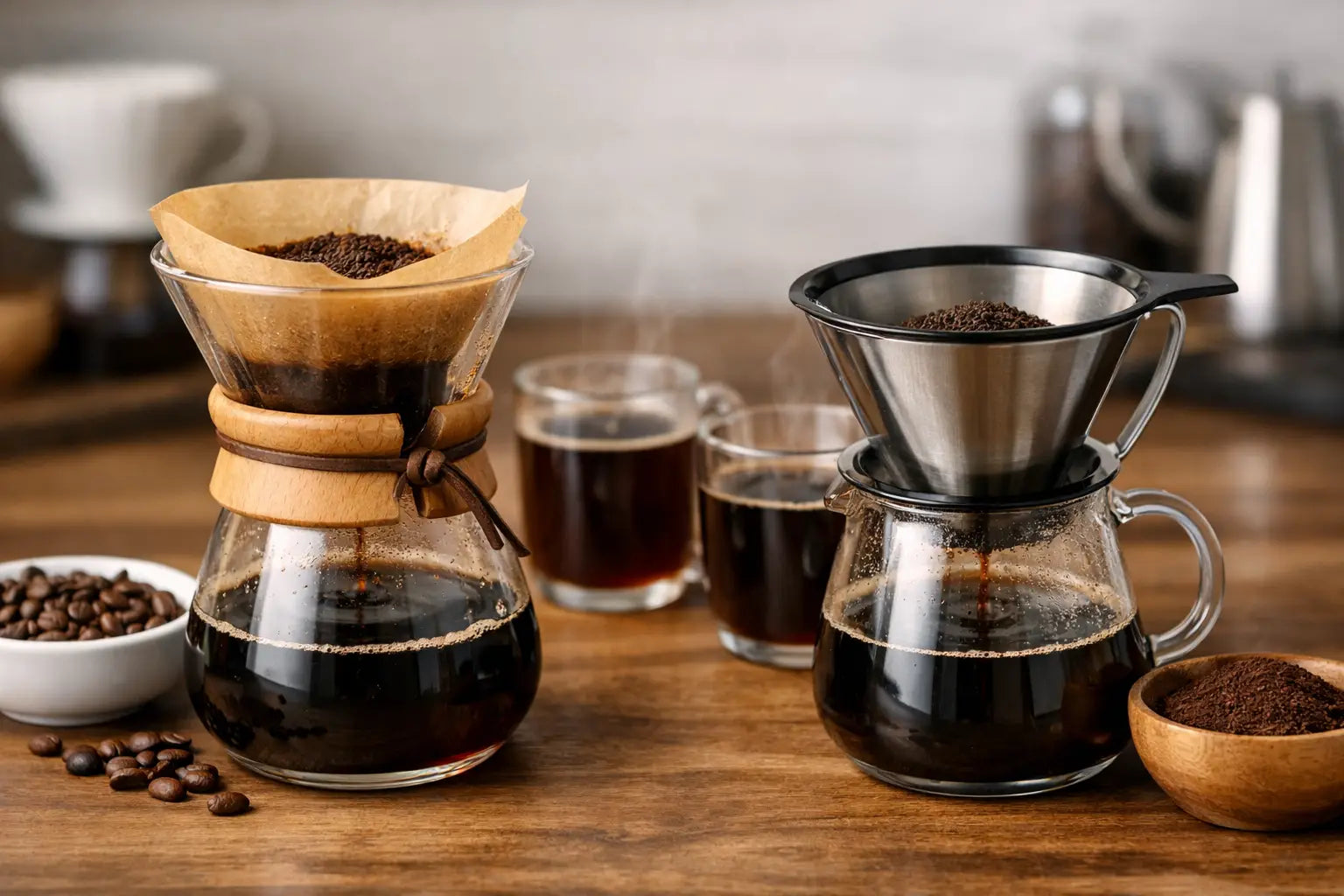
Paper filters are tightly woven and highly absorbent. They catch most oils and fines, producing coffee that looks clear and tastes focused. Metal filters have tiny openings rather than fibers. More natural coffee oils and fine particles make it through, giving the cup a rounder body and a little more visual cloudiness.
This is why the same freshly roasted coffee can taste surprisingly different when brewed two ways. A washed Ethiopian coffee with floral notes may feel delicate and tea-like through paper, then richer and more fruit-forward through metal. A chocolatey, medium-roast blend may taste especially plush through metal, while paper can bring its caramel sweetness into sharper focus.
What paper filters bring to the cup
Paper filters are the familiar choice for drip coffee makers, Chemex brewers, and many pour-over setups. Their greatest strength is clarity. By holding back oils and sediment, they create a clean finish that makes distinct flavor notes easier to recognize.
This can be especially rewarding with specialty single origin coffees. If you chose a coffee for its citrus-like acidity, honeyed sweetness, or delicate stone-fruit character, a paper filter gives those details room to shine. The result often feels bright, elegant, and easy to sip cup after cup.
Paper is also forgiving. Because it catches more fines, it can reduce the muddy or gritty quality that sometimes happens when a grinder produces uneven particles. That makes it a dependable option for busy weekday mornings, especially when you want a reliably clean brew without adjusting every variable.
There are trade-offs. Paper filters absorb some of the flavorful oils that contribute to a coffee's weight and aroma. A cup can seem lighter than the same coffee brewed with metal. Disposable filters also need to be stocked, and lower-quality paper can add a papery taste if it is not rinsed first.
How to get the best from paper
Use a filter made for your brewer and rinse it thoroughly with hot water before adding coffee. This warms the brewer, helps the filter sit flat, and removes any lingering paper flavor. Discard the rinse water, then brew as usual.
Paper often works beautifully for light and medium roasts, washed-process coffees, and coffees with layered acidity. It is also the natural choice when you enjoy a polished, café-style pour-over with very little sediment at the bottom of the cup.
What metal filters bring to the cup
A metal filter is reusable, durable, and built for drinkers who enjoy more texture. Since it allows more oils and tiny particles through, the brew has a fuller mouthfeel. Think silky, rounded, and substantial rather than crisp and tea-like.
That body can make familiar comfort notes feel more generous. Coffees with flavors like cocoa, roasted nuts, brown sugar, and baking spice often become deeper and more lingering through a metal filter. For someone who wants a pour-over that lands closer to the satisfying weight of a French press, metal can be a wonderful middle ground.
Metal filters are also convenient over the long term. Buy one compatible filter, rinse it after brewing, and it is ready for tomorrow. For frequent coffee drinkers, that means less waste from daily paper filters and no last-minute realization that the filter box is empty.
But reusable does not mean maintenance-free. Coffee oils can cling to the fine mesh. If they are not cleaned thoroughly, they can become stale and dull the flavor of an otherwise exceptional coffee. Metal filters also let more sediment into the cup, which some drinkers love and others find distracting.
How to get the best from metal
Rinse a metal filter immediately after use, then wash it regularly with a coffee-safe cleaner or a gentle soak in hot water. Look closely at the mesh, because trapped particles can hide in the smallest openings. Let the filter dry fully between brews.
A slightly coarser grind often helps reduce excess sediment and bitterness. Pour steadily rather than aggressively, and remember that the cup may need a moment to settle before the final sip. The last mouthful can contain more fines, particularly with a very fine grind.
Flavor, body, health, and sustainability
The paper-versus-metal decision is often framed as a simple battle between taste and sustainability. The reality is more personal.
For flavor, paper emphasizes separation and brightness, while metal emphasizes body and aromatic oils. If you want to notice the difference between a berry-like natural-process coffee and a clean, citrus-toned washed coffee, paper gives you a more defined view. If you want a rich, comforting cup that feels substantial with breakfast, metal may better suit your palate.
Some people also choose paper because it removes more of the coffee's diterpenes, including cafestol and kahweol. These compounds are present in coffee oils and can raise LDL cholesterol for certain people when consumed frequently in unfiltered coffee. This does not make metal-filtered coffee a poor choice, but it is a worthwhile consideration for anyone following medical guidance around cholesterol. Your clinician can offer advice tailored to your needs.
On sustainability, a reusable metal filter avoids routine single-use filter waste, but it still requires water and energy to manufacture and clean. Paper filters create recurring waste, although unbleached or compostable options may fit well with your household habits. Used paper filters and grounds can often be composted, depending on your local program. The most sustainable choice is usually the one you will use well for years while keeping your brewing routine enjoyable.
Match the filter to your brewer and coffee
Your equipment may narrow the choice. A Chemex is designed around its thicker paper filters, which are a major reason its coffee tastes so clean and refined. Standard automatic drip machines generally work best with the paper basket filters specified by the manufacturer, though permanent metal filters are available for many models.
For cone-style pour-overs, such as a V60, you can explore both paper and reusable metal options. This is an excellent place to taste the contrast with the same coffee. Brew one cup through each filter on separate days, keeping the dose, water temperature, and grind as close as possible. Take a moment to notice not only the first sip, but also how the coffee feels and tastes as it cools.
Choose paper when you want crisp definition, easy cleanup, and a clear expression of a nuanced single origin. Choose metal when you value a fuller body, reusable equipment, and a cup with more natural coffee oils. If your preferences shift with the season or the coffee in your canister, keep both. A bright spring coffee may call for paper, while a cozy weekend blend may feel right through metal.
A better cup starts with fresh coffee
Filter choice matters, but it cannot rescue stale beans or replace careful brewing. Start with freshly roasted specialty coffee, grind just before brewing, use clean water, and measure your dose consistently. Those simple habits make the difference between an ordinary cup and one that turns a quiet morning at home into a cherished moment.
Let your own taste lead. The best filter is the one that helps your favorite coffee feel most like yours.