Arabica Robusta Comparison for Better Coffee
The coffee that makes a quiet morning feel special is rarely chosen by caffeine alone. In an Arabica Robusta comparison, the real difference comes down to what you want in the cup: layered sweetness and aroma, a powerful crema, a stronger caffeine lift, or a blend of all three. Knowing the distinction helps you buy coffee with more confidence and make every home-brewed cup feel more like your own.
Arabica Robusta Comparison: Start With the Plant
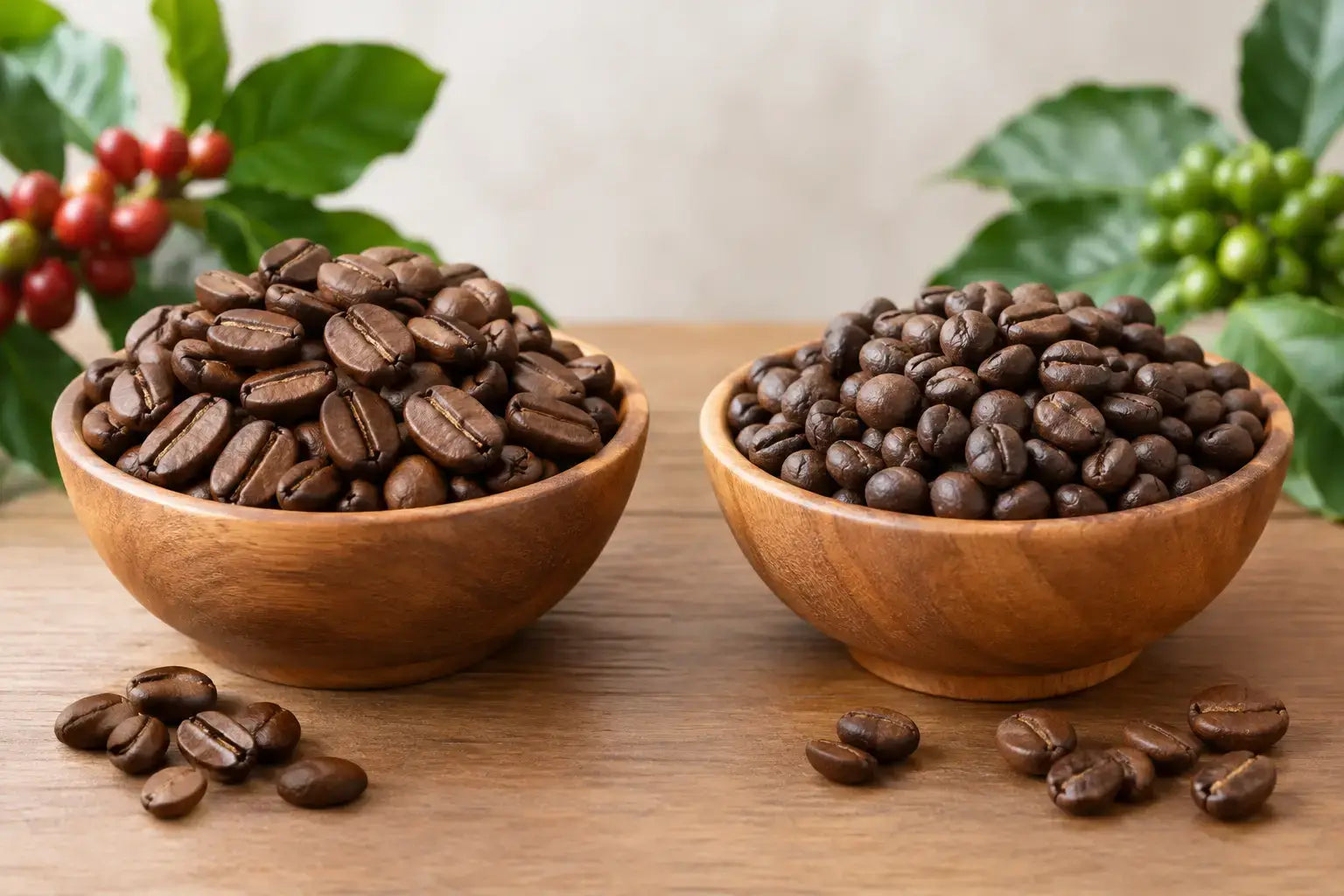
Arabica and Robusta are commonly used names for two different coffee species. Arabica, or Coffea arabica, is the species behind most specialty coffee. It is typically grown at higher elevations, where cooler temperatures slow cherry development and can encourage more nuanced flavor.
Robusta usually refers to Coffea canephora. It grows well in warmer, lower-altitude regions and is generally more resistant to heat, pests, and disease. Its hardiness can make it a practical crop for growers, especially in climates where Arabica is more difficult to cultivate.
That botanical difference influences everything that follows: the shape of the bean, the amount of caffeine, the way the coffee responds to roasting, and the flavors that arrive in your mug. Still, species is only one piece of the story. Origin, processing, freshness, roasting, and brewing all have a meaningful say in the final cup.
Flavor: Delicate Complexity or Intense Strength?
Arabica is prized for aromatic, expressive coffee. Depending on where and how it is grown, you may taste notes ranging from cocoa, caramel, and toasted nuts to stone fruit, citrus, florals, or berries. Its acidity can be bright and lively or soft and wine-like, giving the cup definition rather than simply sharpness.
For many people, Arabica feels naturally suited to slow morning rituals. A washed Colombian coffee may bring comforting chocolate and red-fruit notes to a drip brewer, while an Ethiopian natural process can offer jammy sweetness and fragrant florals. These details are why single-origin Arabica is so compelling: a cup can carry a distinct sense of place.
Robusta generally has a more forceful profile. It is often described as earthy, woody, grain-like, dark chocolatey, or pleasantly bitter when handled well. Lower-quality Robusta can taste harsh, rubbery, or overly astringent, which is one reason it developed an uneven reputation in North American coffee culture. But carefully grown and processed fine Robusta can be surprisingly clean, sweet, and satisfying, particularly in espresso blends.
The better choice depends on your taste. If you look for clarity, sweetness, and origin character, Arabica is usually the natural fit. If you enjoy a heavier body, pronounced bitterness, and an assertive cup, Robusta may have a role in your routine.
Caffeine and Body: Why the Cup Feels Different
Robusta typically contains about twice as much caffeine as Arabica. Exact levels vary by coffee and preparation, but Arabica is often around 1.2% caffeine by weight, while Robusta may reach roughly 2.2% or more. Caffeine is part of the plant’s natural defense system, which helps explain why the tougher Robusta plant carries more of it.
That does not mean every Robusta drink will provide exactly double the caffeine of every Arabica drink. Your serving size, coffee-to-water ratio, brewing method, and how much coffee you drink matter just as much. An espresso made with a Robusta-forward blend may feel especially energizing, while a large mug of Arabica filter coffee can still deliver plenty of caffeine.
Body is another noticeable difference. Arabica often feels silky, rounded, or tea-like depending on the roast and brew method. Robusta tends to produce a thicker, weightier texture. In espresso, it can create a dense, persistent crema - the golden foam that sits on top of a well-pulled shot. That crema is visually appealing, but it is not a guarantee of quality on its own. Flavor should always have the final word.
Why Specialty Coffee Favors Arabica
Specialty coffee is not defined by the word Arabica alone. An Arabica coffee can still be flat, stale, poorly roasted, or carelessly sourced. Yet Arabica has the capacity for the sweetness, balance, and complexity that specialty producers and roasters work hard to preserve.
At House Coffee, that focus begins with thoughtfully sourced, freshly roasted Arabica coffees selected for memorable flavor and quality. High-scoring coffees, including Q-grade selections of 84 points and above, are evaluated for attributes such as fragrance, flavor, acidity, body, sweetness, and cleanliness. The goal is not to chase technical language for its own sake. It is to put more care into the cup you share at the kitchen table, bring to your desk, or enjoy in a moment of calm before the day begins.
Traceability matters here, too. When a coffee is identified by country, region, farm, cooperative, or process, it gives you a clearer connection to the people and conditions behind the bean. That connection is harder to find in anonymous commodity coffee, regardless of whether it is Arabica or Robusta.
When Robusta Makes Sense
Robusta is not simply “bad coffee,” and Arabica is not automatically “good coffee.” The old shorthand misses the care of skilled growers and overlooks the purpose of a blend.
A small percentage of quality Robusta can add crema, body, and extra caffeine to an espresso blend. Some traditional Italian-style espresso profiles use it deliberately for that deeper, more intense character. It can also suit drinkers who take coffee with milk and want a flavor that remains present through a latte or cappuccino.
If you love a rich, darker espresso with a lingering bite, a thoughtfully made Arabica-Robusta blend may be enjoyable. If you prefer black coffee with sweetness, clean finish, and recognizable origin notes, a specialty Arabica is more likely to deliver the experience you want.
Choosing Coffee for Your Brewing Method
Your brewer can make the Arabica Robusta comparison feel even more personal. For pour-over, Chemex, batch brew, and French press, single-origin Arabica offers plenty to explore. A medium roast may highlight balance and sweetness, while a lighter roast can bring out more fruit and floral character. For French press, choose a coffee with enough body to stand up to the full-immersion method.
Espresso leaves more room for preference. A medium or medium-dark Arabica can create a sweet, syrupy shot with notes of chocolate, caramel, or fruit. A blend that includes Robusta may produce a thicker crema and a more intense finish. Neither is universally better. The best espresso is the one that tastes balanced to you, whether you drink it straight or turn it into a milk-based drink.
For cold brew, Arabica is often a dependable choice because its sweetness and chocolate-forward notes can become smooth and refreshing over a long extraction. A darker roast can work beautifully if you prefer low-acid, bold flavor, while a medium roast may give you more dimension.
Buy for Freshness, Not Just the Label
When choosing between Arabica and Robusta, look beyond the front of the bag. Ask when the coffee was roasted, where it was grown, and what flavors you can expect. Whole beans ground just before brewing will usually offer more fragrance and flavor than pre-ground coffee that has been sitting for weeks.
Store your coffee in an airtight container away from heat, light, and moisture. Skip the refrigerator, where beans can absorb odors and experience condensation. A good bag of coffee deserves a little care, especially when it is part of the rhythm that brings people together at home.
Choose Arabica when you want to savor origin, sweetness, and complexity. Choose a quality Robusta blend when you want extra intensity, body, and crema. Then brew it fresh, share it generously, and let the cup create one more cherished moment in your day.