Coffee Water Temperature Guide for Better Brews
A great bag of coffee can still taste thin, bitter, or unexpectedly sour if the water misses its mark. This coffee water temperature guide gives you a practical way to match heat to your beans, brewing method, and preferred cup - so every morning ritual feels a little more like the café experience you want to create at home.
Water temperature controls how quickly coffee compounds dissolve. Too cool, and you may leave sweetness and depth in the grounds. Too hot, and delicate flavors can become harsh or dry. The goal is not to chase one perfect number. It is to use temperature as one thoughtful adjustment among grind size, dose, brew time, and water quality.
Coffee Water Temperature Guide: Start at 195-205°F
For most specialty coffees, a water temperature between 195°F and 205°F is an excellent starting range. That is about 30 seconds off a full boil when using a kettle without temperature control, though room temperature, kettle material, and altitude can change the timing.
Within that range, the best setting depends on roast level and brew method. Lighter roasts are denser and often benefit from hotter water, usually 200-205°F. The higher heat helps draw out their bright fruit notes, florals, and layered sweetness. A washed Ethiopian coffee, for example, may taste more complete at 203°F than it does at 195°F.
Medium roasts are usually at home around 195-202°F. This range tends to preserve balance: enough energy for caramel sweetness and origin character, without pushing roast notes too hard. It is a reliable place to begin with a premium single-origin coffee or a carefully developed house blend.
Darker roasts generally prefer a gentler approach, around 185-195°F. They are more soluble because the roasting process has made their structure more porous. Water that is too hot can pull excessive bitterness and smoky flavors from the grounds, masking the chocolatey, comforting character many people love in a dark roast.
Why Water Temperature Changes the Taste
Coffee brewing is extraction. Water moves through ground coffee and dissolves acids, sugars, oils, and compounds that contribute bitterness and body. Heat speeds up that process.
Cooler water extracts more slowly. If your cup tastes sharp, salty, lemony in an unpleasant way, or watery despite using enough coffee, low temperature could be part of the problem. Before changing everything else, try increasing your water temperature by 3-5 degrees.
Hotter water extracts more aggressively. If the coffee tastes bitter, woody, burnt, hollow, or leaves a drying sensation on your tongue, lowering the temperature can help. But temperature is not always the culprit. A grind that is too fine or a brew that runs too long can create the same over-extracted profile.
Think of temperature as a way to refine the cup, not rescue stale coffee. Freshly roasted, specialty-grade beans give you more sweetness and clarity to work with. That is where thoughtful sourcing, careful roasting, and a simple brewing adjustment can turn an ordinary pause into a cherished moment.
Best Water Temperature by Brewing Method
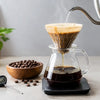
Pour-over: 198-205°F
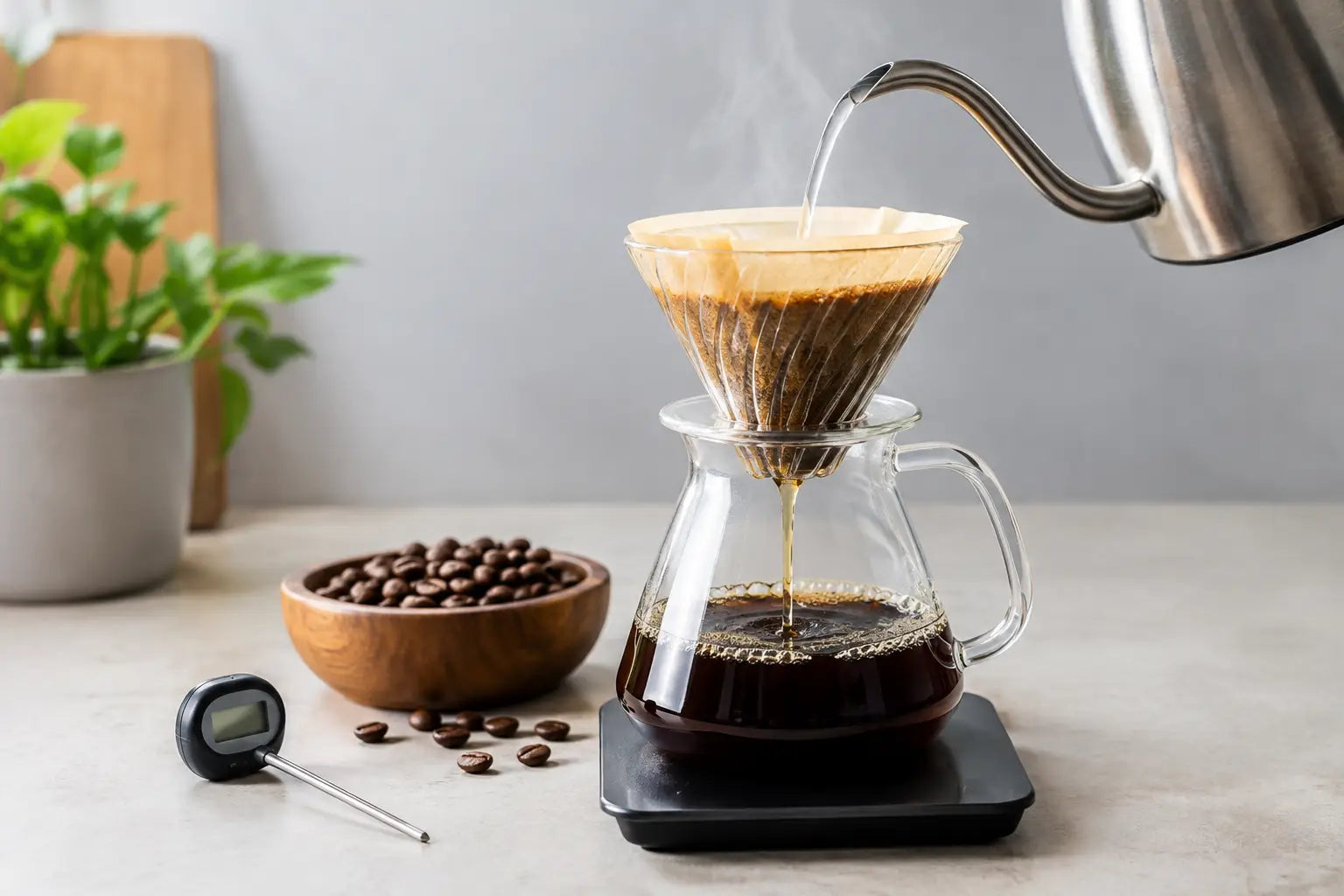
Pour-over brewing rewards precision because the water has direct contact with the coffee for a relatively short, controlled period. Start at 202°F for a light or medium-light roast. This usually gives enough extraction for a sweet, expressive cup without muting the origin's personality.
For a delicate coffee with floral or tea-like notes, you might prefer 198-200°F. If the same coffee tastes underdeveloped or sour, move up toward 204-205°F. Keep your pouring pace consistent while testing. Changing temperature and pour technique at the same time makes it difficult to tell what improved the cup.
French press: 195-200°F
Immersion brewers such as the French press hold coffee and water together for several minutes. Because contact time is longer, you do not always need the hottest water available. 198°F is a dependable starting point for most medium roasts.
A French press naturally produces more body because the metal filter allows oils and fine particles into the cup. If that body starts tasting rough or bitter, try 195°F before shortening your steep. For lighter roasts, 200-202°F can bring more vibrancy and sweetness.
Drip coffee maker: 195-205°F
A quality drip brewer should deliver water within this range, but not every machine does. If your coffee maker consistently produces flat, sour coffee with fresh beans and a sensible grind, it may not be heating water sufficiently.
Use 200°F as the target when your machine allows temperature selection. For machines without controls, focus on fresh coffee, an appropriate medium grind, and a clean showerhead. Mineral buildup can affect both heat and flow, quietly changing the flavor in your morning cup.
AeroPress: 175-205°F
The AeroPress is wonderfully flexible. For a classic, fuller cup with medium or darker roasts, start around 185-195°F. For light-roast coffee and a recipe with a shorter steep, try 200-205°F to gain sweetness and complexity.
This broad range is not a contradiction. It reflects the AeroPress's many recipes, grind sizes, and steep times. A finer grind and longer steep often call for cooler water; a coarser grind and quick brew may need more heat.
Espresso: 198-204°F
Espresso machines usually display boiler temperature rather than the exact temperature reaching the coffee puck, so small adjustments should be made patiently. Start around 200°F for a medium roast. Light roasts often respond well to 202-204°F, while darker espresso roasts can become more rounded at 198-200°F.
If a shot is sour and finishes quickly, increase temperature slightly only after confirming the dose, yield, and grind are in range. If it tastes intensely bitter, lower the temperature by 1-2 degrees or consider a slightly coarser grind. Espresso is concentrated, so subtle changes are easy to notice.
Cold brew: Room temperature or cold water
Cold brew follows different rules. Since it steeps for many hours, hot water is not needed. Use cool, filtered water and allow time to do the work. The result is often smooth and low in perceived acidity, though it may show less of the sparkling fruit character found in a hot pour-over.
What to Do Without a Temperature-Controlled Kettle
You do not need specialized equipment to brew beautiful coffee. Bring fresh water to a boil, remove the kettle from heat, and wait about 30 seconds for a temperature near 205°F. Waiting 60-90 seconds will usually bring you closer to the 195-200°F range.
These are useful estimates, not laboratory measurements. A small gooseneck kettle may cool more quickly than a large stovetop kettle, and a cold ceramic dripper will absorb heat from your brew water. Preheating your brewer, carafe, and mug with hot water makes your process more consistent and keeps the final cup warmer.
If you brew coffee often, a temperature-controlled kettle is a meaningful upgrade. It is especially helpful for single-origin coffees, where a few degrees can reveal more honeyed sweetness, stone fruit, cocoa, or florals. Still, consistency matters more than owning every tool. Repeatable habits will teach you more about your coffee than chasing gear ever will.
Adjust Temperature With Intention
When a brew misses the mark, make one change at a time. Keep your coffee dose, grind, and pour pattern steady, then adjust temperature in small steps. Three degrees is enough to hear what the coffee is telling you.
Raise the temperature when a light roast tastes sour, thin, or muted. Lower it when a darker roast tastes bitter, ashy, or astringent. If the coffee tastes both sour and bitter, temperature alone may not solve it. That often points to uneven extraction, which can come from inconsistent grinding, channeling in espresso, or uneven pouring in a dripper.
Water itself matters, too. Filtered water with a balanced mineral content helps coffee extract predictably and taste clean. Distilled water can leave a cup strangely empty, while heavily mineralized tap water may dull a coffee's sweetness. Start with good water, fresh beans, and the temperature range that suits your roast, then make the cup your own.
The best brewing temperature is the one that lets your coffee feel generous in the cup - sweet enough to linger, clear enough to notice where it came from, and comforting enough to invite one more unhurried sip.