How to Dial In Espresso at Home
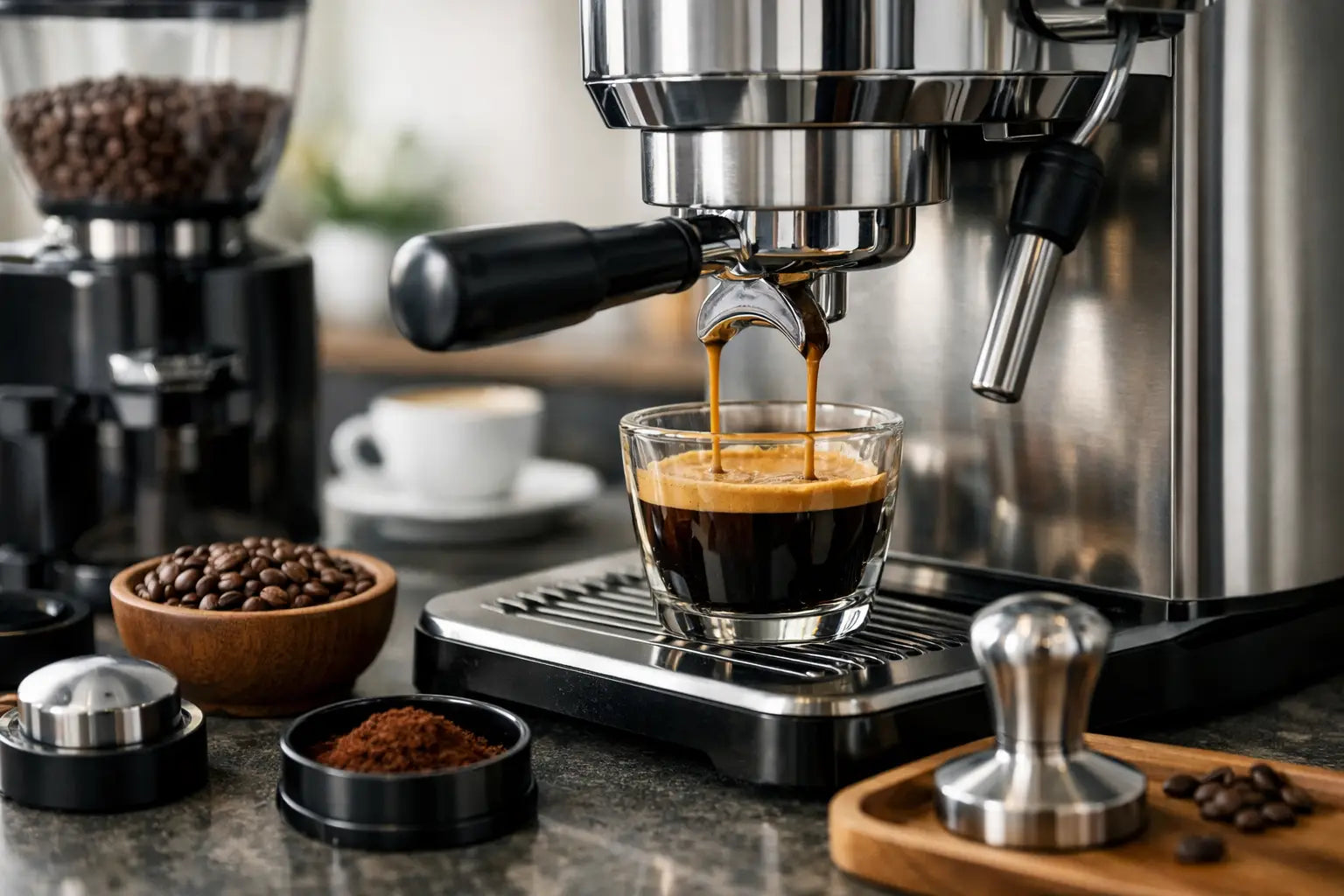
A great espresso shot can go sideways fast. One morning it pours like warm honey and tastes like dark chocolate and ripe fruit. The next, it runs too quickly, tastes sharp, and leaves you wondering what changed. If you have ever felt that frustration, learning how to dial in espresso is what brings consistency back to your cup.
Dialing in is the process of adjusting your recipe so your coffee tastes balanced, sweet, and expressive. It is not about chasing a perfect number for its own sake. It is about getting the best from the beans you have, on the grinder and machine you use, in the rhythm of your home.
What dialing in espresso really means
When people talk about espresso, they often focus on time first. Time matters, but taste matters more. Dialing in is really about controlling extraction - how much of the coffee's soluble flavor ends up in the cup.
If extraction is too low, espresso tastes sour, salty, thin, or grassy. If extraction goes too far, it can taste bitter, dry, hollow, or harsh. The sweet spot lives in between, where acidity feels lively, sweetness is present, and the finish is clean.
That balance depends on four main variables: dose, grind size, yield, and time. Dose is how much dry coffee goes into the basket. Yield is how much liquid espresso comes out. Grind size changes how quickly water moves through the puck. Time tells you how long that process takes, but it is best used as feedback rather than the main target.
How to dial in espresso with a simple baseline
Start with a recipe you can repeat. For most modern espresso, a good baseline is a 1:2 ratio. That means if you dose 18 grams of coffee, you aim for 36 grams of espresso in the cup.
A practical starting point is 18 grams in, 36 grams out, in about 25 to 32 seconds. That range is not law. Some coffees, especially lighter single origins, may taste better a little longer or with a slightly higher yield. Darker roasts may feel richer and cleaner with a shorter ratio. Still, 1:2 gives you a stable place to begin.
Use a scale for both dose and yield. Espresso is too concentrated for guesswork to be reliable. Small changes matter, and measuring them is what turns random shots into intentional ones.
Start with fresh coffee and a steady setup
The easiest way to sabotage espresso is to change too many things at once. Before touching your grinder, make sure your setup is stable.
Use coffee that is fresh but not too fresh. Beans often perform best for espresso after a short rest from roast, usually around 7 to 14 days, though it depends on the coffee. Very fresh coffee can produce excess gas, uneven flow, and wild shot behavior. Older coffee can taste flat and lose the sparkle that makes specialty coffee memorable.
Keep your dose, basket, tamp pressure, and machine temperature consistent. Purge the grinder if needed, warm up the machine fully, and use the same puck prep routine each time. These details may sound small, but together they shape the cup.
Taste first, then adjust one variable
This is the heart of how to dial in espresso without getting lost. Pull a shot with your baseline recipe. Taste it. Then make one change.
If the shot runs fast and tastes sour or thin, grind finer. A finer grind slows the flow and usually increases extraction. If the shot runs slow and tastes bitter or heavy in a dull way, grind coarser.
Keep the dose the same while you are learning. Changing dose and grind together makes it harder to know what actually fixed the shot. Once grind is close, you can use yield to fine-tune flavor.
A shorter yield usually gives you more body and intensity. A longer yield can bring more clarity and sweetness, especially with lighter roasts, but too long can thin the shot out. If your espresso tastes concentrated but sharp, try keeping the same dose and grinding similar, then pull slightly more liquid. If it tastes dry and overdone, stop the shot a bit earlier.
Read the cup, not just the clock
Time is useful, but flavor is the real guide. A 28-second shot is not automatically good, and a 35-second shot is not automatically bad. Espresso does not care about rules as much as it cares about balance.
A good shot often has texture without muddiness, sweetness without being flat, and acidity that feels crisp rather than aggressive. Think of time as a clue that helps explain what happened, not the only goal.
This matters even more with specialty coffee. A washed Ethiopian and a chocolatey Latin American blend may need different recipes to show their best qualities. One may sing at a slightly higher yield. The other may feel rounder and more comforting as a ristretto-style shot. It depends on roast level, density, solubility, and what flavors you want to bring forward.
Common problems when dialing in espresso
Channeling is one of the biggest reasons a shot can look wrong and taste confusing. It happens when water finds weak paths through the puck instead of extracting evenly. You might see spurting, uneven streams, or blonding that starts too early. In the cup, that often creates a strange mix of sourness and bitterness.
Better puck prep helps. Distribute the grounds evenly before tamping. Tamp level. Avoid clumps. If you use a distribution tool or needle tool, use it consistently, not aggressively.
Another common issue is stale or overly humid coffee behavior. Weather affects grinders more than many home baristas expect. On humid days, coffee may need a slightly coarser grind. As beans age, they often need a finer setting to maintain similar flow. If yesterday's recipe suddenly misses, your grinder may not be the problem at all.
A practical espresso dialing workflow
When you open a new bag, begin with your standard dose and a 1:2 ratio. Pull the shot and note the time. Then taste.
If it tastes sour, empty, or underdeveloped, grind finer and pull again. If it tastes bitter, drying, or heavy without sweetness, grind coarser. Once the shot tastes close, use yield to refine the result. More yield can open up sweetness and clarity. Less yield can add syrupy texture and reduce sharpness.
After two or three shots, most coffees start to reveal their direction. You are not trying to force every bean into the same profile. You are listening for where it feels most alive.
This is especially rewarding with carefully sourced coffee. A high-scoring single origin can show layered fruit, florals, cocoa, or caramel when your recipe is right. A blend can offer the dependable comfort many people want every morning - rich body, sweet finish, and enough structure to stand up beautifully in milk drinks.
Keeping espresso consistent day after day
Once a coffee is dialed in, write the recipe down. Record dose, yield, time, grind setting, and a few tasting notes. The next morning, start there and adjust only if the shot tells you to.
Consistency at home does not mean rigidity. It means building a repeatable ritual. Weigh the dose. Watch the yield. Taste with attention. Small changes are normal, especially as the coffee ages, but they become easy to manage when your process is calm and clear.
A good espresso routine should feel grounding, not stressful. That is part of what makes home coffee special. The work of dialing in may be technical, but the reward is deeply personal - a cup that feels crafted for your morning, your kitchen, and the people you share it with.
When to stop adjusting
There is a point where chasing perfection starts to make espresso worse. If your shot is sweet, balanced, and enjoyable, you are there. Not every coffee will taste like a competition espresso. Some are meant to be bright and lively. Others are meant to be plush and comforting.
The goal is not to erase a coffee's character. It is to help it express itself clearly. That is why quality beans matter so much. With fresh, thoughtfully roasted coffee, dialing in becomes less about fixing flaws and more about revealing what was already there.
If you want better espresso at home, trust your palate and give yourself a repeatable process. The numbers help, but the final answer is always in the cup - and the best shot is the one that makes you slow down for a moment and enjoy being home.