Specialty Coffee vs Supermarket Coffee
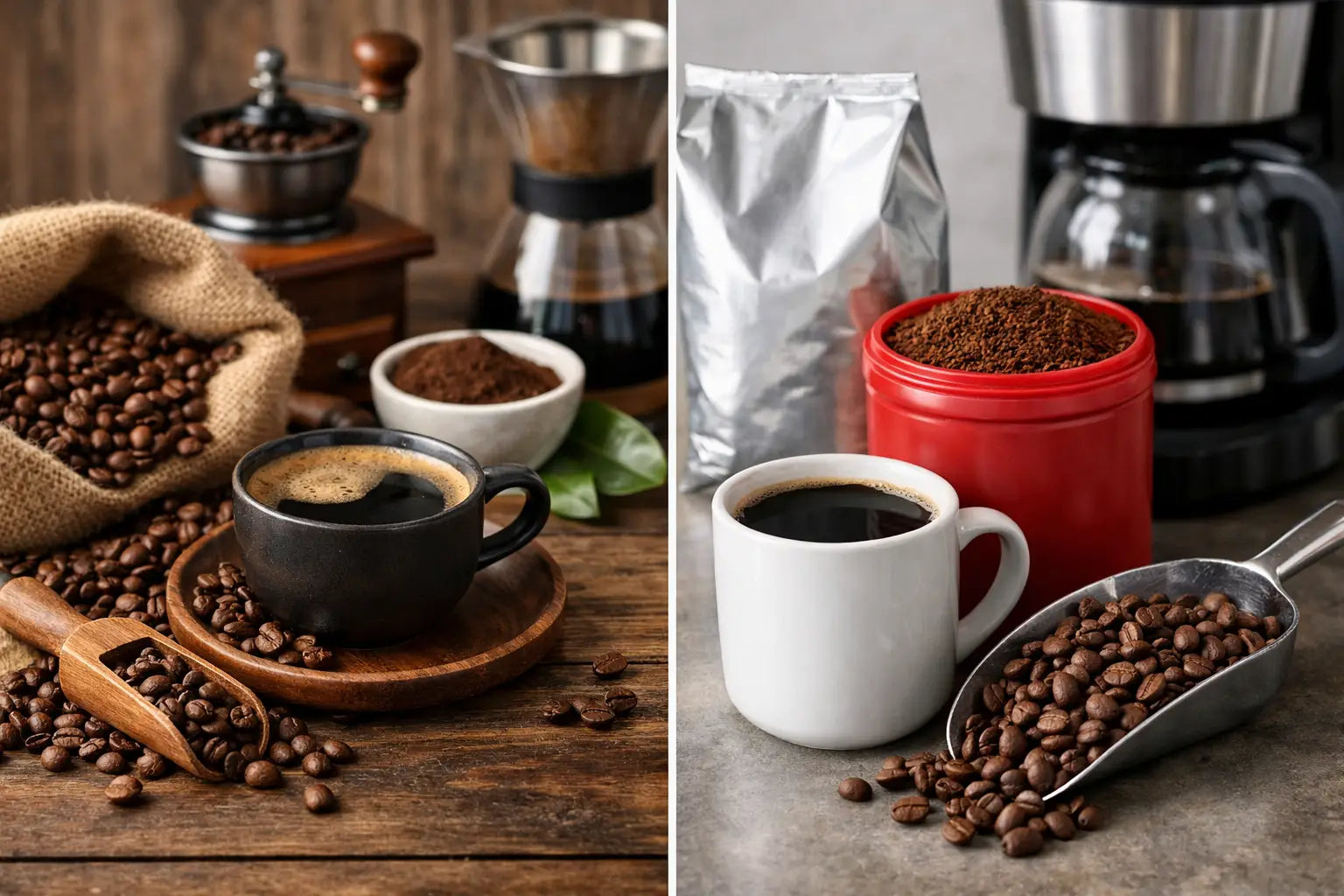
You can taste the difference before you have the words for it. One cup feels flat, bitter, and forgettable. Another has sweetness, balance, and the kind of aroma that slows the morning down for a second. When people compare specialty coffee vs supermarket coffee, they are really comparing two very different ideas of what coffee should be.
For some households, coffee is just fuel. For others, it is part of the rhythm of home - the first quiet moment before work, the pot shared after dinner, the familiar comfort of a daily ritual done well. That is where the gap becomes obvious. Specialty coffee is built around freshness, quality, and traceability. Supermarket coffee is usually built around scale, shelf life, and consistency at a lower price point.
What specialty coffee vs supermarket coffee really means
The biggest difference is not branding or packaging. It starts with the coffee itself. Specialty coffee refers to high-quality beans that score 80 points or above on a 100-point scale used by professional tasters. In many premium programs, that bar is even higher, with coffees graded 84+ for cleaner flavor, stronger sweetness, and more distinct character.
Supermarket coffee usually comes from commodity-grade lots. That does not mean every grocery-store bag is bad, but it often means the coffee was purchased for volume, blended for uniformity, and roasted to appeal to the broadest possible audience. The goal is dependability over distinction.
That difference shapes everything else - from how the coffee is sourced to how long it sits before you brew it.
Freshness changes the entire cup
Coffee is an agricultural product, and freshness matters more than many people realize. Once roasted, beans begin to lose aromatic compounds over time. They do not become unsafe, but they do become less expressive. The sweetness softens, the fruit notes fade, and the cup can start tasting dull or stale.
Specialty roasters tend to roast in smaller batches and sell coffee closer to the roast date. That gives you a better chance of brewing coffee when it still has life in it. You can smell it when you open the bag and taste it when hot water hits the grounds.
Supermarket coffee is usually designed for long shelf stability. It may spend weeks or months in warehouses, trucks, back rooms, and on store shelves before it gets to your kitchen. Vacuum sealing and nitrogen flushing help preserve it, but they cannot fully replace the vibrancy of freshly roasted coffee.
If your current coffee tastes harsh unless you add extra cream or sugar, freshness may be one reason.
Flavor is where most people notice the upgrade
The clearest point in the specialty coffee vs supermarket coffee conversation is flavor. Specialty coffee is selected and roasted to reveal what makes each coffee unique. Depending on origin, process, and roast style, you might taste chocolate, citrus, berry, caramel, nuts, stone fruit, or florals. Not as flavored additives - as natural flavor notes already in the bean.
Supermarket coffee often leans darker, smokier, and more bitter. Sometimes that is a deliberate style. Dark roasts can be rich and satisfying. But in mass-market coffee, darker roasting is also a practical way to smooth out inconsistencies in lower-grade beans and create a familiar taste profile from one batch to the next.
That does not mean specialty coffee always tastes light or acidic. A well-roasted specialty blend can be deep, comforting, and chocolate-forward. The difference is balance. You still taste sweetness and structure, not just roast.
Sourcing tells you what is behind the bag
Another major difference is traceability. Specialty coffee often comes with details about where it was grown, who produced it, the altitude, the variety, and the processing method. That level of information is not there for decoration. It signals that the roaster is treating coffee as a craft product with a real origin story.
In many cases, specialty coffee also comes from more intentional buying relationships. Direct trade and ethical sourcing models can create better outcomes for producers and encourage investment in quality at the farm level. It is not perfect across the industry, and not every specialty brand works the same way, but transparency tends to be much stronger.
Supermarket coffee is usually less specific. You may see broad terms like Colombian or medium roast, but often without farm-level detail or quality markers. For some shoppers, that is fine. For others, knowing the origin is part of what makes the cup more meaningful.
When you know the coffee was grown with care, selected with purpose, and roasted to honor its character, the experience feels less disposable.
Price matters, and so does value
Supermarket coffee is often cheaper upfront. That is one reason it remains the default choice for many households. If you are brewing a large pot every day for a family or office, price per bag matters.
But value is not only about the sticker price. Specialty coffee often delivers more flavor per cup, which can change how you brew and how much you enjoy it. You may find yourself drinking it black more often, using less sugar, or feeling more satisfied with one truly good cup instead of two average ones.
There is also less waste when you actually finish the bag because you enjoy it. Many people have had the experience of buying a large supermarket bag only to let half of it sit because the flavor never felt quite right.
So yes, specialty coffee usually costs more. The better question is whether the quality, freshness, and sourcing justify that difference for your routine. For many coffee drinkers, the answer is yes - especially when coffee is part of the comfort and character of home.
Brewing at home makes the difference even clearer
If you use a French press, pour-over, espresso machine, or even a solid drip brewer, better beans will usually show up in the cup. Specialty coffee tends to respond well to good brewing because it has more clarity and structure to begin with.
That said, not every home setup needs a highly complex single origin. If you want a smooth, dependable morning cup, a well-crafted specialty blend may be the better fit than a bright, highly nuanced coffee. It depends on your taste and your brewing habits.
Supermarket coffee can still work in a pinch, especially if convenience is your top priority. But if you are investing in grinders, brewers, or espresso equipment, using stale or low-grade beans limits what those tools can do.
A better bean does not make home brewing harder. More often, it makes it more rewarding.
Who should choose specialty coffee?
If coffee is one of the small pleasures that shapes your day, specialty coffee is usually worth exploring. It makes sense for people who care about fresh roast dates, clearer flavor, ethically sourced beans, and a more personal connection to what they drink.
It also makes sense for gift-giving. A thoughtfully roasted coffee with real origin detail feels elevated in a way that generic grocery coffee rarely does. It turns a practical item into something warm and memorable.
For businesses, cafés, and hospitality settings, the choice matters too. The coffee you serve says something about your standards. A more distinctive, fresher coffee can leave a stronger impression on guests, clients, and teams.
When supermarket coffee may still fit
There are fair reasons to choose supermarket coffee. Budget is real. Convenience is real. Some people simply want an easy, familiar bag they can grab during a weekly grocery trip.
And not every palate is looking for tasting notes or origin breakdowns. If your priority is a basic cup with minimal decision-making, supermarket coffee may meet the need.
Still, once you taste a coffee that was roasted recently, sourced with care, and built around quality rather than shelf life, it becomes harder to ignore what has been missing.
House Coffee was built for that moment - when coffee stops being a habit you settle for and becomes a ritual you look forward to. The right bag does more than wake you up. It brings warmth to the kitchen, comfort to the routine, and a little more intention to the parts of life that happen at home.
If you have been wondering whether upgrading your coffee is really worth it, start with one fresh bag and a brewing method you already trust. The answer is usually waiting in the first sip.