Why Origin Matters in Coffee – Unlocking Real Flavor
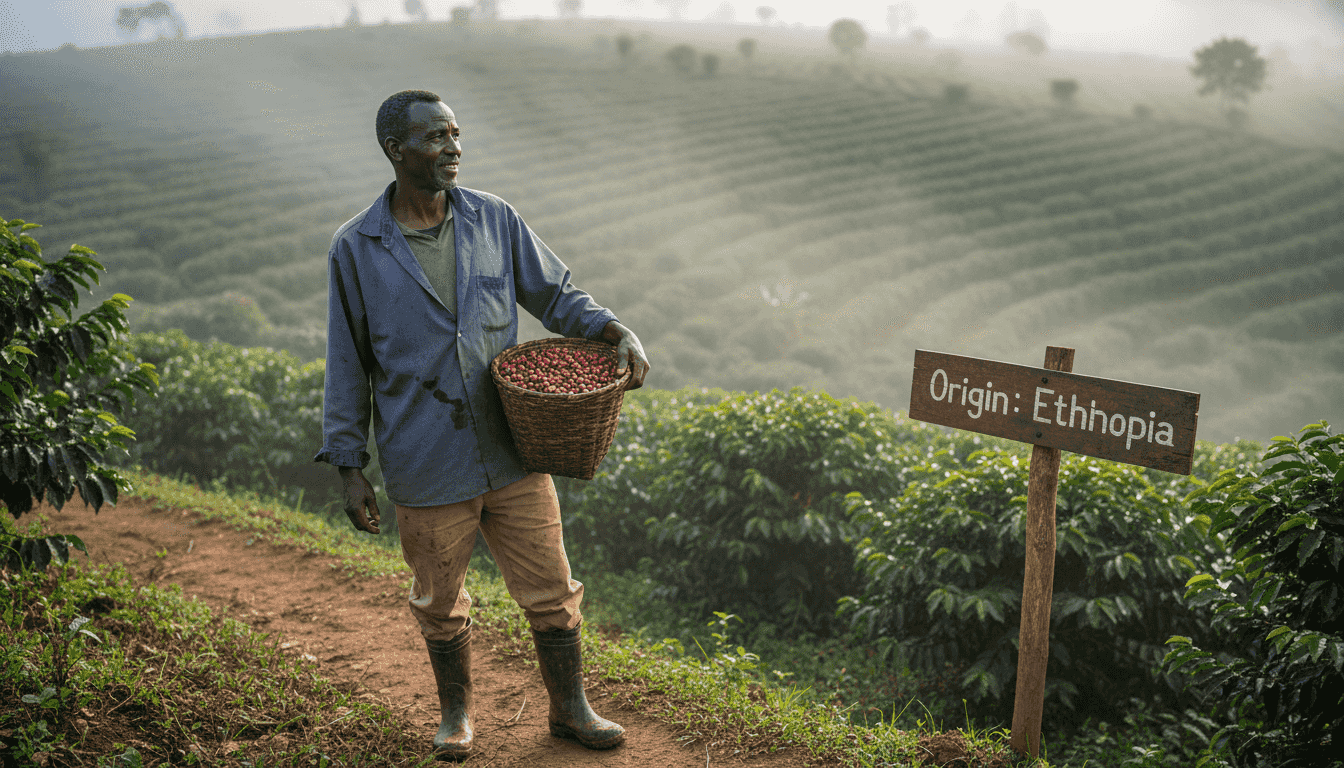
Many coffee lovers overlook the true depth behind the origins stamped on their favorite single-origin Arabica bags. Understanding origin means unveiling the intricate blend of geography, culture, and chemistry that shapes every cup—from Ethiopian highlands to Colombian valleys. For eco-conscious enthusiasts, embracing the complex interaction of terroir guides ethical choices and transforms brewing precision. This guide reveals hidden misconceptions and concrete science that elevate your appreciation of where your coffee truly comes from.
Table of Contents
- Defining Coffee Origin And Common Misconceptions
- The Real Science Behind Origin Flavor
- How Terroir Shapes Coffee Flavor And Quality
- Arabica Vs. Blends: Key Differences By Origin
- Transparency, Traceability, And Ethical Sourcing
- How Origin Influences Your Brewing Experience
Key Takeaways
| Point | Details |
|---|---|
| Understanding Coffee Origin | Coffee origin is about more than just country; it encompasses specific geographic, environmental, and cultural factors that shape flavor. |
| Misunderstandings About Coffee Flavor | Many misconceptions exist, such as assuming all beans from a country taste the same, but origin-specific details significantly influence taste. |
| Terroir’s Role in Flavor | Terroir, including altitude, soil, and climate, is crucial in developing the unique flavor profiles of coffee, impacting how beans should be brewed. |
| Importance of Ethical Sourcing | Transparency and ethical sourcing are essential for supporting sustainable practices and ensuring fair compensation for coffee farmers. |
Defining Coffee Origin and Common Misconceptions
Coffee origin refers to the geographic location and environmental conditions where coffee plants grow and are harvested. This encompasses not just the country but the specific region, altitude, climate, and soil composition that shape every cup you brew.
Many people think origin simply means the country name on the bag. That’s only part of the story. True coffee origin captures the entire ecosystem—from Ethiopian highlands to Colombian mountains to Indonesian volcanic soil.
What Coffee Origin Really Means
Coffee origin is a convergence of geography, culture, and chemistry. The history of coffee spans many centuries, originating from wild coffee plants in Ethiopia and developing through centuries of cultivation across the Arabian Peninsula and beyond. This historical journey shaped not just where coffee grows but how it tastes.
Origin determines flavor compounds that develop in the bean. Altitude affects acidity. Rain patterns influence sweetness. Soil composition adds mineral notes. These aren’t abstract concepts—they’re real chemical reactions happening in the plant.
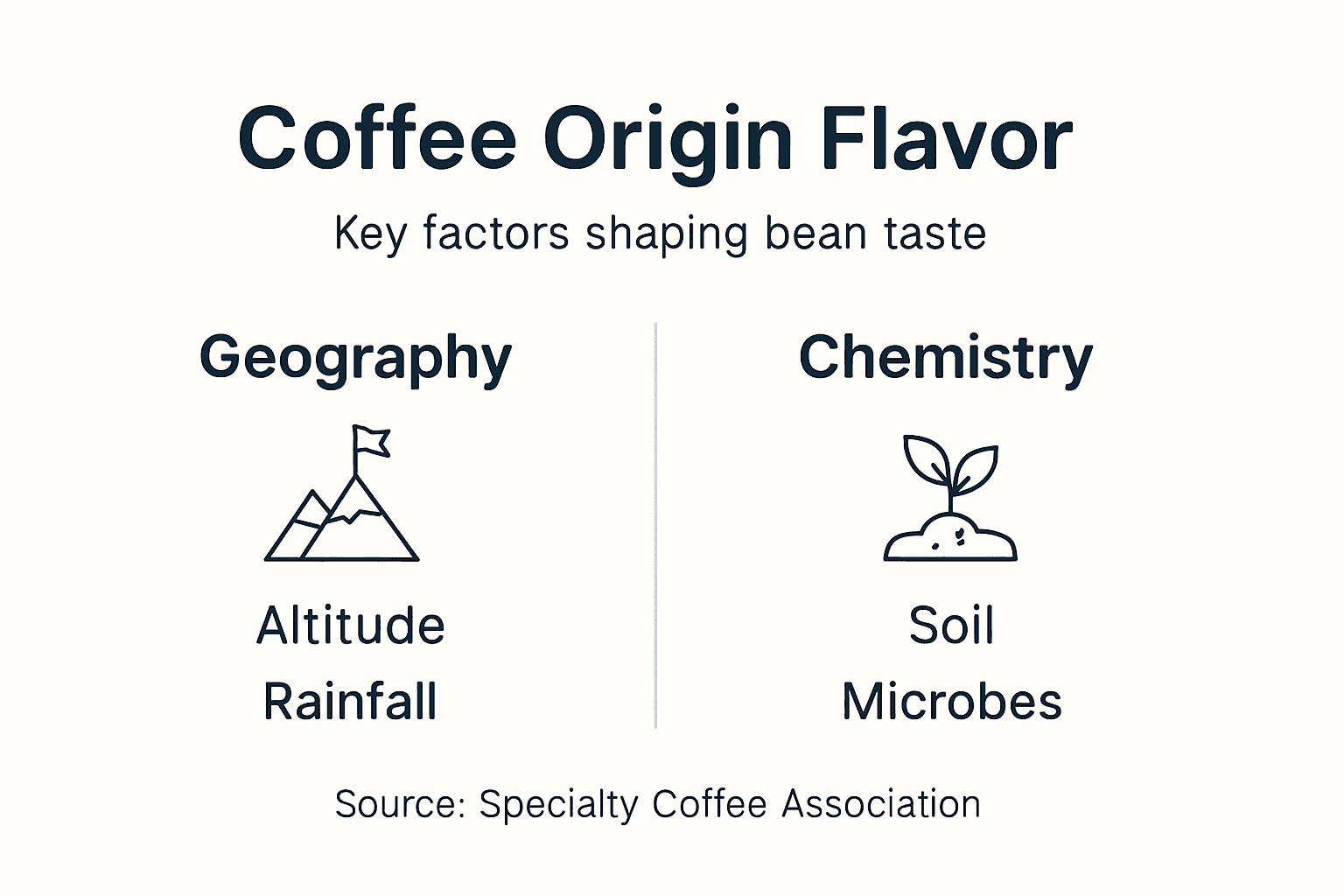
For eco-conscious coffee lovers, origin also connects you to the growers, farming practices, and environmental stewardship of specific regions. You’re not just buying a product; you’re supporting a place and its people.
Common Misconceptions That Miss the Mark
Here’s what coffee drinkers often get wrong:
- “Brazilian coffee is always heavy and earthy” – Region matters more than country. Brazilian beans from different altitudes taste vastly different
- “Single-origin means one farm” – It means beans from one geographic origin, often combining multiple farmers in that region
- “Darker roasts reveal the true origin flavor” – Roasting actually masks origin characteristics; lighter roasts show more terroir
- “All Ethiopian coffee tastes floral” – Flavor varies dramatically by altitude, processing method, and specific growing region
- “Origin is just marketing hype” – Origin directly affects acidity, body, sweetness, and aromatics in measurable ways
Origin isn’t just where coffee comes from—it’s the complete story of climate, elevation, soil, and culture that creates the beans in your cup.
The Real Science Behind Origin Flavor
When beans grow at higher altitudes, they develop more slowly. This extended growing season creates more complex flavor compounds and higher acidity. Beans from 1,200 meters taste completely different from those at 2,000 meters, even in the same region.
Rain timing, humidity, and temperature fluctuations during harvest season affect sugar development in the cherry. Processing method—how quickly farmers remove the fruit from the bean—intensifies or mellows certain flavor notes specific to that origin.
This is why understanding single-origin coffee’s unique taste and impact transforms your entire brewing experience. You move from generic “coffee taste” to understanding the distinct characteristics of Kenyan peach-forward notes versus Indonesian chocolate undertones.
Why This Matters for Your Brewing
When you understand origin, you stop brewing coffee randomly. You choose brewing temperatures, water ratios, and grind sizes based on the bean’s actual characteristics, not guessing.
An acidic Ethiopian bean needs different treatment than a balanced Colombian bean. Understanding origin lets you extract exactly what makes that coffee special.
Pro tip: When buying single-origin beans, look for specific region names (not just “Ethiopia”) and altitude information on the label—these details tell you exactly what flavor profile to expect and how to brew for maximum flavor extraction.
How Terroir Shapes Coffee Flavor and Quality
Terroir is the complete picture of where coffee grows. It’s not just one factor but a complex interaction of geography, soil, climate, altitude, and local microbial communities that work together to shape your coffee’s taste.
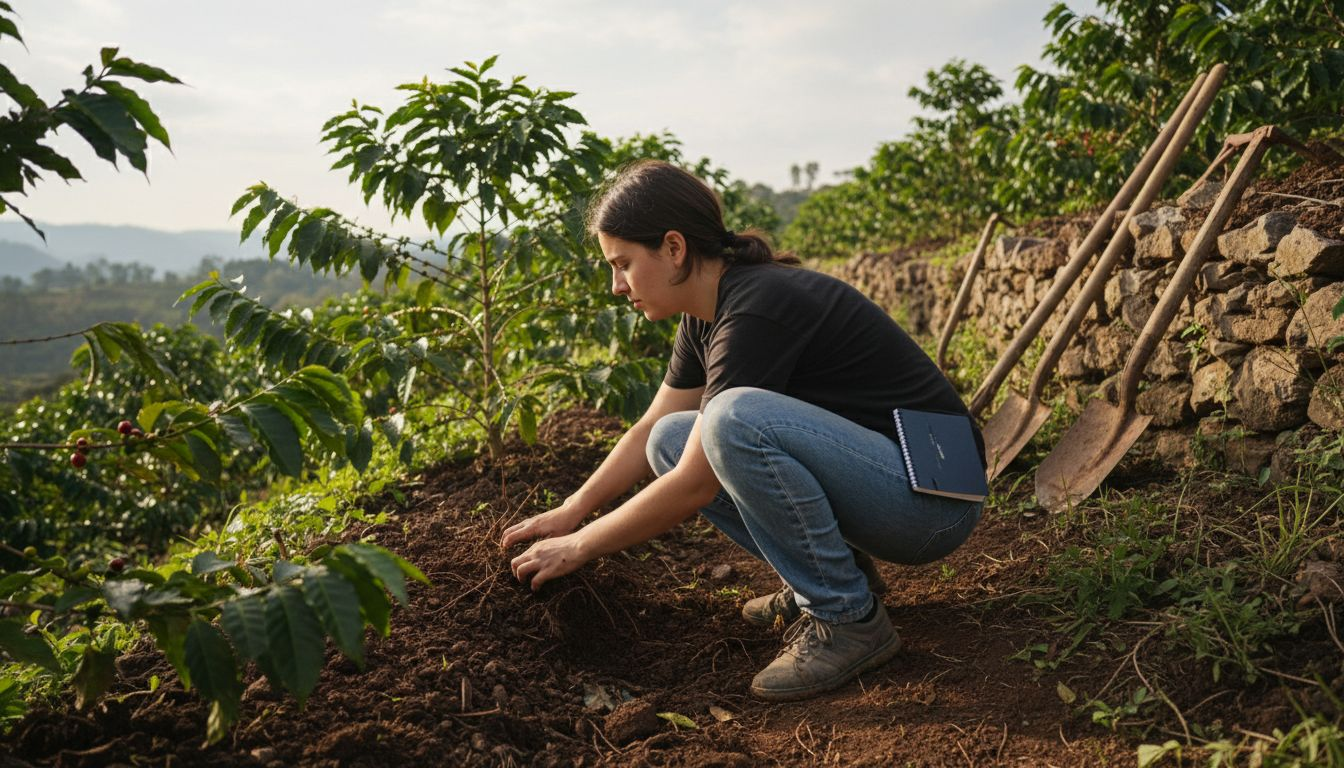
Think of terroir like fingerprints. Two coffee plants growing 500 meters apart will produce beans with noticeably different flavor profiles. The soil composition changes. Rainfall patterns shift. Microbial populations vary. Each element contributes to the final cup.
The Environmental Factors That Matter Most
Terroirn encompasses several critical elements:
- Altitude – Higher elevations mean slower bean development and more complex flavors
- Soil composition – Mineral-rich volcanic soil produces different notes than clay-based soil
- Climate and rainfall – Timing and amount of rain directly affect sugar development in the cherry
- Temperature fluctuations – Day-to-night temperature swings influence acid development
- Topography – Mountain slopes provide drainage and sun exposure variations
Each of these factors alone changes how the coffee plant grows. Combined, they create the unique flavor signature of a specific origin.
Here’s a quick comparison of how origin and terroir factors influence the coffee’s flavor profile:
| Factor | Typical Impact on Flavor | Example Region | Resulting Taste Character |
|---|---|---|---|
| Altitude | Increases acidity and complexity | Ethiopian Highlands | Bright, fruity notes |
| Soil Composition | Adds mineral and earthy tones | Indonesian volcanic soil | Deep, chocolate undertones |
| Climate/Rainfall | Enhances sweetness and body | Colombian Andes | Balanced and sweet |
| Microbial Community | Alters subtle flavor nuances | Central American farms | Distinct regional aroma |
The Microbial Component You Never See
Understanding terroir extends beyond environmental factors to include the invisible world of microbes living in the soil and on the coffee plant itself. These plant-associated microbiomes alter the biochemical composition of your coffee beans before they’re even harvested.
Bacteria, fungi, and other microorganisms in the soil break down nutrients and make them available to the plant roots. They produce compounds that influence flavor development deep inside the bean. This microbial ecosystem is unique to each location and contributes significantly to quality.
You can’t see these microbes, but you taste them in your cup.
Terroir is the convergence of what you can measure (altitude, rainfall, soil pH) and what you cannot see (billions of microorganisms) working together to create flavor.
How Terroir Translates to Your Taste Experience
Ecosystem factors create specific flavor compounds in the bean. Acidic volcanic soil produces beans with bright acidity. High-altitude regions with cool nights develop complex berry and floral notes. Wet climates encourage different microbial populations that create earthy undertones.
When you taste a Kenyan coffee’s red fruit characteristics or a Colombian coffee’s chocolate sweetness, you’re literally tasting the terroir expressed through flavor.
This is why understanding coffee flavor profiles becomes essential once you recognize terroir’s impact. The same varietal grown in different origins tastes completely different.
Why Premium Coffee Requires Terroir Awareness
Specialty coffee producers understand that visual and sensory cues evoking the terroir enhance premium perception and enjoyment. When you know a coffee comes from a specific 2,000-meter Ethiopian plateau with volcanic mineral soil, that knowledge changes how you experience the cup.
Eco-conscious coffee drinkers specifically seek out single-origin beans because terroir connects you to a real place with real people managing that ecosystem. You’re not drinking abstract “coffee”—you’re drinking the expression of a specific mountain, soil type, and farming community.
This connection between terroir and quality is why single-origin beans command premium prices. You’re paying for the specificity of place.
Pro tip: When tasting a new single-origin coffee, research the altitude and soil type of its origin, then intentionally taste for how those factors show up—bright acidity from altitude, mineral notes from volcanic soil—to deepen your appreciation of how terroir shapes flavor.
Arabica vs. Blends: Key Differences by Origin
Arabica and blended coffees are fundamentally different products, and origin plays a crucial role in understanding those differences. Arabica coffee originates from a single ancestral plant with low genetic diversity, while blends typically combine Arabica with Robusta varieties grown in different regions.
The distinction matters because genetics and growing conditions directly determine flavor, quality, and how origin influences what you taste in your cup.
Understanding Arabica’s Genetic Foundation
Arabica coffee originated from a single speciation event and has low genetic diversity compared to other major crops. This genetic uniformity influences Arabica’s flavor profiles and susceptibility to diseases.
Because all Arabica shares common genetic ancestry, its flavor characteristics remain relatively consistent across origins. An Ethiopian Arabica and a Colombian Arabica share fundamental taste DNA. But terroir—altitude, soil, climate—expresses that DNA differently in each location.
Arabica is known for its mild, aromatic qualities and is typically grown at higher altitudes under specific climatic conditions. These cultivation requirements mean Arabica thrives only in optimal environments, contributing to its superior flavor profile and premium price.
Why Blends Include Robusta and What That Changes
Blends introduce Robusta coffee (Coffea canephora), which offers higher caffeine content and bitter flavor notes. Robusta grows at lower altitudes and tolerates harsher conditions than Arabica.
Here’s how they differ:
- Caffeine content – Robusta has nearly double the caffeine of Arabica
- Flavor profile – Robusta tastes stronger, more bitter, with earthy or woody notes
- Growing conditions – Robusta thrives at lower elevations with less finicky climate requirements
- Cost – Robusta is significantly cheaper, which is why it appears in budget blends
- Origin impact – Robusta’s origin affects flavor less dramatically than Arabica’s does
When you buy a blend, you’re getting the Arabica’s origin-specific character diluted by Robusta’s consistent bitterness. This is why single-origin Arabica beans showcase terroir more clearly.
Arabica expresses its origin like a musician performing a composition; Robusta provides background notes that mask the performance.
How Origin Shapes Each Coffee Type Differently
Origin changes Arabica dramatically. A Kenyan Arabica from 2,000 meters tastes entirely different from a Brazilian Arabica at 1,200 meters. The role of Arabica beans in elevating coffee quality stems directly from this origin sensitivity.
Blends, by contrast, are formulated to achieve consistency. Roasters blend Arabica and Robusta in specific ratios to hit a target flavor profile. Origin still matters, but the blend formula overrides individual origin characteristics.
Eco-conscious coffee lovers choose single-origin Arabica because origin tells the complete story—where the beans grew, who cultivated them, and what the environment contributed to your cup.
Pro tip: Compare a single-origin Arabica with a blend side-by-side by brewing both at the same temperature and grind size, then taste how the Arabica highlights bright, specific origin notes while the blend tastes more uniform and bitter.
Transparency, Traceability, and Ethical Sourcing
Transparency and traceability are no longer luxury features in specialty coffee—they’re essential expectations. When you know where your coffee comes from and how it was grown, you connect directly to the farmer, the land, and the real impact of your purchase.
For eco-conscious coffee lovers, these elements transform a purchase into a conscious choice that supports sustainable farming and fair compensation for growers.
What Traceability Actually Means
Traceability means tracking coffee from farm to cup. Implementing traceability systems in coffee value chains enhances transparency and accountability, helping ensure sustainable production practices. You move from buying generic “Ethiopian coffee” to knowing the exact farm, altitude, harvest date, and farmer’s name.
This tracking empowers farmers, preserves biodiversity, and facilitates ethical sourcing. When roasters and retailers document this journey, you get proof that your coffee was grown responsibly.
Traceability creates accountability at every step. Farmers know their practices are visible. Exporters verify quality standards. Roasters confirm authenticity. This chain of visibility prevents deception and ensures quality.
How Transparency Levels the Playing Field
Historically, coffee farmers were isolated from information about their own product. They didn’t know what roasters paid for their beans or what consumers paid in shops. This information gap meant unfair pricing and minimal profit for growers.
Transparency and traceability create a more balanced coffee value chain by providing consistent and comparable data on production costs and value distribution. Data-sharing platforms and technical collaborations help level information asymmetries between smallholder farmers and larger supply chain actors.
When you buy transparent, traceable coffee, you’re supporting systems that:
- Enable farmers to negotiate fair prices based on actual data
- Show exactly how much money reaches growers versus intermediaries
- Help farmers understand market demand and quality expectations
- Support better business efficiency across the entire supply chain
- Foster equitable value sharing that improves farmers’ livelihoods
Ethical Sourcing Goes Beyond Fair Price
Ethical sourcing encompasses fair wages, environmental protection, and community investment. It’s not enough that farmers are paid fairly; ethical sourcing also ensures they use sustainable farming practices, protect water sources, and maintain biodiversity.
Transparency reveals whether coffee was grown using pesticides harmful to ecosystems or organic methods that preserve soil health. It shows whether child labor was involved or whether workers received fair compensation.
Ethical sourcing means you know your money supports real people, real land, and real environmental stewardship.
Why This Matters for Your Brewing Experience
When you choose traceable, ethical coffee, you’re not making a sacrifice. You’re upgrading your entire experience. You taste better coffee because ethical farmers invest in quality cultivation. You brew with purpose because you know the complete story behind your cup.
Eco-conscious drinkers report that understanding the origin story and ethical practices makes the coffee taste better. That’s not psychology—it’s the result of farmers who care enough about their land and craft to produce exceptional beans.
Pro tip: Before buying a coffee, ask the retailer or check the label for specific information: farmer name, altitude, harvest date, and certification (Fair Trade, Rainforest Alliance, or direct trade)—this transparency signals genuine ethical sourcing.
How Origin Influences Your Brewing Experience
Origin doesn’t just determine flavor—it determines how you should brew your coffee. A high-altitude Ethiopian bean demands different brewing parameters than a low-altitude Brazilian bean. Understanding these connections transforms brewing from guessing to precision.
When you match your brewing method to your coffee’s origin, you unlock flavors that stay hidden with generic approaches.
The Origin-Brewing Connection
The origin of coffee influences brewing techniques and the resulting flavor experience. Traditional brewing methods like Turkish coffee’s Ibrik method highlight the cultural connection between coffee origin and preparation style.
This relationship runs deep. Coffee plants adapted to specific climates develop distinct chemical profiles. These profiles respond differently to heat, water contact time, and extraction methods. High-acidity Ethiopian beans need different treatment than low-acidity Indonesian beans.
When you understand origin, you stop brewing one way and start adapting your technique to the bean’s actual characteristics.
How Bean Characteristics Shape Brewing Choices
Brewing methods and equipment significantly impact flavor profile, which is shaped by its origin. The variety of coffee bean—influenced by origin-specific conditions like altitude and soil—interacts with brewing parameters such as grind size, water temperature, and brew time.
Here’s what changes based on origin:
- High-altitude beans (bright acidity) – Require hotter water (195-205°F) to extract acidity fully
- Low-altitude beans (heavy body) – Benefit from slightly cooler water (185-195°F) to avoid over-extraction
- Natural-processed beans (fruity) – Need shorter brew times to emphasize delicate fruit notes
- Washed-processed beans (clean) – Can handle longer brew times for fuller extraction
- High-altitude beans (complex) – Demand finer grind sizes to maximize surface area contact
Origin determines bean density. Denser beans need finer grinds. Less dense beans work better with coarser grinds. Get the grind wrong, and you’re fighting against the bean’s actual structure.
Tasting the Origin Through Your Brewing Method
Water temperature and brew time are origin-specific levers. A Kenyan coffee with bright berry notes suffers with low-temperature brewing—you lose the acidity that defines its character. Pour-over methods work beautifully for Kenyans because hot water extracts those bright notes.
Indonesian coffees with earthy, chocolate notes benefit from immersion brewing like French press. The longer contact time brings out those deep, body-forward characteristics without over-extracting delicate acids that don’t exist in the first place.
Origin determines what your coffee can become in the cup. Brewing method decides whether you unlock that potential or waste it.
Building Your Origin-Specific Brewing Strategy
Eco-conscious coffee lovers appreciate that choosing single-origin beans means you can dial in brewing parameters specific to that bean’s actual chemistry. You’re not compromising for blends designed to hide origin character.
Start by researching your coffee’s altitude and processing method. These two factors tell you everything about expected acidity, body, and flavor intensity. Then adjust water temperature down 5 degrees and extend brew time by 10 seconds from your baseline.
Taste, adjust, repeat. This intentional approach reveals flavors your coffee actually contains but standard brewing hides.
Pro tip: Start with your coffee’s altitude—if it’s above 2,000 meters, use water near boiling (200-205°F); if below 1,200 meters, drop to 185-190°F—then taste and adjust by 5-degree increments until flavors brighten without becoming bitter.
Use this table to guide brewing choices based on your coffee’s origin characteristics:
| Origin Trait | Best Brew Method | Water Temp Range | Flavor Extraction Focus |
|---|---|---|---|
| High-altitude, bright beans | Pour-over | 200-205°F | Highlight acidity, aroma |
| Low-altitude, heavy beans | French press | 185-195°F | Boost body, earthy notes |
| Natural process, fruity | Aeropress | 190-200°F | Preserve delicate fruit |
| Washed process, clean | Drip or Chemex | 195-205°F | Maximize clarity, sweetness |
Discover the True Flavor of Coffee Origin with House Coffee
Unlock the full potential of your coffee experience by selecting from our carefully curated collection of Specialty Coffee single-origin Arabica beans. Understanding how origin shapes flavor, acidity, and aroma allows you to appreciate every cup on a deeper level. Whether you seek bright Ethiopian highland notes or rich volcanic Indonesian undertones, our ethically sourced coffees offer a transparent connection to the farmers and terroir behind each harvest.
Don’t settle for generic blends that mask origin characteristics. Elevate your brew with premium beans matched to your taste and brewing style. Visit House Coffee today to explore our unique single-origin offerings and complement your selection with expertly designed Brewing Essentials that help you extract the perfect cup every time. Experience coffee as it was meant to be—authentic, bright, and deeply connected to place. Take your next step toward coffee mastery now.
Frequently Asked Questions
What does coffee origin mean?
Coffee origin refers to the geographic location and environmental conditions where coffee plants grow, encompassing the specific region, altitude, climate, and soil composition that influence the flavor profile of the coffee.
How does origin affect the taste of coffee?
Origin affects the flavor of coffee through chemical reactions influenced by factors like altitude, soil composition, and climate. Higher altitudes generally lead to more complex flavors and acidity, while different soil types provide various mineral notes.
What is the difference between single-origin coffee and blends?
Single-origin coffee comes from one specific geographic location or region, highlighting its unique flavor characteristics, whereas blends combine beans from multiple origins (including possible blends with Robusta) for a more uniform taste, often diluting individual flavor profiles.
How can I brew coffee to enhance its origin flavors?
To unlock the flavors tied to coffee’s origin, adjust your brewing parameters based on the coffee’s altitude and processing method. For example, high-altitude beans require hotter water and finer grinds to enhance acidity, while low-altitude beans do better with cooler water and coarser grinds.
Recommended
-
Posted in
en, why origin matters in coffee