Role of Coffee Origin – Elevating Flavor and Ethics

Choosing coffee is about more than just the country printed on the bag. The true story of your bean includes the exact farm location, the elevation it was grown at, and the intricate combination of soil and climate that shaped its flavor. For urban coffee lovers eager to craft the perfect cup at home, understanding coffee origin brings you closer to premium, single-origin Arabica beans and the real people and places behind them. Discover how origin impacts quality, supports sustainability, and connects you directly to the world’s best cups.
Table of Contents
- Defining Coffee Origin And Its Importance
- Influence Of Origin On Coffee Flavor Profiles
- Single-Origin Vs. Blends: Key Differences
- What Makes Single-Origins Special
- When Blends Make Sense
- Ethical Sourcing And Sustainable Origins
- Choosing The Right Origin For Home Brewing
- The Origin Selection Process
Key Takeaways
| Point | Details |
|---|---|
| Importance of Coffee Origin | Understanding coffee origin helps trace flavor characteristics, quality, and sustainability practices. It influences how beans develop unique flavors based on geographical and environmental factors. |
| Single-Origin vs. Blends | Single-origin coffees highlight specific terroir-driven flavors and offer full traceability, while blends prioritize consistency and complex flavor profiles. Choose based on desired exploration versus reliability. |
| Ethical Sourcing | Opting for ethically sourced coffees supports fair practices and sustainable farming, directly impacting farmers’ livelihoods and environmental health. Look for certifications and direct trade connections. |
| Brewing Method Alignment | Select coffee origins that align with your brewing method to enhance flavor. Understanding the relationship between origin characteristics and your equipment can elevate your coffee experience. |
Defining Coffee Origin and Its Importance
Coffee origin refers to the specific geographical location, altitude, climate, and soil conditions where coffee plants are grown, combined with the plant species and variety cultivated in that region. Think of it like wine terroir, but for coffee. The origin encompasses far more than just a country name on a bag. It includes the precise elevation of the farm, the annual rainfall patterns, the mineral composition of the soil, and the microclimates that shape how coffee plants develop and produce beans. When you’re evaluating specialty coffees, origin tells you the complete story of where your beans came from and what environmental factors influenced their growth.
While over 100 coffee plant species exist globally, only two dominate commercial production: Coffea arabica and Coffea canephora (robusta). Identifying these species and varieties is foundational to understanding origin because different species and cultivars thrive in different regions and express distinct flavor profiles. Arabica beans, which make up roughly 60-70% of global coffee production, require specific growing conditions and tend to produce the complex, nuanced flavors that specialty coffee enthusiasts pursue. The origin determines not just the flavor you’ll experience, but also the bean’s resilience to disease, its yield potential, and its compatibility with your brewing method at home. For urban coffee lovers seeking premium single-origin Arabicas, knowing the origin ensures you’re getting beans bred and grown specifically for the quality characteristics you value.
Understanding origin matters enormously for traceability and sustainability. When you purchase coffee with clear origin information, you’re buying accountability. A specific origin designation means the beans came from a traceable farm or cooperative, not a blended lot from multiple unknown sources. This traceability directly supports ethical sourcing practices because it creates a direct chain from grower to your cup. Farmers who specialize in single-origin production have strong incentives to maintain high standards since their reputation and income depend on consistent quality. Additionally, the historical lineage of coffee plants and their genetic adaptation continues to inform modern cultivation practices. Understanding how coffee species evolved in their native Ethiopian environment, for instance, helps growers and breeders develop cultivars better suited to climate change pressures and disease resistance. When you choose single-origin beans from House Coffee’s collections, you’re participating in this global conversation about sustainable cultivation and genetic preservation.
Origin also dramatically impacts flavor expression. Ethiopian Yirgacheffe beans taste distinctly different from Colombian Geishas, which taste nothing like Kenyan AA varieties. These differences aren’t accidents of marketing, they’re products of altitude, rainfall timing, soil minerals, and the specific cultivars selected by generations of farmers in each region. A bean grown at 6,000 feet in volcanic soil develops completely different chemical compounds than one grown at 4,000 feet in clay soil, even if they’re the same species. This is why specialty roasters obsess over origin and why purchasing directly from sources like House Coffee that emphasize origin stories matters. You’re not just buying coffee beans, you’re investing in the specific sensory experience that only that geographical and agricultural context can create.
Pro tip: When selecting your next coffee, pay attention to the elevation range and harvest season listed alongside the origin name. Higher elevations (above 5,000 feet) and specific harvest months indicate farms with exacting growing standards and precise processing control, which almost always translates to superior flavor clarity in your cup.
Influence of Origin on Coffee Flavor Profiles
The flavor you experience in your cup is not random. It’s a direct result of where your coffee was grown, how the climate treated the plants throughout their growing season, and what minerals the soil fed to the roots. When you taste a coffee from different origins, you’re literally tasting geographical expression. African coffees tend to deliver fruity and floral notes that jump off your palate, while South American coffees typically offer nutty and chocolatey characteristics that feel warmer and rounder. These flavor differences aren’t marketing speak or roaster imagination. They stem from real, measurable differences in how coffee plants develop in different environments. The altitude at which beans grow, the rainfall patterns they experience, the temperature fluctuations between day and night, and the specific mineral content of the soil all shape the chemical compounds that form inside the bean. These compounds are what you’re actually tasting when you brew that morning cup.

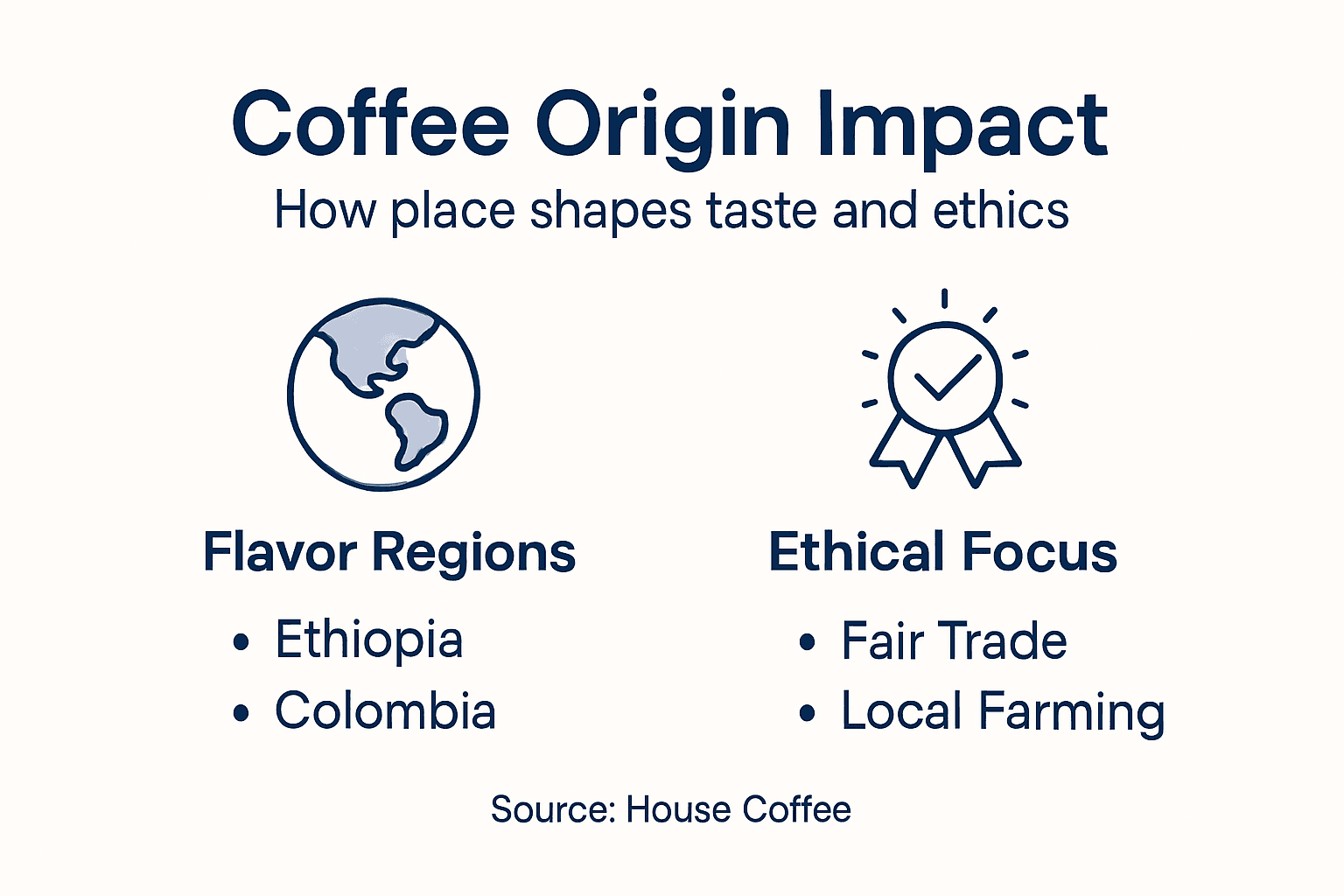
The science behind origin flavor is surprisingly complex. Different origins create distinct volatile and non-volatile compounds that directly influence how the roasted beans taste and smell. A bean grown in volcanic soil will develop different chemistry than one grown in clay soil, even if they’re the same varietal planted at the same altitude. Ethiopian Yirgacheffe beans, for example, develop their characteristic bright acidity and berry-like notes because of the specific combination of altitude (usually 5,000 to 7,000 feet), seasonal rainfall patterns, and the Cambisol soil type common in that region. Colombian coffees from the Huila region taste nutty and balanced because of their 4,500 to 6,000-foot elevation and the particular climate dynamics of that area. Kenyan AA beans achieve their wine-like qualities and black currant notes through completely different terroir conditions. These aren’t coincidences. Each region has developed a flavor signature that comes directly from its environmental conditions. When you’re purchasing from House Coffee’s collections, you’re choosing beans specifically because of these origin-driven flavor characteristics, not despite them.
Understanding how origin shapes flavor helps you make better purchasing decisions and brew smarter at home. If you love bright, acidic coffees with fruity notes, you’ll want to focus on East African origins like Ethiopia, Kenya, or Rwanda. If you prefer smoother, more chocolatey cups with body, Colombian, Brazilian, or Central American coffees deliver that profile more consistently. The altitude range listed on your bag tells you something important about flavor potential. Higher altitude coffees (above 5,500 feet) generally develop more complexity and acidity because the plants grow more slowly in the cooler mountain air, allowing sugars and acids to accumulate. This translates to more interesting flavor when you brew it. Processing method also plays a role in how origin flavor expresses itself. A washed Ethiopian coffee tastes different from a natural-processed Ethiopian coffee, but both will still carry that Ethiopian character underneath. The origin provides the foundation, and processing adds another layer of influence on top.
Here is a summary of how coffee origins influence flavor profiles:
| Region | Typical Flavor Notes | Altitude Range | Soil Type Impact |
|---|---|---|---|
| East Africa | Fruity, floral, bright | 5,000–7,000 feet | Volcanic, Cambisol adds acidity |
| South America | Nutty, chocolatey, balanced | 4,500–6,000 feet | Clay, loamy enhances sweetness |
| Central America | Sweet, mild, clean | 3,500–5,500 feet | Volcanic promotes clarity |
| Southeast Asia | Earthy, spicy, full-bodied | 2,000–4,000 feet | Rich volcanic deepens body |
Here’s what makes this practical for your home brewing routine. The next time you’re considering which single-origin Arabica to purchase, read the origin description carefully. Look for specific information about altitude, region within the country, and any flavor notes listed by the roaster. Those notes aren’t randomly assigned. They come from someone who actually tasted the coffee and identified the flavor compounds that origin created. If the description mentions “fruity,” that origin genuinely will taste fruitier than an origin described as “nutty.” Start building your palate by trying coffees from different regions side by side when possible. Brew them the same way using the same equipment so the only variable is origin. You’ll quickly discover which regional flavor profiles resonate with your preferences, and you’ll never buy coffee randomly again.
Pro tip: Purchase a coffee from a different origin region than your usual choice this month, then brew it using your standard method and pay attention to the first sip, the middle notes as it cools, and the finish. This deliberate tasting approach trains your palate to recognize how origin shapes flavor in real time.
Single-Origin vs. Blends: Key Differences
When you walk into a specialty coffee shop or browse House Coffee’s collections, you’ll encounter two fundamental categories: single-origin coffees and blends. Understanding the difference between them matters because it shapes your entire coffee experience. A single-origin coffee comes from beans harvested from a specific farm, region, or country, preserving the distinct characteristics of that particular location. You know exactly where the coffee grew, what altitude it was harvested at, and how that geography influenced the final flavor in your cup. With a blend, the roaster combines beans from multiple origins to create something intentionally different from what any single origin could offer alone. Think of single-origin as a solo artist expressing their unique voice, while blends are orchestrated collaborations designed to hit specific flavor targets.
The practical differences between these two categories are significant. Single-origin coffees showcase unique terroir-driven flavors and offer complete traceability, making them the choice for coffee drinkers who want to taste exactly where their coffee comes from and support specific growers or regions. You might taste Ethiopian floral notes one month, then switch to Kenyan wine-like characteristics the next month, and experience genuine seasonal variation. This diversity is part of the appeal. Single origins also tell a story. When you purchase a coffee from a specific farm in Colombia or a cooperative in Rwanda, you’re connecting directly to the people who grew your coffee. For urban specialty coffee enthusiasts seeking premium Arabicas, this traceability aligns perfectly with ethical sourcing values and the desire to support sustainable coffee practices. Blends, by contrast, prioritize consistency and complexity over geography. A roaster might combine a bright African coffee with a smooth South American coffee and a balanced Central American coffee to create a flavor profile that tastes the same every time you brew it, regardless of seasonal variations or harvest differences. Blends also allow roasters to manage costs more effectively by balancing expensive, high-altitude single origins with more affordable options.
Here’s where your preferences come into play. If you love exploration and want to taste the natural expression of different regions, single-origin coffees are your path. You’ll experience seasonal shifts, discover new flavor profiles, and build a sophisticated palate by comparing coffees side by side. If you prioritize reliability and want a coffee that tastes the same whether you brew it in January or July, a well-crafted blend delivers that consistency. Many specialty roasters create signature blends that become beloved standards. Some urban coffee enthusiasts maintain both in their rotation, brewing single origins on weekends for mindful tasting sessions and relying on a trusted blend for weekday reliability. The key insight is that neither approach is objectively better. Single origins align more closely with the specialty coffee movement’s emphasis on transparency and quality, which resonates with the House Coffee audience. But blends serve a legitimate purpose for drinkers seeking particular flavor profiles or consistency without seasonal surprises. Consider your lifestyle and how much coffee exploration energizes you. If you’re someone who enjoys experimenting with different origins and noticing subtle flavor differences, single-origin Arabicas from House Coffee’s Gold, Diamond, or Limited Edition collections will reward your attention. If you prefer mastering one coffee and brewing it perfectly, a high-quality blend might serve you better.
Compare single-origin and blended coffees at a glance:
| Aspect | Single-Origin | Coffee Blend |
|---|---|---|
| Traceability | Full farm-to-cup visibility | Sources mixed from several regions |
| Flavor Profile | Unique, terroir-driven | Consistent, balanced taste |
| Seasonal Impact | Taste changes by harvest | Blends minimize seasonal shifts |
| Price Range | Often premium | Broad, sometimes more affordable |
What Makes Single-Origins Special
Single-origin coffees connect you directly to place. When you purchase an Ethiopian Yirgacheffe from House Coffee, you’re tasting what that specific region and altitude produced during that harvest. The flavor profile reflects everything about that terroir. You’ll notice seasonal differences year to year because weather varies, affecting how the beans develop. This transparency and traceable quality are exactly what specialty coffee enthusiasts value. Single origins also command premium pricing because exceptional single-origin lots are genuinely scarce and their unique characteristics justify higher costs.
When Blends Make Sense
Blends offer something different. A roaster might create a blend specifically designed for espresso, balancing body, sweetness, and crema production across multiple origins. Another blend might target pour-over brewing, emphasizing clarity and complexity. Blends provide more predictable results throughout the year because seasonal variations in individual origins get balanced out by the combination. For coffee drinkers who want excellent coffee without thinking too much about origin differences, a well-made blend is genuinely the right choice.
Pro tip: Start with a single-origin Arabica from a region that matches your flavor preferences, then brew it alongside a well-regarded blend using identical equipment and brewing technique. Compare the two directly and pay attention to which one you reach for during your regular weekday mornings versus which one deserves your weekend attention.
Ethical Sourcing and Sustainable Origins
When you purchase coffee, your money flows backward through a complex supply chain. It passes through importers, distributors, roasters, and eventually reaches the farmer who actually grew your beans. Ethical sourcing means ensuring that money reaches farmers fairly, that growing practices protect the environment, and that transparency exists at every step. This matters deeply because coffee farming is one of the world’s most economically challenging agricultural sectors. Many farmers operate on razor-thin margins, struggle with climate instability, and lack market access that would let them sell directly at fair prices. Sustainable origins go beyond just paying slightly more. They represent a commitment to practices that keep farms viable for decades, protect ecosystems, and create conditions where farming families can actually thrive rather than merely survive. When you choose ethically sourced coffees from House Coffee, you’re actively participating in reshaping how the coffee industry operates at its foundation.
Ethical sourcing addresses multiple interconnected challenges simultaneously. Sustainable coffee practices focus on farmer prosperity, climate resilience, and supply chain transparency across the entire industry. A coffee farm practicing sustainable methods might implement shade-grown cultivation, where coffee plants grow under native tree canopies rather than in monoculture clearings. This approach preserves biodiversity, prevents soil erosion, maintains water quality in local watersheds, and actually produces more flavorful coffee because the plants develop more slowly under partial shade. Farmers also benefit through carbon sequestration credits and improved long-term soil health. Certification schemes like Fair Trade, Rainforest Alliance, and Specialty Coffee Association standards provide third-party verification that farms meet specific sustainability criteria. These certifications aren’t perfect, but they create accountability mechanisms. When you see certification logos on House Coffee’s single-origin offerings, they represent real audits and ongoing compliance requirements. Beyond certifications, direct relationships between roasters and farmers matter enormously. House Coffee’s emphasis on origin stories reflects this commitment. When you read about a specific cooperative in Rwanda or a family farm in Colombia, you’re learning about people the roasting company maintains direct relationships with, not anonymous suppliers in a global commodity market.
Sustainability in coffee production encompasses three fundamental dimensions. Environmental sustainability means protecting forests, water resources, and soil health. Social sustainability focuses on fair wages, safe working conditions, and community development. Economic sustainability ensures farms remain financially viable so farmers aren’t forced to abandon coffee cultivation or expand into environmentally destructive practices. Successful ethical sourcing integrates environmental protection with improved farmer livelihoods through participatory approaches that give farmers genuine agency in supply chain decisions. This represents a significant shift from older models where corporations dictated terms to powerless producers. Modern ethical sourcing increasingly involves farmer cooperatives and community-led governance structures where growing communities have voices in pricing, quality standards, and sustainability practices. When you purchase single-origin Arabicas specifically selected for their ethical sourcing credentials, you’re supporting this shift toward more equitable relationships.
Here’s what this means for your coffee purchases in practical terms. Start by reading product descriptions on House Coffee’s website carefully. Look for specific origin information, certification badges, and any mention of direct relationships with farms or cooperatives. Products in the Limited Edition or Diamond collections often highlight unique sustainability stories because these premium tiers align with specialty coffee values. The higher price for ethically sourced coffees reflects real costs. Shade-grown cultivation requires more skilled management than industrial monoculture farming. Direct trade relationships involve significant relationship-building and quality control investments by roasters. Fair pricing means farmers actually receive a living wage rather than commodity market minimums. When you pay that premium, you’re funding genuine sustainability improvements, not just marketing language. Consider establishing a regular purchasing relationship with House Coffee rather than buying occasional single bags. Consistent customer relationships help roasters maintain stable direct trade partnerships with farmers, which strengthens the entire supply chain. Your regular purchases create predictable demand that lets farmers invest in their operations with confidence.
Pro tip: When ordering single-origin coffee, check the roast date on the package and plan your purchase for beans roasted within the last two weeks, prioritizing those from cooperatives or farms explicitly named in the product description over those with vague sourcing information.
Choosing the Right Origin for Home Brewing
Selecting the right coffee origin for your home setup requires understanding three interconnected factors: your brewing equipment, your flavor preferences, and your lifestyle. Not every origin performs equally well with every brewing method. A light-bodied Ethiopian natural process coffee might shine through a pour-over or Aeropress where clarity matters, while a full-bodied Colombian works beautifully in French press or espresso. The origin you choose should align with how you actually brew coffee at home, not with what sounds exotic or prestigious. This means taking honest inventory of your equipment and habits. Do you brew one cup at a time using pour-over? Do you make espresso? Are you a French press devotee? Does your morning routine have room for 10 minutes of focused brewing, or do you need something fast and reliable? Your answers to these questions narrow the field significantly. Then overlay your flavor preferences. Are you drawn to bright, acidic coffees with fruity notes, or do you prefer smooth, chocolatey cups with body? Origin directly determines these characteristics, so understanding what you actually enjoy is foundational.
Start by identifying which flavor profile genuinely excites you. Consider keeping a simple log of coffees you’ve enjoyed, noting whether they were fruity, floral, nutty, chocolatey, spicy, or balanced. After a few weeks, patterns emerge. Maybe you notice you consistently gravitate toward African coffees because their brightness energizes your mornings. Maybe you discover you actually prefer the comforting sweetness of South American origins over the complexity of East African beans. This isn’t about chasing trends or impressing other coffee enthusiasts. It’s about recognizing what makes your coffee experience genuinely better. Identifying single-origin beans that match your preferences becomes much easier once you understand your own taste profile. Origin stories can guide you. If you love Ethiopian coffees, explore different regions within Ethiopia. Yirgacheffe offers fruity, floral complexity. Sidamo brings winey, berry-forward characteristics. Harrar presents wine-forward profiles with heavy body. All are Ethiopian, but each region expresses terroir distinctly. Similarly, Colombian coffees span the country, with origins like Geisha offering bright notes while others deliver classic balanced profiles. House Coffee’s product descriptions and origin information make these distinctions clear, helping you navigate options with confidence.
Your brewing method should guide origin selection. Espresso demands coffees with enough body and sweetness to cut through milk if you’re making cappuccinos or lattes, or enough complexity to stand alone in shots. Brazilian and Colombian origins excel here. Pour-over and Aeropress brewing highlight clarity and nuance, making lighter-roasted East African origins magnificent choices. French press brewing extracts heavier oils and compounds, favoring fuller-bodied coffees that won’t taste thin in the final cup. Cold brew, which steeps for 12 to 24 hours, benefits from origins that develop sweetness without over-extraction, making versatile Central American coffees reliable performers. Moka pot brewing, which operates similarly to espresso, also favors body-forward origins. Turkish coffee wants very finely ground beans, and anything with good acidity and complexity works beautifully. Your equipment isn’t restrictive. It’s liberating because it helps you choose origins that will genuinely perform well in your setup rather than requiring you to adjust your brewing method to suit a coffee. Once you establish preferences, consider building a small rotation. Many specialty coffee enthusiasts maintain three or four regular single-origin coffees that they rotate through. This approach lets you develop deep familiarity with each coffee’s flavor development as beans age from roasting day, helps you discover how seasonal variations affect specific origins year to year, and prevents palate fatigue from drinking the same coffee daily. Start with House Coffee’s Gold collection for approachable, well-balanced single origins. Move into the Diamond collection once you’ve developed clearer preferences and want more distinctive, premium expressions of origin. The Limited Edition offerings provide opportunities to explore rare microlots and unusual processing methods.
The Origin Selection Process
Break down your decision into manageable steps. First, consider your primary brewing method and identify three origins historically known to perform well in that equipment. Second, read the flavor descriptions House Coffee provides for each origin, noting which notes appeal to you. Third, check altitude information. Higher altitude coffees offer more complexity. Lower altitude origins deliver more straightforward sweetness. Fourth, examine the roast date and order beans roasted within the previous two weeks for optimal freshness. Finally, brew your selection intentionally, taking notes on how the coffee develops as it cools. This approach transforms coffee shopping from guessing to informed decision-making.
Pro tip: Order two different single-origin coffees from regions you’ve never tried, then brew them using identical equipment and technique on the same morning, tasting them side-by-side while taking notes on acidity, body, and flavor notes to quickly build your taste vocabulary and discover your true preferences.
Discover the True Power of Origin with House Coffee
Understanding the role of coffee origin is the key to unlocking exceptional flavor and supporting ethical sourcing practices. If you are seeking to elevate your home brewing experience with specialty, single-origin Arabica coffees precisely chosen for their distinct terroir and sustainable backgrounds you have come to the right place. House Coffee offers thoughtfully curated selections like the Gold Collection and the Diamond Collection that highlight unique origin stories and premium quality. Each coffee connects you directly to the dedicated farmers and the lands they cultivate making every cup a meaningful experience.
Experience the difference for yourself by exploring our collections at House Coffee. Take control of your coffee journey today by choosing freshly roasted, ethically sourced single-origin beans tailored to your flavor preferences and brewing method. Visit our site now and start savoring unparalleled coffees that honor both taste and sustainability.
Frequently Asked Questions
What is coffee origin and why is it important?
Coffee origin refers to the specific geographical location, altitude, climate, and soil conditions where coffee plants are grown. It influences flavor profiles, plant resilience, and provides traceability for ethical sourcing.
How does coffee origin affect flavor profiles?
Coffee origin significantly impacts flavor due to varying environmental conditions like altitude, soil type, and climate. For example, beans grown at higher elevations often have more complexity and acidity, while different soil types contribute distinct flavor notes.
What is the difference between single-origin coffee and blends?
Single-origin coffee comes from a specific farm or region, showcasing unique flavors and full traceability. Blends combine beans from multiple origins to create a consistent flavor profile, often prioritizing balance over distinct geographical characteristics.
How can I choose the right coffee origin for my brewing method?
Consider your brewing equipment and personal flavor preferences. For instance, lighter-bodied coffee may work best in pour-over methods, while full-bodied varieties excel in espresso or French press. Understanding these relationships helps enhance your coffee experience.
Recommended
- Role of Arabica Beans: Elevating Coffee Quality and Sustainability – House Coffee
- Role of Arabica Beans: Elevating Coffee Quality and Sustainability – House Coffee
- How to Identify Single Origin Beans for Premium Coffee – House Coffee
- How to Identify Single Origin Beans for Premium Coffee – House Coffee
-
Posted in
role of coffee origin