Role of Arabica Beans: Elevating Coffee Quality and Sustainability

Nearly 60 percent of the world’s coffee is Arabica, yet many American connoisseurs still fall for myths about what sets these celebrated beans apart. The search for ethically sourced, premium coffee has never been more important for those who demand flavor adventure and genuine cultivation stories at home. This guide uncovers the real distinctions behind Arabica beans, dispels common misconceptions, and highlights what truly matters for a refined, authentic coffee experience.
Table of Contents
- Defining Arabica Beans And Common Misconceptions
- Comparing Arabica With Other Bean Varieties
- Key Characteristics Influencing Coffee Quality
- Impact Of Origin, Processing, And Roasting
- Ethical Sourcing And Sustainability Practices
- Choosing Arabica For Premium Coffee Experiences
Key Takeaways
| Point | Details |
|---|---|
| Arabica Coffee Significance | Arabica coffee is the most refined variety, making up 60% of global production and offering a diverse flavor profile. |
| Misconceptions about Arabica | Not all Arabica coffees taste the same; flavor varies by growing conditions, and pricing is influenced by multiple factors. |
| Impact of Origin and Roasting | The origin, processing, and roasting methods significantly shape the final flavor and quality of coffee. |
| Sustainability in Coffee Production | Ethical sourcing and sustainability practices are essential for supporting farming communities and protecting the environment. |
Defining Arabica Beans and Common Misconceptions
Arabica coffee represents the most refined and premium species of coffee beans, originating in the forests of Ethiopia. This exceptional plant species accounts for approximately 60% of global coffee production, offering a sophisticated flavor profile that distinguishes it from other coffee varieties. Unlike its counterpart Robusta, Arabica beans are characterized by their nuanced taste, lower acidity, and more complex aromatic characteristics.
The botanical origins of Arabica coffee trace back hundreds of thousands of years, resulting from a unique hybridization between Coffea canephora and Coffea eugenioides. Endangered native populations exist primarily in Ethiopian and Yemeni forests, highlighting the critical importance of conservation efforts for maintaining this extraordinary coffee species. The plant itself grows as a small tree, producing white fragrant flowers and vibrant red fruit berries that contain the prized coffee beans.
Several common misconceptions about Arabica beans persist among coffee enthusiasts. Many believe all Arabica coffees taste identical, when in reality, flavor profiles can dramatically vary based on specific growing conditions, altitude, soil composition, and processing methods. Another widespread myth suggests that Arabica beans are universally more expensive, which overlooks the significant variation in pricing driven by regional production costs, farming practices, and bean quality.
Pro tip: When selecting Arabica beans, focus on the specific region of origin and look for single-origin offerings that provide detailed information about the bean’s cultivation and processing to ensure the highest quality experience.
Comparing Arabica With Other Bean Varieties
Coffee enthusiasts recognize distinct differences between Arabica and Robusta varieties, which fundamentally shape the global coffee experience. Arabica beans stand out for their superior flavor profile, characterized by a smoother, sweeter taste with more complex aromatic notes. In contrast, Robusta beans deliver a more intense, bitter flavor and significantly higher caffeine content, making them less preferred among discerning coffee drinkers.
Coffee bean varieties showcase remarkable diversity, with each type offering unique characteristics. Arabica varieties range from Bourbon to Catimor, demonstrating incredible adaptability to different growing conditions. Some varieties like Catimor excel in yield and disease resistance, while others such as Bourbon are prized for exceptional cup quality at high altitudes. The botanical differences extend beyond taste - Arabica beans are typically flatter and more elongated, while Robusta beans appear rounder and more compact.
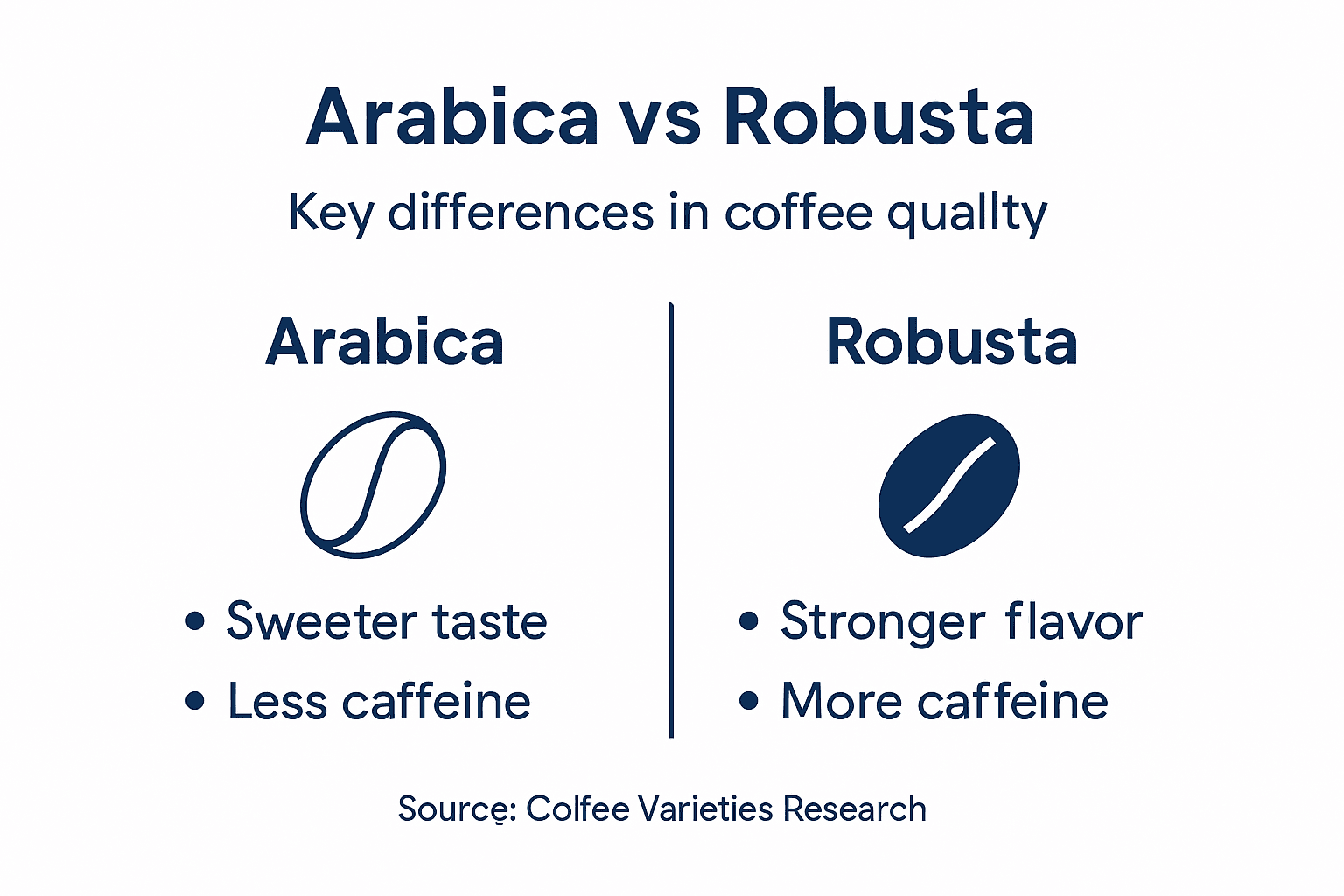
The global coffee market overwhelmingly favors Arabica, with approximately 60% of production dedicated to this premium species. This preference stems from Arabica’s nuanced flavor complexity, lower caffeine content, and more refined taste profile. Robusta, while less expensive to produce, is primarily used in instant coffee and espresso blends where its strong, bold characteristics can be strategically incorporated. Factors like growing altitude, soil composition, and processing methods further distinguish these bean varieties, creating a rich tapestry of coffee experiences.
Here’s a concise comparison of key differences between Arabica and Robusta coffee beans:
| Characteristic | Arabica | Robusta |
|---|---|---|
| Flavor Profile | Sweet, mild, nuanced | Strong, bitter, earthy |
| Caffeine Content | Lower (1-1.5%) | Higher (2-3%) |
| Bean Shape | Oval, flat, elongated | Rounder, more compact |
| Cultivation Altitude | High altitudes (up to 2000m) | Low-mid altitudes (up to 800m) |
| Resistance to Disease | Lower | Higher |
| Market Usage | Specialty, premium blends | Instant, mass-market |
Pro tip: When exploring coffee varieties, compare beans from different regions and processing methods to discover the subtle flavor variations that make each coffee unique.
Key Characteristics Influencing Coffee Quality
Chemical transformations during roasting are fundamental in determining coffee’s ultimate flavor profile and quality. Roasting represents a complex process where heat triggers intricate chemical reactions that develop the beans’ aromatic compounds, texture, and sensory characteristics. Precise temperature control and timing are critical, as they directly influence the development of nuanced flavor notes, acidity levels, and overall coffee complexity.
Coffee quality assessment involves multiple sophisticated parameters beyond simple taste evaluation. Green bean characteristics play a crucial role, with factors like particle size, bean density, and moisture content serving as key quality indicators. Chemical composition, including levels of chlorogenic acids and caffeine, provides additional insight into potential flavor depth and aromatic potential. Arabica beans consistently demonstrate superior quality markers compared to other varieties, reflecting their more refined genetic profile.
Post-harvest processing techniques significantly impact final coffee quality, with each stage presenting opportunities for flavor enhancement or degradation. Harvesting methods, drying processes, and storage conditions all contribute to the beans’ ultimate sensory experience. Arabica beans are particularly sensitive to these variables, requiring meticulous attention to preserve their delicate flavor nuances. Professional coffee graders evaluate these characteristics through comprehensive sensory assessments that examine aroma, body, acidity, and overall balance.
Pro tip: When selecting high-quality coffee, look beyond marketing claims and focus on specific origin details, processing methods, and roast dates to ensure an exceptional brewing experience.
Impact of Origin, Processing, and Roasting
Roasting dramatically transforms coffee’s chemical composition, creating the complex flavor profile that coffee enthusiasts cherish. Roasting temperature and duration are critical variables that determine the final sensory experience, influencing everything from aroma intensity to flavor complexity. Each stage of roasting triggers precise chemical reactions that develop the beans’ unique characteristics, removing undesirable compounds while concentrating desirable flavor molecules.
Coffee origin plays a pivotal role in defining potential flavor profiles, with geographical factors like altitude, soil composition, and climate directly impacting bean quality. Different processing methods - including washed, natural, and honey processing - further modify the beans’ inherent characteristics. Arabica beans are particularly sensitive to these variables, requiring nuanced handling to preserve their delicate flavor notes. Professional roasters carefully map each bean’s journey from origin to final roast, understanding how environmental and processing conditions interact to create distinctive taste experiences.

Roasting levels represent a critical dimension of coffee quality, with medium roasting offering the most balanced flavor profile. Light roasts preserve more of the bean’s original characteristics, while dark roasts develop deeper, more caramelized flavor notes. The optimal roasting approach depends on the specific bean’s origin, processing method, and intended flavor profile. Skilled roasters treat each batch as a unique expression of its geographical and botanical heritage, making subtle adjustments to unlock the beans’ maximum potential.
Below is a summary of factors that shape coffee quality at different stages:
| Stage | Key Factors | Influence on Quality |
|---|---|---|
| Farming | Altitude, soil, climate | Determines bean potential |
| Processing | Washed, natural, honey | Develops acidity and sweetness |
| Roasting | Temperature, duration | Creates signature flavor profile |
| Storage | Humidity, packaging | Preserves freshness and aroma |
Pro tip: Experiment with single-origin coffees from different roasting levels to discover the subtle flavor variations that reveal each bean’s unique character.
Ethical Sourcing and Sustainability Practices
Coffee sustainability initiatives represent a critical approach to transforming global agricultural practices and supporting vulnerable farming communities. Sustainable sourcing goes beyond simple economic transactions, creating comprehensive frameworks that address environmental conservation, social equity, and economic empowerment for coffee-producing regions. These initiatives recognize that truly ethical coffee production requires a holistic understanding of interconnected ecological and human systems.
The most effective sustainability strategies integrate multiple layers of community support. Farming systems are evaluated through complex frameworks that assess farmer vulnerability, technological access, and long-term resilience. Certification schemes play a crucial role in this process, providing structured pathways for farmers to improve agricultural practices, protect local ecosystems, and secure fair economic outcomes. These programs typically focus on developing human capital, enhancing technological resources, and creating transparent supply chains that directly benefit local producers.
Implementing sustainable coffee sourcing requires nuanced approaches that respect regional diversity and local agricultural traditions. Modern sustainability practices emphasize community-led decision-making, enabling farmers to develop strategies tailored to their specific environmental and economic contexts. This approach moves beyond traditional top-down interventions, instead creating collaborative models that recognize farmers as active partners in ecological and economic transformation. Key focus areas include water conservation, biodiversity protection, fair labor practices, and developing climate-resilient agricultural techniques.
Pro tip: When purchasing coffee, look for certifications that demonstrate comprehensive sustainability commitments, focusing on brands that provide transparent information about their sourcing practices and community investments.
Choosing Arabica for Premium Coffee Experiences
Arabica varieties offer extraordinary flavor complexity, originating from the ancient coffee forests of Ethiopia and representing the pinnacle of coffee craftsmanship. Premium coffee enthusiasts recognize Arabica as the gold standard, prized for its nuanced taste profiles, lower caffeine content, and remarkable aromatic diversity. Each variety tells a unique story of botanical heritage, reflecting the intricate relationship between genetic lineage, growing conditions, and sensory experience.
Selective breeding has produced dozens of Arabica varieties, each engineered to thrive in specific environmental conditions while maintaining exceptional cup quality. High-altitude cultivation enhances Arabica’s distinctive characteristics, concentrating complex flavor compounds and developing more refined taste notes. Specialty coffee producers carefully select varieties that balance yield potential with sensory excellence, understanding that true premium experiences emerge from meticulous varietal selection and precise agricultural practices.
Choosing premium Arabica requires understanding subtle distinctions between varieties. Some excel in bright, citrusy profiles, while others offer deep, chocolatey undertones. Factors like soil composition, altitude, processing method, and microclimate all contribute to the final flavor experience. Professional coffee curators approach selection as an art form, recognizing that each bean represents a complex interplay of botanical genetics, environmental conditions, and human expertise.
Pro tip: Explore single-origin Arabica coffees from different regions to develop a sophisticated palate and appreciate the remarkable diversity within this exceptional coffee species.
Elevate Your Coffee Experience with Ethically Sourced Arabica Beans
Discover the power of premium Arabica beans to transform your daily coffee ritual while supporting sustainable farming practices. This article uncovered key challenges such as maintaining coffee quality through careful origin selection, processing, and roasting, alongside the critical need for ethical sourcing that protects both environment and communities. At House Coffee, we address these goals head-on by offering a curated range of single-origin Arabica beans sourced from trusted growers committed to sustainability and top-tier craftsmanship.
Explore our Diamond Collection – House Coffee to experience exceptional varieties that capture complex flavors shaped by unique geographies and eco-friendly farming. 
Ready to savor coffee that is as responsible as it is remarkable Take the next step with us today and choose from our carefully selected premium Arabica offerings curated to satisfy the most discerning palettes while supporting sustainability. Visit House Coffee now and embrace a truly elevated coffee journey. For those who appreciate boldness with ethical roots check out our Dark Roast – House Coffee selection.
Frequently Asked Questions
What makes Arabica beans different from Robusta beans?
Arabica beans are known for their smooth, sweet flavor and complex aromatic notes, while Robusta beans tend to have a stronger, more bitter flavor and higher caffeine content. Arabica is generally preferred for premium coffee experiences due to its nuanced taste.
How do processing methods affect the quality of Arabica coffee?
Processing methods such as washed, natural, and honey can significantly impact Arabica coffee’s flavor profile. Each method alters the beans’ acidity, sweetness, and overall sensory experience, making the choice of processing technique crucial for achieving high quality.
Why is sustainability important in Arabica coffee production?
Sustainability is essential in Arabica coffee production as it ensures fair labor practices, environmental conservation, and community support. Ethical sourcing helps protect farming communities and promotes long-term resilience in coffee-growing regions.
What factors influence the quality of Arabica coffee beyond the bean itself?
Factors influencing the quality of Arabica coffee include cultivation altitude, soil composition, post-harvest processing techniques, and roasting practices. Each of these elements contributes to the final flavor and overall coffee experience.
Recommended
-
Posted in
role of arabica beans