Why Support Ethical Coffee: Real-World Impact Explained

Finding truly ethical coffee can feel challenging when every bag claims to be sustainable or fair. This matters to eco-conscious home baristas who care about both planet and people while brewing premium Arabica. Ethical coffee today spans far more than marketing labels—it includes fair wages, safe conditions, transparency, and environmental stewardship across about 10 million hectares globally. Discover how ethical choices shape better beans, livelihoods, and ecosystems for your artisanal cup.
Table of Contents
- What Ethical Coffee Means Today
- How Ethical Coffee Supports Farmers
- Environmental Benefits of Ethical Sourcing
- How Consumers Drive Positive Change
- Comparing Ethical Coffee to Conventional Brands
Key Takeaways
| Point | Details |
|---|---|
| Ethical Coffee Supports Fair Practices | Ethical coffee prioritizes fair wages and safe working conditions for farmers, ensuring they receive livable incomes and respect for their rights. |
| Consumer Choices Drive Change | Purchasing ethical coffee signals demand for sustainable practices, encouraging producers and roasters to prioritize ethics over profit. |
| Environmental Stewardship is Essential | Ethical sourcing actively protects ecosystems, promotes biodiversity, and reduces chemical usage in coffee production. |
| Transparency is Key | Look for brands that provide detailed information on sourcing and farm practices; transparency indicates a genuine commitment to ethical standards. |
What Ethical Coffee Means Today
Ethical coffee today goes far beyond a simple label on your bag. It represents a comprehensive approach to addressing real challenges across the entire coffee supply chain, from the farmer’s field to your brew station.
At its core, ethical coffee means fair treatment of workers and producers throughout the entire supply chain. This includes decent wages, safe working conditions, and respect for labor rights from farm to roasting facility. Transparency matters too—you should know where your coffee comes from and that suppliers face accountability for meeting ethical standards.
Ethical coffee also addresses environmental stewardship. The industry operates across approximately 10 million hectares globally, affecting biodiversity and climate. Ethical practices work to reduce coffee’s environmental footprint while supporting farmer livelihoods.
Here’s what distinguishes ethical coffee in practice:
- Fair compensation ensuring farmers earn livable incomes, not subsistence wages
- Transparent sourcing allowing you to track coffee origin and supply chain practices
- Safe working conditions protecting farm workers from exploitation and hazardous situations
- Environmental responsibility reducing deforestation, water waste, and chemical use
- Community empowerment supporting farmer decision-making on sustainable practices
It’s important to understand that ethical coffee differs from sustainability, though the terms often overlap. Sustainable coffee focuses primarily on environmental impacts—soil health, water conservation, biodiversity protection. Ethical coffee emphasizes human dignity and fair economic practices. The strongest coffee comes from producers using both approaches together.
Sustainability initiatives across the coffee industry continue evolving with eleven distinct approaches, many driven by farming communities themselves. These initiatives help local decision-makers weigh environmental, economic, and cultural considerations in their own context.
When you choose ethical coffee, you’re supporting a system where producers capture fair value for their work. You’re also backing practices that protect soil, water, and forests for future harvests. This matters to home baristas especially—the quality of your single-origin Arabica improves when farmers invest in their land and crops receive proper care.
Ethical coffee today means accountability across the entire supply chain, from fair wages to environmental stewardship.
Pro tip: Look for coffee sourced from producers who share detailed origin information and farming practices—transparency is your best indicator of genuine ethical commitment.
How Ethical Coffee Supports Farmers
When you buy ethical coffee, your money flows directly into farmer livelihoods in ways that conventional coffee simply doesn’t match. The difference isn’t subtle—it reshapes how farmers operate their land and plan their futures.
Fair wages form the foundation of ethical coffee support. Conventional coffee often traps farmers in a cycle where global market prices don’t cover production costs. Ethical sourcing guarantees minimum prices and premiums that reflect actual work and care invested in growing quality beans.
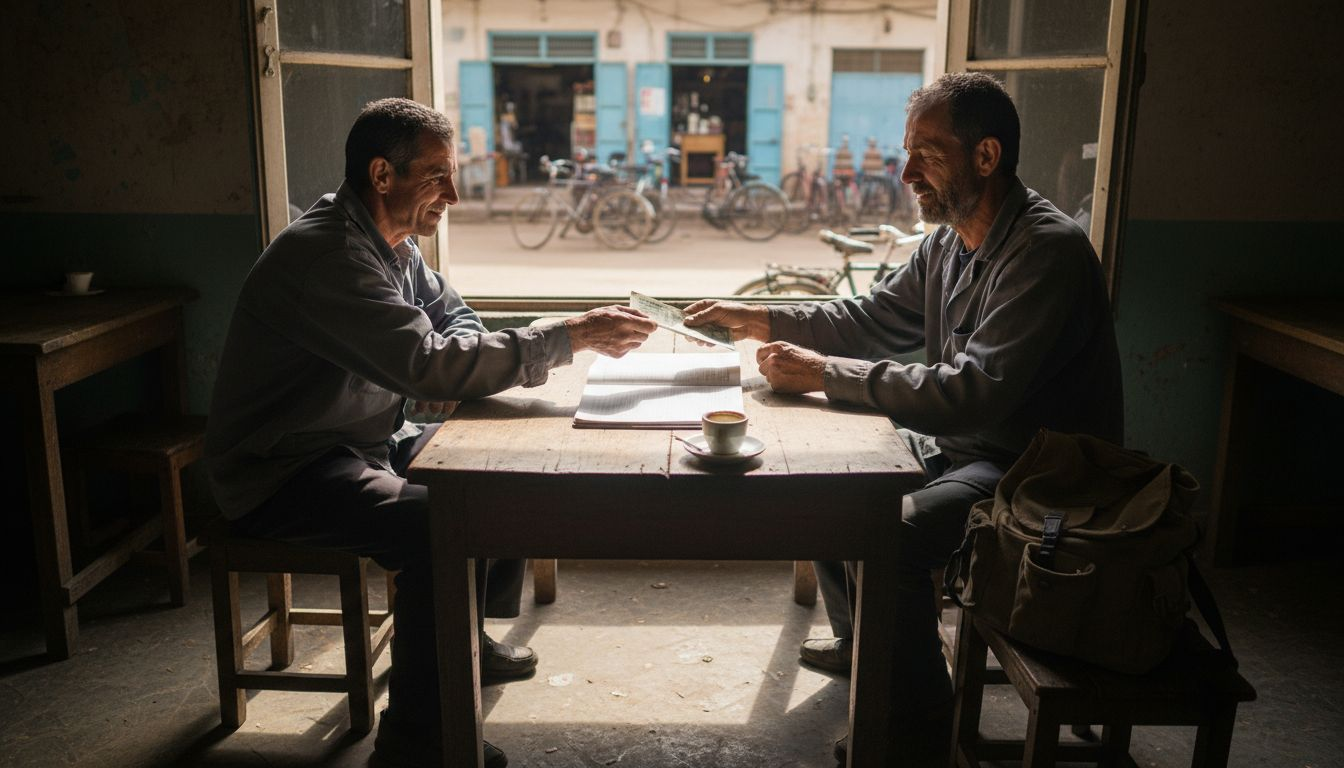
Farmers gain more than just higher income. They receive stability in an unpredictable market. Price volatility has historically forced farmers to sell at losses during downturns. Ethical commitments provide price floors and long-term purchasing agreements, allowing farmers to invest confidently in their operations.
Here’s how ethical coffee actively supports farmers:
- Stable income through guaranteed minimum prices and multi-year contracts
- Market resilience reducing vulnerability to volatile commodity prices
- Investment capacity enabling farmers to upgrade equipment and farming techniques
- Access to training on sustainable practices that improve yields and land health
- Reduced debt burden as farmers escape predatory lending cycles
Community-led decision making empowers farmers to shape their own futures. Rather than outside organizations imposing practices, sustainable coffee initiatives help farmers evaluate what works best for their specific climate, soil, and cultural context.
Ethical coffee also supports farmer resilience against climate pressures. As weather patterns shift unpredictably, sustainable farming practices—improved soil health, water conservation, shade-grown methods—help farmers adapt and maintain productivity. This isn’t charity; it’s securing the future of coffee production itself.
Transformational change across one million coffee farmers by 2030 depends on collective action from roasters, retailers, and consumers choosing ethical sources. Your purchasing decisions signal market demand for farmer-centered practices.
For home baristas, this support cycle creates a tangible benefit: farmers investing in quality production deliver the superior single-origin Arabica beans you brew. Better-paid farmers can afford time and resources to process coffee properly, resulting in cleaner flavor profiles and consistency in your cup.
Ethical coffee transforms farming from a survival struggle into a sustainable profession where farmers capture fair value for their expertise.
Pro tip: When selecting coffee, look for roasters that share farmer names, farm locations, and payment details—this transparency demonstrates genuine commitment to farmer support.
Environmental Benefits of Ethical Sourcing
Ethical coffee sourcing creates a measurable positive impact on the ecosystems where coffee grows. This isn’t just about reducing harm—it’s about actively restoring and protecting critical environmental systems that sustain both coffee production and local communities.
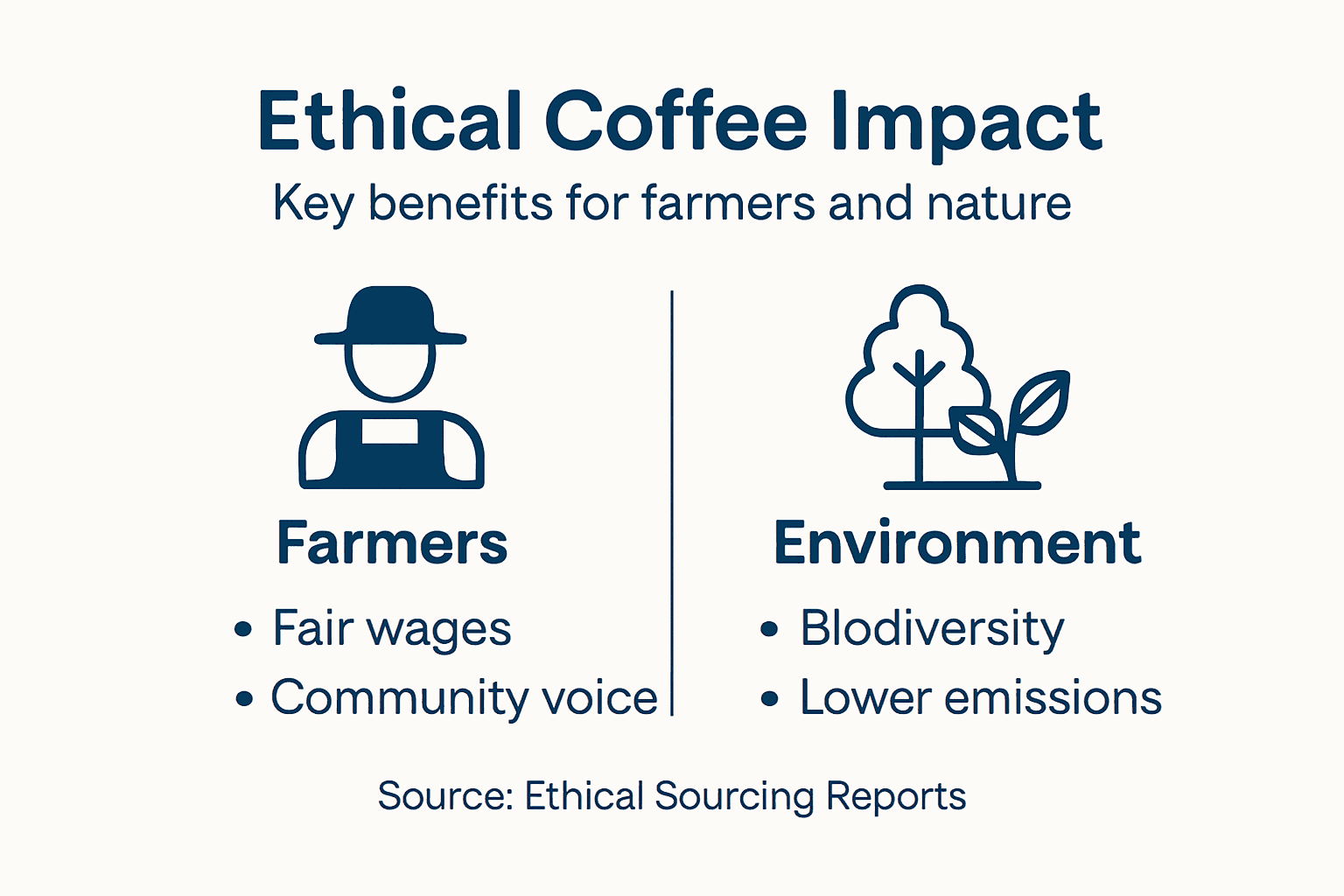
Biodiversity preservation is one of the most visible environmental wins. Conventional coffee plantations often replace native forests with monoculture crops, devastating wildlife habitats. Shade-grown coffee systems maintain forest canopy structures that support birds, insects, and other species, creating functioning ecosystems alongside production.
Ethical sourcing practices dramatically reduce chemical dependency. Sustainable farms minimize pesticide and fertilizer use, protecting soil health and water quality. This matters because coffee regions often supply drinking water to millions of people downstream from farming areas.
Here’s what ethical sourcing accomplishes environmentally:
- Carbon sequestration through shade trees and forest preservation
- Soil conservation reducing erosion and maintaining fertility long-term
- Water protection limiting chemical runoff and preserving clean water sources
- Deforestation prevention by making coffee farming on existing land more profitable
- Climate resilience through diverse farming systems that adapt to weather shifts
Greenhouse gas emissions decrease when farms adopt sustainable practices. Resilient farming systems with improved soil management and shade trees sequester carbon while reducing inputs that require energy-intensive production.
Climate change poses a direct threat to coffee production. Rising temperatures and irregular rainfall patterns stress traditional farming methods. Ethical sourcing encourages practices—improved water management, shade structures, soil building—that help farms adapt and survive future climate conditions.
When you choose ethically sourced single-origin Arabica, you’re supporting farming practices that keep coffee production within planetary boundaries. Farms practicing soil conservation, biodiversity protection, and water stewardship ensure coffee can continue growing in the same regions for generations.
The environmental benefits accumulate across the entire supply chain. Reduced chemical inputs mean fewer pollutants in ecosystems. Protected forests mean carbon storage and wildlife corridors. Better soil means less erosion threatening downstream communities.
Ethical coffee sourcing transforms farming from extraction to restoration, actively healing the ecosystems that make coffee possible.
Pro tip: Look for coffee roasters highlighting shade-grown, forest-friendly, or regenerative practices—these specific methods deliver the strongest environmental benefits you can directly support through your purchase.
How Consumers Drive Positive Change
Your purchasing decisions carry real power in reshaping the coffee industry. Every bag of ethically sourced coffee you choose sends a market signal that drives systemic change across production, processing, and trade practices.
Consumer demand directly influences industry behavior. When enough people purchase certified ethical coffee, roasters and distributors respond by sourcing more sustainable products. This creates economic incentive for producers to adopt sustainable practices rather than competing solely on price.
Certification schemes like Fairtrade and Rainforest Alliance demonstrate consumer impact at scale. Voluntary certification schemes improve social, economic, and environmental outcomes because consumers actively seek them out. Higher demand for certified coffee means farmers earn better prices when they comply with standards.
Here’s how consumer choices create measurable change:
- Market growth signals producers that sustainability pays financially
- Price incentives reward farmers for ethical and environmental practices
- Supply chain transparency becomes expected, not optional, from roasters
- Certification adoption expands as producers capitalize on consumer preferences
- Industry standards elevation when competitors must match consumer expectations
Your individual choice matters more than you think. A single consumer buying ethical coffee might seem insignificant. But aggregated across millions of conscious buyers, individual choices reshape entire supply chains and make ethical sourcing profitable enough to scale.
Home baristas hold particular influence. Specialty coffee enthusiasts research origins, brewing methods, and sourcing practices more thoroughly than average consumers. Your knowledge and choices influence friends, family, and social circles, creating ripple effects beyond your personal purchases.
Transparency becomes possible when consumers demand it. Roasters now publish farmer names, payment details, and environmental certifications because customers expect this information. Without consumer pressure, such transparency would remain unnecessary from a business standpoint.
The coffee industry evolves when enough consumers choose ethically. Producers gain competitive advantage by adopting sustainable practices. Retailers prioritize ethical products. Certification bodies expand programs. All of this accelerates because consumers signal consistent preference through purchasing decisions.
Your choice to buy ethically sourced single-origin Arabica directly supports farmers practicing better methods. It tells roasters that quality, ethics, and environmental responsibility matter to you. It demonstrates market demand for change across the entire system.
Consumer demand for ethical coffee transforms the industry from profit-driven extraction into value-driven sustainability.
Pro tip: Build relationships with your roaster and ask detailed questions about sourcing practices—this engagement signals that consumers value transparency, encouraging roasters to invest in deeper ethical sourcing commitments.
Comparing Ethical Coffee to Conventional Brands
The difference between ethical and conventional coffee extends far beyond what you taste in your cup. It fundamentally shapes who benefits from your purchase and what happens to the land where coffee grows.
Conventional coffee prioritizes volume and price above all else. These brands source from the cheapest suppliers available, often ignoring farmer welfare and environmental damage. Sun-grown monoculture farming maximizes yield per acre but depletes soil, requires heavy pesticide use, and eliminates forest habitat.
Ethical coffee operates on a different foundation. Rather than competing solely on cost, ethical coffee emphasizes sustainability across environmental and social dimensions. Certified ethical brands pay premium prices that reflect fair wages, sustainable practices, and environmental stewardship.
Here’s where the two approaches diverge:
Here’s how ethical coffee compares to conventional coffee across industry dimensions:
| Aspect | Ethical Coffee | Conventional Coffee |
|---|---|---|
| Farmer Well-being | Ensures living wages and fair payment | Often leaves farmers in poverty |
| Environmental Approach | Prioritizes biodiversity and soil health | Frequently causes deforestation and soil loss |
| Transparency | Traceable origin and payments | Opaque, hard-to-track supply chain |
| Certification | Holds third-party ethical certifications | Rarely certified or independently audited |
| Product Quality | Higher due to producer investments | Lower, with less attention to processing |
- Farmer income: Ethical coffee guarantees living wages; conventional often leaves farmers below poverty line
- Environmental impact: Ethical uses shade-grown methods and reduced pesticides; conventional relies on chemical-intensive sun farming
- Certification standards: Ethical carries Fairtrade, organic, or similar certifications; conventional typically has none
- Transparency: Ethical traces origins and payment details; conventional obscures supply chain information
- Land health: Ethical builds soil and biodiversity; conventional depletes both for short-term yields
The price difference reflects real value. Ethical coffee costs more because it actually pays the people who grew it and protects the ecosystems supporting production. Conventional coffee appears cheaper only because those costs get externalized onto farmers and the environment.
Conventional brands often lack certifications because meeting standards would require paying more to producers. Without certification, they avoid accountability for labor practices or environmental damage. This allows rock-bottom pricing but creates genuine harm.
Ethical coffee supports fair wages, sustainable farming with reduced pesticides, and shade-grown methods that preserve biodiversity. Conventional coffee frequently involves deforestation, chemical runoff, and exploitation.
For home baristas especially, ethical coffee delivers superior quality alongside ethics. Farmers earning fair compensation invest in proper processing, fermentation, and drying. This results in cleaner flavor profiles and more consistent single-origin Arabica beans compared to commodity coffee from farmers cutting corners to survive economically.
Ethical coffee pays farmers enough to care about quality; conventional coffee pays just enough to keep farmers producing volume.
Pro tip: Compare bag labels side by side—look for specific certifications like Fairtrade, Rainforest Alliance, or organic, plus details about farm names and origins; conventional brands typically lack these specifics entirely.
Key ethical coffee certifications and what they represent:
| Certification | Focus Area | Typical Requirements |
|---|---|---|
| Fairtrade | Social & Economic | Guaranteed minimum price, fair labor |
| Rainforest Alliance | Environment & Social | Biodiversity, reduced chemicals, worker rights |
| USDA Organic | Environment | No synthetic pesticides or fertilizers |
| UTZ Certified | Social & Economic | Good agricultural practices, traceability |
Discover the Real Impact of Your Coffee Choice with House Coffee
Choosing ethical coffee means supporting fair wages, transparent sourcing, and environmental stewardship just like the article explains. At House Coffee, we understand the challenges farmers face with unstable markets and environmental pressures. That is why our Specialty Coffee – House Coffee collection offers single-origin Arabica beans sourced from dedicated growers committed to ethical and sustainable farming. Every purchase fuels stable incomes, healthy ecosystems, and better-quality coffee for your perfect brew.
Experience coffee that makes a real-world difference today. Browse our selection and join a community of coffee lovers who demand transparency and positive change. Visit House Coffee now and elevate your daily ritual into a meaningful act of support. Explore options like our Dark Roast – House Coffee or discover fresh artisanal blends crafted to honor the people and planet behind your cup.
Frequently Asked Questions
What is ethical coffee?
Ethical coffee refers to coffee sourced and produced with a focus on fair treatment of farmers and laborers, environmental stewardship, and transparency in the supply chain. It ensures fair wages, safe working conditions, and sustainable farming practices.
How does ethical coffee benefit farmers?
Ethical coffee provides farmers with fair wages, stable income through guaranteed prices, and access to training in sustainable farming practices. This financial security allows them to invest in their operations and improve their quality of life.
What environmental benefits are associated with ethical coffee?
Ethical coffee sourcing promotes biodiversity, reduces chemical dependency, conserves soil, and protects water sources. Sustainable practices help sequester carbon and prevent deforestation, ensuring healthier ecosystems.
How can consumers positively impact the coffee industry?
Consumers drive positive change by choosing ethically sourced coffee, which signals demand for sustainable practices. This encourages roasters and producers to adopt ethical sourcing and improve transparency, benefiting both farmers and the environment.
Recommended
- Ethical Coffee Sourcing: Ensuring Impactful Choices – House Coffee
- 7 Benefits of Ethically Sourced Coffee for Conscious Drinkers – House Coffee
- Why Choose Single Origin Coffee: Pure Flavor, Ethical Impact – House Coffee
- Role of Coffee Origin – Elevating Flavor and Ethics – House Coffee
- Eco-Friendly Oral Hygiene: Transforming Dental Routines – Stop Oral Care
-
Posted in
en, why support ethical coffee