How to Grind Coffee at Home for Perfect Flavor
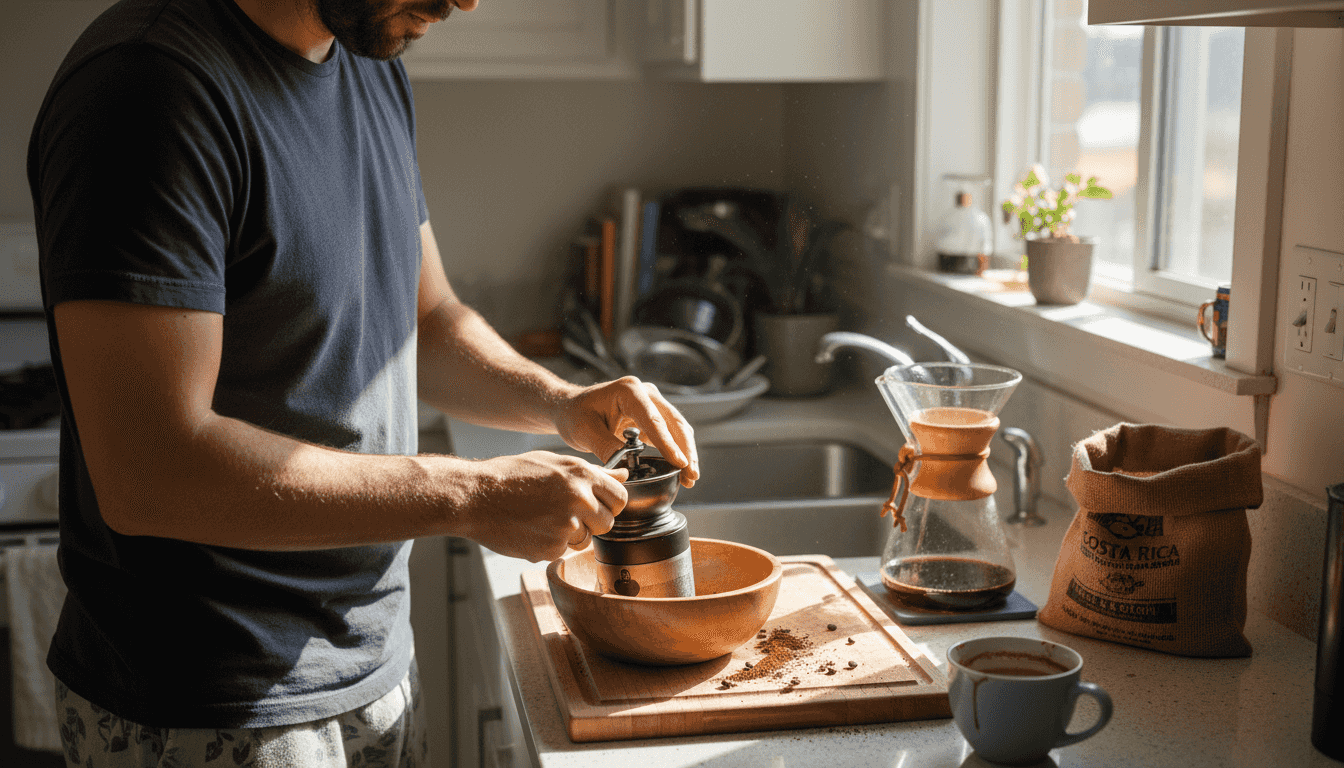
Every home barista knows the magic of that first sip when every variable comes together flawlessly. In busy city kitchens from Berlin to Tokyo, your choice of beans and grinder sets the stage for a truly artisanal brew. Selecting premium, ethically sourced beans and dialing in the right grind transforms morning routines into uplifting rituals and brings out the distinct character of single-origin coffee. Discover how the foundation of thoughtful selection and expert technique shapes every cup you craft.
Table of Contents
- Step 1: Choose The Right Coffee Beans And Grinder
- Step 2: Set Up Your Grinder For Your Brew Method
- Step 3: Grind The Coffee To The Proper Consistency
- Step 4: Check The Grind Size For Quality
Quick Summary
| Key Insight | Explanation |
|---|---|
| 1. Select Quality Coffee Beans | Choose premium, ethically sourced beans that suit your brewing method for better flavor. |
| 2. Use a Burr Grinder | Invest in a burr grinder for uniform particle sizes, ensuring proper extraction and flavor. |
| 3. Match Grind Size to Method | Adjust grind size according to your brew method for optimal extraction and a balanced cup. |
| 4. Grind Just Before Brewing | Grind coffee beans right before brewing to maintain freshness and aromatic oils for better taste. |
| 5. Check Grind Consistency | Regularly assess grind size uniformity to avoid extraction issues that can affect flavor quality. |
Step 1: Choose the right coffee beans and grinder
Your grinder and beans are the foundation of exceptional coffee. Get these two elements right, and you’re halfway to a perfect cup. The wrong pairing or low-quality equipment will sabotage even the best brewing technique.
Start by selecting premium, ethically sourced beans that match your brewing style. Are you using a pour-over, French press, or espresso machine? Each method demands a different grind size and bean profile. Single-origin beans offer more complexity than blends, giving you distinct flavor characteristics to explore.
Bean Selection Matters
When choosing beans, consider these factors:
- Origin and processing method: Different regions and processing techniques create vastly different flavor profiles
- Freshness: Look for a roast date within the last two weeks; older beans lose aromatic oils and complexity
- Roast level: Light roasts preserve origin flavors, while darker roasts develop bolder, smokier notes
- Variety: Understanding coffee variety characteristics helps you select beans suited to your taste preferences
The grinder determines everything that happens after. A poor grinder produces inconsistent particle sizes, leading to uneven extraction and muddy flavors. Burr grinders are non-negotiable for home use because they deliver uniform grind sizes critical for proper flavor extraction.
Blade grinders create inconsistent grind particles that lead to over-extraction and bitter coffee. Invest in burr grinders for the precision your specialty beans deserve.
Choose between conical burr grinders for versatility or flat burr grinders for ultimate consistency. Consider your brew method, desired grind range, noise tolerance, and cleaning ease when evaluating options. Manual grinders work beautifully for single cups and offer ritualistic appeal, while electric grinders suit daily routines and larger quantities.
Here’s a quick comparison of popular burr grinder types to help you choose:
| Grinder Type | Best For | Noise Level | Cleaning Ease |
|---|---|---|---|
| Conical Burr | Versatile brewing setups | Moderate | Simple, easy access |
| Flat Burr | Ultimate consistency | Louder | More complex cleaning |
| Manual Burr | Single servings, travel | Quiet | Effortless, portable |
| Electric Burr | Daily large quantities | Varies | Easy with removable parts |
Your investment in quality beans pairs perfectly with a grinder that respects them. When selecting burr grinders, prioritize consistency, adjustable settings, and durability over flashy features.
Pro tip: Buy beans in small quantities (250-500 grams) and grind immediately before brewing to preserve aromatic oils and maximize the flavor complexity you paid for in premium, specialty beans.
Step 2: Set up your grinder for your brew method
Grinder settings aren’t universal. Each brewing method demands a specific particle size to extract the right amount of flavor and body. A coarse setting that works beautifully for French press will leave your espresso thin and sour.
The relationship between grind size, brewing time, and water temperature determines your final cup. When you match your grinder setting to your brew method, everything else falls into place naturally. Getting this right separates muddy, over-extracted coffee from vibrant, balanced cups.
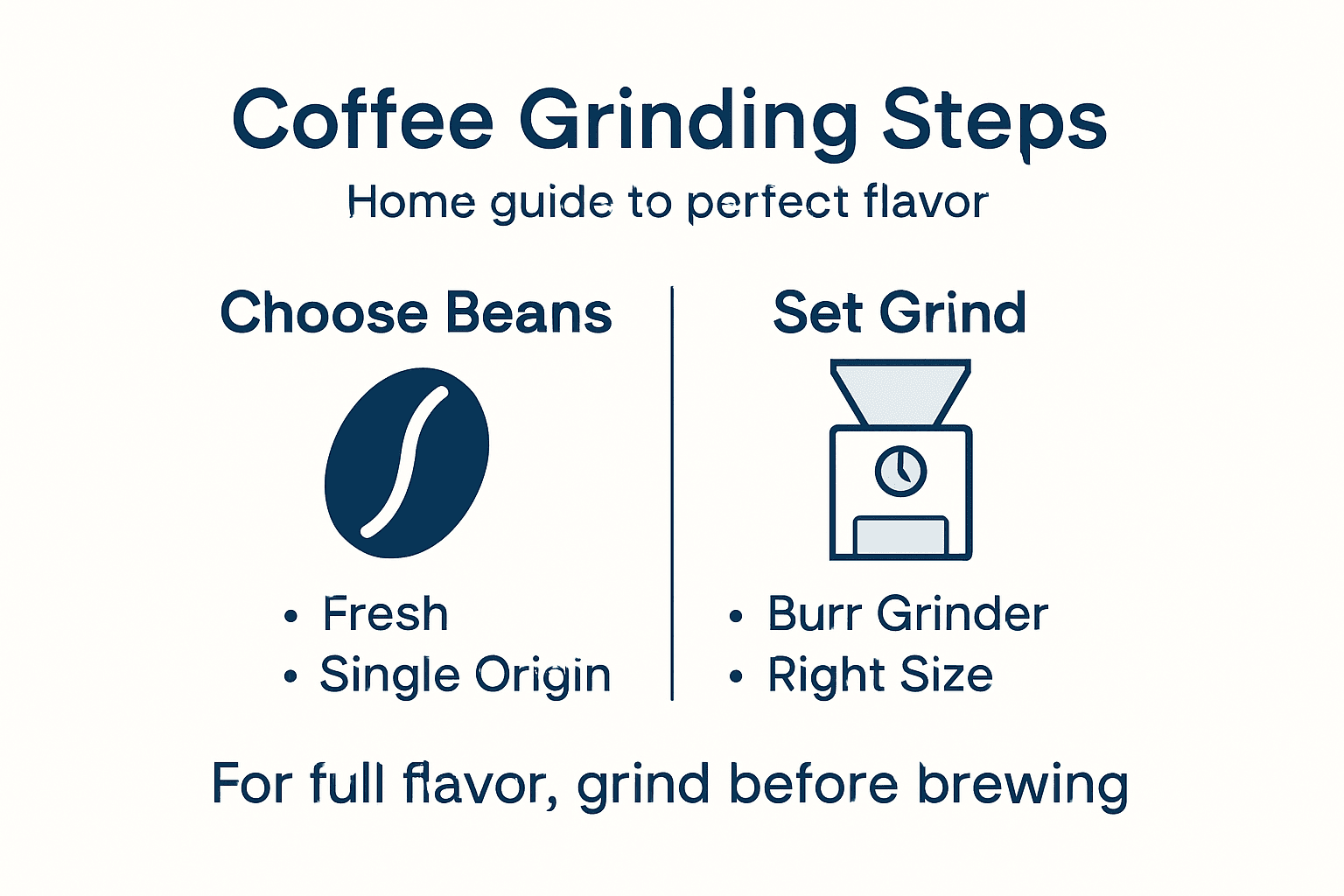
Understanding Grind Size by Brew Method
Each method requires a different approach:
- Espresso: Extra fine, powder-like consistency for resistance and pressure
- Pour-over: Medium-fine to allow water to flow while extracting properly
- French press: Coarse particles that settle at the bottom without clogging the filter
- Aeropress: Medium grind for flexibility and clean, crisp results
- Cold brew: Coarse grounds that steep slowly over 12-24 hours
Think of grind size as controlling extraction speed. Finer particles expose more surface area, speeding up extraction. Coarser particles slow it down. The Specialty Coffee Association sets standards for optimal grind adjustment across different brew methods to achieve balanced flavor and consistent strength.
Start with the recommended setting for your method, then test and adjust slightly. If your coffee tastes sour or weak, go finer. If it tastes bitter or muddy, go coarser. This experimentation is where you develop your palate and discover what you actually prefer.
Use this guide to align grind size, extraction speed, and coffee style:
| Brew Method | Grind Size | Extraction Speed | Flavor Profile Target |
|---|---|---|---|
| Espresso | Extra fine powder | 25-30 sec, fast pressure | Intense, syrupy, balanced |
| Pour-over | Medium-fine | 2-4 min, steady flow | Clean, bright, nuanced |
| French press | Coarse | 4 min, long immersion | Full-bodied, rich, mellow |
| Aeropress | Medium | 1-2 min, versatile | Crisp, clean, flexible |
| Cold brew | Coarse | 12-24 hrs, slow steep | Smooth, mild, low-acid |
Your grinder setting is the single most adjustable variable in coffee brewing. Small changes in particle size create dramatically different flavors, so dial in carefully.
Consider using grind setting converters designed by the specialty coffee community to translate settings between different grinder models. This removes guesswork when switching brewing methods or grinders.
Pro tip: Write down your ideal grinder settings for each brew method you use regularly, noting the grinder model and ambient temperature, since humidity and temperature can slightly affect how your grinder performs.
Step 3: Grind the coffee to the proper consistency
This is where your grinder earns its value. The actual act of grinding transforms whole beans into particles ready for extraction. Get the consistency right, and you unlock the full potential of your premium beans.
Your burr grinder creates uniform particle sizes that ensure even water contact and balanced extraction. Each grind setting produces a specific consistency, and matching that to your brewing method is non-negotiable. The difference between a vibrant, balanced cup and a flat, over-extracted one often comes down to this single step.
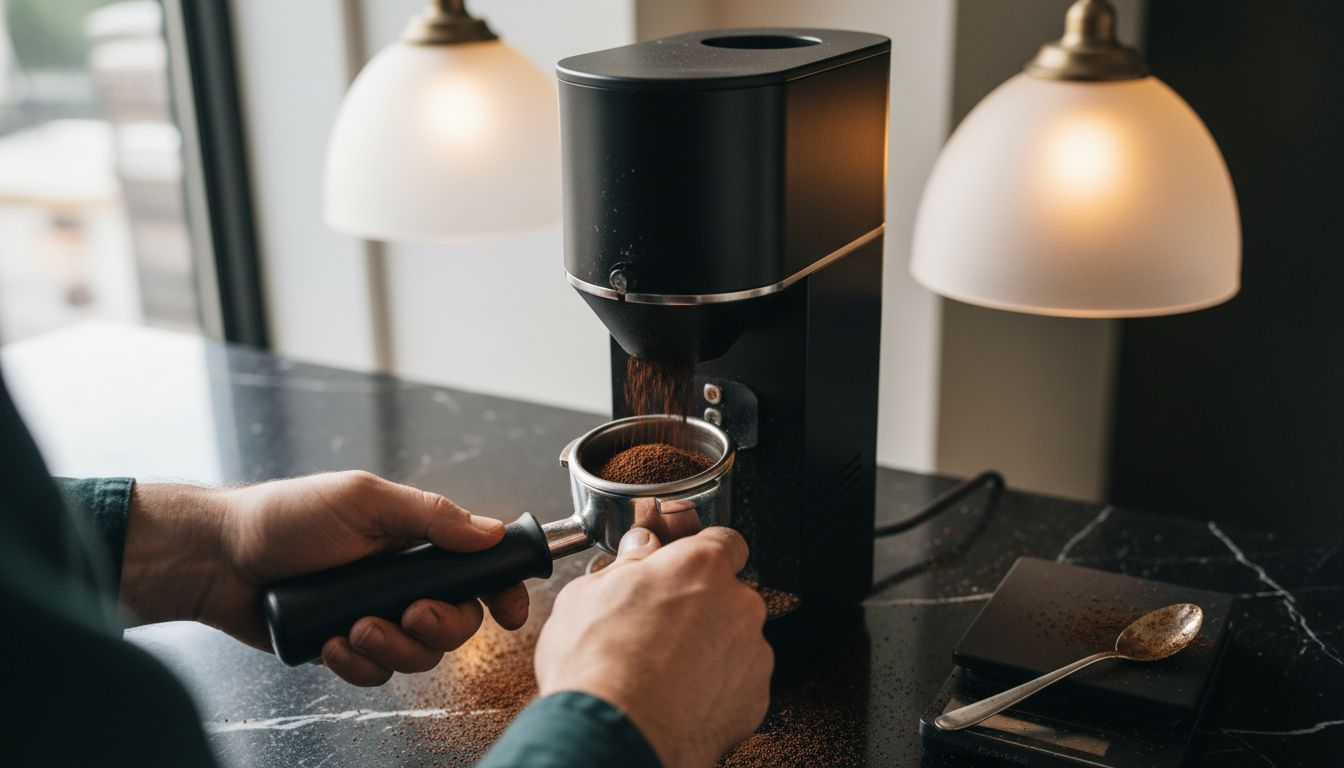
The Grinding Process
Follow these steps for consistent results:
- Measure your beans by weight, not volume (aim for 1 to 2 grams per 16 milliliters of water as a starting point)
- Set your grinder to your predetermined setting for your brew method
- Pour beans into the hopper slowly and grind until all beans pass through
- Listen for the grinder motor to return to normal speed, indicating you’re finished
- Transfer grounds directly to your brewing device immediately
When you grind fresh, you preserve aromatic oils and volatile compounds that define specialty coffee. Grinding hours ahead of brewing allows these oils to oxidize and dissipate, robbing your cup of complexity and brightness.
Understanding different grind size ranges helps you dial in precisely. Fine grinds increase surface area for shorter brew times like espresso, while coarse grinds suit longer steeping methods like French press. The relationship between particle size and extraction time determines whether you’ll taste balanced sweetness or harsh bitterness.
Consistency matters more than perfection. Uniform particles extract evenly, while mixed sizes create uneven extraction and muddy flavors that overpower origin characteristics.
Pay attention to how your grounds feel and look. They should appear uniform in size without dust or fines coating your hands. If your burrs are sharp and properly calibrated, you’ll achieve this consistency every time.
Pro tip: Grind immediately before brewing and use all your grounds within two minutes to capture the fresh aromatics that make specialty coffee worth the investment in quality beans and equipment.
Step 4: Check the grind size for quality
Not all grinds are created equal. Your burr grinder should produce uniform particles, but it’s worth verifying that you’re actually getting consistent results. Quality control at this stage prevents extraction problems before they ruin your brew.
Uniform grind size directly impacts how water flows through your grounds. When particles are inconsistent, water finds paths of least resistance, over-extracting some grounds while under-extracting others. This creates competing flavors that muddy your cup instead of highlighting the origin characteristics you paid for.
How to Evaluate Your Grind
Assessing grind quality doesn’t require expensive equipment:
- Visual inspection: Spread your grounds on a white plate and look for uniform particle size with minimal dust
- Texture test: Rub a small amount between your fingers and feel for consistent granule size
- Comparison method: Reference standard grind size guides to compare your grounds against known examples
- Brew performance: The ultimate test is how your coffee tastes and how quickly water flows through it
Fine grounds should feel like sand, medium grinds like raw sugar, and coarse grinds like peppercorns. If your grind looks dusty or contains obvious clumps alongside fine particles, your burrs may need adjustment or cleaning.
Inconsistent grind sizes cause flavor defects that mirror extraction problems. Understanding how grind quality impacts sensory attributes helps you diagnose whether bitterness or sourness comes from your grind or your technique. A sour cup often signals under-extraction from too-coarse grounds, while bitter flavors typically indicate over-extraction from too-fine particles mixed with larger ones.
Perfect grind consistency matters more than hitting any single particle size. Uniformity ensures even extraction and reveals the true flavors locked inside your beans.
Check your grind regularly, especially when switching bean origins or brew methods. Over time, burrs wear and may need replacement or recalibration. This simple quality check takes seconds but prevents hours of frustration chasing extraction problems that stem from inconsistent grinding.
Pro tip: Take a photo of your ideal grind on your phone for future reference, making it easy to verify consistency across brewing sessions and different grinder settings.
Unlock Perfect Coffee Flavor at Home with the Right Beans and Gear
Grinding coffee at home to perfection is about more than just equipment it is about selecting the freshest premium beans and pairing them with a quality grinder tuned for your brew method. If you want to avoid bitter or muddy flavors and unlock the vibrant, balanced cup you crave you need consistency in grind size and freshness in your specialty beans. This article highlights how crucial grind settings and uniform particle size are for achieving your coffee goals.
Explore our carefully curated collection of ethically sourced, single-origin Specialty Coffee – House Coffee designed for freshness and maximum flavor. Complement your coffee with the finest Brewing Essentials – House Coffee to elevate your at-home brewing ritual. Don’t wait to transform your daily coffee experience visit House Coffee now and find everything you need to grind perfectly and brew your best cup today.
Frequently Asked Questions
How do I choose the right coffee beans for optimal flavor at home?
Choosing premium, ethically sourced beans that match your brewing style is crucial for optimal flavor. Consider the origin, freshness, roast level, and variety of the beans to find those that suit your taste preferences. Start by experimenting with single-origin beans for more distinct flavor experiences.
What type of grinder should I use for grinding coffee at home?
A burr grinder is essential for achieving uniform grind sizes, which are critical for flavor extraction. Opt for either a conical burr grinder for versatility or a flat burr grinder for maximum consistency, depending on your brewing method and needs.
How can I adjust my grinder settings based on the brewing method?
Grinder settings should align with your specific brewing method to ensure proper extraction. For example, use an extra fine grind for espresso, a medium grind for pour-over, and a coarse grind for French press. Start with recommended settings and adjust based on the taste of your coffee.
How can I check if my grind size is ideal for brewing?
Evaluate your grind by conducting a visual inspection and texture test. Ensure the particles are uniform in size, feeling like sand for fine grinds or raw sugar for medium grinds. If the consistency is off, make small adjustments to your grinder settings to improve your brew’s flavor.
What steps should I follow to grind coffee for the best flavor?
To grind coffee effectively, weigh your beans, set your grinder to the appropriate setting for your brew method, and grind immediately. Use 1 to 2 grams of coffee per 16 milliliters of water as a starting point. This preserves aromatic oils and enhances flavor complexity, leading to a tastier cup.
How can I maintain my grinder for consistent results?
Regularly check your grinder for wear and clean it to ensure consistent performance. Inspect the grind quality visually and by feel; if the particles vary too much, recalibrate or clean the burrs. Performing these checks will help you produce high-quality grounds, ensuring a better-tasting coffee every time.
Recommended
- 7 Essential Steps for Perfect Coffee at Home – House Coffee
- How to Taste Coffee Flavors Like an Expert at Home – House Coffee
- How to Brew Specialty Coffee for Rich, Authentic Flavor – House Coffee
- How to Brew Specialty Coffee for Rich, Authentic Flavor – House Coffee
- Experience Café-Quality Coffee with Sugar Free Shots – MyGymSupplements
-
Posted in
en, how to grind coffee at home