How to Brew Specialty Coffee for Rich, Authentic Flavor

Every passionate home barista knows that brewing exceptional coffee is more than just routine—it is a rewarding ritual shaped by quality, precision, and curiosity. With global cities cultivating a vibrant coffee scene, exploring specialty coffee at home unlocks complex flavors and elevates daily enjoyment. This guide reveals how focusing on high-quality specialty coffee beans and mastering essential brewing steps can help you achieve barista-level results and discover new dimensions in every cup.
Table of Contents
- Step 1: Select High-Quality Specialty Coffee Beans
- Step 2: Measure and Grind Coffee Precisely
- Step 3: Set Up Your Brewing Equipment Correctly
- Step 4: Control Water Temperature and Brew Time
- Step 5: Evaluate Aroma and Taste for Perfection
Quick Summary
| Key Insight | Explanation |
|---|---|
| 1. Select high-quality beans | Choose single origin Arabica beans with clear provenance for unique flavors. |
| 2. Measure and grind precisely | Use a digital scale and burr grinder to ensure accurate measurements and even extraction. |
| 3. Maintain brewing equipment | Keep tools clean and set up correctly, ensuring precise temperature for optimal extraction. |
| 4. Control temperature and time | Brew coffee between 195°F and 205°F for the best flavor; timing affects taste significantly. |
| 5. Evaluate aroma and taste | Engage your senses to identify flavor notes; personal preference is key to a great coffee experience. |
Step 1: Select high-quality specialty coffee beans
Choosing exceptional coffee beans is the foundation of brewing an extraordinary cup of specialty coffee. The journey begins with understanding what separates premium beans from ordinary ones, focusing on factors that dramatically influence flavor and quality. Specialty coffee experts assess beans through rigorous sensory evaluations that go far beyond basic grading standards.
When selecting beans, look for single origin Arabica varieties from reputable growing regions. These beans offer distinct flavor profiles shaped by unique regional characteristics. Pay close attention to details like harvest date, processing method, and altitude of cultivation. High elevation Arabica beans typically develop more complex flavor notes due to slower growth and concentrated nutrients. Seek out beans with clear provenance information that highlights specific details about the farm, region, and cultivation practices.
Coffee enthusiasts should prioritize beans roasted within the past two weeks to ensure maximum freshness and optimal flavor potential. Whole bean selections allow you to grind just before brewing, preserving essential oils and aromatics that create a rich sensory experience. Look for transparent packaging with roast dates clearly displayed and avoid bulk bins where beans might have been exposed to light and air for extended periods.
Pro tip: Visit local roasters or specialty coffee shops to sample and compare different bean varieties before making a larger purchase, ensuring you select beans that match your taste preferences.
Step 2: Measure and grind coffee precisely
Precision is the secret weapon of exceptional home coffee brewing. Specialty coffee standards emphasize accurate measurement as the cornerstone of creating a consistently delicious cup. Understanding the nuanced relationship between coffee dose, grind size, and brewing method transforms an ordinary morning routine into a carefully crafted sensory experience.
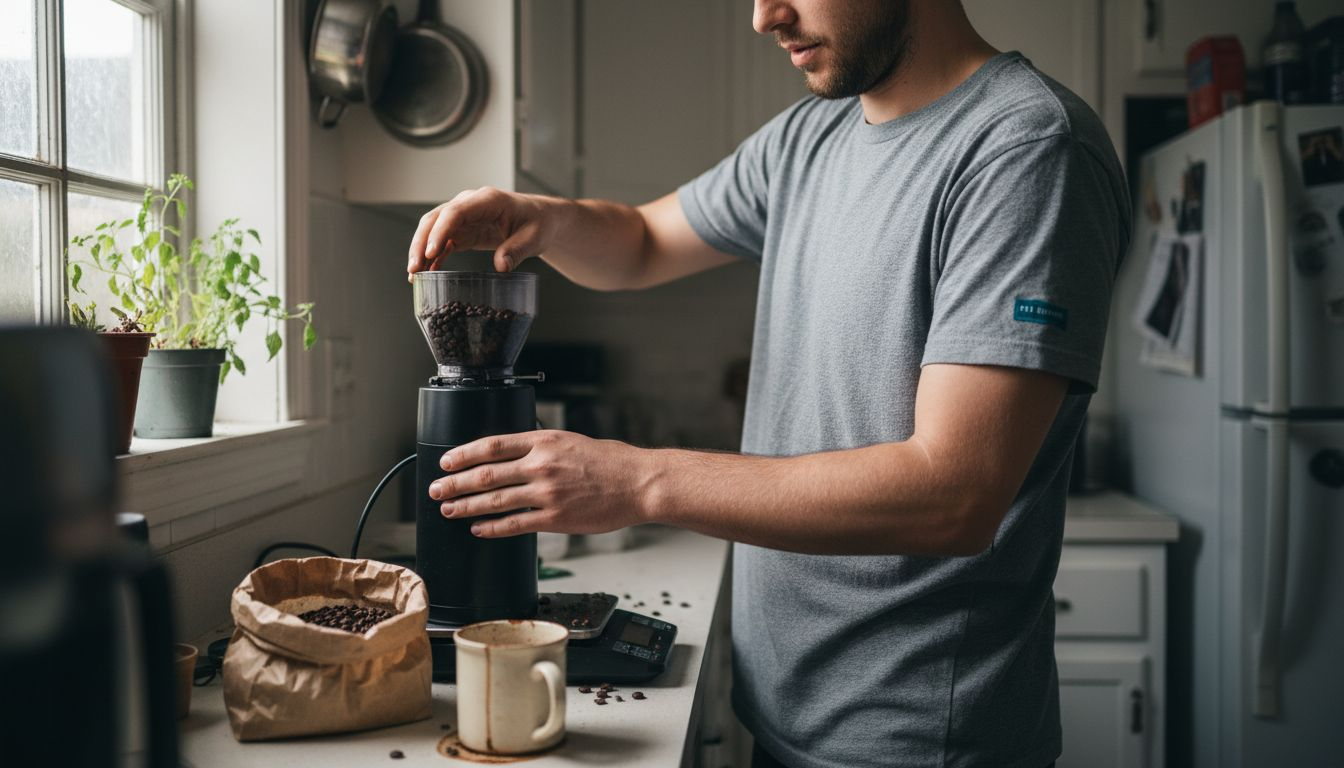
Start by investing in a digital kitchen scale that measures to 0.1 gram increments, allowing you to reproduce your favorite brew with scientific accuracy. Most specialty coffee recipes recommend a ratio of 1:15 to 1:17 coffee to water weight, meaning for every gram of coffee, you will use 15 to 17 grams of water. When selecting a grinder, prioritize burr grinders over blade grinders, as they create more uniform particle sizes essential for even extraction. Adjust your grind size based on your brewing method electric drip coffee makers require a medium grind, while espresso demands an ultrafine consistency and pour over methods work best with a medium fine grind.
Consistent grinding techniques dramatically impact flavor extraction. Grind your beans immediately before brewing to preserve essential oils and aromatics. If possible, aim to use beans roasted within the past two weeks and grind only the amount you plan to brew right away. This approach ensures maximum flavor potential and prevents oxidation that can diminish your coffee’s complex taste profile.
Pro tip: Calibrate your grinder periodically by running a small amount of rice through it to clean burrs and ensure consistent particle size.
Step 3: Set up your brewing equipment correctly
Creating the perfect cup of specialty coffee requires more than just quality beans Specialty Coffee Association standards recommend precise equipment setup. Your brewing tools are the critical bridge between exceptional beans and an extraordinary coffee experience, demanding careful attention and thoughtful preparation.
Choose brewing equipment that matches your preferred coffee style and matches the characteristics of your selected beans. For pour over methods, invest in a gooseneck kettle that allows precise water flow and temperature control. If you prefer French press or immersion brewing, select a vessel with thick walls that maintain consistent heat. Ensure your brewing device is clean and free from old coffee residue that could impart stale or rancid flavors. Check all connections, filters, and moving parts to confirm everything is aligned correctly and functioning smoothly.
Temperature plays a crucial role in extraction, so use a thermometer or an electric kettle with temperature control to maintain water between 195 and 205 degrees Fahrenheit. This narrow range ensures optimal flavor extraction without burning the coffee grounds. Always preheat your brewing equipment by running hot water through it before adding coffee this helps maintain consistent brewing temperature and prevents sudden heat loss that can compromise extraction quality.
Pro tip: Invest in a quality kitchen towel dedicated exclusively to wiping down your coffee equipment to prevent cross contamination of flavors and maintain pristine brewing conditions.
Here’s a quick comparison of popular specialty coffee brewing methods and their key characteristics:
| Brewing Method | Recommended Grind | Ideal Brew Time | Notable Flavor Notes |
|---|---|---|---|
| Pour Over | Medium-fine | 2.5–3 minutes | Clean, nuanced, aromatic |
| French Press | Coarse | 4–5 minutes | Full-bodied, rich, earthy |
| Espresso | Extra-fine | 25–30 seconds | Intense, concentrated, bold |
| Automatic Drip | Medium | 5–6 minutes | Smooth, balanced, mellow |
Step 4: Control water temperature and brew time
Mastering water temperature and brew time is the precision science that transforms good coffee into an extraordinary sensory experience. Specialty Coffee Association research highlights critical brewing parameters that directly influence flavor extraction and overall coffee quality.
Water temperature is a crucial variable in coffee brewing. Aim to maintain a consistent temperature between 195 and 205 degrees Fahrenheit (90 to 96 degrees Celsius). Too low a temperature results in under extraction, producing weak and sour coffee. Conversely, water that is too hot burns the coffee grounds, creating bitter and harsh flavors. Different brewing methods require slight variations in temperature and timing. Pour over methods typically work best with water around 200 degrees Fahrenheit and a brew time of 2.5 to 3 minutes. Espresso demands shorter brewing times of 25 to 30 seconds at slightly higher temperatures to create intense flavor concentration.
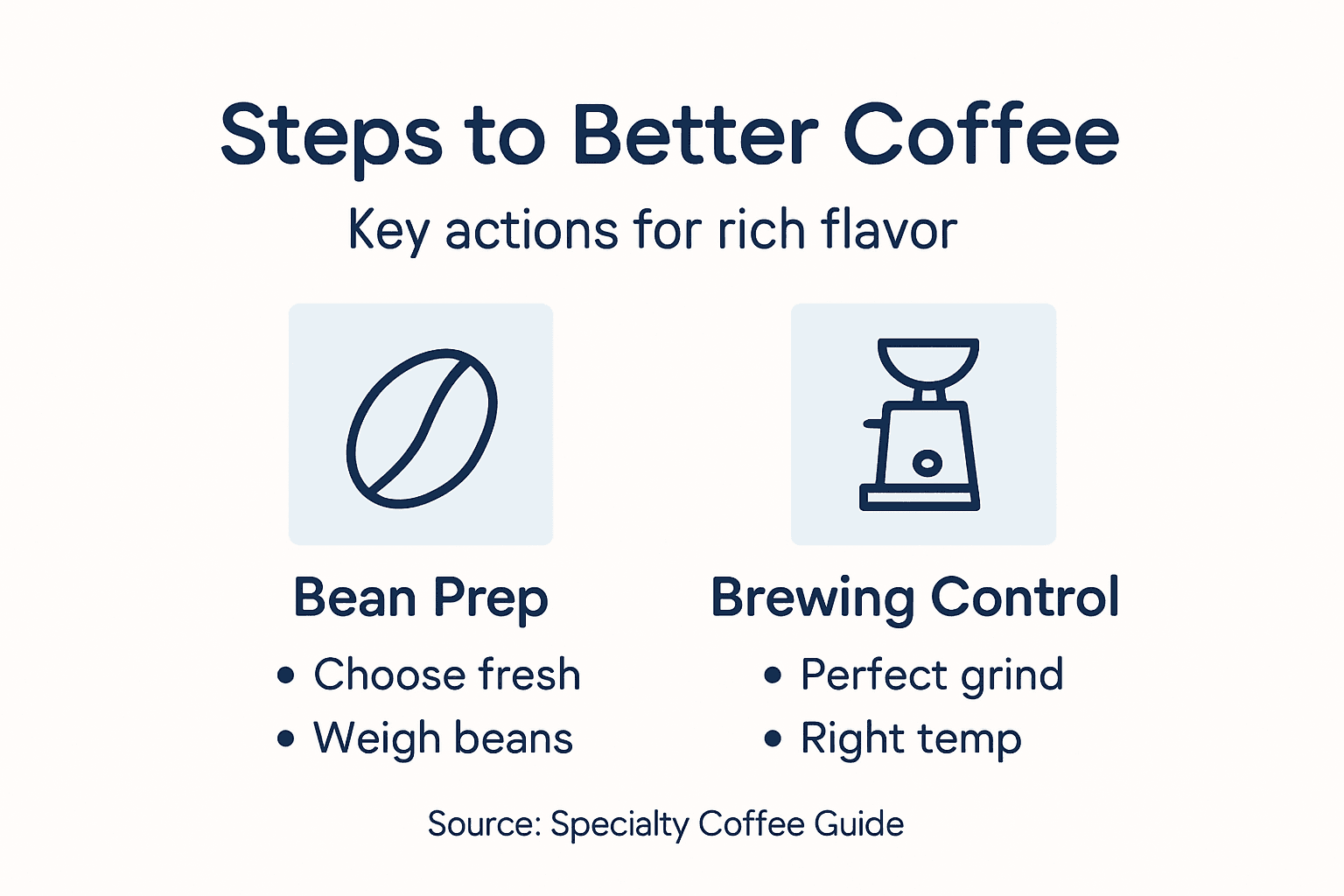
Use a digital thermometer or an electric kettle with temperature control to ensure precision. Start a timer when you first contact water with coffee grounds and monitor the total brew time carefully. Consistent timing allows you to reproduce your perfect cup and make incremental adjustments to improve flavor profile. Remember that grind size also impacts brewing time smaller grinds extract faster, while coarser grinds require longer brewing periods.
Pro tip: Invest in a stopwatch or brewing timer app to track your exact brewing duration and help you replicate your most successful coffee brewing experiments.
Step 5: Evaluate aroma and taste for perfection
Specialty Coffee Association cupping protocols provide a systematic approach to assessing coffee’s complex sensory characteristics. Understanding how to evaluate your brew goes beyond simple enjoyment it is about discovering the intricate layers of flavor that transform an ordinary cup into an extraordinary experience.
Begin your sensory evaluation by first engaging your sense of smell. Inhale the coffee’s aroma deeply before tasting, noting the range of scents from fruity and floral to nutty and earthy. When tasting, let the coffee coat your entire palate. Pay attention to different flavor notes that emerge initial taste, mid palate, and the lingering aftertaste. Consider qualities like acidity (the bright, tangy sensation), body (the coffee’s weight and texture), and overall balance. Professional coffee tasters use a flavor wheel to help articulate the nuanced characteristics they detect, describing notes such as chocolate, caramel, citrus, or subtle herbal undertones.
Develop your palate by tasting coffee systematically. Take small sips and allow the coffee to move across different areas of your tongue. Notice how flavors shift and transform as the coffee cools. Compare different brewing methods and origins to expand your sensory understanding. Remember that personal preference plays a significant role your ideal coffee is the one that most delights your individual taste buds.
Use this summary as a reference for key coffee flavor attributes during evaluation:
| Attribute | Description | Common Examples |
|---|---|---|
| Aroma | Scent before tasting | Floral, fruity, nutty |
| Acidity | Tangy or bright sensation | Citrus, green apple, plum |
| Body | Texture and weight on palate | Creamy, silky, light |
| Aftertaste | Lingering flavor once swallowed | Chocolate, spice, smoky |
Pro tip: Clean your palate between tastings by drinking room temperature water and eating a plain cracker to reset your taste sensations.
Elevate Your Brewing with Premium Tools and Fresh Beans
Achieving rich authentic flavor when brewing specialty coffee requires more than just knowledge it demands the right beans precise measurements and top-quality equipment. The article highlights challenges such as selecting fresh single-origin Arabica beans mastering grind size and water temperature as well as evaluating aroma and taste. At House Coffee we understand these pain points and provide carefully curated collections of ethically sourced coffee that celebrate unique origins and craftsmanship.
Explore our Brewing Essentials – House Coffee for the tools you need to perfect your technique from precision scales to gooseneck kettles. Freshness is critical so discover our exceptional coffee varieties designed to enhance each step of your brewing ritual.
Ready to transform your coffee experience? Visit House Coffee now to find everything you need to brew outstanding specialty coffee at home. Take advantage of our upcoming Subscriptions – House Coffee to receive fresh beans regularly and never miss a moment of that perfect cup. Start your journey toward rich flavorful coffee today.
Frequently Asked Questions
How do I choose high-quality specialty coffee beans?
To choose high-quality specialty coffee beans, look for single origin Arabica varieties from reputable growing regions. Pay attention to details like the harvest date, processing method, and altitude to ensure the beans offer rich and complex flavor profiles.
What is the best way to measure and grind coffee for brewing?
The best way to measure and grind coffee for brewing is to use a digital kitchen scale and precise burr grinder. Aim for a coffee-to-water ratio of 1:15 to 1:17 and adjust the grind size according to your brewing method for optimal flavor extraction.
How should I set up my brewing equipment for specialty coffee?
To set up your brewing equipment correctly, choose tools that match your coffee style and ensure they are clean and functioning properly. Preheat your brewing devices with hot water and check that all parts are aligned to maintain optimal temperature during brewing.
What water temperature and brew time should I use for specialty coffee?
Use water between 195 and 205 degrees Fahrenheit for brewing specialty coffee, maintaining this temperature throughout the process. Monitor the brew time specific to your method; for example, pour over should be around 2.5 to 3 minutes for the best flavor.
How can I evaluate the aroma and taste of my brewed coffee?
Evaluate the aroma and taste of your brewed coffee by first inhaling deeply to appreciate the various scents before tasting. Focus on different flavor notes as the coffee cools, and consider qualities like acidity, body, and aftertaste to understand the coffee’s character better.
What should I do to clean my palate between coffee tastings?
To clean your palate between coffee tastings, drink room temperature water and eat a plain cracker. This will help reset your taste sensations and allow for a more accurate evaluation of different coffees you taste.
Recommended
- 7 Essential Steps for Your Specialty Coffee Checklist – House Coffee
- 7 Essential Steps for Your Specialty Coffee Checklist – House Coffee
- Step by Step Specialty Coffee Selection Guide for Home – House Coffee
- Step by Step Specialty Coffee Selection Guide for Home – House Coffee
- Brew Ratio Explained: Unlocking Espresso Consistency
-
Posted in
how to brew specialty coffee