Why freshness matters in coffee for the best brew
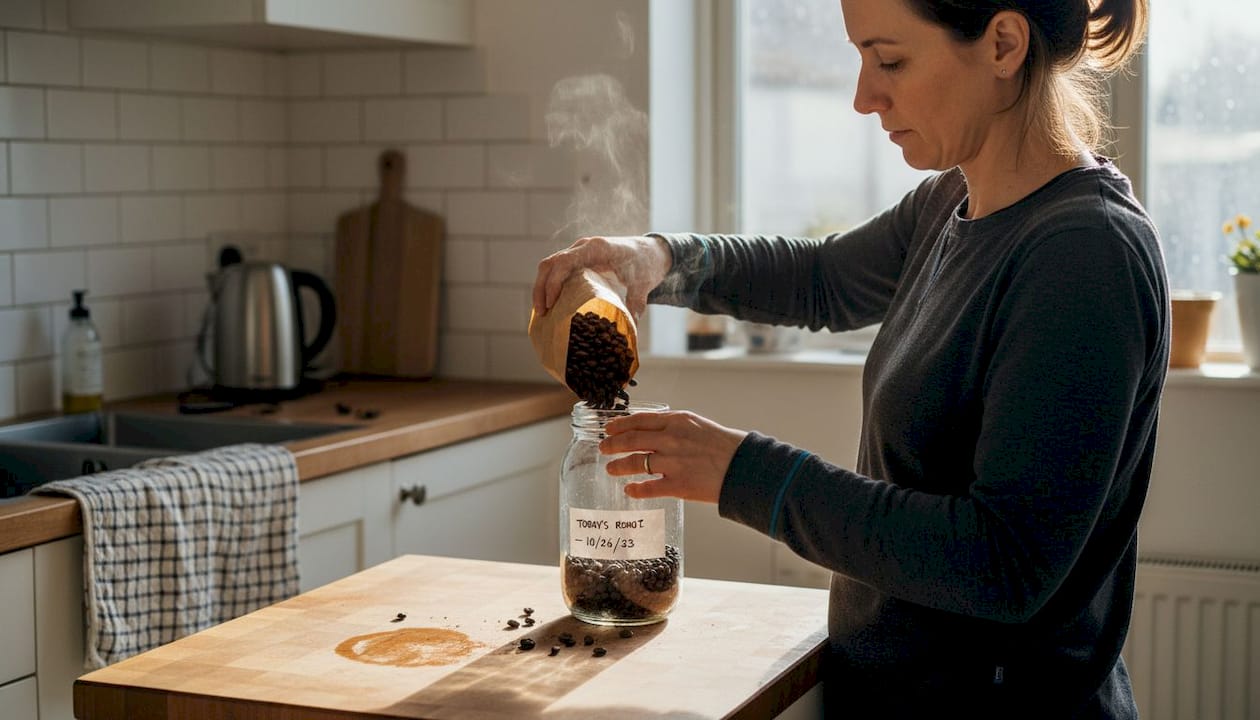
You’ve probably heard that coffee is best within hours of roasting, but what if that’s not quite true? Scientific research reveals that freshly roasted beans undergo complex chemical changes over days, not just hours, and peak sensory quality often emerges after a rest period. Understanding how freshness really affects your brew can transform your daily cup from good to exceptional. This guide explores the science behind coffee freshness, challenges common assumptions, and provides practical strategies to help you time your brewing for maximum flavor.
Table of Contents
- Key takeaways
- Understanding coffee freshness: what really happens after roasting
- Challenging the freshly roasted dogma: post-roast maturation explained
- Practical guide for home baristas: optimizing freshness in your coffee routine
- Explore specialty coffee to unlock your freshest brew
- Frequently asked questions
Key Takeaways
| Point | Details |
|---|---|
| Flavor improves with rest | Resting freshly roasted beans for several days allows flavors to mellow and integrate, producing a smoother cup than immediate brew. |
| Rest enhances sensory quality | Chemical freshness and sensory quality progress on different timelines, so a controlled rest can yield better aroma and balance than rushing to brew. |
| Track roast dates | Note the roast date on each bag and observe flavor changes over the first two weeks to find your ideal brewing window. |
| Storage and grind | Storing beans properly and grinding close to brew time preserves aroma and ensures consistent extraction. |
Understanding coffee freshness: what really happens after roasting
The moment coffee beans finish roasting, they begin an intricate chemical transformation. Within the first 24 hours, volatile organic compounds responsible for aroma start dissipating rapidly. Gas chromatography studies show that freshly roasted beans release carbon dioxide and other gases that can interfere with proper extraction if brewed too soon.
The science tells a more complex story than the simple “fresher is better” narrative. Research demonstrates that coffee loses vibrancy measurably within 24 hours, yet sensory evaluations reveal many tasters prefer beans that have rested for several days. This apparent contradiction makes sense when you understand the difference between chemical freshness and sensory optimization.
Key chemical changes in the first week:
- Carbon dioxide degassing reduces pressure that causes uneven extraction
- Volatile aromatic compounds stabilize after initial rapid loss
- Lipid oxidation begins slowly, accelerating after two weeks
- Moisture content equilibrates with storage environment
Green coffee refers to unroasted beans, which can remain stable for months when stored properly. Freshly roasted coffee describes beans within days of roasting, while rested coffee has been allowed to degas and stabilize for optimal brewing. Understanding these distinctions helps you make informed decisions about when to brew.
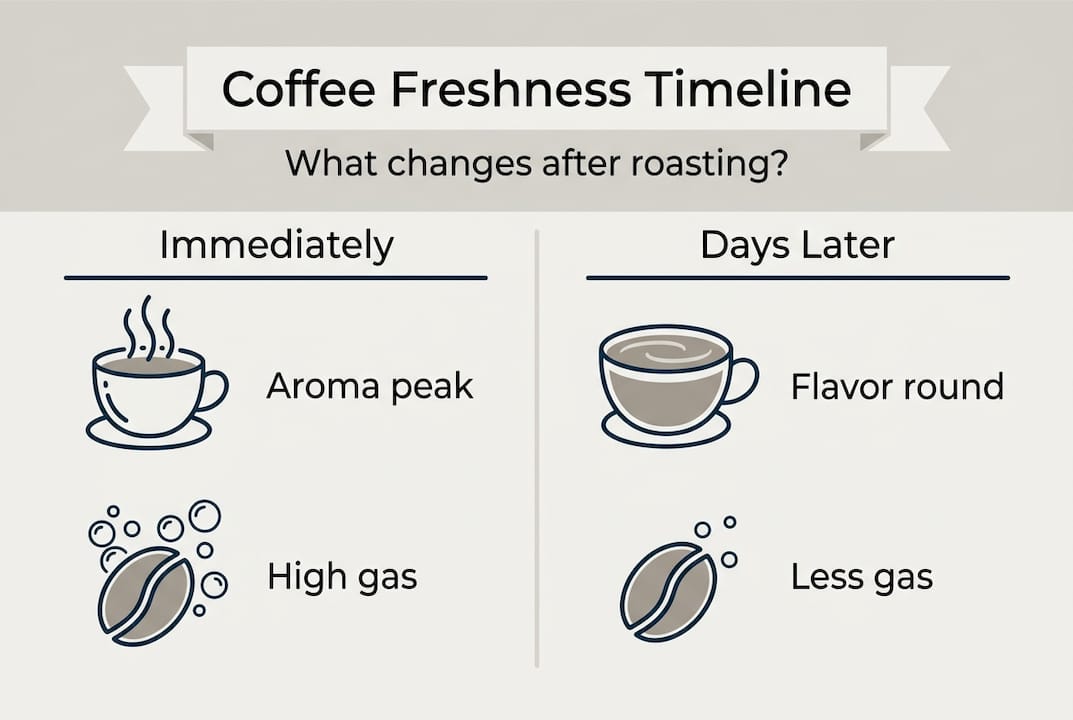
| Time after roasting | Chemical state | Sensory characteristics |
|---|---|---|
| 0-24 hours | High CO2, volatile loss | Can taste grassy, underdeveloped |
| 3-7 days | Moderate CO2, stabilized | Often peak flavor complexity |
| 8-14 days | Low CO2, gradual oxidation | Still excellent if stored well |
| 15+ days | Oxidation accelerating | Declining but acceptable |
Pro Tip: Write the roast date on your coffee bag and track how flavor changes over the first two weeks. This personal experimentation reveals your ideal brewing window for different origins and roast levels.
“The belief that coffee must be consumed within hours of roasting oversimplifies a complex maturation process. Controlled rest periods allow flavors to integrate and develop in ways that immediate brewing cannot achieve.” — Sensory analysis from specialty coffee research
The volatile compounds that create coffee’s signature aroma are most abundant immediately after roasting, but their intensity doesn’t always translate to better taste. Excessive carbon dioxide can create a harsh, sharp quality that masks subtle flavor notes. Understanding why freshly roasted coffee benefits from rest changes how you approach your brewing routine entirely.
Challenging the freshly roasted dogma: post-roast maturation explained
The specialty coffee world has long debated whether immediate freshness or controlled maturation produces superior results. Think of coffee like fine cheese or wine, products that develop character through carefully managed aging. While coffee doesn’t improve indefinitely like some wines, a strategic rest period allows flavors to integrate and mellow.
Studies on post-roast maturation demonstrate that sensory qualities can enhance without detriment when beans rest under proper conditions. This challenges the dogma that every hour past roasting diminishes quality. The reality involves a sweet spot where degassing completes enough for even extraction while aromatic compounds remain vibrant.
Benefits of strategic rest periods:
- Reduced harshness from excessive carbon dioxide
- Better integration of flavor compounds
- More balanced extraction during brewing
- Enhanced sweetness and reduced bitterness
- Clearer expression of origin characteristics
| Brewing immediately | Resting 3-7 days |
|---|---|
| Sharp, sometimes harsh | Smooth, integrated |
| Uneven extraction | Consistent extraction |
| Dominant roast flavors | Balanced roast and origin |
| High acidity | Rounded acidity |
| Can taste underdeveloped | Fully expressed complexity |
The sensory differences between immediate and rested coffee become obvious once you conduct side-by-side comparisons. Beans brewed within 24 hours often exhibit a piercing quality, while the same beans at five days post-roast reveal layers of sweetness and complexity that were previously masked. This maturation mirrors how certain foods develop their best characteristics through controlled aging.

Pro Tip: Buy two bags of the same coffee and brew one immediately while letting the other rest for a week. This direct comparison reveals how maturation affects your specific beans and brewing method.
Common misconceptions about coffee freshness include the belief that any delay after roasting causes irreversible quality loss. In reality, proper storage during a rest period preserves most desirable qualities while allowing unwanted compounds to dissipate. Another myth suggests that freezing immediately after roasting locks in peak freshness, but this ignores the beneficial changes that occur during controlled maturation.
“Coffee maturation resembles the development of complex flavors in aged cheeses. The process requires time for chemical reactions to reach equilibrium, creating a more refined final product than what exists immediately after production.”
Exploring coffee flavor profiles helps you recognize the specific characteristics that emerge during optimal rest periods. Different origins and roast levels benefit from varying maturation times, making personal experimentation essential. Light roasts often need longer rest periods than dark roasts because their denser structure retains more carbon dioxide.
Specialty coffee tasting techniques enable you to identify subtle differences between brewing stages. Professional cuppers routinely evaluate coffee at multiple points post-roast to determine ideal consumption windows. This systematic approach transforms casual coffee drinking into an intentional practice that maximizes every bean’s potential.
Practical guide for home baristas: optimizing freshness in your coffee routine
Translating freshness science into daily practice requires a systematic approach. Home baristas who track roast dates and adjust their methods consistently achieve better results than those who ignore timing considerations. The following steps create a framework for optimizing freshness in your routine.
Step-by-step freshness optimization:
- Record the roast date immediately when purchasing or receiving coffee
- Store beans in an airtight container away from light, heat, and moisture
- Allow light roasts to rest 5-10 days, medium roasts 3-7 days, dark roasts 2-5 days
- Grind only what you need immediately before brewing
- Adjust grind size coarser for beans within the first few days post-roast
- Monitor flavor changes daily to identify your personal peak window
- Use beans within three weeks of roasting for optimal quality
The ideal rest period varies based on multiple factors including roast level, origin, processing method, and personal taste preferences. Ethiopian naturals often benefit from longer rest than Colombian washed coffees because their fruit-forward profiles need time to integrate. Experimentation reveals patterns that guide your purchasing and brewing schedule.
Storage practices dramatically impact how long coffee maintains peak quality. Oxygen exposure accelerates staling through lipid oxidation, while moisture introduces off-flavors and encourages mold growth. Light degrades aromatic compounds, and heat speeds all deterioration processes. An airtight container in a cool, dark cabinet provides ideal conditions.
Storage best practices:
- Use opaque, airtight containers with minimal headspace
- Keep beans whole until brewing to minimize surface area exposure
- Avoid refrigeration, which introduces moisture and odor absorption
- Consider vacuum-sealed bags for beans you won’t use within two weeks
- Never store coffee near spices, onions, or other aromatic foods
Grinding just before brewing preserves volatile aromatic compounds that dissipate within minutes of grinding. Proper grinding techniques ensure you extract the full spectrum of flavors developed during the optimal rest period. Pre-ground coffee loses most aromatic complexity within hours, making fresh grinding non-negotiable for quality-focused brewers.
Pro Tip: If beans seem to extract too quickly or taste harsh within the first few days post-roast, grind slightly coarser than usual. Excess carbon dioxide can cause channeling and over-extraction, which a coarser grind helps mitigate.
Grind size adjustments compensate for the changing physical properties of beans as they degas. Fresher beans with higher carbon dioxide content create more resistance to water flow, requiring a coarser grind to achieve proper extraction time. As beans age and degas, you may need to grind finer to maintain extraction quality.
Following essential brewing steps ensures your freshness optimization efforts translate into superior taste. Water quality, temperature, and brewing time all interact with bean freshness to determine final cup quality. A systematic approach to each variable produces consistent results you can refine over time.
Creating a dedicated coffee brewing space helps you maintain the organization needed to track roast dates and implement proper storage. When your tools and beans have designated places, you’re more likely to follow best practices consistently. This environmental structure supports the habits that maximize freshness benefits.
Explore specialty coffee to unlock your freshest brew
Now that you understand how freshness and maturation affect flavor, you’re ready to experience the difference with carefully sourced beans. Our specialty coffee collection features single-origin Arabica beans roasted to order, ensuring you receive them at the ideal stage for resting and brewing. Each selection tells a unique origin story while delivering the quality you need for exceptional home brewing.
The Gold Collection showcases premium beans from dedicated growers who prioritize sustainable practices and exceptional quality. These carefully curated offerings provide the foundation for exploring how different origins respond to rest periods and brewing methods. Pair your fresh beans with quality paper filters that preserve delicate flavors without introducing off-tastes, completing your setup for brewing excellence.
Frequently asked questions
How long does coffee stay fresh after roasting?
Coffee maintains peak quality for approximately three weeks after roasting when stored properly in an airtight container away from light and heat. However, optimal flavor often emerges between 3-14 days post-roast as beans complete degassing and flavors integrate. Beyond three weeks, noticeable quality decline occurs as oxidation accelerates.
What’s the best way to store coffee beans for maximum freshness?
Store whole beans in an opaque, airtight container in a cool, dark cabinet away from heat sources and aromatic foods. Avoid refrigeration or freezing for daily-use coffee, as temperature fluctuations introduce moisture. Keep the container sealed between uses and only grind what you need immediately before brewing.
Does grinding coffee beans immediately before brewing really matter?
Absolutely. Ground coffee loses aromatic compounds within minutes of grinding due to increased surface area exposure to oxygen. Whole beans protect volatile oils and aromatics until brewing, preserving the complexity developed during optimal rest periods. Fresh grinding is one of the most impactful steps for improving coffee quality at home.
Can I freeze coffee beans to preserve freshness longer?
Freezing works for long-term storage of beans you won’t use within three weeks, but requires careful execution. Divide beans into single-use portions in airtight bags, freeze immediately, and thaw completely before opening to prevent condensation. Never refreeze thawed beans. For daily brewing, proper room temperature storage in airtight containers proves more practical.
How can I tell if my coffee has gone stale?
Stale coffee exhibits flat, cardboard-like aromas instead of vibrant, complex scents. The brew tastes dull and one-dimensional, lacking the brightness and nuanced flavors of fresh beans. Visually, aged beans may appear oily even if originally dry-roasted, indicating lipid migration to the surface. If your coffee smells or tastes lifeless, it’s past peak quality regardless of the roast date.
Recommended
-
Posted in
en, why freshness matters in coffee