What is coffee flavor profile? A 2026 guide for enthusiasts

Many believe darker roasts deliver stronger, better flavor. That’s false. Coffee flavor profiles emerge from over 800 volatile compounds interacting with origin, processing, and roasting. This guide clarifies how to identify, understand, and appreciate the nuanced flavors in your cup, empowering you to make informed coffee choices and elevate your tasting skills.
Table of Contents
- Defining Coffee Flavor Profile
- Impact Of Origin And Terroir On Coffee Flavor
- Role Of Processing Methods On Flavor Profile
- Roasting’s Impact On Flavor Development
- Sensory Tasting Techniques And Vocabulary
- Common Misconceptions About Coffee Flavor Profiles
- Impact Of Brewing On Flavor Perception
- Practical Guide To Tasting And Recognition
- Explore Specialty Coffee And Enhance Your Flavor Journey
- Frequently Asked Questions
Key takeaways
| Point | Details |
|---|---|
| Flavor profiles combine sensory and chemical dimensions | Coffee flavor includes taste, aroma, body, and aftertaste shaped by hundreds of chemical compounds. |
| Origin and processing deeply influence flavor | Geography, altitude, and processing methods like washed or natural create distinct flavor characteristics. |
| Roasting transforms flavor chemistry | Light roasts preserve origin notes while dark roasts reduce acidity and can mask nuanced flavors. |
| Sensory tools improve tasting accuracy | Using the SCA flavor wheel and standardized vocabulary helps identify and describe flavors precisely. |
| Regular practice sharpens recognition | Consistent cupping sessions with structured note-taking build sensory memory and confidence. |
Defining coffee flavor profile
A coffee flavor profile describes the complete sensory experience of a coffee. It encompasses taste, aroma, mouthfeel, and aftertaste. This profile results from a complex interaction of over 800 volatile compounds that create aroma and taste sensations.
The sensory experience blends with chemical makeup to form what you perceive in each sip. Key attributes include acidity, sweetness, bitterness, body, and aftertaste. Understanding these elements helps you identify what makes each coffee unique.
Key sensory attributes:
- Acidity: Bright, tangy notes often compared to citrus or stone fruits that add liveliness
- Sweetness: Natural sugars that balance bitterness and acidity
- Bitterness: A characteristic taste that can add depth when balanced properly
- Body: The weight and texture of coffee on your palate, ranging from light to full
- Aftertaste: Flavors that linger after swallowing, revealing complexity
These attributes work together to create a complete flavor impression. The balance between them determines whether a coffee tastes bright and fruity, smooth and chocolatey, or bold and earthy. Recognizing how these elements interact is the foundation for appreciating coffee complexity and making informed purchasing decisions.
Impact of origin and terroir on coffee flavor
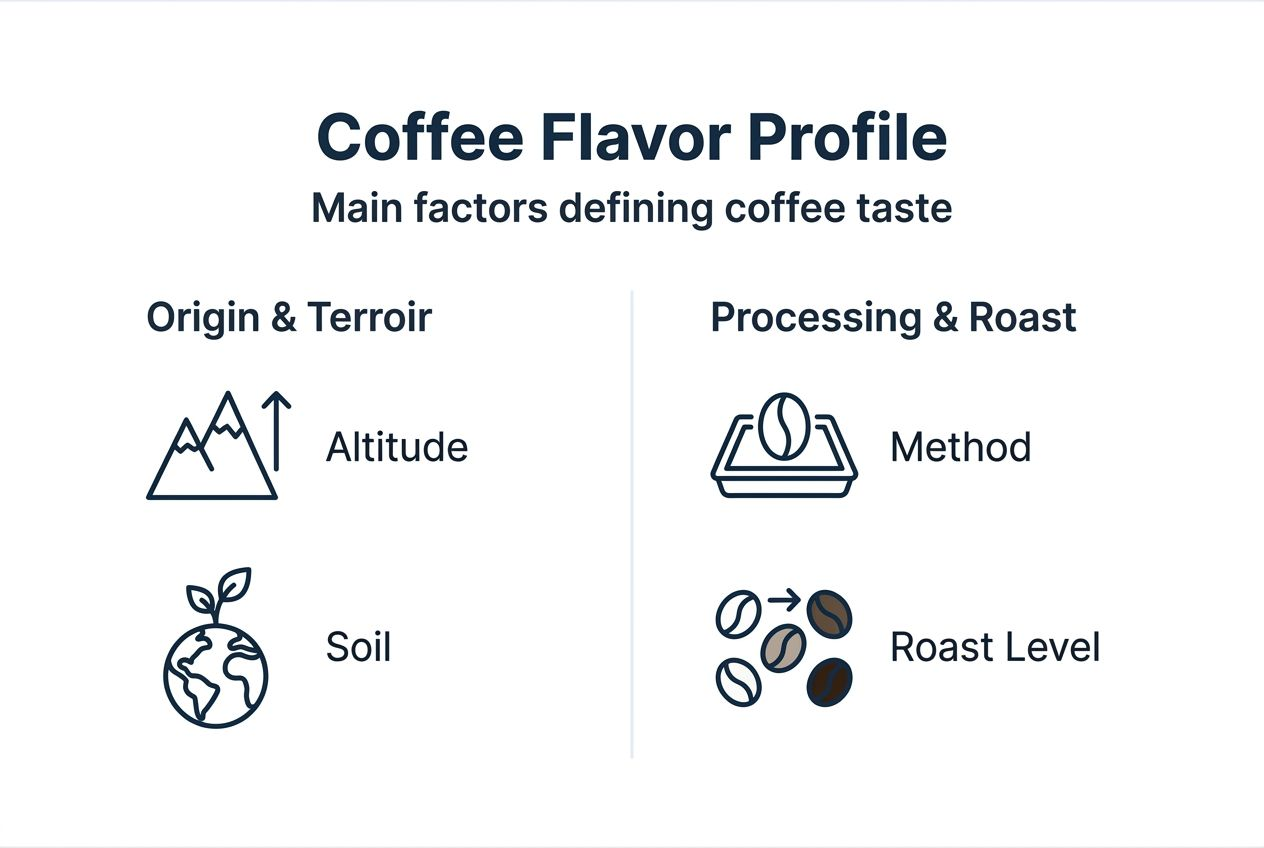
Geography shapes coffee flavor as distinctly as it shapes wine. The concept of terroir encompasses altitude, soil composition, climate, and cultivation practices. These environmental factors directly influence acidity levels, sweetness, and flavor complexity.
High-altitude coffees typically develop brighter acidity and more intricate flavor notes. Cooler temperatures at elevation slow cherry maturation, allowing more complex sugars and acids to develop. Coffees grown at 1,200 to 2,000 meters often exhibit floral, fruity, or tea-like characteristics.
Soil mineral content and rainfall patterns further modify flavor profiles. Volcanic soils in regions like Guatemala or Ethiopia contribute mineral notes and body. Consistent rainfall supports even cherry development, reducing defects that cause off-flavors.
Origin influences on flavor:
- Ethiopian coffees: Known for floral, berry, and citrus notes with bright acidity
- Colombian coffees: Balanced profiles with caramel sweetness and mild acidity
- Brazilian coffees: Nutty, chocolatey flavors with low acidity and fuller body
- Kenyan coffees: Intense berry notes, wine-like acidity, and bold flavor
Understanding importance of coffee origin helps you anticipate flavor characteristics before brewing. Regional patterns emerge because terroir creates consistent conditions that favor specific flavor development. When you select coffee by origin, you’re choosing a flavor blueprint shaped by thousands of environmental variables working in harmony.
Role of processing methods on flavor profile
Processing methods determine how coffee cherries transform into green beans ready for roasting. The fermentation and drying stages profoundly modify flavor chemistry. Three primary methods create distinctly different flavor outcomes.
Washed processing removes fruit before drying, yielding cleaner, brighter coffees with pronounced acidity. This method highlights origin characteristics because fruit sugars don’t influence final flavor. The result is clarity and crispness that appeals to those seeking defined, articulate flavors.
Natural processing dries whole cherries, allowing fruit sugars to penetrate the bean during fermentation. This creates fruity, wine-like notes with heavier body and sweetness. The extended contact between fruit and bean develops complex fermentation flavors that can taste like berries, tropical fruit, or even boozy notes.
Honey processing removes skin but leaves mucilage on the bean during drying. This creates a middle ground between washed and natural, offering some fruit sweetness with maintained clarity. The amount of mucilage left determines whether the result leans closer to washed or natural characteristics.
| Processing Method | Flavor Characteristics | Body | Acidity |
|---|---|---|---|
| Washed | Clean, bright, crisp | Light to medium | High |
| Natural | Fruity, wine-like, complex | Full | Low to medium |
| Honey | Balanced, sweet, smooth | Medium to full | Medium |
Processing effects on fermentation:
- Washed coffees ferment for 12 to 48 hours in water, developing lactic acids
- Natural coffees ferment for weeks, creating alcoholic esters and fruit compounds
- Honey coffees experience controlled fermentation based on mucilage thickness
Processing choices made by producers directly shape the flavor you experience. Recognizing these patterns helps you select coffees that match your preferences and understand why two coffees from the same region can taste dramatically different.
Roasting’s impact on flavor development
Roasting triggers chemical transformations that create coffee’s characteristic aromas and flavors. Maillard reactions and caramelization occur when heat breaks down sugars and amino acids. These reactions produce hundreds of new flavor compounds that didn’t exist in green beans.
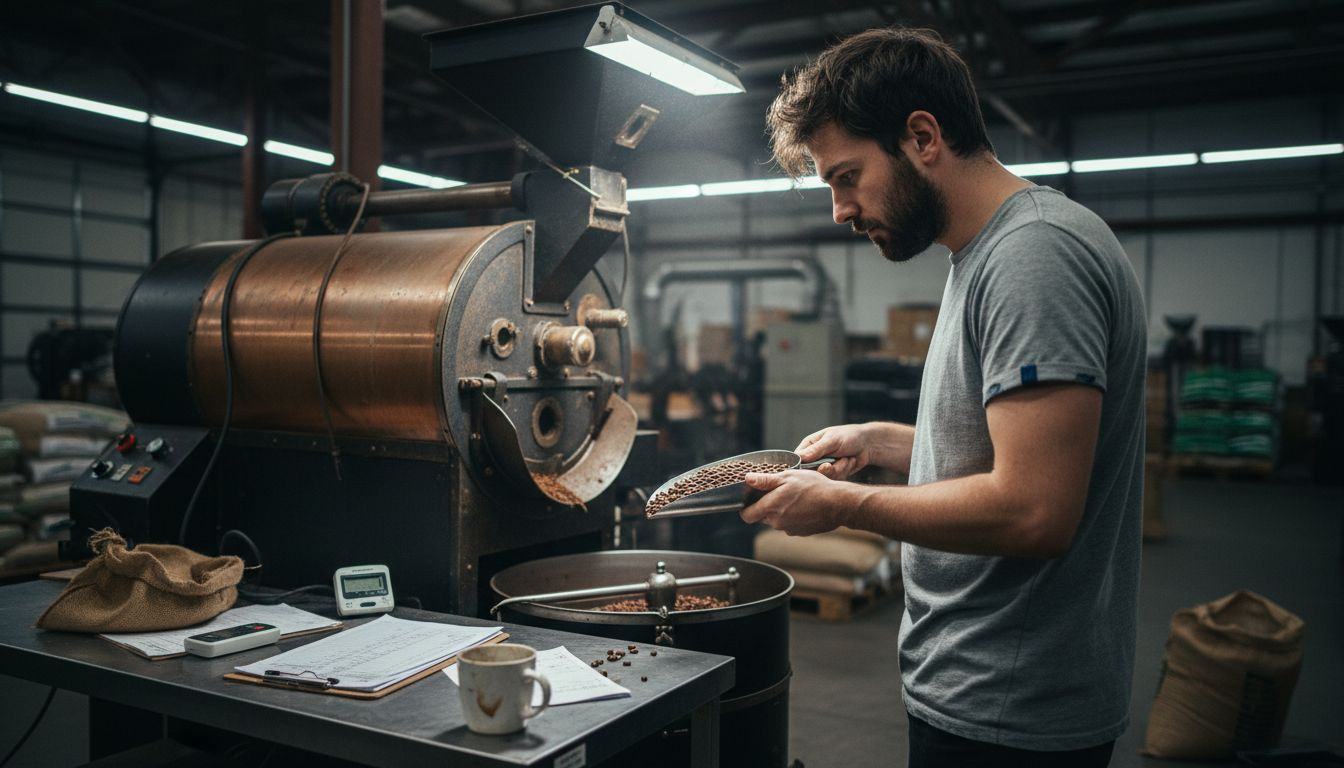
The roasting process reduces perceived acidity by 30 to 40 percent as organic acids break down under heat. Light roasts preserve more origin flavors and maintain higher acidity. Dark roasts develop roast flavors like chocolate, caramel, and smokiness that can mask delicate origin notes.
Balanced roasting requires precise temperature control and timing. Underdeveloped roasts taste grassy or sour. Overdeveloped roasts taste burnt or ashy. The goal is reaching the sweet spot where desired flavors emerge without destroying origin characteristics.
Roasting stages and flavor development:
- Light roasts: Preserve floral and fruity notes, maintain high acidity, lighter body
- Medium roasts: Balance origin and roast flavors, moderate acidity, fuller body
- Dark roasts: Emphasize roast flavors, reduce acidity, heaviest body
Pro Tip: Purchase coffee roasted within two weeks of brewing. Freshness preserves volatile aromatics that dissipate over time, ensuring you experience the full flavor complexity intended by the roaster.
Understanding coffee roasting explained helps you select roast levels that align with your preferences. The roaster’s skill in developing beans determines whether you taste the coffee’s potential or a one-dimensional char.
Sensory tasting techniques and vocabulary
The SCA Coffee Taster’s Flavor Wheel provides a standardized framework for identifying and describing coffee flavors. This tool categorizes over 100 flavor descriptors into groups like fruity, floral, nutty, and spicy. Using consistent vocabulary improves communication and tasting accuracy.
Sensory evaluation involves systematically assessing aroma, taste, mouthfeel, and aftertaste. Professional cuppers follow protocols that isolate specific attributes. Home enthusiasts can adopt simplified versions of these techniques to sharpen their palates.
Essential sensory terms:
- Aroma: Fragrance of dry grounds and wet coffee, revealing volatile compounds
- Acidity: Brightness or liveliness, not sourness, that adds structure
- Body: Tactile sensation of weight and texture in your mouth
- Flavor notes: Specific tastes like berry, chocolate, or citrus
- Aftertaste: Lingering flavors after swallowing, indicating quality and complexity
Building a mental library of flavor references improves recognition speed. Tasting fresh fruits, nuts, and spices outside of coffee helps you identify these notes when they appear in your cup. The more reference points you have, the more accurate your descriptions become.
Pro Tip: Keep a tasting journal noting coffee details, brewing parameters, and flavor impressions. Reviewing past notes reveals patterns in your preferences and tracks your improving palate over time.
Learning coffee flavor terminology transforms vague impressions into precise observations. This vocabulary empowers you to communicate preferences to roasters and baristas, ensuring you get coffee that matches your taste.
Common misconceptions about coffee flavor profiles
Many believe darker roasts mean stronger flavor, but this confuses intensity with quality. Darker roasts reduce acidity and mask origin characteristics rather than enhance inherent strength. What people perceive as strength is often just bitterness from carbonized sugars.
Bitterness gets unfairly labeled as a flaw. In reality, balanced bitterness contributes to complexity and depth. The problem arises when bitterness dominates due to over-extraction or excessive roasting. Well-crafted coffee uses bitterness as one component in a harmonious profile.
Another myth suggests that expensive coffee always tastes better. Price reflects factors like rarity, processing labor, and ethical sourcing practices. While these often correlate with quality, personal preference matters more than cost. A moderately priced coffee matching your taste beats a premium coffee you dislike.
Common flavor myths debunked:
- Myth: Oily beans indicate freshness
- Reality: Oil appears when beans are roasted dark or aged; neither guarantees quality
- Myth: Espresso beans differ from drip coffee beans
- Reality: Any bean works for any method; roast level and grind size matter more
- Myth: Single-origin always beats blends
- Reality: Skilled blending balances flavors that single origins can’t achieve alone
Over-roasting destroys the nuanced flavors that terroir, processing, and careful cultivation create. Understanding coffee roast myths explained helps you avoid marketing hype and focus on what truly creates exceptional flavor: balanced roasting that preserves a coffee’s unique characteristics while developing pleasant roast notes.
Impact of brewing on flavor perception
Brewing parameters determine how much flavor you extract from ground coffee. Water temperature, grind size, and brew time are the critical variables. These factors affect extraction yield and the balance of acidity, bitterness, and sweetness in your cup.
Water temperature between 195°F and 205°F extracts desirable compounds efficiently. Cooler water under-extracts, creating sour, weak coffee. Hotter water over-extracts, producing bitter, harsh flavors. Precise temperature control is essential for consistent results.
Grind size controls extraction rate by changing surface area exposed to water. Finer grinds extract faster, suitable for espresso’s short contact time. Coarser grinds extract slower, ideal for French press or cold brew. Matching grind to method prevents under or over-extraction.
Brewing variables and their effects:
- Water quality: Minerals enhance extraction; distilled water tastes flat; chlorinated water adds off-flavors
- Coffee-to-water ratio: Standard is 1:15 to 1:17; stronger ratios increase intensity
- Brew time: Shorter times favor acidity; longer times increase bitterness
- Agitation: Stirring or turbulence accelerates extraction and can enhance uniformity
Proper brewing technique enhances clarity and highlights subtle flavor notes that poor brewing obscures. Even exceptional beans taste mediocre when brewed incorrectly. Dialing in your brewing method is as important as selecting quality coffee.
Understanding these principles helps you troubleshoot flavor issues. Sour coffee suggests under-extraction; try finer grind or hotter water. Bitter coffee indicates over-extraction; try coarser grind or shorter brew time. Adjusting one variable at a time helps you identify the cause and achieve balanced extraction.
Practical guide to tasting and recognition
Regular cupping practice improves flavor identification by 60%. Structured tasting builds sensory memory and trains your palate to detect subtle differences. Following a consistent method accelerates learning and provides comparable results across sessions.
Cupping involves brewing multiple coffees simultaneously using standardized ratios and protocols. This side-by-side comparison highlights differences that individual tastings might miss. Even simplified home versions deliver significant learning benefits.
Step-by-step tasting process:
- Smell dry grounds: Note the intensity and character of the aroma before adding water
- Add hot water: Observe the bloom and emerging wet aromas as CO2 releases
- Break the crust: After four minutes, stir to release trapped aromatics and inhale deeply
- Taste systematically: Slurp coffee to aerosolize it across your palate, focusing on each attribute
- Record impressions: Note acidity, body, sweetness, bitterness, and specific flavor notes
- Evaluate aftertaste: Pay attention to lingering flavors and how they evolve
Focus on building basic taste recognition before attempting complex descriptors. Can you identify the difference between bright acidity and flat mouthfeel? Can you separate sweetness from fruity notes? Mastering fundamentals creates a foundation for advanced tasting.
Key practice tips:
- Compare coffees from different origins to understand regional characteristics
- Taste the same coffee at different temperatures to observe flavor evolution
- Cup coffees blind to eliminate bias and sharpen objective assessment
- Use the SCA flavor wheel during tastings to expand vocabulary
Exploring coffee flavor profiles explained provides context for what you’re tasting. Learning coffee cupping accuracy tips helps refine your technique. Reviewing coffee tasting tips home baristas offers additional strategies for accelerating your learning curve and achieving consistent, accurate flavor assessments.
Explore specialty coffee and enhance your flavor journey
Now that you understand what creates coffee’s complex flavors, you’re ready to explore beans that showcase these principles. House Coffee offers a curated specialty coffee collection featuring single-origin Arabica beans that highlight distinct origin characteristics and careful processing.
Each coffee in the collection comes with detailed origin stories and tasting notes that connect what you’ve learned to what you taste. For enthusiasts looking to deepen their exploration or small businesses seeking quality beans, specialty coffee wholesale options provide access to premium selections. Consider starting with one kilo coffee beans for drip to experience how proper roasting and freshness deliver the flavor complexity discussed throughout this guide.
Frequently asked questions
What does acidity mean in coffee flavor?
Acidity refers to a bright, tangy sensation in coffee, often likened to citrus or fruity notes. It contributes to the coffee’s liveliness and perceived freshness. High-quality coffees typically display pleasant acidity that adds structure rather than sourness.
How does coffee processing affect flavor?
Washed coffee tends to be cleaner and brighter while natural processing enhances fruitiness and sweetness. The fermentation stage during processing modifies flavor by developing specific acids and aromatic compounds. Processing choices made by producers directly determine whether a coffee tastes fruity, clean, or somewhere between.
Can darker roast coffee taste better than lighter roast?
Darker roasts often reduce acidity and mask origin flavors but can provide a bolder, sometimes bitter taste. Better flavor depends on individual preference and balance, not roast darkness alone. Some prefer the chocolate and caramel notes of darker roasts, while others value the brightness and complexity of lighter roasts.
What is the best way to start improving coffee tasting skills?
Begin with regular cupping sessions using a flavor wheel to identify basic tastes and aromas. Consistent practice and note-taking build recognition and confidence. Using structured guides like this coffee tasting guide improves tasting accuracy and accelerates your learning curve significantly.
Recommended
-
Posted in
en, what is coffee flavor profile