Coffee Roasting Explained: Elevating Specialty Flavor
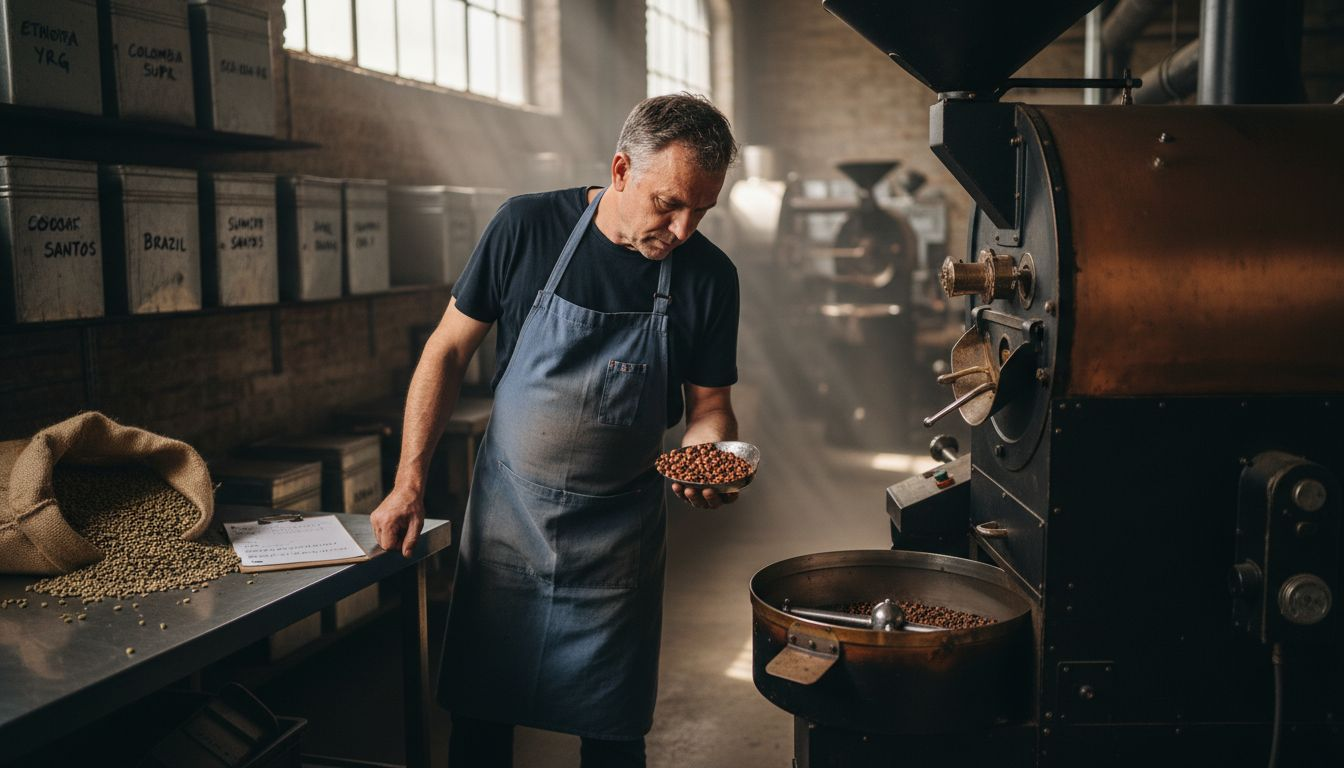
You may know how to brew a good cup, but understanding dry heat treatment of green coffee beans unlocks the science behind every sip. Misconceptions about roast strength, freshness, and flavor still shape what many American home baristas believe. Getting past these myths reshapes your specialty brewing experience, putting precise roasting chemistry and ethical sourcing at the center of every bean you choose.
Table of Contents
- Defining Coffee Roasting And Common Myths
- Roast Levels And Their Impact On Flavor
- Key Chemical Reactions In Arabica Roasting
- Ethical Roasting Practices And Sustainability
- Avoiding Mistakes In Home Coffee Roasting
Key Takeaways
| Point | Details |
|---|---|
| Coffee Roasting | Coffee roasting transforms green beans into specialty coffee through precise chemical reactions. Understanding these processes enhances flavor appreciation. |
| Myths of Roasting | Common misconceptions include the belief that darker roasts taste stronger and that refrigeration preserves freshness of beans. Proper storage is crucial. |
| Roast Levels and Flavor | Different roast levels (light, medium, dark) significantly influence flavor profiles and ideal brewing methods, emphasizing the importance of personal preference. |
| Ethical Practices | Prioritizing ethical roasting practices supports fair compensation for farmers and encourages sustainable farming methods, impacting both local communities and the environment. |
Defining coffee roasting and common myths
Coffee roasting is the dry heat treatment of green coffee beans that transforms their flavor, color, and texture through chemical reactions. This process is what separates specialty coffee from the bland stuff gathering dust on grocery store shelves.
You probably think you understand roasting. But most people believe things about coffee that simply aren’t true.
What Actually Happens During Roasting
The dry heat treatment of coffee beans involves hot air circulation that gradually raises bean temperature and triggers complex chemical transformations. The Maillard reaction creates those deep, desirable flavors you’re chasing when brewing specialty coffee at home.
Your beans undergo three main stages:
- Drying stage: Moisture content decreases from roughly 11% to near zero
- Roasting stage: Heat triggers flavor compound development and color changes
- Cooling stage: Beans stop cooking and stabilize for storage
This isn’t just heating. It’s precision chemistry.
The Myths That Won’t Die
The biggest myth? Darker roasts taste stronger. Wrong. Lighter roasts often pack more caffeine and brighter, more complex flavors. Darker roasts taste bolder, but that’s different from stronger.
Another common misconception: storing coffee in your fridge keeps it fresh longer. Truth is, refrigeration introduces moisture and absorbs odors, degrading your beans. Store them in an airtight container at room temperature instead.
People also think all dark roasts taste the same. They don’t. Origin still matters enormously, even at darker roast levels.
Why These Myths Exist
Historical roasting practices dating back to 15th-century Yemen established certain traditions that stuck around. Mass-market coffee brands reinforced these myths through marketing that equated dark color with quality.
Home baristas often inherit these beliefs from casual drinkers who never questioned them.
The roast level doesn’t determine quality alone—origin, processing method, and freshness matter equally to what you taste in your cup.
Understanding roasting’s real effects helps you make better purchasing decisions for your home brewing. You’ll stop chasing myths and start chasing actual flavor.
Pro tip: Request roast dates from your coffee supplier, not roast levels, and taste beans at different roasts from the same origin to discover your genuine preference instead of defaulting to what marketing tells you is “better.”
Roast levels and their impact on flavor
Roast level fundamentally shapes how your coffee tastes. From the moment those beans hit the roaster’s heat, the degree and duration of roasting directly determines which flavor compounds develop and which ones disappear.
This isn’t subtle. The difference between a light and dark roast is like comparing two completely different coffees.
Light Roasts: Bright and Complex
Light roasts stop shortly after the first crack, that audible popping sound that signals beans are expanding. At this stage, beans retain their origin characteristics most clearly.
What you get:
- Sweet and fruity notes that shine through
- Higher acidity that feels bright on your palate
- More caffeine preserved from the original bean
- Floral and tea-like qualities typical of the origin
Light roasts demand respect. They showcase what the farmer grew, not what the roaster created.
Medium Roasts: The Middle Ground
Medium roasts develop deeper flavor while maintaining some origin character. Roasters push past the first crack but stop before the second crack begins.
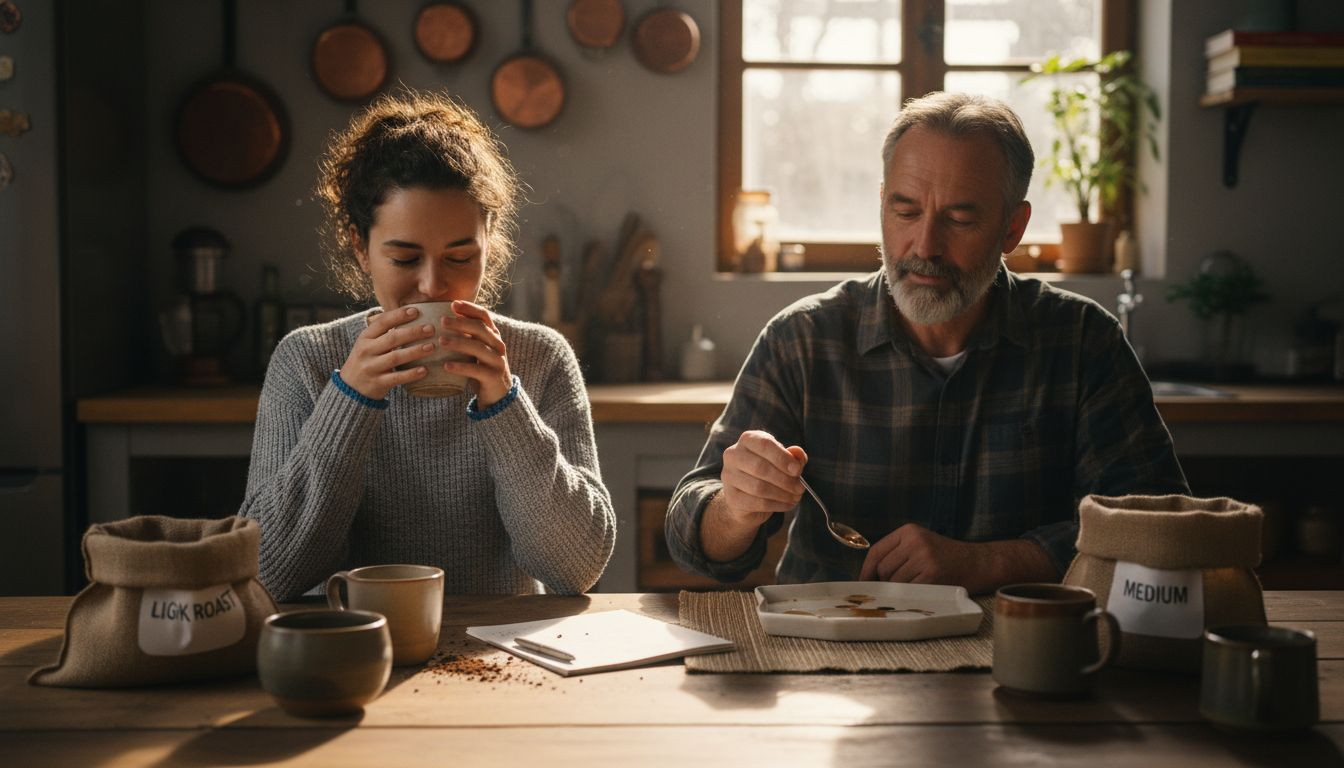
You’ll notice a balance between origin flavors and roasted character. Acidity stays present but becomes less sharp. Sweetness deepens while fruitiness fades slightly.
Many specialty coffee drinkers prefer medium roasts because they offer complexity without overpowering bitterness.
Dark Roasts: Bold and Pronounced
Dark roasts continue well into or past the second crack, where beans become visibly darker and oils surface on the bean exterior. Roasting intensity significantly impacts bitterness levels while reducing the bright, fruity notes lighter roasts preserve.
Dark roasts deliver:
- Bold, roasty flavors that dominate your cup
- Lower acidity for a smoother mouthfeel
- Nutty and smoky aromas from extended heat exposure
- Heavier body that feels fuller on your tongue
The Development Time Factor
Roast color alone doesn’t tell the whole story. Development time, the phase after the first crack, controls flavor balance more precisely than you’d expect.
A slow development creates more nuance. A quick, aggressive development emphasizes bitterness. This is where roasting skill separates mediocre from exceptional specialty coffee.
Roast level shapes your entire flavor experience, but development time determines whether that experience tastes refined or harsh.
Understanding these distinctions helps you choose beans aligned with your coffee flavor preferences and brewing method. Light roasts shine in pour-overs where subtlety matters. Dark roasts work beautifully in espresso where bold intensity helps cut through milk.
Here’s a quick comparison of coffee roast levels and their ideal brewing methods:
| Roast Level | Typical Flavor Profile | Ideal Brewing Method | Caffeine Content |
|---|---|---|---|
| Light | Bright, fruity, floral | Pour-over, drip | Highest |
| Medium | Balanced, sweet, complex | AeroPress, drip | Moderate |
| Dark | Bold, smoky, heavy body | Espresso, French press | Slightly lower |
Pro tip: Buy small quantities of the same bean across different roast levels and brew each identically to discover your genuine preference rather than defaulting to what others recommend.
Key chemical reactions in Arabica roasting
Roasting Arabica beans triggers a cascade of chemical transformations that create the flavors you taste in your cup. These reactions don’t happen randomly—they follow predictable patterns based on temperature and time.
Understanding what actually occurs inside those beans helps you appreciate why roasting skill matters so much.
The Maillard Reaction: Flavor Foundation
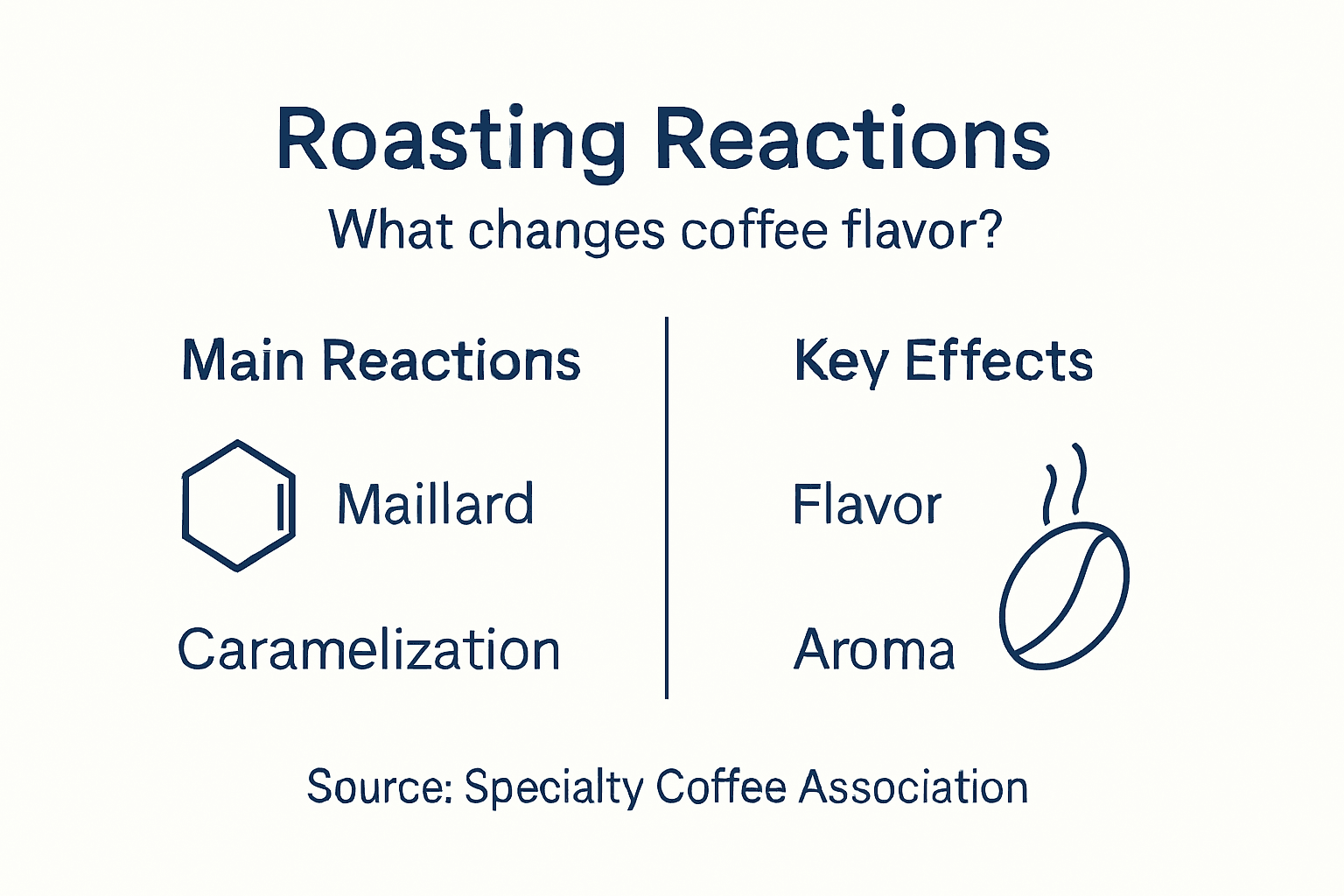
The Maillard reaction is the primary chemical process that builds coffee flavor during roasting. This reaction occurs when amino acids and reducing sugars interact at high temperatures, creating hundreds of new compounds.
This is where the magic happens. Without the Maillard reaction, coffee would taste grassy and bitter, like green beans.
Key results from the Maillard reaction:
- Development of brown color in beans
- Creation of roasty, nutty, and caramel-like flavors
- Production of complex aroma compounds
- Formation of bittersweet tastes that define roasted coffee
Caramelization: Sweetness Development
Caramelization breaks down sugars through heat, creating sweet and bitter compounds simultaneously. This reaction accelerates as roasting continues and temperatures climb above 320°F (160°C).
Caramelization adds depth and complexity that pure Maillard reactions alone cannot produce. It’s why darker roasts taste sweeter despite having less residual sugar.
Chlorogenic Acid Loss: Acidity Changes
Roasting reduces chlorogenic acids significantly, which explains why light roasts taste brighter and more acidic than dark roasts. These acids break down as temperature increases, lowering the overall acidity your palate perceives.
Chlorogenic acids also contribute to bitterness, so their loss in darker roasts creates a smoother, less sharp cup.
Moisture and Volatile Compounds
Roasting removes nearly all moisture from green beans, dropping from roughly 11% to below 1%. This concentration intensifies flavors and creates the crispy texture of roasted beans.
Volatile compounds like aldehydes and ketones form during roasting and define aroma. These compounds are delicate—they start degrading immediately after roasting stops, which is why freshness matters so much.
Caffeine Stability
Caffeine remains relatively stable throughout roasting, contrary to common myths. Whether you choose light or dark roasts, caffeine content changes only marginally.
This means roast level doesn’t determine caffeine content—bean origin and type do.
Chemical reactions during roasting are predictable and measurable, which is why specialty roasters control temperature and time with scientific precision.
These reactions combine to create the distinctive aromas and flavors that make specialty coffee so rewarding. Each roast level emphasizes different reactions, which is why the same bean tastes completely different across light, medium, and dark profiles.
This table summarizes key chemical reactions and their effects on coffee aroma and taste:
| Chemical Reaction | Main Effect | Aroma Impact | Flavor Change |
|---|---|---|---|
| Maillard Reaction | Creates complex compounds | Nutty, caramel notes | Deep, roasty flavors |
| Caramelization | Converts sugars | Sweet, toasted aromas | Enhances sweetness |
| Chlorogenic Acid Breakdown | Reduces acidity | Softer, mild aromas | Smoother, less bitter |
| Formation of Volatiles | Builds aroma profile | Fresh, layered scents | More pronounced taste |
Pro tip: Buy freshly roasted beans and brew them within two to three weeks of the roast date to experience these chemical compounds at their peak before volatile aromatics degrade.
Ethical roasting practices and sustainability
Ethical roasting goes beyond just the roaster’s facility. It encompasses the entire journey from farm to cup, ensuring that farmers earn fair compensation and environmental ecosystems remain healthy.
Your purchasing decisions directly influence whether coffee production supports or harms the communities that grow your beans.
What Makes Roasting Ethical
Ethical roasting practices prioritize transparency and accountability throughout the supply chain. This means roasters know exactly where their beans come from and can verify that farmers received fair prices.
Ethical roasters also minimize waste and energy consumption during the roasting process itself. They invest in equipment efficiency and responsible disposal of byproducts.
Key commitments include:
- Direct relationships with farming cooperatives and single-origin producers
- Payment above commodity market prices
- Investment in farmer training and crop improvement
- Transparent documentation of sourcing and pricing
- Certification through recognized programs like Fair Trade or Rainforest Alliance
Environmental Impact of Roasting
Coffee roasting consumes significant energy, but sustainable roasting methods integrate environmental conservation with economic viability. Modern roasters increasingly use renewable energy sources and heat recovery systems.
The real sustainability challenge extends beyond the roastery. It starts at the farm where agroforestry, soil conservation, and water management practices determine long-term environmental health.
Farmers implementing these methods create:
- Improved soil health and water retention
- Greater biodiversity in coffee-growing regions
- Enhanced climate resilience
- Reduced chemical inputs and pesticide use
Fair Trade and Certification Programs
Certification programs provide accountability that individual promises cannot guarantee. Fair Trade certification ensures farmers receive minimum prices regardless of market fluctuations, creating economic stability for families.
Ethical sourcing and fair production chains directly impact both environmental and social sustainability. When farmers earn adequate income, they invest in better practices and equipment.
Certification also verifies that labor practices meet human rights standards and child labor is eliminated.
The Roaster’s Responsibility
Roasters who prioritize ethics often roast smaller batches at lower temperatures to preserve quality while minimizing energy waste. This approach requires more skill but produces superior flavor.
They also invest in direct relationships with farmers, sometimes visiting farms personally to understand growing conditions and challenges.
Ethical roasting means understanding that every cup represents real people whose livelihoods depend on fair compensation and sustainable practices.
Your choice between commodity coffee and ethically roasted specialty coffee directly impacts coffee-farming communities and ecosystems. When you prioritize ethical roasting, you’re voting with your wallet for a better coffee industry.
Pro tip: Look for roasters that publicly share their sourcing information, farmer relationships, and certification details on product pages or websites, then ask them directly about their sustainability practices before buying.
Avoiding mistakes in home coffee roasting
Home roasting sounds romantic until your beans turn bitter and uneven. Most beginners repeat the same mistakes that destroy flavor before they even start brewing.
The difference between success and disappointment comes down to understanding what goes wrong and how to prevent it.
Temperature Control: The Foundation
Inconsistent temperature is the biggest culprit behind failed roasts. Your roasting environment needs stable heat that you can monitor and adjust throughout the process.
Without temperature control, some beans roast while others remain underdeveloped. This creates a chaotic mix of flavors instead of a cohesive roast.
Tips for better temperature management:
- Use a thermometer to track bean temperature, not just air temperature
- Preheat your roaster thoroughly before adding beans
- Maintain consistent heat application throughout the roast
- Keep detailed notes on temperature curves for each batch
Roast Stage Awareness: Know When to Stop
Understanding roast stages and development time separates experienced home roasters from frustrated beginners. The first crack signals the beginning of the real roast, not the end.
Many home roasters pull beans too early, assuming the first crack means they’re done. This produces sour, under-developed coffee that tastes grassy and thin.
Development time, the phase after the first crack, determines final flavor balance. A rushed development creates harsh bitterness. A carefully controlled development builds complexity and sweetness.
Uneven Roasting: The Mixing Problem
Uneven heat distribution causes some beans to roast faster than others, creating an inconsistent batch. Beans on the edges roast differently than those in the center.
Constant, gentle agitation prevents this problem. Keep beans moving throughout the roast so every bean experiences equal heat exposure.
Bean Selection and Storage
Start with quality green beans from reliable suppliers. Stale green beans won’t roast properly regardless of your technique.
Store green beans in a cool, dry environment away from direct sunlight. Moisture absorption and oxidation degrade roasting potential before you even begin.
Rushing the Process
Home roasting requires patience. Speed-roasting creates uneven flavor development and excessive bitterness.
Allow adequate time between roasts so your equipment cools completely. Rushing consecutive batches means you cannot control temperatures accurately.
Home roasting failures usually stem from rushing, not roasting. Give each batch the time it needs to develop properly.
When you taste coffee flavors like an expert at home, you’ll quickly identify which mistakes you’re making. This feedback loop accelerates improvement and helps you refine your technique.
Pro tip: Keep a detailed roasting journal documenting temperature, timing, first crack occurrence, and development duration, then taste-test each batch to identify patterns and correct your technique methodically.
Unlock the True Potential of Your Coffee with Expert Roasting Choices
If you have ever felt overwhelmed by confusing roast levels or struggled to find ethically sourced coffee that truly honors specialty flavor, you are not alone. This article breaks down the essential roasting science and debunks myths, but the next step is finding premium beans that match your ideal taste profile and values. At House Coffee, we understand how important it is to enjoy fresh, responsibly roasted coffee from trusted growers.
Discover our carefully curated Dark Roast – House Coffee collection that showcases bold, rich flavors achieved through precise roasting techniques. Pair your selection with the right tools from our Brewing Essentials – House Coffee to elevate your brewing experience at home. Don’t wait to taste the difference that ethical sourcing and skilled roasting make—visit House Coffee now and transform every cup into a celebration of craftsmanship and sustainability.
Frequently Asked Questions
What is coffee roasting?
Coffee roasting is the process of applying dry heat to green coffee beans, transforming their flavor, color, and texture through complex chemical reactions. This process is vital in differentiating specialty coffee from lower-quality coffee.
How does roast level affect coffee flavor?
Roast level significantly impacts coffee flavor. Light roasts are bright and complex, medium roasts balance sweetness with origin character, and dark roasts deliver bold, roasty flavors with lower acidity.
What are common myths about coffee roasting?
Common myths include the belief that darker roasts contain more caffeine and that refrigeration keeps coffee fresh. In reality, lighter roasts often have more caffeine, and storing coffee in a cool, dry place in an airtight container is best to maintain freshness.
How can I improve my home coffee roasting?
To improve home coffee roasting, focus on temperature control, be aware of the roast stages, and prevent uneven roasting by agitating the beans. Take notes on temperature and timing to refine your technique with each batch.
Recommended
-
Posted in
coffee roasting explained, en