Ethical Coffee Sourcing: Ensuring Impactful Choices

Choosing your morning cup goes beyond finding the freshest roast or most intriguing single-origin label. For many coffee enthusiasts, the real satisfaction comes from knowing their favorite beans are sourced with respect for farmers, the environment, and local communities. Embracing a holistic sustainability framework ensures that every brew supports fair pay, biodiversity, and transparent relationships in coffee-growing regions around the world.
Table of Contents
- Defining Ethical Coffee Sourcing Principles
- Types of Ethical Sourcing Certifications
- Farmer Relationships and Fair Compensation
- Environmental Impact and Sustainability Measures
- Common Pitfalls in Coffee Sourcing Practices
Key Takeaways
| Point | Details |
|---|---|
| Holistic Sustainability | Ethical coffee sourcing encompasses economic fairness, social equity, and environmental stewardship to create sustainable impacts in coffee-producing communities. |
| Importance of Certifications | Certifications like Fairtrade and Rainforest Alliance ensure transparency and promote responsible practices in the global coffee supply chain. |
| Long-term Farmer Relationships | Establishing equitable, long-lasting relationships with farmers leads to better compensation and community development, moving beyond transactional interactions. |
| Addressing Structural Challenges | Real ethical sourcing requires overcoming superficial practices and low farmer empowerment with comprehensive support and transparency in the supply chain. |
Defining Ethical Coffee Sourcing Principles
Ethical coffee sourcing represents a comprehensive approach to transforming the global coffee supply chain through deliberate, responsible practices. At its core, this concept goes far beyond simple transactional relationships, focusing instead on creating meaningful economic, social, and environmental impacts for coffee-producing communities.
The fundamental principles of ethical coffee sourcing are rooted in creating a holistic sustainability framework that addresses multiple interconnected dimensions. Systematic research highlights that genuine ethical sourcing encompasses three critical pillars:
- Economic Fairness: Ensuring farmers receive competitive, livable wages
- Social Equity: Supporting community development and worker rights
- Environmental Stewardship: Protecting ecosystems and promoting sustainable agricultural practices
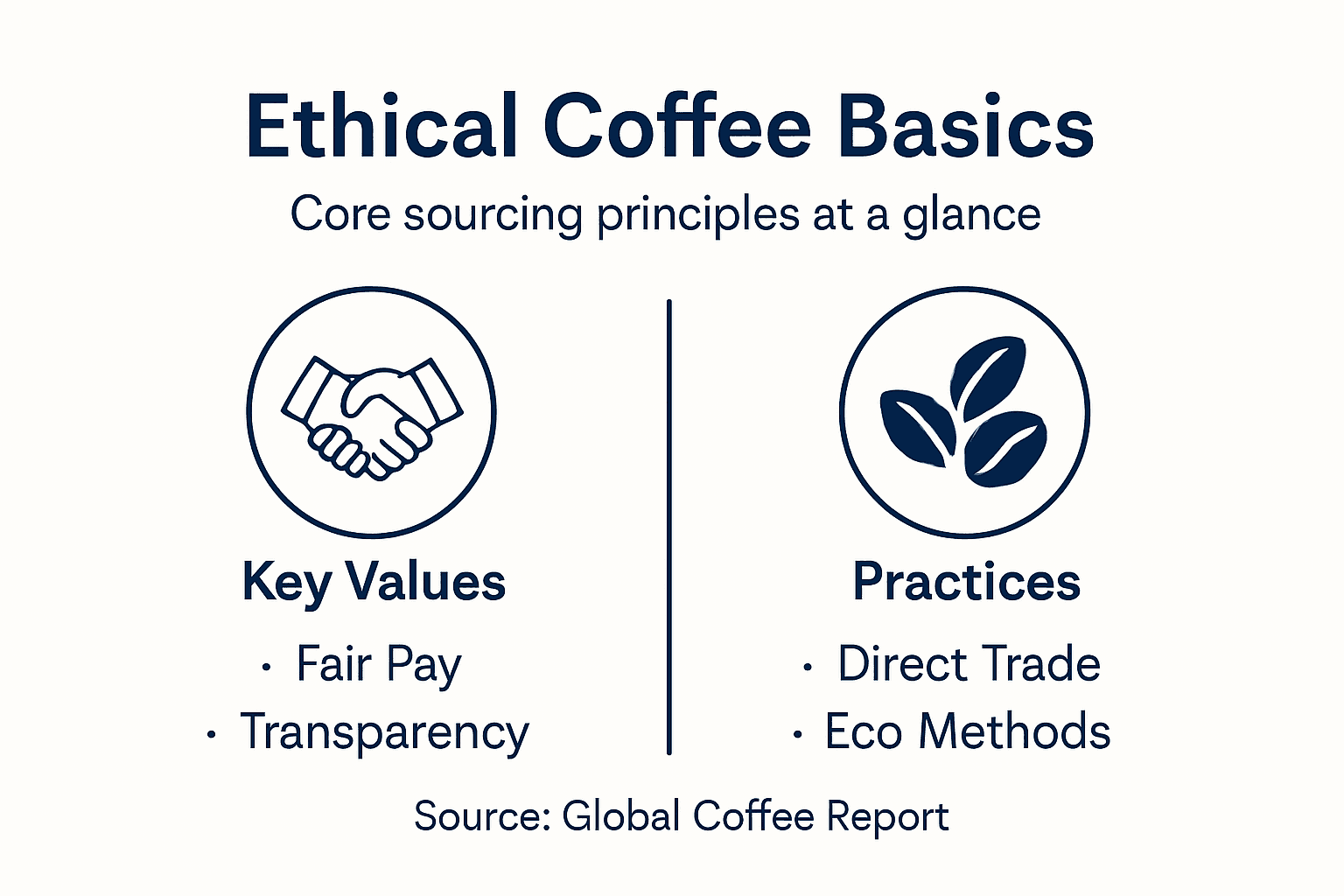
Within this framework, responsible coffee buyers commit to transparent relationships that empower producers and protect their fundamental human dignity. These commitments translate into concrete actions like paying premium prices, investing in local infrastructure, providing agricultural training, and maintaining long-term partnerships with farming cooperatives.
By prioritizing direct trade relationships and comprehensive supply chain transparency, coffee companies can create meaningful change. This approach recognizes that ethical sourcing is not a marketing strategy, but a profound commitment to human and environmental well-being.
Pro tip: When selecting coffee, look for certifications and detailed origin information that demonstrate a brand’s genuine commitment to ethical sourcing practices.
Types of Ethical Sourcing Certifications
Ethical coffee sourcing certifications serve as critical mechanisms for verifying and standardizing responsible production practices across the global coffee industry. These certifications provide consumers with transparent insights into the complex journey of coffee from farm to cup, ensuring that each purchase supports sustainable and equitable agricultural systems.
Coffee certifications validate multiple dimensions of ethical production, each focusing on distinct aspects of social and environmental responsibility. The most prominent certifications include:
- Fairtrade Certification: Guarantees minimum pricing and social premiums for farmers
- Rainforest Alliance Certification: Emphasizes environmental conservation and biodiversity
- USDA Organic Certification: Ensures chemical-free agricultural practices
- Direct Trade Certification: Promotes transparent, direct relationships between farmers and roasters
Each certification represents a unique approach to addressing systemic challenges within the coffee supply chain. For instance, Fairtrade International ensures farmers receive fair compensation, while the Rainforest Alliance focuses on protecting ecological systems and promoting sustainable land management practices.
Ethical certifications are more than just labels – they represent a comprehensive commitment to transforming global agricultural practices and supporting vulnerable farming communities.
Understanding the nuanced differences between these certifications allows consumers to make informed choices that align with their personal values and support meaningful sustainable development in coffee-producing regions.
Here’s how major ethical coffee certifications differ in focus and impact:
| Certification Type | Main Focus | Producer Benefits | Consumer Impact |
|---|---|---|---|
| Fairtrade | Minimum price guarantee | Community investment, fair pay | Supports farmer welfare |
| Rainforest Alliance | Environmental conservation | Biodiversity incentives | Encourages nature protection |
| USDA Organic | Chemical-free farming | Healthier farm conditions | Safer for consumers |
| Direct Trade | Transparent relationships | Higher incomes, partnership | Traceable supply chain |
Pro tip: Look for multiple certification logos on coffee packaging to ensure a comprehensive approach to ethical sourcing.
Farmer Relationships and Fair Compensation
The heart of ethical coffee sourcing lies in understanding and addressing the complex economic challenges faced by coffee farmers worldwide. Farmers often struggle with incomes that fall significantly below living wage standards, creating a critical need for transformative approaches to compensation and relationship building.
Ethical sourcing demands a comprehensive strategy that goes beyond simple price adjustments. The most effective approaches include:
- Establishing predictable pricing mechanisms
- Providing direct financial support
- Investing in farmer training and infrastructure
- Creating long-term partnership models
- Supporting community development initiatives
Most small-scale coffee farmers operate in challenging economic environments where market volatility can devastate their livelihoods. By developing stable, transparent relationships, coffee buyers can create meaningful economic opportunities that extend far beyond traditional transactional interactions.
Genuine fair compensation is not about charity – it’s about recognizing the fundamental value of human labor and creating sustainable economic ecosystems.
Deep systemic challenges persist in coffee-producing regions. Research reveals ongoing labor issues including child labor and unsafe working conditions, underscoring the critical importance of rigorous monitoring and genuine commitment to farmer welfare.

Pro tip: When purchasing coffee, prioritize brands that provide detailed information about their farmer relationships and compensation practices.
Environmental Impact and Sustainability Measures
Coffee production represents a complex environmental ecosystem with profound implications for global biodiversity and climate resilience. Sustainability initiatives have made significant progress, with over 73% of global coffee purchases now meeting critical sustainability criteria.
The most impactful environmental sustainability measures include:
- Implementing regenerative agricultural practices
- Protecting local biodiversity
- Reducing chemical fertilizer usage
- Minimizing water consumption
- Developing climate-adaptive farming techniques
- Supporting reforestation efforts
Climate change poses an existential threat to coffee production, with rising temperatures and unpredictable weather patterns challenging traditional growing regions. Innovative approaches that integrate local knowledge and scientific research are crucial for developing resilient agricultural systems.
Sustainable coffee production is not just about preserving ecosystems – it’s about creating a regenerative model that supports both environmental health and farmer livelihoods.
Systematic reviews highlight the importance of governance models that empower local communities and integrate sustainable practices. These approaches recognize that environmental stewardship must be deeply rooted in local cultural and economic contexts.
Pro tip: Choose coffee brands that transparently document their environmental sustainability strategies and support local conservation efforts.
Common Pitfalls in Coffee Sourcing Practices
Ethical coffee sourcing is fraught with complex challenges that often undermine well-intentioned sustainability efforts. Systemic sustainability challenges persist despite numerous certification programs and industry initiatives, revealing deep-rooted structural issues in global coffee supply chains.
The most significant pitfalls in coffee sourcing include:
- Superficial certification processes
- Limited farmer economic empowerment
- Inconsistent standard enforcement
- High certification costs for producers
- Minimal transparency in supply chains
- Inadequate long-term farmer support
Economic pressures create substantial barriers for small-scale coffee producers, who often lack bargaining power and access to critical market information. Research consistently highlights the fundamental disconnect between ethical intentions and practical implementation in global coffee sourcing.
Genuine ethical sourcing requires more than symbolic gestures – it demands structural transformations that fundamentally redistribute economic opportunities.
Certification programs, while well-intentioned, frequently fall short of creating meaningful change. The most successful approaches integrate comprehensive support systems that address economic, social, and environmental challenges simultaneously.
This table summarizes common pitfalls and possible solutions in ethical coffee sourcing:
| Challenge | Industry Weakness | Effective Solution |
|---|---|---|
| Superficial Certification | Lax or inconsistent audits | Third-party transparent oversight |
| High Certification Costs | Financial burden for farmers | Subsidized or group certifications |
| Poor Farmer Empowerment | Lack of market access | Direct long-term contracts |
| Minimal Supply Chain Transparency | Opaque sourcing practices | Digital traceability platforms |
Pro tip: Investigate coffee brands that provide detailed, transparent documentation about their sourcing practices and farmer support mechanisms.
Choose Ethical Coffee That Makes a Real Difference
Navigating the complex challenges of ethical coffee sourcing requires commitment to fairness, sustainability, and transparency. At House Coffee, we understand the critical need to support farmers with fair compensation, protect the environment, and deliver premium quality beans you can trust. Our Organic – House Coffee collection highlights carefully selected single-origin Arabica beans, aligned with the principles of environmental stewardship and sustainable farming outlined in the article.

Experience coffee that supports ethical sourcing beyond certifications. Explore our Diamond collection – House Coffee for exclusive beans sourced through stable, transparent partnerships with growers. Every purchase helps empower farming communities and contributes to lasting change. Visit us today at House Coffee and take your next step toward impactful, mindful coffee choices.
Frequently Asked Questions
What are the main principles of ethical coffee sourcing?
Ethical coffee sourcing is based on three main principles: economic fairness, social equity, and environmental stewardship. These principles aim to create a sustainable framework that benefits coffee-producing communities.
How can consumers ensure they are supporting ethically sourced coffee?
Consumers can look for certifications on coffee packaging, such as Fairtrade, Rainforest Alliance, USDA Organic, and Direct Trade. These certifications validate ethical practices and provide transparency in coffee sourcing.
What are the environmental benefits of ethical coffee sourcing?
Ethical coffee sourcing promotes environmental sustainability through practices like regenerative agriculture, protection of biodiversity, reduced chemical use, and water conservation. These efforts help create a healthier ecosystem and combat climate change.
What challenges do coffee farmers face in achieving fair compensation?
Coffee farmers often struggle with incomes below living wage standards due to market volatility, limited bargaining power, and high certification costs. Ethical sourcing addresses these challenges through stable pricing, direct support, and community development initiatives.
Recommended
-
Posted in
en, what is ethical coffee sourcing