Why Choose Arabica Beans for Premium Coffee

Choosing the right coffee beans can feel overwhelming when you care about both flavor and ethical sourcing. For ethically-minded North American coffee lovers, understanding the origins and qualities of Arabica matters because these beans connect you directly with traditions rooted in Ethiopia, the birthplace of fine coffee. Coffea arabica is native to Ethiopia, where its major genetic diversity is found, shaping every premium Arabica variety you brew at home. This article uncovers how Arabica’s unique history and botanical traits empower you to make better choices for your palate and the planet.
Table of Contents
- What Are Arabica Beans and Their Origins
- Key Characteristics of Arabica Coffee Beans
- How Arabica Differs From Robusta Varieties
- Flavor Profiles, Freshness, and Health Benefits
- Ethical Sourcing and Eco-Friendly Practices
- Common Mistakes When Selecting Arabica Beans
Key Takeaways
| Point | Details |
|---|---|
| Origin Matters | Understanding that Arabica beans trace back to Ethiopia enhances appreciation for flavor and ethical sourcing. |
| Choose Quality | Look for specific origin information on Arabica packaging for better traceability and quality assurance. |
| Freshness is Key | Purchase freshly roasted Arabica within 7 to 14 days for optimal flavor and health benefits. |
| Support Ethical Sourcing | Select Arabica from certified programs to ensure fair compensation for farmers and sustainable practices. |
What Are Arabica Beans and Their Origins
Arabica beans carry a fascinating origin story that directly impacts the coffee sitting in your kitchen right now. Coffea arabica is native to Ethiopia, specifically the southwestern forests where the coffee plant first emerged thousands of years ago. This isn’t just historical trivia. The genetic diversity found in Ethiopian coffee forests shaped every Arabica variety cultivated worldwide today. Think of Ethiopia as the genetic vault for all premium Arabica coffee. When historians trace the lineage of modern coffee cultivation, they point to a pivotal moment: seeds from southwestern Ethiopia were transported to Yemen for cultivation. From Yemen, the Bourbon and Typica varieties spread across the globe, eventually reaching India, Indonesia, and the Americas by the 18th century. These two ancestral lines form the foundation of nearly all Arabica coffee you’ll encounter today.
What makes Arabica scientifically unique goes beyond its geographical roots. Arabica coffee represents about 60% of global production and remains the most cultivated coffee species worldwide. The plant itself presents distinctive visual characteristics: a small tree with glossy, dark green leaves and delicate white flowers. Botanically speaking, Arabica is an allotetraploid, meaning its genetic makeup resulted from a natural hybridization between two different coffee species roughly 1 million years ago. This genetic history partly explains why Arabica beans produce the complex flavor profiles and aromatic compounds that coffee enthusiasts prize. The species thrives in specific altitude ranges and cooler climates, which limits where it can be grown successfully. This geographical constraint makes authentic Arabica inherently more exclusive than its hardier Robusta counterpart. Unlike Robusta beans, which tolerate lower altitudes and harsher conditions, Arabica demands elevation, shade, and careful cultivation practices.
For North American coffee lovers focused on ethical sourcing, the Arabica origin story matters significantly. Understanding that your premium beans likely trace back to Ethiopian ancestry helps you appreciate the connection between origin, flavor, and the farmers sustaining these heirloom varieties. Single origin Arabica beans from different regions develop distinct characteristics based on altitude, soil composition, and local farming practices. A coffee from one Ethiopian region tastes remarkably different from one grown in Central America, yet both share that Arabica foundation. When you choose Arabica, you’re selecting a species with proven complexity and a heritage spanning centuries of careful cultivation.
Pro tip: When browsing Arabica options, look for specific origin information on the packaging. Coffee labeled simply as “Arabica” provides less insight than beans identified by region, farm, or cooperative name, which often indicates higher quality and better traceability to ethical producers.
Key Characteristics of Arabica Coffee Beans
Arabica beans possess distinctive physical and chemical traits that set them apart from other coffee species and explain why they command premium prices. The plant itself grows as a dense, upright shrub reaching 10 to 15 feet tall, displaying glossy, wavy-edged dark green leaves and producing fragrant white flowers. These flowers develop into red berries, each typically containing two seeds that become your coffee beans. This growth pattern matters to ethically-minded buyers because it reveals something about farming practices. Arabica plants thrive in partial shade environments with rich, well-drained soil, which aligns perfectly with shade-grown and agroforestry practices that preserve forest ecosystems. The species exhibits moderate drought tolerance and demonstrates general pest resistance, reducing the need for heavy chemical interventions. This natural hardiness against pests appeals to conscious consumers seeking sustainably produced coffee without excessive pesticide use.
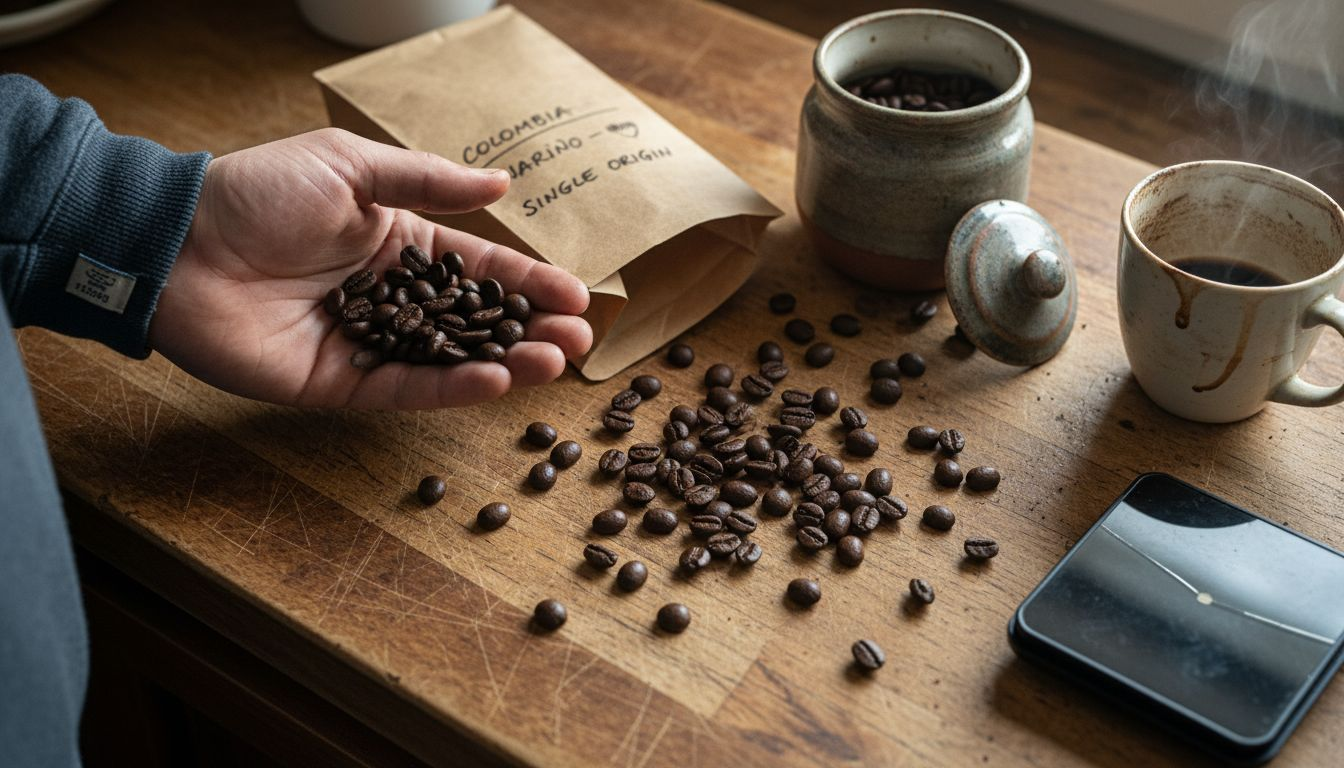
What happens inside an Arabica bean determines the flavor and health qualities you experience. Arabica beans contain bioactive compounds including caffeine, chlorogenic acids, trigonelline, and phenolics that deliver both taste and antioxidant benefits. These chemical compounds create the complexity coffee enthusiasts crave. The roasting process significantly alters these compounds. Some decrease during heat exposure, while others form entirely through roasting chemical reactions, which explains why a light roast tastes entirely different from a dark roast despite coming from identical beans. Beyond bioactive compounds, Arabica beans are rich in carbohydrates with moderate protein and fat content. This nutritional profile contributes to the body and mouthfeel you experience when drinking. Arabica is renowned for its smooth flavor profile and rich aroma, making it the preferred choice among North American coffee drinkers who appreciate nuance over intensity.
The combination of these physical and chemical characteristics makes Arabica the obvious choice for premium coffee. A plant that grows slowly in shade-compatible conditions naturally produces beans with more developed flavor compounds than rapidly cultivated alternatives. The density of the plant and density of the bean itself correlate with slower growth and higher bean quality. When you purchase single-origin Arabica from an ethical producer, you’re investing in beans shaped by optimal growing conditions, careful harvesting, and precise processing. The plant’s preference for elevation and cooler temperatures means Arabica thrives in regions known for exceptional coffee quality. These geographical constraints create scarcity that justifies premium pricing while supporting farmers who maintain higher standards.
Pro tip: Store your Arabica beans in an airtight container away from direct sunlight and heat, as the bioactive compounds responsible for flavor and antioxidants degrade when exposed to light and oxygen. Freshly roasted beans reach peak flavor within 7 to 14 days, so buy smaller quantities more frequently rather than stockpiling.
How Arabica Differs From Robusta Varieties
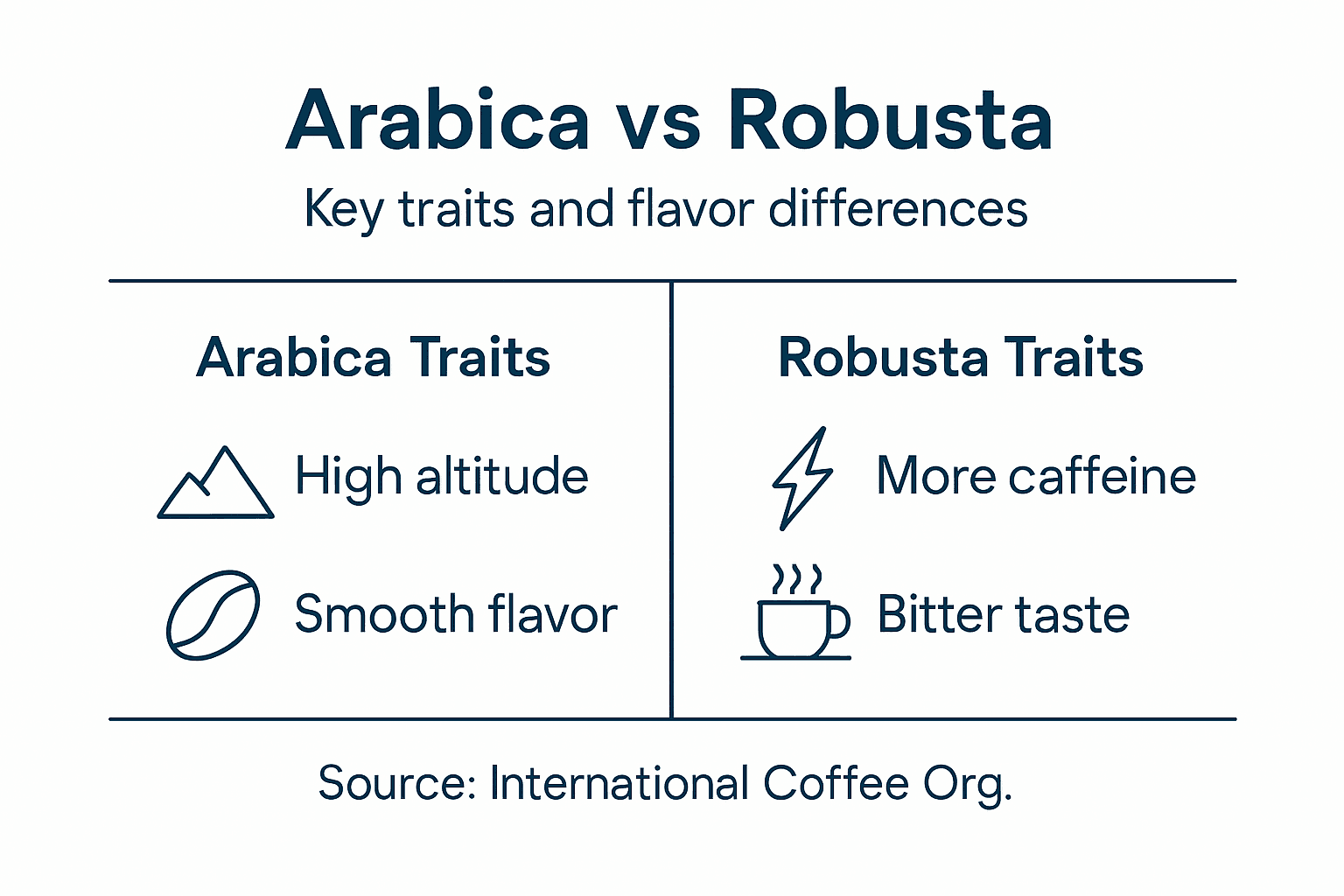
The coffee world essentially splits into two camps: Arabica and Robusta. These are distinct species with fundamentally different characteristics that affect everything from flavor to farming practices. Understanding these differences explains why Arabica commands premium prices and why ethically-minded North American coffee lovers consistently choose it over cheaper alternatives. Arabica grows at high altitudes between 1,200 and 2,200 meters, typically in cooler climates that demand more careful cultivation. Robusta, by contrast, thrives at lower altitudes and tolerates hotter, more challenging growing conditions. This altitude difference isn’t just geography. Higher altitude growth produces denser beans with more complex sugar development, which translates directly into the nuanced flavors you taste in your cup. The elevation requirement means Arabica farming inherently aligns with certain environmental preservation practices, as high altitude regions often feature forests and diverse ecosystems that benefit from shade-grown coffee cultivation.
Chemically and botanically, these species diverge significantly. Arabica contains approximately 1.2% caffeine, while Robusta contains roughly double that amount, yet Arabica drinkers rarely feel jittery or overwhelmed. The lower caffeine content works in Arabica’s favor because it allows more delicate flavors to shine through. Robusta beans taste stronger and more bitter, which makes them useful for espresso blends where intensity masks lower quality, but this same bitterness detracts from the refined experience premium drinkers seek. Arabica delivers smooth, floral, and fruity flavor profiles with bright acidity that creates complexity. Robusta tastes earthy and harsh by comparison. From a pest and disease perspective, Arabica exhibits greater susceptibility to coffee leaf rust and other diseases, which means farmers must employ more sophisticated management techniques. This vulnerability actually supports ethical sourcing because it discourages large-scale industrial monoculture farming. Robusta’s hardiness enables high-yield commodity production, which deprioritizes quality and often involves aggressive pesticide use.
The distinction matters profoundly for conscious consumers. Arabica’s genetic diversity creates distinct flavor profiles across different origins and farms. A single-origin Arabica from Ethiopia tastes completely different from one grown in Central America or East Africa, offering variety that reflects terroir and farmer expertise. Robusta lacks this genetic complexity and produces a one-dimensional coffee experience. When you purchase premium Arabica from an ethical producer, you’re investing in beans grown with intentionality rather than pure yield maximization. The plant’s demanding nature means Arabica farmers must understand their land, maintain soil health, and practice sustainable agriculture. These requirements naturally align with the values of North American coffee enthusiasts seeking to support responsible producers. Robusta represents the opposite philosophy: maximum output with minimum input, often at environmental and quality cost.
Here’s a concise comparison of Arabica and Robusta coffees:
| Attribute | Arabica | Robusta |
|---|---|---|
| Growing Altitude | 1,200–2,200 meters | 200–800 meters |
| Climate Preference | Cool, shaded, humid | Hot, dry, resilient |
| Caffeine Content | About 1.2% | About 2.2% |
| Flavor Profile | Smooth, floral, fruity | Bitter, earthy, harsh |
| Bean Density | High, slow growth | Lower, fast growth |
| Pest Resistance | Moderate; susceptible | Strong; resistant |
| Price Range | Premium, higher cost | Lower, commodity grades |
| Genetic Diversity | Wide variation | Limited diversity |
Pro tip: If a coffee listing seems suspiciously cheap for supposedly premium beans, check the product details for species confirmation. Unscrupulous sellers sometimes blend Robusta into Arabica products or mislabel entirely. True single-origin Arabica from quality roasters typically costs 20 to 40 percent more than generic commercial coffee, reflecting genuine quality differences.
Flavor Profiles, Freshness, and Health Benefits
Arabica coffee tastes the way it does because of what happens during roasting. The beans you purchase contain chlorogenic acids, trigonelline, diterpenes, and other bioactive compounds that transform under heat. When you roast Arabica beans, antioxidants and polyphenol content increase during early roasting then decrease, which explains why light and medium roasts preserve different flavor characteristics than dark roasts. This chemical transformation isn’t random. Different Arabica varieties respond uniquely to heat, which is why a single-origin Ethiopian Arabica tastes floral and fruity while a Central American variety might display chocolate and nutty notes. A light roast preserves more origin-specific flavors because the beans spend less time under heat, allowing delicate compounds to remain intact. Medium roasts develop more balanced sweetness and body. Dark roasts emphasize boldness but sacrifice some of the nuanced complexity that makes premium Arabica worth purchasing. Understanding this roasting chemistry helps you select beans suited to your brewing preferences and taste sensibilities.
Freshness dramatically impacts both flavor and health benefits. Arabica beans begin degrading the moment roasting finishes. Exposure to oxygen, light, and heat accelerates deterioration of the very compounds that make coffee taste good and deliver health benefits. Freshly roasted beans reach peak flavor within 7 to 14 days, a window that conscientious roasters and retailers highlight prominently. After that window closes, the antioxidant activity gradually diminishes. This is why purchasing from specialty roasters who roast in small batches matters for ethically-minded buyers. Industrial coffee manufacturers roast massive quantities weeks or months before sale, meaning their beans have already lost significant antioxidant content and flavor complexity by the time they reach your kitchen. When you buy fresh, single-origin Arabica from a committed producer, you receive beans at their nutritional and flavor peak. Store them in an airtight container away from sunlight and heat to preserve these qualities as long as possible.
The health benefits of Arabica deserve genuine attention. Arabica coffee provides antioxidant effects and potential anticarcinogenic properties through chlorogenic acids and other bioactive compounds. These aren’t marketing claims. Antioxidants combat oxidative stress in your body, and polyphenols support anti-inflammatory responses. The caffeine content, around 1.2 percent in Arabica, provides mental clarity without the jittery overstimulation associated with higher-caffeine Robusta. For North American coffee drinkers aged 25 to 45 seeking both flavor and wellness benefits, Arabica checks both boxes simultaneously. A cup of premium Arabica delivers mental alertness, antioxidant support, and genuine enjoyment. The smoothness and rich aroma that define Arabica contribute to the overall experience without the harshness that can trigger digestive discomfort. When you choose ethically sourced Arabica grown by farmers committed to sustainable practices, you invest in beans that nourish both your body and your values. This alignment between personal wellness, environmental responsibility, and authentic flavor experience explains why conscious consumers consistently return to premium Arabica.
Pro tip: Grind your Arabica beans immediately before brewing to maximize antioxidant extraction and flavor clarity. Whole beans preserve bioactive compounds far better than pre-ground coffee, which oxidizes rapidly once ground. If you must purchase pre-ground coffee, use it within one week and store it in an opaque airtight container.
Ethical Sourcing and Eco-Friendly Practices
Your coffee purchase directly impacts farmers in Ethiopia, Central America, East Africa, and beyond. The reality of global coffee production reveals systemic challenges that ethically-minded North American buyers increasingly recognize and reject. Coffee farming communities face interconnected problems including inadequate compensation, volatile market prices, and limited access to education. Low pay and volatile markets leave farmers with insufficient resources to adopt sustainable farming practices, creating a vicious cycle where economic desperation forces environmental compromise. A farmer struggling to feed their family cannot prioritize soil conservation, shade-grown practices, or biodiversity protection. Transparent market information remains scarce in many coffee-producing regions, meaning farmers lack the knowledge to negotiate better prices or understand global demand trends. When you purchase Arabica from ethical sourcing programs, you break this cycle by directly supporting farmers who receive fair compensation and technical support. This financial stability enables them to invest in sustainable practices that benefit both their land and future harvests.
Certification programs provide accountability mechanisms that genuinely matter. Ethical sourcing initiatives focus on improving farmer livelihoods while promoting environmental stewardship and transparent supply chains. These programs evaluate economic standards, social practices, and environmental impact across coffee operations. Reputable certifications verify that farmers receive fair prices, workers enjoy safe conditions, and land management protects forest ecosystems. Look for specific certifications when purchasing premium Arabica rather than relying on vague claims. The most credible programs trace beans from specific farms or cooperatives, allowing you to learn about the exact people growing your coffee. This transparency matters psychologically and practically. You know your purchase supports an identifiable farmer practicing responsible agriculture rather than funding industrial commodity coffee production that prioritizes yield over sustainability. Shade-grown Arabica preserves forest canopy, maintains biodiversity, and sequesters carbon. Certified programs enforce these practices and require continuous improvement, meaning participating farmers must demonstrate ongoing commitment to environmental stewardship.
Eco-friendly Arabica cultivation directly protects water resources, soil health, and forest ecosystems. No deforestation standards prevent coffee farmers from clearing native forests for plantations, which would devastate biodiversity and eliminate carbon sinks. Responsible management systems ensure chemical use remains minimal, protecting both worker health and water quality in vulnerable communities. Arabica grown in biodiverse agroforestry systems supports bird populations, insect pollinators, and soil microorganisms that maintain long-term land productivity. When you purchase ethically sourced Arabica, you invest in coffee production models that work with nature rather than against it. These sustainable practices require more labor, more knowledge, and more patience than industrial monoculture farming. The premium price you pay for specialty Arabica reflects this genuine commitment to quality and responsibility. You receive superior flavor complexity and aroma while knowing your purchase actively supports environmental preservation and farmer welfare across coffee-producing regions.
To better understand how certifications support ethical coffee, refer to this summary:
| Certification Type | Key Focus | Benefits to Farmers | Impact on Environment |
|---|---|---|---|
| Fair Trade | Fair pay, stable markets | Reliable income, community funds | Promotes sustainable land use |
| Organic | No chemical use | Healthier working conditions | Protects water and biodiversity |
| Rainforest Alliance | Ecosystem conservation | Technical support, better yield | Preserves forests and wildlife |
| Direct Trade | Transparent sourcing | Higher premiums, training | Incentivizes small-batch sustainability |
Pro tip: Request origin information before purchasing. Ask your coffee retailer specific questions about farmer cooperatives, certification programs, and roasting dates. Suppliers genuinely committed to ethical sourcing eagerly provide this information because they know their sourcing practices represent competitive advantages. Avoid retailers who cannot answer detailed questions about where their Arabica comes from.
Common Mistakes When Selecting Arabica Beans
Most North American coffee buyers make critical errors without realizing they are compromising quality and value. The most fundamental mistake is ignoring roast dates entirely. Coffee begins degrading immediately after roasting, yet countless consumers purchase beans weeks or months old without checking packaging information. A bag labeled only with a harvest date tells you nothing about freshness. Roast dates matter more than anything else on the package. If a retailer cannot provide a roast date within the last two weeks, walk away. Another widespread error involves overlooking origin transparency. Coffee labeled simply as “Arabica blend” or “premium Arabica mix” provides zero information about where your beans actually come from. Blending beans from multiple origins obscures quality and makes it impossible to trace your purchase back to specific farmers or cooperatives. When selecting Arabica, demand single-origin specificity. Look for information identifying the country, region, farm, or cooperative. This transparency indicates a retailer genuinely committed to quality rather than cutting corners by mixing multiple sources together.
Many buyers fail to recognize that understanding defect standards and bean grading systems reveals actual quality differences. Professional coffee graders evaluate defect counts, bean size, and moisture content using established standards. A premium Arabica exhibits minimal defects and uniform bean size. Defects range from minor cosmetic issues to serious problems that significantly impact cup quality. When you purchase from specialty roasters, they have already sorted and graded beans before roasting, eliminating defective ones. Industrial coffee manufacturers skip this step, meaning defective beans make it into your package. Price becomes a reliable quality indicator precisely because proper grading and defect removal require labor and expertise. Cheaper Arabica often contains ungraded beans with hidden defects that only reveal themselves once you brew your coffee.
Avoiding price extremes protects you from both counterfeit products and unrealistic expectations. If a bag claims single-origin Arabica yet costs the same as commodity coffee, deception is happening somewhere in the supply chain. Conversely, premium pricing alone does not guarantee quality. Investigate what you are actually purchasing before committing money. Ask retailers whether their Arabica comes from certified ethical sourcing programs. Request information about roaster credentials and cupping protocols. Professional roasters conduct cupping evaluations, a standardized tasting process that identifies flavor profiles and quality issues. Proper cupping evaluation and consistent sampling prevent misclassification and ensure accurate quality assessment. Retailers who skip cupping or cannot discuss their evaluation processes likely cut corners elsewhere. Do not settle for vague marketing language. Specific, detailed product information indicates a company genuinely invested in quality rather than simply capitalizing on premium coffee trends.
Pro tip: Compare per-ounce pricing rather than total package cost when evaluating Arabica options. A 12-ounce bag at $16 seems cheaper than a 16-ounce bag at $20 until you calculate per-ounce cost. Specialty roasters often charge more per ounce because they maintain smaller inventories and roast more frequently, ensuring maximum freshness at the moment of purchase.
Discover the True Essence of Premium Arabica Coffee with House Coffee
Choosing Arabica beans means embracing a coffee experience defined by complexity, ethical sourcing, and exceptional freshness. If you value scientifically proven health benefits, rich flavor profiles, and environmental responsibility, then House Coffee offers exactly what you need. Our carefully curated collections, including the renowned Diamond Collection, showcase high-altitude, single-origin Arabica beans that honor the tradition and heritage of their Ethiopian roots while supporting sustainable farming practices.
Elevate your daily coffee ritual by selecting beans that meet strict ethical and quality standards. Explore our offerings and enjoy the confidence that comes from buying from a trusted source dedicated to transparency and freshness. Act now to experience coffee crafted by dedicated growers with passion and expertise. Visit House Coffee today and consider joining our upcoming Subscriptions to receive freshly roasted, ethically sourced Arabica coffee delivered straight to your door.
Frequently Asked Questions
What are the key characteristics of Arabica beans?
Arabica beans are known for their smooth flavor profile, floral and fruity notes, and rich aroma. They grow best in high altitudes and cooler climates, and possess moderate pest resistance. Additionally, they contain bioactive compounds that contribute to their complex flavor and health benefits.
How does Arabica coffee differ from Robusta coffee?
Arabica coffee is typically grown at higher altitudes and has a lower caffeine content (about 1.2%) compared to Robusta, which has roughly double that amount. Arabica offers smoother, more nuanced flavors, while Robusta tends to be bitter and harsh. Arabica also has better susceptibility to pests, which often leads to more careful farming practices.
Why is freshness important for Arabica coffee?
Freshness is crucial because Arabica beans begin to degrade immediately after roasting. They reach peak flavor within 7 to 14 days, and exposure to light, oxygen, and heat can accelerate the deterioration of taste and health benefits. Always check for roast dates and buy smaller quantities more frequently for the best flavor.
What should I consider when choosing Arabica coffee?
When selecting Arabica coffee, look for specific origin details like the region or farm name rather than vague labels. Check for roast dates to ensure freshness, and consider certifications that indicate ethical sourcing practices. This ensures both quality and support for sustainable farming.
Recommended
- Role of Arabica Beans: Elevating Coffee Quality and Sustainability – House Coffee
- Role of Arabica Beans: Elevating Coffee Quality and Sustainability – House Coffee
- How to Identify Single Origin Beans for Premium Coffee – House Coffee
- How to Identify Single Origin Beans for Premium Coffee – House Coffee
-
Posted in
why choose arabica beans