What Is Specialty Coffee and Why Quality Matters

Searching for a truly remarkable cup of coffee often means sorting through endless options that promise quality and sustainability. For those who care about both taste and ethical sourcing, specialty coffee stands out thanks to its strict grading system set by the Specialty Coffee Association requiring coffees to score above 80 points and meet exacting criteria. You will discover how thoughtful craftsmanship, responsible sourcing, and nuanced flavors transform everyday brewing into something meaningful.
Table of Contents
- Defining Specialty Coffee And Quality Standards
- Arabica Versus Robusta: Bean Varieties Explained
- From Farm To Cup: Sourcing And Ethical Practices
- Flavor Profiles, Freshness, And Craftsmanship
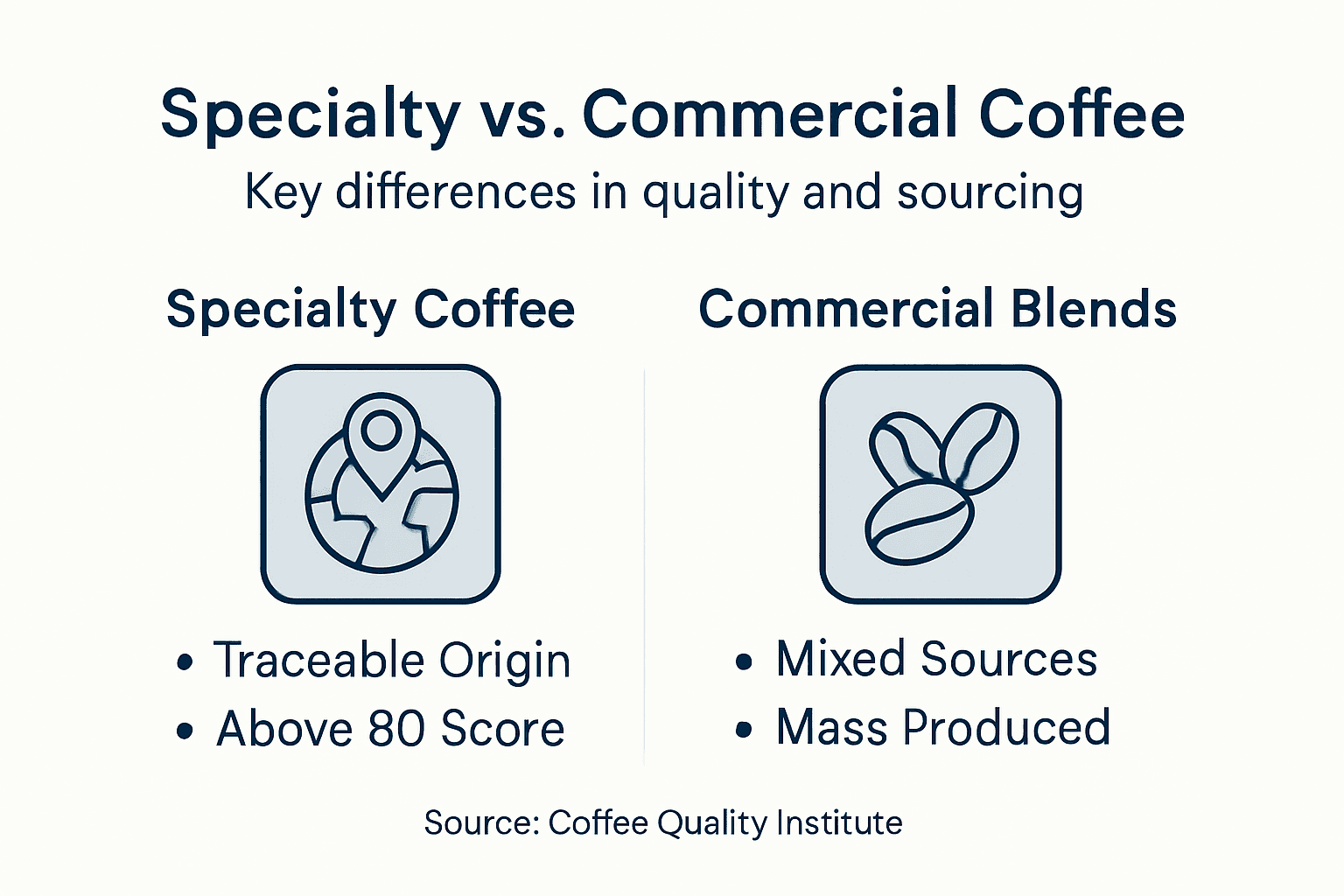
- Comparing Specialty Coffee And Commercial Blends
Key Takeaways
| Point | Details |
|---|---|
| Specialty Coffee Quality Standards | Specialty coffee must score above 80 points and pass strict evaluation criteria, emphasizing sustainability and ethical sourcing. |
| Arabica vs. Robusta | Arabica beans dominate specialty coffee with more complex flavors, while Robusta is favored for higher caffeine content in certain preparations. |
| Responsible Sourcing | Ethical coffee procurement focuses on fair wages, transparency, and environmental sustainability, enhancing farmer livelihoods and quality. |
| Specialty vs. Commercial Coffee | Specialty coffee is characterized by distinct flavors and traceability, contrasting with commercial blends that prioritize low cost and uniformity. |
Defining Specialty Coffee and Quality Standards
Specialty coffee represents a pinnacle of craftsmanship and quality in the global coffee industry. Unlike mass-produced commodity coffee, specialty coffee is defined by rigorous standards that evaluate every aspect of its production and sensory characteristics. Global coffee quality standards establish a comprehensive framework that transforms coffee from a simple beverage into an artisanal experience.
The Specialty Coffee Association (SCA) has developed a meticulous grading system that sets the global benchmark for specialty coffee quality. Under these standards, coffee must meet stringent criteria:
- Score above 80 points on a 100-point evaluation scale
- Contain zero to five total defects per 350 grams of beans
- Demonstrate exceptional sensory attributes including clarity, sweetness, and complex flavor profiles
- Provide complete traceability from farm to cup
Beyond numerical scores, specialty coffee represents a holistic approach to production that prioritizes sustainability, ethical sourcing, and exceptional taste. Comprehensive coffee standards from the International Coffee Organization emphasize not just flavor, but the entire ecosystem of coffee production - including social, economic, and environmental considerations.
Quality Dimensions in specialty coffee extend far beyond traditional metrics. They encompass:
- Precise agricultural practices
- Careful harvesting techniques
- Meticulous processing methods
- Advanced roasting expertise
- Sophisticated brewing approaches
By maintaining such exacting standards, specialty coffee transforms a daily ritual into a nuanced, meaningful experience that connects consumers directly with global coffee-producing communities.
Pro tip: When exploring specialty coffee, look for detailed origin information and roast dates to ensure maximum freshness and quality.
Arabica Versus Robusta: Bean Varieties Explained
The world of specialty coffee revolves around two primary bean varieties: Arabica and Robusta, each with distinct characteristics that dramatically influence flavor, quality, and overall coffee experience. Comprehensive coffee bean comparisons reveal these varieties represent over 98% of global coffee production, with Arabica dominating the specialty coffee market.
Arabica beans, scientifically known as Coffea arabica, are the pinnacle of coffee excellence. These beans are characterized by:
- Grown at high altitudes with cooler climates
- Oval-shaped with a curved crease
- Complex and nuanced flavor profiles
- Lower caffeine content
- Subtle fruity and floral notes
- Mild acidity
In contrast, Robusta beans (Coffea canephora) offer a completely different coffee experience. Distinctive bean characteristics highlight their unique attributes:
- Thrive in lower elevations and hotter climates
- Rounder with a flat crease
- Higher caffeine content
- More robust and bitter flavor profile
- Stronger, earthier taste
- Greater disease resistance
While Arabica accounts for approximately 70% of global coffee production and is prized in specialty coffee circles, Robusta plays a critical role in certain coffee preparations, particularly in espresso blends and instant coffee. The choice between these varieties depends on desired flavor intensity, caffeine levels, and intended brewing method.
Here’s a straightforward comparison of Arabica and Robusta coffee beans:
| Attribute | Arabica | Robusta |
|---|---|---|
| Global Production Share | About 70% | About 28% |
| Typical Price | Higher per pound | Lower per pound |
| Main Uses | Specialty coffee, filter brews | Espresso blends, instant coffee |
| Climate Preference | Cooler, higher elevation | Hotter, lower elevation |
| Caffeine Level | Moderate | High |
| Sensory Notes | Fruity, floral, nuanced | Bitter, earthy, bold |
| Disease Resistance | Lower | Higher |
Pro tip: When selecting coffee, consider Arabica for complex, smooth flavors and Robusta for a stronger, more intense caffeine kick.
From Farm to Cup: Sourcing and Ethical Practices
Specialty coffee transcends mere taste, embodying a holistic approach that connects consumers directly with global coffee-producing communities through responsible sourcing practices. Comprehensive sourcing research reveals that ethical coffee procurement goes far beyond a simple transaction, focusing on sustainable livelihoods and meaningful economic impact.
Ethical coffee sourcing encompasses multiple critical dimensions:
- Ensuring fair wages for coffee farmers
- Promoting safe and dignified working conditions
- Supporting environmentally sustainable farming practices
- Maintaining transparent supply chains
- Implementing traceability mechanisms
- Fostering long-term economic viability for farming communities
Industry leaders have developed sophisticated frameworks to validate and improve ethical standards. These approaches typically involve:
- Third-party auditing of farming practices
- Comprehensive social and environmental assessments
- Continuous improvement programs
- Direct engagement with farming communities
- Economic transparency initiatives
The ultimate goal of responsible coffee sourcing extends beyond compliance, aiming to create meaningful transformation in coffee-producing regions. Ethical sourcing frameworks demonstrate how intentional procurement can simultaneously support farmer livelihoods, preserve environmental resources, and deliver exceptional coffee experiences to consumers worldwide.
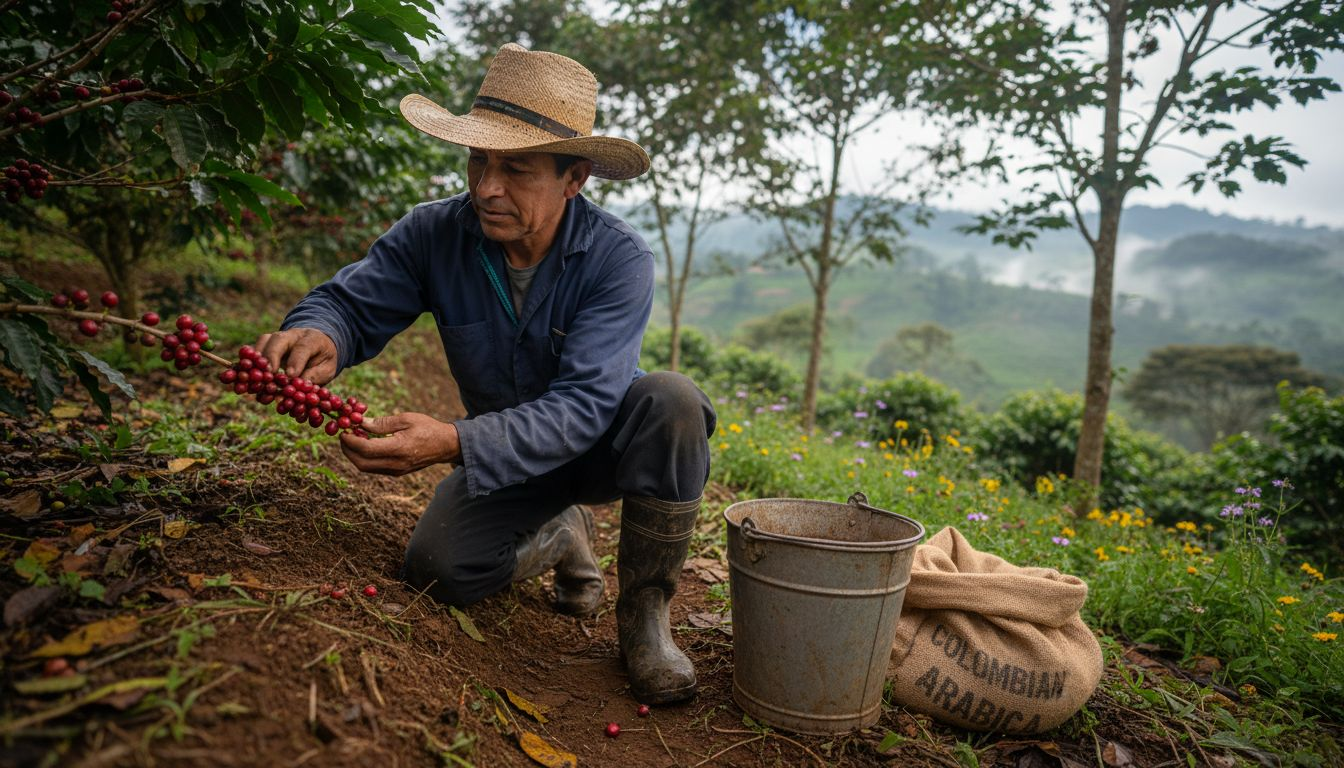
Pro tip: When purchasing specialty coffee, look for brands that provide detailed information about their sourcing practices and farmer relationships.
Flavor Profiles, Freshness, and Craftsmanship
Specialty coffee is an intricate sensory journey that transforms a simple beverage into an art form, where flavor profiles represent the nuanced expression of agricultural skill and roasting expertise. Coffee flavor complexity reveals a sophisticated world of sensory attributes that go far beyond simple taste sensations.
The Flavor Spectrum encompasses multiple dimensions, including:
- Fruity notes ranging from citrus to berry
- Floral undertones
- Nutty and chocolatey foundations
- Subtle spice and herbal hints
- Unique regional characteristics
- Variations based on processing methods
Freshness plays a critical role in preserving these delicate flavor nuances. Flavor preservation techniques demonstrate that minimizing time between roasting and consumption is essential for maintaining the volatile compounds responsible for rich, complex aromas. Specialty coffee craftsmen understand that:
- Roasting date matters more than brewing date
- Oxygen and light degrade coffee flavors quickly
- Proper storage is crucial for maintaining quality
- Small batch roasting preserves flavor integrity
- Direct trade relationships ensure maximum freshness
Ultimately, specialty coffee represents a holistic experience where agricultural expertise, precise roasting techniques, and thoughtful brewing converge to create an extraordinary sensory journey.
Pro tip: Purchase coffee from roasters who clearly display roast dates and prioritize small-batch production for the most vibrant flavor experience.
Comparing Specialty Coffee and Commercial Blends
The world of coffee is divided into two distinct realms: specialty coffee and commercial blends, each representing dramatically different approaches to sourcing, production, and quality. Why choose specialty coffee reveals the profound differences that set premium coffee experiences apart from mass-produced alternatives.
Key distinctions between specialty and commercial coffee include:
- Sourcing practices
- Flavor complexity
- Farming standards
- Processing methods
- Quality control
- Traceability
- Environmental impact
- Economic sustainability
Commercial coffee blends typically prioritize:
- Low production costs
- Consistent but bland flavor profiles
- Large-scale manufacturing
- Bulk commodity trading
- Minimal farmer compensation
In contrast, specialty coffee represents a holistic approach that elevates coffee from a simple commodity to a crafted, meaningful experience. The commitment to quality extends beyond taste, encompassing ethical sourcing, environmental stewardship, and direct support for coffee-producing communities.
This table summarizes how specialty and commercial coffees differ in impact and approach:
| Aspect | Specialty Coffee | Commercial Blends |
|---|---|---|
| Value Chain Transparency | Farm-to-cup traceable | Often obscure origins |
| Quality Control | Individual lot assessment | Mass blending for uniformity |
| Environmental Impact | Supports eco-practices | Less focus on sustainability |
| Economic Model | Premiums to farmers | Minimal direct farmer benefit |
| Consumer Experience | Distinctive, complex flavors | Simple, generic taste profile |
Pro tip: Compare coffee labels and look for detailed origin information, roast dates, and specific flavor notes to distinguish between specialty and commercial blends.
Elevate Your Coffee Experience with Specialty Quality from House Coffee
The journey to exceptional coffee begins with understanding quality and ethical sourcing as the foundation of specialty coffee. If you want to savor coffee that delivers complex flavors, freshness, and traceability from farm to cup you need access to carefully selected single-origin Arabica beans. House Coffee solves the challenge of finding premium coffee by offering curated collections that celebrate craftsmanship and responsible farming, so you can enjoy every cup knowing it supports sustainable and eco-friendly practices.
Discover the difference that rigorously sourced specialty coffee makes through our Subscriptions – House Coffee featuring Gold, Diamond, and Limited Edition collections.
Don’t settle for generic blends when you can explore vibrant, ethically sourced coffees that transform your daily ritual. Visit House Coffee now to start your premium coffee journey and consider perfect gifting options at Gift and Bundles – House Coffee. Quality, freshness, and a deeper connection to the coffee’s origin await you.
Frequently Asked Questions
What is specialty coffee?
Specialty coffee refers to high-quality coffee that meets rigorous standards in terms of production and tasting attributes, typically scoring above 80 points on a 100-point scale.
Why does quality matter in specialty coffee?
Quality is essential in specialty coffee as it affects flavor, aroma, and overall experience. High-quality coffee beans come from ethical sourcing, provide traceability, and highlight the skills of farmers and roasters.
What are the key differences between Arabica and Robusta coffee beans?
Arabica beans are known for their complex flavors and lower caffeine content, while Robusta beans have a stronger, more bitter profile and higher caffeine levels. Arabica dominates the specialty market, making it more desirable for discerning coffee drinkers.
How can I ensure that the specialty coffee I buy is fresh?
To ensure freshness, look for roast dates on the packaging and choose coffee from roasters that practice small-batch production. Proper storage and minimizing time between roasting and consumption can also help preserve the coffee’s rich flavors.
Recommended
-
Posted in
what is specialty coffee