Defining Coffee Aroma: Elevating Your Brewing Experience

Every home barista knows the allure of a freshly brewed cup, yet few recognize how approximately 850 volatile compounds shape the intricate aroma that defines coffee’s soul. Understanding this sensory complexity matters for those who crave a truly exceptional experience, revealing how origin, roasting, and genetics influence every fragrant note. Discover how a deeper appreciation for coffee aroma can transform your daily ritual and guide your pursuit of premium, ethically sourced beans.
Table of Contents
- What Coffee Aroma Truly Means
- Key Aroma Categories And Their Origins
- How Aroma Influences Taste Perception
- Factors Shaping Coffee Aroma Quality
- Common Misconceptions About Coffee Aroma
Key Takeaways
| Point | Details |
|---|---|
| Complex Aroma Profile | Coffee aroma consists of over 850 volatile compounds, creating a rich sensory experience influenced by the roasting process. |
| Aroma Categories | Distinct aroma categories like floral, fruity, nutty, and smoky arise from chemical interactions, reflecting the coffee’s origin and processing. |
| Taste Perception | Aroma significantly influences the perceived flavor of coffee, with individual genetic differences affecting sensory experiences. |
| Quality Factors | Environmental conditions, genetic variety, and processing techniques all play vital roles in determining coffee aroma quality. |
What Coffee Aroma Truly Means
Coffee aroma represents a complex sensory experience that transcends simple smell, emerging from an intricate chemical transformation during roasting. Volatile compounds generated through roasting create the nuanced aromatic profile that defines each unique coffee experience.
At its core, coffee aroma involves approximately 850 identified volatile compounds, with roughly 40 critical components contributing to the full sensory expression. The Maillard reaction - a chemical interaction between amino acids and sugars - plays a pivotal role in developing these aromatic characteristics during the roasting process.
Understanding coffee aroma requires recognizing its transformation from raw green beans to roasted perfection. Green coffee beans possess minimal aromatic potential, which dramatically changes through heat application. During roasting, complex precursor molecules break down and recombine, creating the rich, multi-layered aromatic profile coffee enthusiasts appreciate.
Key characteristics of coffee aroma include:
- Chemical complexity with 850+ volatile compounds
- Significant transformation during roasting
- Sensory experience involving smell and taste interactions
- Unique profile based on bean origin, roast level, and processing
Pro tip: Allow freshly roasted coffee to rest for 3-5 days before brewing to fully develop its aromatic potential.
Key Aroma Categories and Their Origins
Coffee aroma represents a fascinating sensory landscape, with distinctive chemical flavor profiles emerging from complex biochemical interactions. These aromatic categories range from floral and fruity to nutty and smoky, each telling a unique story of origin, processing, and roasting technique.
The primary aroma categories in coffee are deeply rooted in their chemical composition, derived from sugars, amino acids, and lipids that transform dramatically during roasting. Specific reactions like the Maillard and Strecker degradation generate characteristic notes, with each category reflecting the intricate genetic and environmental influences of the coffee’s origin.
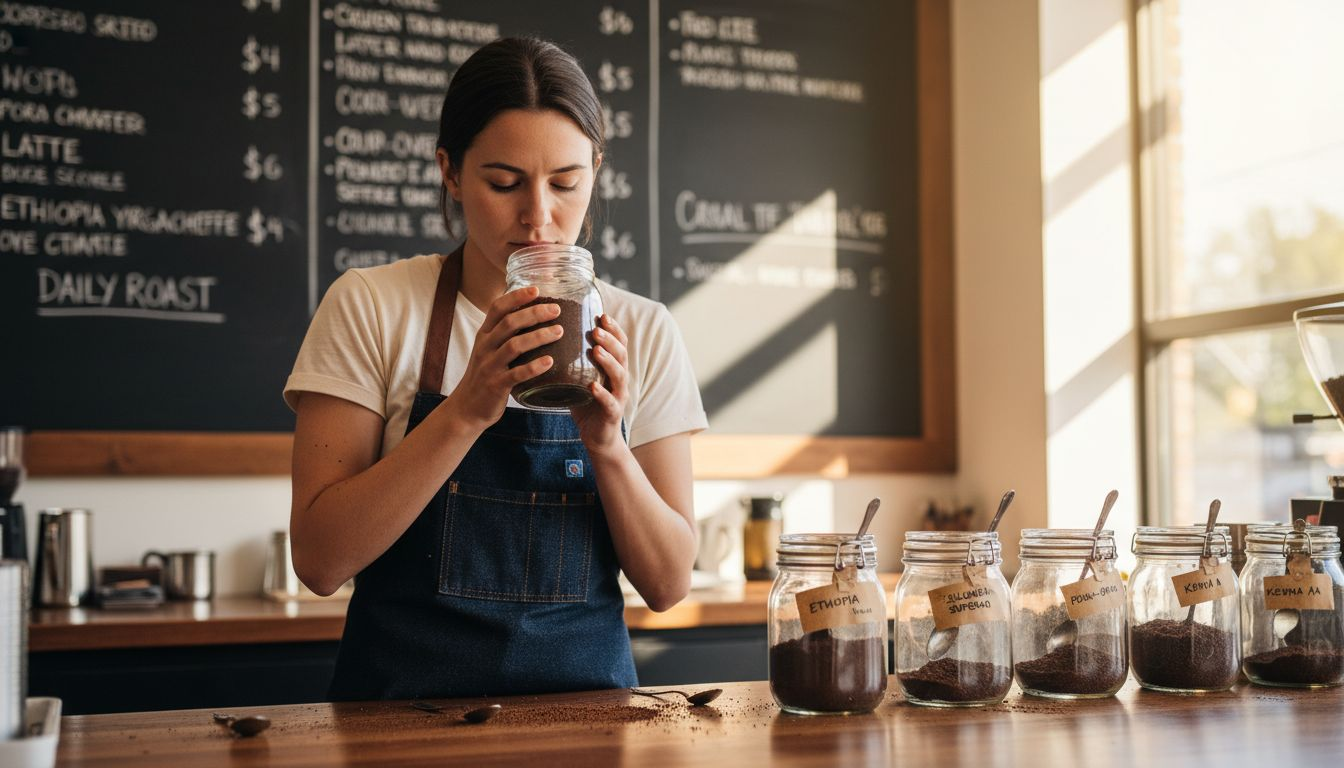
Understanding these aroma categories requires appreciating their multifaceted nature. Volatile compounds derived from biochemical precursors create a complex sensory experience that goes beyond simple taste, encompassing several key classifications:
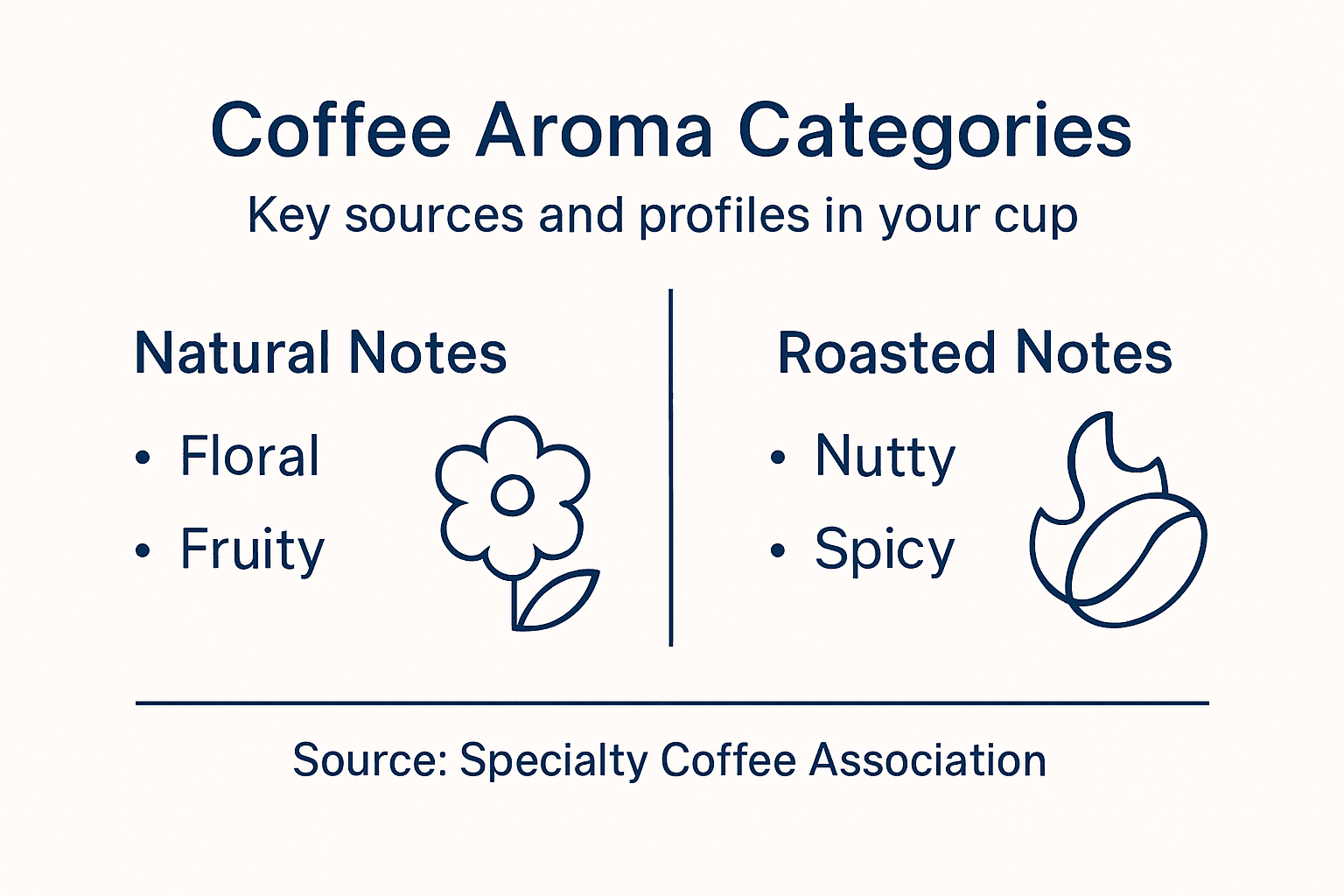
Here’s how major coffee aroma categories differ in their chemical origins and typical tasting notes:
| Aroma Category | Main Chemical Precursors | Representative Tasting Notes |
|---|---|---|
| Floral | Linalool, Geraniol | Jasmine, rose, lavender |
| Fruity | Esters, Aldehydes | Citrus, berry, stone fruit |
| Nutty | Pyrazines, Furanones | Almond, hazelnut, walnut |
| Herbal | Methoxypyrazines, Terpenes | Fresh cut grass, sage, oregano |
| Smoky | Phenols, Furans | Toasted wood, tobacco, charcoal |
- Floral Aromas: Delicate, reminiscent of jasmine or lavender
- Fruity Notes: Ranging from citrus to berry-like characteristics
- Nutty Profiles: Suggesting almonds, hazelnuts, or walnuts
- Herbal Tones: Evoking fresh green or botanical impressions
- Smoky Undertones: Reflecting roasting intensity and technique
Pro tip: Explore single-origin coffees to experience the purest expression of regional aroma characteristics.
How Aroma Influences Taste Perception
Coffee’s sensory experience goes far beyond simple taste, with aroma pathways dramatically influencing perception through complex neurological interactions. The human sensory system processes coffee flavor through two primary olfactory mechanisms: orthonasal (through the nose) and retronasal (through the back of the mouth) pathways.
Genetic predispositions play a significant role in how individuals experience coffee’s flavor profile. Bitter compound interactions with taste receptors create unique sensory experiences, meaning that what one person finds delightful, another might find overwhelming. This genetic variation explains why coffee tastes dramatically different from person to person.
The intricate relationship between aroma and taste involves multiple sensory dimensions that transform a simple beverage into a complex experience. Different aroma compounds interact with taste receptors, creating nuanced flavor profiles that engage multiple sensory systems simultaneously:
- Orthonasal Perception: Aromas detected before drinking
- Retronasal Perception: Flavor notes experienced while consuming
- Emotional Response: Memories and feelings triggered by specific aromas
- Genetic Variability: Individual differences in taste receptor sensitivity
- Roasting Impact: How roasting techniques modify aroma compounds
Pro tip: Pause and smell your coffee before drinking to enhance your overall sensory experience and appreciation of its complex aroma profile.
Factors Shaping Coffee Aroma Quality
Coffee aroma quality emerges from an intricate interplay of environmental and processing variables, with precise agricultural conditions dramatically influencing flavor development. Temperature, humidity, and light exposure during coffee drying and processing create a complex sensory landscape that transforms raw beans into an aromatic masterpiece.
Genetic variation and post-harvest techniques play crucial roles in defining coffee’s sensory potential. Roasting parameters critically impact volatile aroma compounds, with each subtle adjustment in time and temperature generating nuanced flavor profiles that distinguish exceptional coffee from ordinary brews.
The journey of coffee aroma quality involves multiple interconnected factors that coffee enthusiasts and professionals carefully manage:
Understanding the influence of different factors helps in producing high-quality coffee aroma:
| Factor | Effect on Aroma Quality | Example Impact |
|---|---|---|
| Genetic Variety | Determines aromatic potential | Arabica vs. Robusta |
| Processing Method | Alters precursor transformation | Washed vs. natural |
| Roasting Technique | Drives compound development | Light vs. dark roast |
| Storage Conditions | Preserves or degrades aromas | Airtight vs. exposed |
- Genetic Variety: Different coffee plant varieties produce unique aromatic potential
- Agricultural Practices: Soil composition, altitude, and cultivation techniques
- Harvesting Timing: Precise moment of bean collection
- Processing Method: Wet, dry, or hybrid processing techniques
- Roasting Precision: Temperature, duration, and technique
- Storage Conditions: Humidity, temperature, and light exposure
Environmental conditions are the silent architects of coffee’s sensory complexity.
Pro tip: Store your coffee in opaque, airtight containers away from direct light and heat to preserve its delicate aromatic compounds.
Common Misconceptions About Coffee Aroma
Coffee enthusiasts often fall prey to widespread myths about aroma, misunderstanding complex sensory experiences that extend far beyond simple perception. The most pervasive misconception is that stronger aroma automatically indicates superior coffee quality, when in reality, nuanced and delicate notes can be equally, if not more, impressive.
Genetic variations play a crucial role in how individuals experience coffee’s sensory landscape. Individual genetic predispositions dramatically influence taste and aroma perception, meaning what one person finds delightful might seem unremarkable to another. This genetic diversity challenges the notion of a universal coffee experience.
Several key misconceptions persist about coffee aroma that deserve careful examination:
- Roast Intensity Myth: Darker roasts do not always guarantee better aroma
- Caffeine Correlation: Bitterness is not solely determined by caffeine content
- Uniform Perception: Aroma is not experienced identically by all people
- Smell vs. Taste: Aroma involves both orthonasal and retronasal experiences
- Quality Indicators: Complexity matters more than apparent strength
True coffee appreciation requires understanding, not oversimplification.
Pro tip: Develop your palate by sampling coffees from different origins and roast levels to truly appreciate aroma’s intricate nuances.
Elevate Your Coffee Aroma Experience Today
Unlock the full potential of your coffee’s aroma by choosing thoughtfully sourced beans that reflect the complexity and craftsmanship you just learned about. The challenge many coffee lovers face is capturing that intricate sensory experience defined by the delicate interplay of volatile compounds created during roasting. At House Coffee, we understand your goal to savor floral, fruity, and nutty aroma notes that bring your brewing to life.
Explore our Gold Collection or indulge in the rich depth of our Dark Roast – House Coffee to experience coffee crafted for optimal aroma development.
Don’t settle for ordinary when you can brew extraordinary. Visit House Coffee now to select ethically sourced, single-origin coffees designed to enhance your aroma and flavor perception. Start your journey toward a premium coffee experience and awaken your senses with every cup.
Frequently Asked Questions
What is coffee aroma and why is it important?
Coffee aroma refers to the complex sensory experience derived from over 850 volatile compounds generated during the roasting process. It plays a crucial role in defining the overall flavor profile and enjoyment of coffee.
How does roasting impact coffee aroma?
Roasting causes complex chemical reactions that transform the initial characteristics of green coffee beans. Key compounds develop during this process, creating a rich and multi-layered aromatic profile that significantly influences taste.
What factors influence the quality of coffee aroma?
The quality of coffee aroma is shaped by several factors including the genetic variety of the coffee plant, processing methods, roasting techniques, and storage conditions. Each plays a vital role in determining the final sensory experience.
Why do different people perceive coffee aromas differently?
Genetic predispositions and individual sensitivities to taste and aroma compounds create unique sensory experiences. What is delightful for one person may be less impressive to another, highlighting the subjective nature of coffee appreciation.
Recommended
- How to Taste Coffee Flavors Like an Expert at Home – House Coffee
- How to Taste Coffee Flavors Like an Expert at Home – House Coffee
- Specialty Coffee Terminology: Enhance Your Coffee Journey – House Coffee
- 7 Essential Steps for Perfect Coffee at Home – House Coffee
- 4 rodzaje kaw ziarnistych – jak je rozróżnić i którą wybrać?
-
Posted in
defining coffee aroma, en