What Is At-Home Barista and Why It Matters
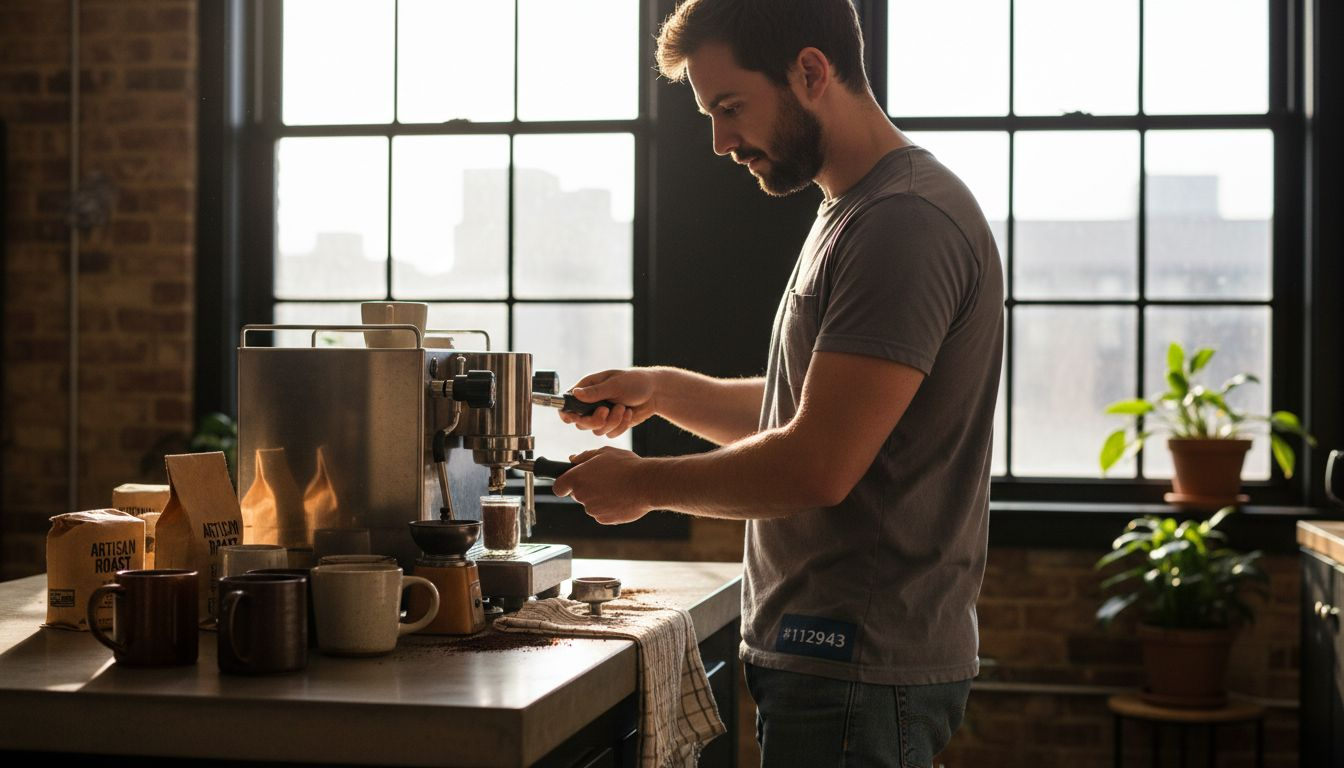
Spending more time at home has inspired a fresh appreciation for crafting premium coffee in your own kitchen rather than relying on coffee shops. For many North American coffee lovers, transforming daily brews into a rewarding ritual is about more than saving money. It is about developing real skills, investing in quality tools, and joining a passionate community of home baristas who value both taste and technique. Discover how embracing the at-home barista mindset can bring a new level of satisfaction to every cup.
Table of Contents
- Defining At-Home Barista Culture And Goals
- Essential Equipment And Key Tools Needed
- Core Techniques And Brewing Methods Explained
- Costs, Challenges, And Common Mistakes
Key Takeaways
| Point | Details |
|---|---|
| At-Home Barista Culture | Coffee enthusiasts invest in their home brewing practices, viewing coffee-making as a craft rather than a convenience. |
| Essential Equipment | Start with a high-quality burr grinder and one brewing method to significantly improve coffee flavor. |
| Understanding Extraction | Master the main variables of coffee brewing, such as grind size and water temperature, to achieve better flavor. |
| Learning Curve and Mistakes | Document brewing parameters to identify and correct common mistakes, enhancing the learning process and improving results. |
Defining At-Home Barista Culture and Goals
The at-home barista movement represents a fundamental shift in how coffee lovers engage with their daily ritual. Rather than accepting whatever a coffee shop offers, home baristas pursue specialty coffee techniques with intention and care, transforming their kitchens into personal brewing sanctuaries.
What exactly is an at-home barista? The concept refers to coffee enthusiasts who prepare their favorite coffee at home with attention to detail and skill development. These aren’t casual drinkers who grab whatever’s convenient—they’re engaged individuals who treat coffee-making as a craft worth mastering.
Several factors have fueled this cultural movement:
- Time at home shifted priorities for many people, making kitchen spaces worth investing in
- Cost savings became obvious when comparing daily coffee shop visits to premium home brewing
- Social media influence showcased inspiring home setups and techniques that sparked curiosity
- Quality consciousness grew as people discovered how much better coffee could taste when prepared properly
The home barista community is composed of passionate enthusiasts who share experiences both online and in person. They learn from professional baristas, study competition techniques, and gradually build expertise. This signals a broader shift toward more engaged and skilled coffee consumers.
At-home baristas don’t just want coffee—they want to understand it, control it, and enjoy the process of creating it themselves.
The goals driving this culture vary but cluster around a few key themes. First, there’s quality improvement: learning how to extract better flavors from specialty beans than automated machines allow. Second, there’s skill mastery: the satisfaction of understanding variables like grind size, water temperature, and extraction time. Third, there’s personal ritual: building a daily practice that enhances quality of life and creates meaningful moments before the chaos of the day begins.
These aren’t separate goals—they overlap and reinforce each other. As you improve extraction skills, your coffee tastes better, which makes your morning ritual more enjoyable, which motivates further learning. It becomes a satisfying cycle of improvement and discovery.
Unlike passive consumption, at-home barista culture requires active participation. You’re investing time in knowledge, money in equipment, and attention to technique. In return, you gain control, quality, and a sense of accomplishment that instant gratification simply can’t match.
Pro tip: Start by identifying which aspect excites you most—whether it’s learning technique, sourcing premium beans, or building a beautiful coffee station—and build your practice around that passion rather than trying to master everything at once.
Essential Equipment and Key Tools Needed
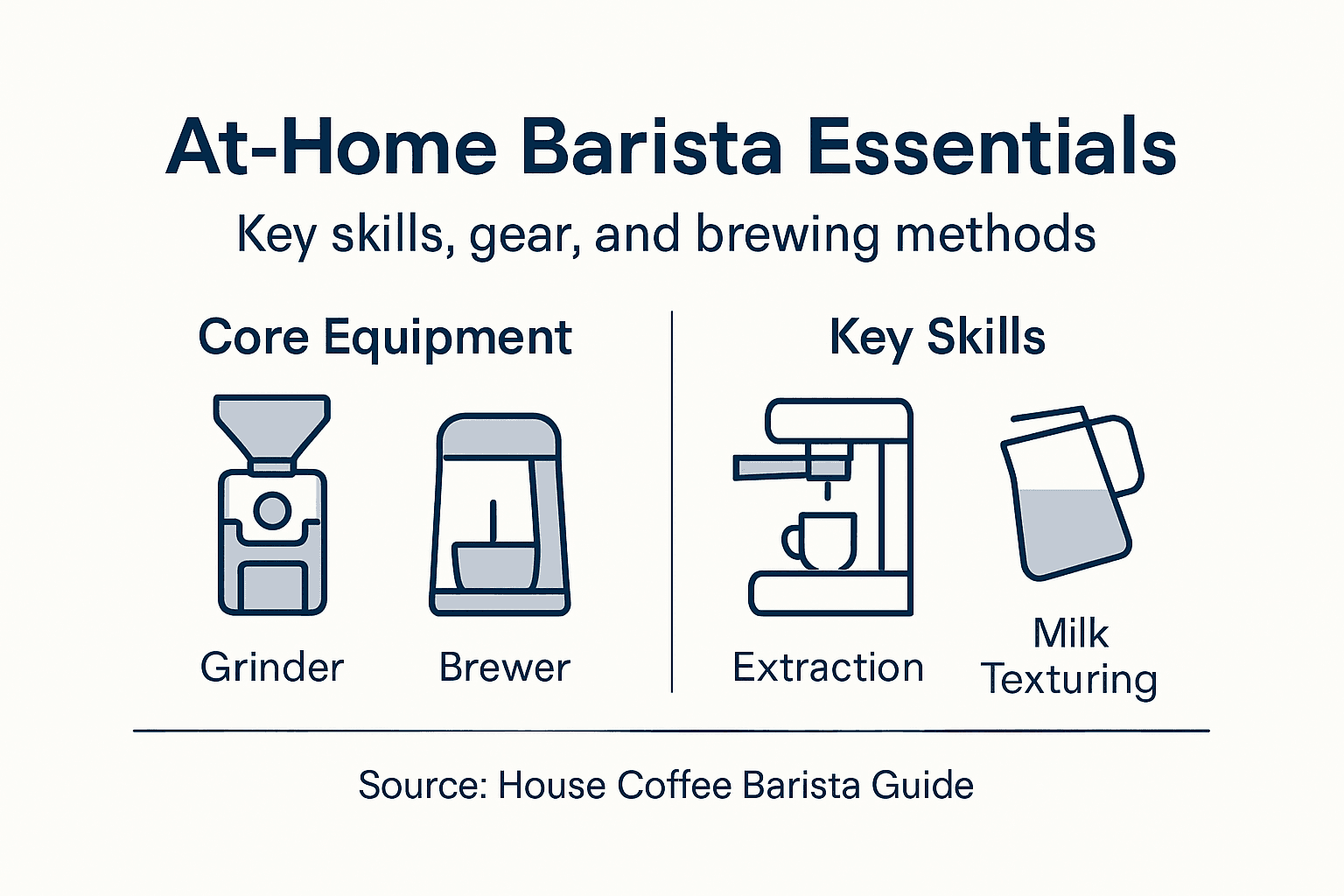
You don’t need a commercial espresso bar to make exceptional coffee at home. However, investing in quality grinders, espresso machines, and milk steaming equipment does transform what’s possible in your kitchen.
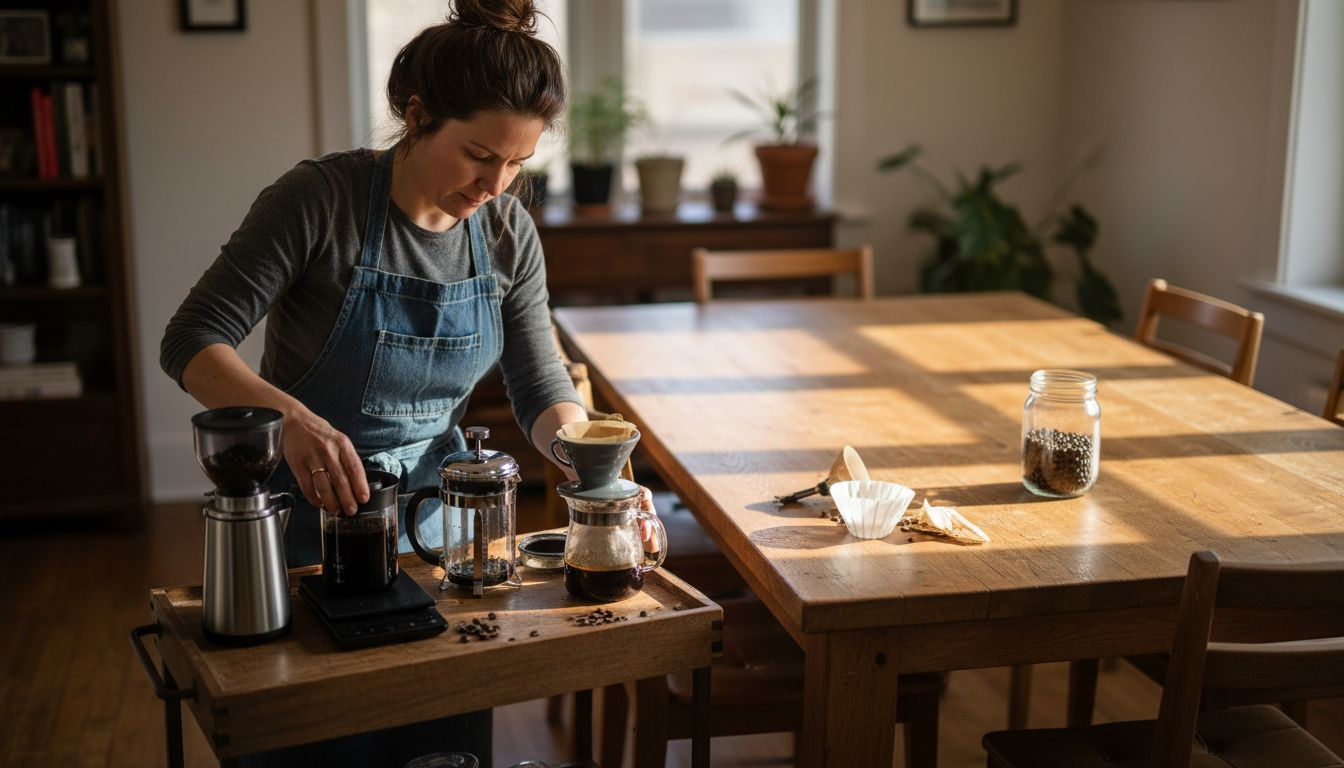
The barrier to entry isn’t as high as you might think. Most home baristas start with a few core pieces rather than a complete setup, then expand strategically over time.
The Non-Negotiable Tools
Three pieces of equipment form the foundation of any at-home barista practice:
- Burr grinder: Fresh grinding right before brewing makes an enormous difference in flavor. Blade grinders produce inconsistent particle sizes that lead to uneven extraction and muddy results.
- Brewing device: Whether you choose pour-over, French press, Moka pot, or espresso machine depends on your preferences and budget. Each requires different skills and produces distinct flavor profiles.
- Scale: Precise measurements and consistent grind size are what separate random results from repeatable excellence. A kitchen scale costs thirty dollars and eliminates guesswork entirely.
Supporting Accessories That Matter
These tools amplify your results and accelerate skill development:
- Tamper and distribution tool: Consistent pressure during tamping ensures even water flow through grounds
- Milk frother or steam wand: Replicated café-style beverages require proper milk texture, which takes dedicated equipment
- Gooseneck kettle: Controlled pouring is crucial for pour-over and manual brewing methods
- Thermometer: Water temperature dramatically affects extraction, and most kettles lie about their actual heat
You don’t need professional-grade equipment to achieve professional-grade results. Smart buying beats expensive buying every time.
Start with a quality grinder and one brewing method that excites you. These two tools alone unlock dramatically better coffee than most coffee shops serve. Add accessories and upgrade as your skills grow and you identify what you actually need.
The House Coffee home coffee bar setup guide walks through organizing your space and selecting gear strategically.
Many beginners overspend on expensive machines while neglecting the grinder. This backward. Your grinder determines consistency more than any other single tool. Invest there first.
Pro tip: Buy one high-quality tool at a time rather than a mediocre complete set, and choose equipment based on the brewing method that genuinely excites you rather than what looks impressive on Instagram.
Core Techniques and Brewing Methods Explained
Mastering at-home coffee isn’t about memorizing recipes—it’s about understanding the fundamental variables that transform ground beans into exceptional flavor. Each brewing method operates differently, but they all depend on the same core principles.
Understanding Extraction
Extraction is simply the process of dissolving soluble compounds from ground coffee into water. Too little extraction tastes sour and thin. Too much tastes bitter and harsh. Getting it right requires controlling several factors simultaneously.
The main variables you’ll manage are:
- Grind size: Smaller particles extract faster, larger particles extract slower
- Water temperature: Hotter water extracts more aggressively; cooler water extracts more gently
- Contact time: How long water and grounds stay together affects overall extraction
- Water quality: Mineral content and pH influence how efficiently extraction occurs
- Coffee-to-water ratio: More coffee means stronger flavor intensity
Consistency beats perfection. Dialing in one variable at a time until you understand how it affects your coffee is more valuable than chasing the “perfect” recipe.
Espresso Extraction
Espresso extraction, milk steaming and frothing, and latte art pouring form the foundation of café-style home brewing. Espresso requires precision because water passes through grounds rapidly under pressure—usually 25 to 30 seconds total.
For espresso, focus on these steps:
- Grind to a fine, consistent texture
- Dose the correct amount into your portafilter
- Tamp with firm, even pressure
- Pull your shot, aiming for 25-30 seconds of flow
Small adjustments matter enormously. If your shot pulls too fast, grind finer. If it pulls too slow, grind coarser. If it tastes sour, try longer extraction time. If it tastes bitter, try shorter extraction.
Immersion Brewing Methods
French press, pour-over, and Moka pots use different mechanics but share the immersion principle—grounds steep in hot water rather than being forced through under pressure. Mastering immersion brewing starts with understanding that these methods are more forgiving than espresso but still demand attention.
With immersion methods, you control extraction primarily through grind size and brew time. Coarser grounds with longer steep times work well. Finer grounds need shorter contact.
Building Milk Skills
Milk steaming creates microfoam—tiny bubbles that texture milk into a velvety consistency perfect for lattes and cappuccinos. This skill takes practice but follows a logical process: position your steam wand correctly, introduce air to expand the milk volume, then heat while creating a whirlpool.
The goal is smooth, glossy milk with tiny bubbles, not a thick foam that separates from liquid.
Pro tip: Focus on mastering one brewing method completely before learning another—understanding how grind size and brew time interact in one system teaches principles that transfer to all others.
Here’s a quick comparison of popular at-home coffee brewing methods and their skill requirements:
| Brewing Method | Flavor Profile | Skill Level Needed | Equipment Cost |
|---|---|---|---|
| Espresso | Intense, complex | Advanced | High |
| Pour-over | Clean, nuanced | Intermediate | Moderate |
| French press | Bold, rich | Beginner | Low |
| Moka pot | Strong, earthy | Intermediate | Low to moderate |
This summary helps highlight the diversity of approaches for home baristas choosing their brewing style.
Costs, Challenges, and Common Mistakes
Becoming a competent at-home barista requires investment beyond just buying beans. Understanding where costs accumulate and which mistakes derail beginners helps you spend wisely and progress faster.
The Real Cost of Entry
Equipment expenses catch many people off guard. A decent burr grinder alone costs $80-150. Add a brewing device, and you’re looking at $150-400 for basic setup. Quality espresso machines push into the thousands. Then come accessories: scales, tampers, milk pitchers, cleaning supplies.
However, costs don’t stop there. Specialty coffee beans cost more than supermarket brands, and you’ll buy plenty while learning. Wasted shots during your learning curve add up. Water filtration systems improve results but require ongoing replacement filters.
The good news? Start small. Many North American home baristas achieve exceptional results with $300-500 in initial investment, then upgrade strategically based on what they actually need.
The Learning Curve Reality
Common mistakes involve improper dosing, inconsistent grind size, and overheating milk, which affect flavor and texture significantly. These aren’t careless errors—they’re predictable missteps everyone makes while mastering technique.
Beginners often encounter these challenges:
- Expecting immediate results: Quality takes practice, not just equipment
- Inconsistent technique: Tiny variations in tamping or pour speed compound over time
- Impatience with dialing in: Adjusting grind size and ratios feels tedious but directly impacts quality
- Underestimating milk steaming: This skill alone requires dozens of practice sessions
Specific Mistakes That Matter Most
Some errors are more forgiving than others. Sustained practice is essential for consistency and enjoyment in home coffee making, which means mistakes become learning opportunities only if you identify them.
The most common productivity killers:
- Inconsistent grind size: Even tiny variations ruin extraction
- Guessing coffee-to-water ratios: Use a scale—guessing wastes beans
- Ignoring water quality: Mineral content affects extraction dramatically
- Over-tamping: Excessive pressure creates uneven extraction
- Rushing the process: Good coffee requires patience
Mistakes teach you more than success does. Each failure points directly to what needs adjustment.
Don’t let costs and complexity intimidate you. Most home baristas hit competency within 2-3 months of consistent practice. At that point, your results genuinely rival specialty coffee shops, making the investment worthwhile.
Many enthusiasts discover they enjoy the process itself more than the final product—the ritual becomes the reward, and costs feel justified by daily satisfaction.
Pro tip: Document your brewing parameters each time you brew—grind setting, water temperature, dose amount, and brew time—so you can identify which adjustments improve your results rather than repeating the same mistakes.
To help you avoid common barriers, here’s a summary of key mistakes and how they impact your results:
| Mistake | Effect on Coffee | Cause | Improvement Tip |
|---|---|---|---|
| Inconsistent grind | Uneven extraction | Poor grinder | Upgrade grinder quality |
| Guessing ratios | Weak or bitter brews | No scale | Use a kitchen scale |
| Over-tamping | Bitter or blocked flow | Excessive pressure | Tamp evenly, not too hard |
| Rushing process | Flat flavor | Impatience | Allow proper brew time |
Consulting this table can accelerate your learning curve and boost your results.
Elevate Your At-Home Barista Journey Today
Unlock the full potential of your coffee ritual by investing in quality tools and specialty beans designed for passion-driven home baristas. Whether you are mastering grind consistency or perfecting your milk frothing skills, the right equipment and ethically sourced coffee can make all the difference. Explore our carefully curated Brewing Essentials – House Coffee collection to find the foundation you need for a premium and consistent brewing experience.
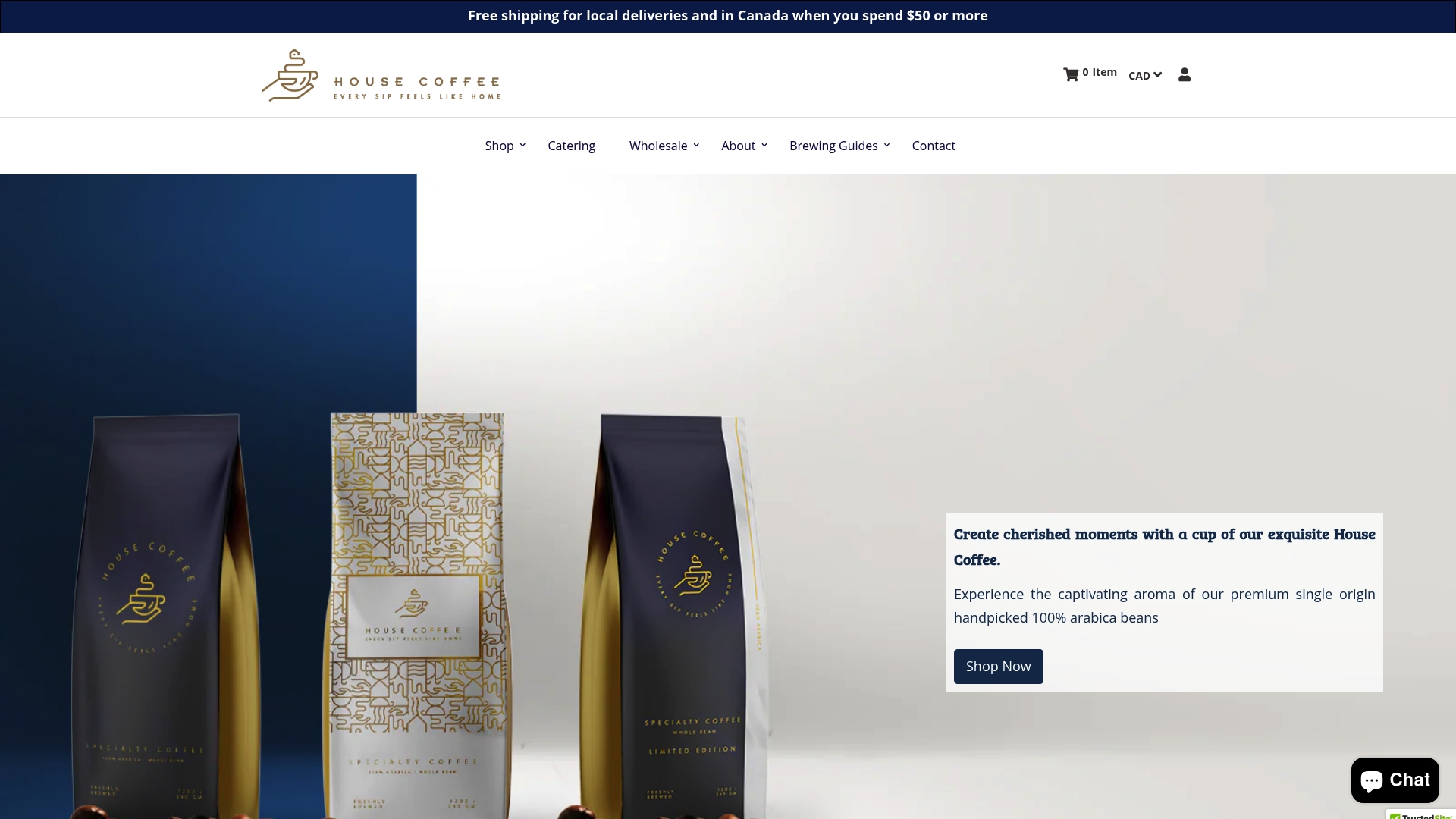
Take control of your morning ritual with House Coffee’s unique range of single-origin Arabica beans and exquisite brewing accessories. Building skills and savoring quality coffee starts today at House Coffee. For those looking to make coffee gifting effortless and luxurious, browse our Gift and Bundles – House Coffee selection. Embrace the artisan culture and shop now to bring café-quality coffee to your home while supporting sustainable and ethical growers.
Frequently Asked Questions
What is an at-home barista?
An at-home barista is a coffee enthusiast who prepares coffee at home with skill and attention to detail, treating coffee-making as a craft worth mastering.
What equipment do I need to start my at-home barista journey?
Essential tools include a quality burr grinder, a brewing device (like a pour-over or French press), and a scale for precise measurements. Additional accessories like a tamper and milk frother can enhance your experience.
How can I improve my coffee brewing skills?
Improving your brewing skills involves understanding key variables like grind size, water temperature, and extraction time. Focus on mastering one brewing method before moving on to another to build a solid foundation.
What are common mistakes to avoid when brewing coffee at home?
Common mistakes include inconsistent grind size, guessing coffee-to-water ratios, over-tamping, and rushing the brewing process. Each of these can negatively impact the flavor and quality of your coffee.
Recommended
-
Posted in
en, what is at-home barista