What is eco-friendly coffee sourcing: 2026 guide
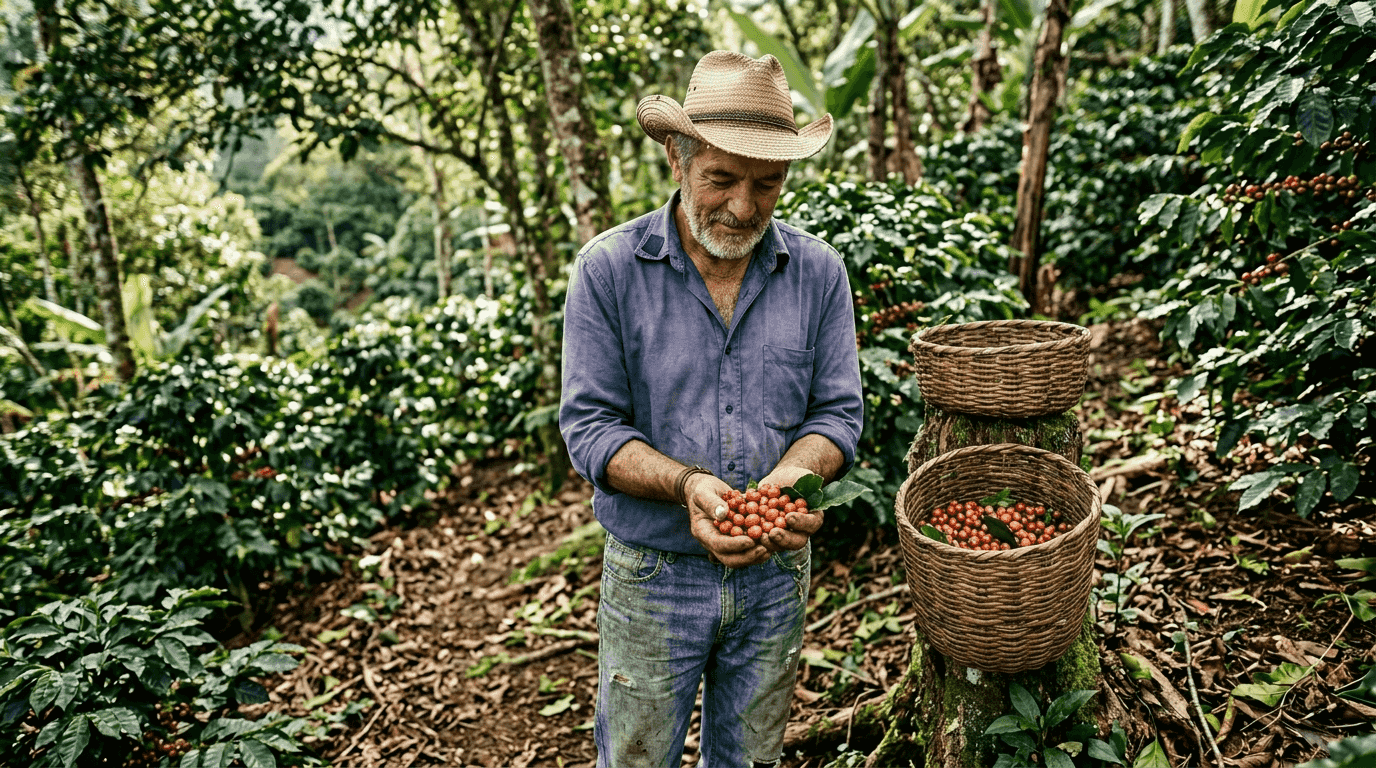
You have probably seen eco-friendly coffee labels and wondered if they are genuine or just clever marketing. Many consumers confuse sustainability buzzwords with actual ethical practices, but true eco-friendly coffee sourcing protects farmers, preserves ecosystems, and guarantees exceptional quality. This guide clarifies what eco-friendly sourcing truly means, which certifications matter, how coffee cultivation impacts the environment, and practical steps you can take to choose ethically sourced coffees with complete confidence.
Table of Contents
- Understanding The Core Principles Of Eco-Friendly Coffee Sourcing
- Certifications That Guarantee Eco-Friendly And Ethical Sourcing
- Environmental Impact Of Coffee Cultivation And Sustainable Practices
- How To Choose Eco-Friendly Coffee As A Consumer
- Discover Sustainably Sourced Specialty Coffee At House Coffee
Key takeaways
| Point | Details |
|---|---|
| Ethical sourcing protects farmers and environment | It ensures fair treatment, prevents exploitation, and maintains traceability from farm to cup. |
| Certifications provide accountability | Fairtrade and Rainforest Alliance enforce strict environmental and social standards with verification. |
| Cultivation causes most environmental impact | Over 90% of coffee’s ecological footprint occurs during farming, making sustainable practices critical. |
| Transparency reduces risks | Minimum standards and clear supplier communication promote accountability without compromising farmer privacy. |
| Quality and sustainability connect | Sustainable soil management and agroforestry practices consistently produce superior coffee. |
Understanding the core principles of eco-friendly coffee sourcing
Genuine eco-friendly coffee sourcing rests on three foundational pillars: protecting farmer rights, minimizing environmental damage, and ensuring complete traceability. Ethical coffee sourcing aims to protect farmer rights, prevent child labor, and reduce environmental harm throughout the supply chain. These principles go far beyond marketing claims, they create accountability systems that benefit everyone from smallholder farmers to consumers seeking quality.
Buyers prioritize ethical sourcing to reduce risks like canceled shipments and reputational damage. When farms fail to meet basic standards, supply chains collapse and brand trust evaporates. Smart buyers implement verification systems to catch problems before they escalate.
Traceability forms the backbone of accountability. It links specific coffee lots to individual farms, harvest dates, and processing methods, creating a transparent chain from origin to roaster. Ethical sourcing programs require detailed record keeping and corrective action plans when audits reveal shortcomings. This documentation protects both buyers and farmers by establishing clear expectations and measurable outcomes.
Transparency must balance buyer insight with farmer privacy. Good suppliers share enough data to evaluate risks without exposing sensitive farm information that could harm producers. The best ethical coffee sourcing explained programs achieve this balance through structured reporting frameworks.
Core ethical standards include:
- Fair wages that exceed local minimums and support dignified living conditions
- Safe working environments with proper equipment and training protocols
- Zero tolerance policies for child labor and forced work
- Environmental protections including pesticide management and water conservation
- Community investment through education, healthcare, and infrastructure improvements
Pro Tip: Define your own minimum ethical standards before shopping for coffee. Communicate these expectations clearly with suppliers to ensure alignment and create accountability from the start.
Certifications that guarantee eco-friendly and ethical sourcing
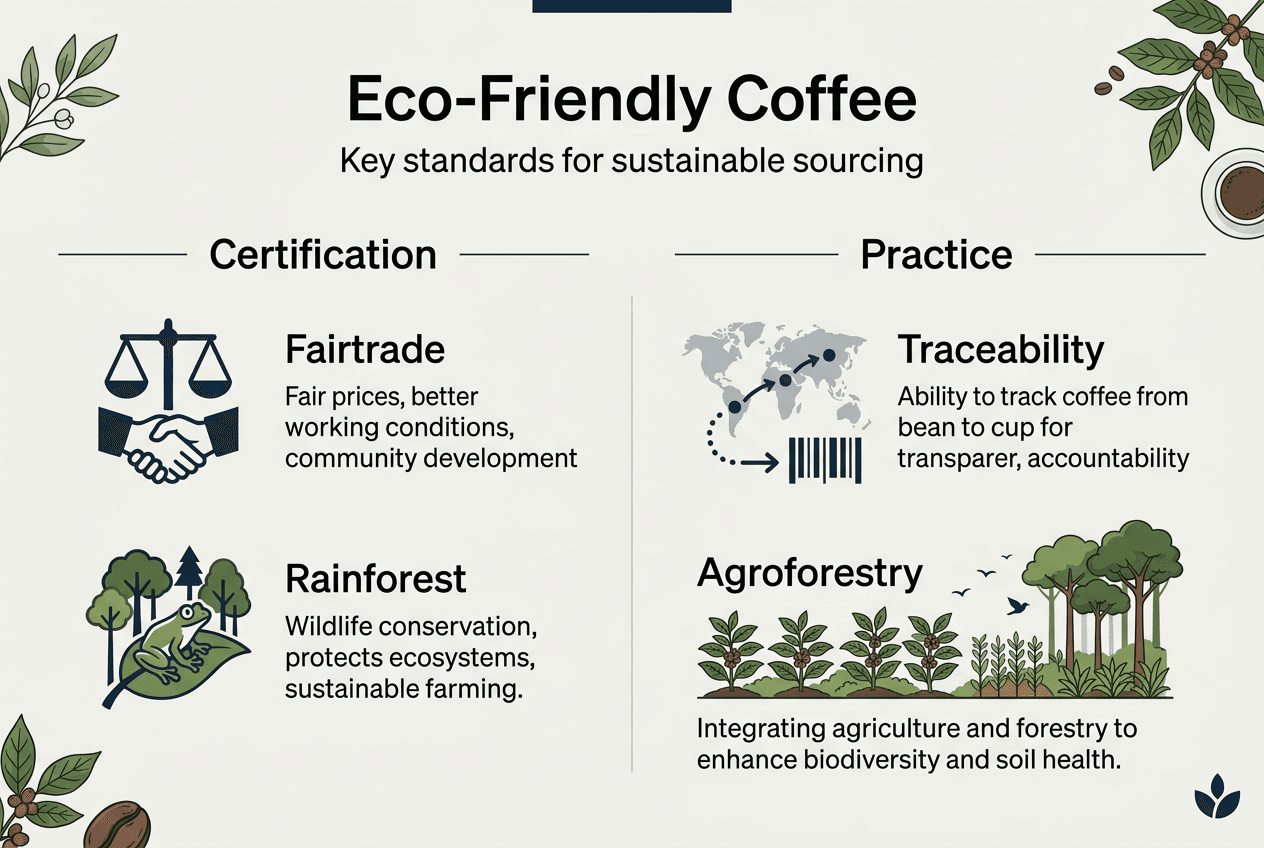
Certification programs transform abstract ethical principles into concrete, verifiable standards. Two major certifications dominate the specialty coffee market: Fairtrade and Rainforest Alliance. Each brings unique strengths to enforcing eco-friendly practices.
Fairtrade certification ensures adherence to environmental standards including sustainable farming practices for both Arabica and Robusta coffee. The program guarantees minimum prices that protect farmers from market volatility while requiring compliance with environmental safeguards. Fairtrade covers producer organizations and traders, creating accountability at multiple supply chain points.
Rainforest Alliance certification supports better farmer livelihoods, human rights, good environmental practices, and climate resilience. This program emphasizes ecosystem health through biodiversity protection, water management, and reduced chemical inputs. Farms must demonstrate continuous improvement across social and environmental metrics to maintain certification.
Both programs require rigorous traceability and regular third-party audits. Certified farms undergo annual inspections that verify compliance with standards ranging from wage documentation to soil conservation practices. This oversight creates confidence for buyers seeking genuinely sustainable coffee.
| Certification | Primary Focus | Key Requirements | Verification |
|---|---|---|---|
| Fairtrade | Fair pricing and farmer organizations | Minimum prices, democratic governance, environmental compliance | Annual third-party audits |
| Rainforest Alliance | Ecosystem health and climate resilience | Biodiversity protection, water conservation, reduced chemicals | Continuous improvement verification |
Fairtrade complements other standards by specifically addressing economic justice through guaranteed pricing floors. Rainforest Alliance prioritizes ecological outcomes through habitat preservation and regenerative agriculture. Many farms pursue both certifications to maximize market access and demonstrate comprehensive sustainability.
Certification benefits extend across the supply chain:
- Farmers gain access to premium markets and technical training
- Ecosystems receive protection through enforced environmental standards
- Consumers obtain verified proof of ethical sourcing practices
- Buyers reduce reputational risks through credible third-party validation
Understanding these certifications helps you make informed choices. Look for organic coffee explained alongside Fairtrade or Rainforest Alliance logos for maximum environmental assurance. Multiple certifications signal serious commitment to sustainability beyond minimum compliance.
Environmental impact of coffee cultivation and sustainable practices
Coffee farming creates significant environmental pressure, but the cultivation stage matters most. The cultivation stage contributes over 90% of environmental impact in 15 out of 18 categories including carbon emissions, water use, and ecosystem disruption. Understanding where damage occurs helps target the most effective sustainability interventions.
Unmechanized cultivation and dry processing significantly reduce environmental impacts compared to industrial farming methods. Traditional techniques that rely on manual labor and natural drying consume less energy and generate fewer emissions. These approaches often correlate with smallholder farms that prioritize quality over volume.
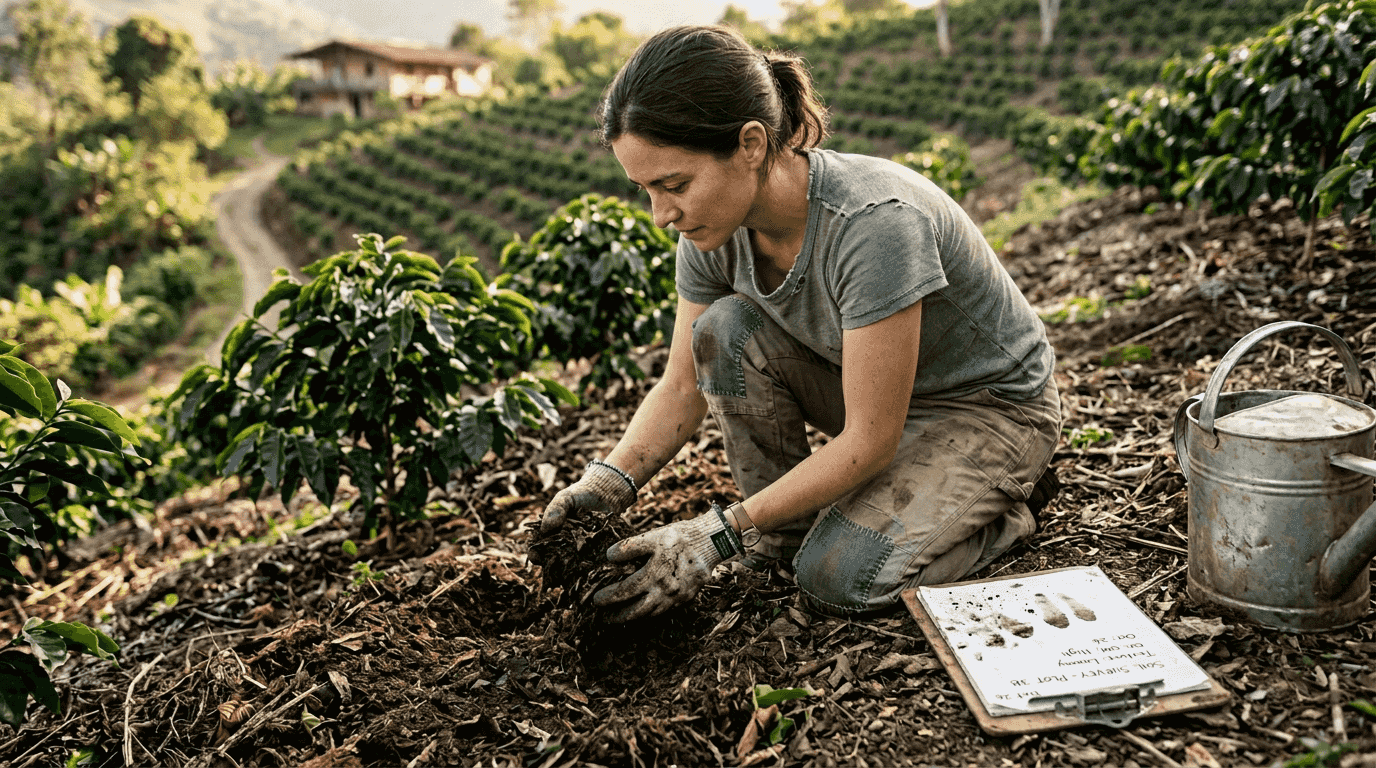
Sustainable ecosystem services are crucial for coffee industry viability, with key initiatives by farmers and cooperatives driving meaningful change. Forward-thinking producers implement agroforestry systems that integrate coffee plants with native trees, creating habitat corridors and improving soil health. These practices boost biodiversity while protecting farms from climate extremes.
Higher coffee quality is associated with sustainable soil management practices that maintain organic matter and carbon stocks. Healthy soil produces better-tasting coffee while sequestering atmospheric carbon. This connection between sustainability and quality creates economic incentives for environmental stewardship.
| Cultivation Method | Carbon Footprint | Water Use | Biodiversity Impact |
|---|---|---|---|
| Mechanized with wet processing | High | Very high | Severe habitat loss |
| Unmechanized with dry processing | Low | Minimal | Moderate preservation |
| Agroforestry systems | Very low (carbon negative) | Low | Significant enhancement |
Farmers and cooperatives drive sustainability through practical innovations:
- Composting coffee pulp and cherry waste to enrich soil naturally
- Installing water recycling systems that reduce processing consumption by 80%
- Planting shade trees that regulate temperature and support pollinators
- Adopting integrated pest management to minimize chemical pesticide use
- Building terraces and contour planting to prevent erosion on steep slopes
Agroforestry remains understudied despite its critical importance for sustainable production. These systems mimic natural forest structure while producing commercial coffee, creating resilient farms that withstand droughts, pests, and market fluctuations. The role of arabica beans specialty coffee production increasingly depends on these regenerative approaches.
Pro Tip: Look for coffee from farms practicing agroforestry and soil health management. These methods consistently produce better-tasting coffee while actively restoring ecosystems, making your purchase both a quality and environmental investment.
How to choose eco-friendly coffee as a consumer
Selecting genuinely eco-friendly coffee requires moving beyond marketing claims to verify actual practices. You can make confident choices by asking the right questions and knowing which signals indicate authentic sustainability.
Buyers should define and share their own minimum ethical standards with suppliers for accountability. Start by identifying what matters most to you: fair wages, organic cultivation, water conservation, or carbon neutrality. Clear personal standards help you evaluate coffee brands consistently and avoid greenwashing.
Traceability links shipped coffee lots to specific farms and harvests for transparency. Ask suppliers for detailed origin information including farm names, cooperative affiliations, harvest periods, and processing methods. Legitimate eco-friendly brands readily share this data because traceability demonstrates their commitment.
Certifications provide initial quality signals but should not be your only criterion. Fairtrade and Rainforest Alliance logos indicate third-party verification of environmental and social standards. However, some excellent small farms lack certification resources despite practicing exemplary sustainability. Look for detailed origin stories that explain specific environmental initiatives.
Transparency should protect farmer privacy while giving you enough information to assess practices. Good suppliers share harvest methods, processing techniques, and sustainability programs without exposing sensitive farm data that could harm producers. This balance indicates mature supply chain relationships built on mutual respect.
Follow these steps to verify eco-friendly coffee:
- Check for recognized certifications like Fairtrade, Rainforest Alliance, or organic labels on packaging.
- Research the roaster or retailer to confirm they publish detailed sourcing information on their website.
- Look for specific farm names, regions, and harvest details rather than vague sustainability claims.
- Contact the supplier directly to ask about traceability systems and environmental programs.
- Prioritize single-origin coffees that allow you to identify single origin beans and trace them to specific producers.
- Read origin stories that describe actual sustainability practices like agroforestry or water recycling.
- Support brands that invest in long-term farmer relationships and community development programs.
When how to select ethical coffee gifts for others, apply the same verification standards. Gift-worthy coffees should demonstrate clear environmental credentials and exceptional quality that reflects sustainable farming practices.
Pro Tip: Prioritize coffees with detailed origin stories and proof of sustainability efforts. Brands that transparently share farm partnerships and environmental initiatives make it easy to support both farmers and ecosystems with every purchase.
Discover sustainably sourced specialty coffee at House Coffee
Ready to put these principles into practice? House Coffee offers a curated selection of sustainably and ethically sourced specialty coffees that meet the highest environmental and social standards. Every coffee in our specialty coffee collection comes with complete traceability, connecting you directly to the farmers and cooperatives behind your cup.

Explore our gold collection specialty coffee featuring certified, traceable coffees that support farmer livelihoods while protecting ecosystems. Each selection includes detailed origin stories, harvest information, and sustainability credentials that let you shop with complete confidence. For wholesale buyers seeking verified ethical sourcing, buy specialty coffee wholesale with transparent supply chain documentation that satisfies the most rigorous standards.
FAQ
What certifications guarantee eco-friendly coffee sourcing?
Fairtrade and Rainforest Alliance certifications are the most recognized for ensuring environmental and social standards in coffee sourcing. They require traceability, fair pricing, and sustainable farming practices verified through annual third-party audits. Learn more about ethical coffee sourcing explained to understand how these programs create accountability.
How does traceability impact eco-friendly coffee sourcing?
Traceability links coffee shipments to specific farms and harvests, enabling accountability and risk management throughout the supply chain. It supports transparency without compromising farmer privacy by sharing essential sourcing details while protecting sensitive farm information. This system helps you identify single origin beans and verify their environmental credentials.
What sustainable practices reduce coffee’s environmental impact?
Practices include agroforestry, organic soil management, dry processing, and unmechanized cultivation that minimize carbon emissions and resource consumption. These approaches improve biodiversity, soil health, and water conservation while often producing superior coffee quality. The role of arabica beans specialty coffee increasingly depends on these regenerative farming methods.
Why does cultivation stage matter most for coffee sustainability?
The cultivation stage accounts for over 90% of coffee’s environmental footprint across most impact categories including carbon emissions and water use. Farming practices determine ecosystem health, soil quality, and climate resilience more than any other supply chain stage. Choosing coffee from farms with sustainable cultivation methods creates the greatest environmental benefit.
How can I verify a coffee brand’s sustainability claims?
Request detailed traceability information including farm names, harvest dates, and processing methods from suppliers. Look for third-party certifications, published origin stories, and transparent supply chain documentation that goes beyond vague marketing language. Legitimate eco-friendly brands readily share this information because it demonstrates their authentic commitment to sustainability.
Recommended
-
Posted in
en, what is eco-friendly coffee sourcing