How to Select Coffee Beans for a Premium Brew

Every morning, the ritual of grinding fresh Arabica beans and brewing a carefully selected cup sparks a sense of anticipation that coffee aficionados from New York to Tokyo know well. For those who value both taste and ethics, the journey to the perfect home brew involves more than just flavor—it is about finding premium beans that align with your values and equipment. This guide will help you navigate brewing equipment fundamentals, uncover your ideal flavor profile, and make thoughtful choices that uplift both your coffee routine and global coffee communities.
Table of Contents
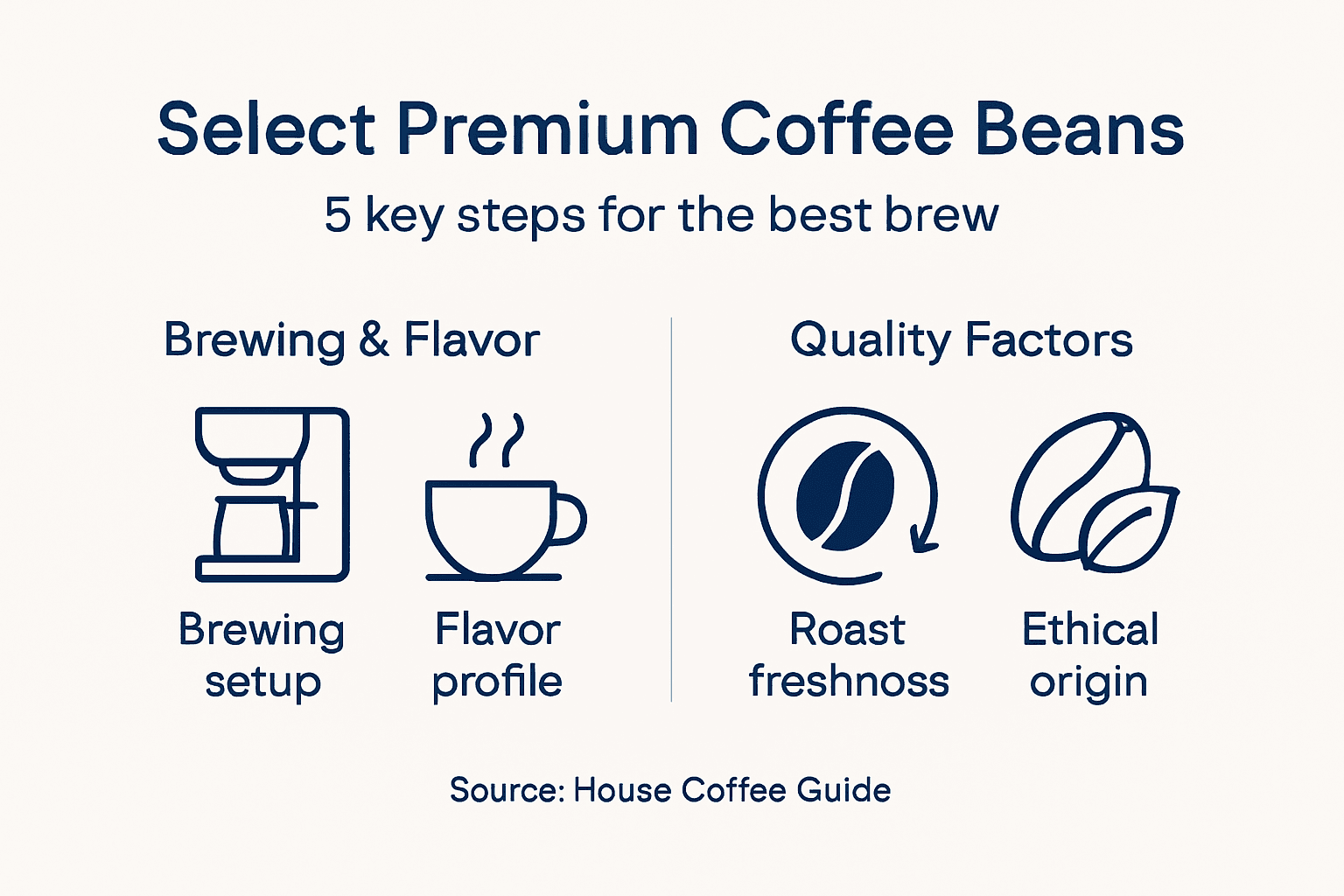
- Step 1: Assess Your Brewing Setup
- Step 2: Identify Your Preferred Flavor Profile
- Step 3: Evaluate Roast Level And Freshness
- Step 4: Review Ethical Sourcing And Origin Stories
- Step 5: Test And Refine Your Bean Choice
Quick Summary
| Main Insight | Detailed Explanation |
|---|---|
| 1. Assess Your Brewing Setup | Understand your brewing method and equipment to choose the best beans and grind size. |
| 2. Identify Your Flavor Profile | Explore personal taste preferences to discover your ideal coffee flavors and notes. |
| 3. Evaluate Roast Level and Freshness | Know the impact of roast levels and freshness on coffee taste, selecting beans wisely. |
| 4. Review Ethical Sourcing | Choose coffee that supports farmers and sustainable practices, enhancing your purchase’s impact. |
| 5. Test and Refine Choices | Engage in systematic tasting and note-taking to perfect your coffee bean selections. |
Step 1: Assess your brewing setup
Selecting the right coffee beans begins with understanding your specific brewing equipment and method. Each brewing device requires a different approach to maximize flavor extraction and overall coffee quality.
Start by taking inventory of your current brewing setup. Different methods like professional coffee brewing techniques dramatically influence bean selection and grinding strategy. Consider these key factors:
- Brewing Method: Identify whether you use a French press, drip machine, pour-over, espresso machine, or other brewing equipment
- Grind Size Requirements: Match your beans to your specific brewing device’s optimal grind consistency
- Water Temperature Capacity: Understand your equipment’s water heating capabilities
- Brewing Time Control: Assess how precisely you can manage brew duration
Your brewing setup dictates which coffee beans will shine brightest. A pour-over method works wonderfully with lighter roast single-origin beans, while an espresso machine demands a different bean profile with more robust, darker roast characteristics.
Here’s a quick comparison of common brewing methods and how they influence bean selection:
| Brewing Method | Ideal Roast Level | Typical Grind Size | Flavor Emphasis |
|---|---|---|---|
| French Press | Medium to Dark | Coarse | Bold, rich, full-bodied |
| Drip Machine | Medium | Medium | Balanced, smooth |
| Pour-Over | Light to Medium | Medium-Fine | Complex, aromatic |
| Espresso Machine | Dark/Espresso | Fine | Intense, concentrated |
| AeroPress | Light to Medium | Fine to Medium | Versatile, customizable |
The right coffee beans paired with the appropriate brewing method can transform an ordinary cup into an extraordinary experience.
Pro tip: If you’re uncertain about your brewing setup’s capabilities, experiment with small batches to determine the ideal bean characteristics for your specific equipment.
Step 2: Identify your preferred flavor profile
Understanding your personal coffee flavor preferences is an art form that requires thoughtful exploration and sensory discovery. Flavor profiling goes far beyond simply liking or disliking a cup of coffee.
Coffee flavor is incredibly complex, with multiple sensory evaluation factors including geographic origin, processing method, and roast characteristics. To develop your flavor profile, consider these key taste dimensions:
- Acidity: Brightness and tangy notes
- Body: Texture and weight of the coffee on your palate
- Sweetness: Natural sugars and pleasant undertones
- Aftertaste: Lingering flavors after sipping
- Aroma: Fragrance and initial scent impressions
Professional coffee tasters often use tools like the Coffee Taster’s Flavor Wheel to articulate nuanced taste experiences. By systematically exploring different flavor notes, you’ll discover whether you prefer bright and citrusy Ethiopian beans, rich and chocolatey Brazilian varieties, or smooth and balanced Colombian roasts.
Your personal flavor profile is a journey of discovery, not a destination.
Pro tip: Keep a coffee tasting journal to track your flavor preferences, noting origin, roast, and specific taste characteristics each time you try a new bean.
Step 3: Evaluate roast level and freshness
Understanding roast levels and coffee freshness is crucial for selecting premium beans that deliver an exceptional brewing experience. Roast level dramatically influences the flavor, aroma, and overall character of your coffee.
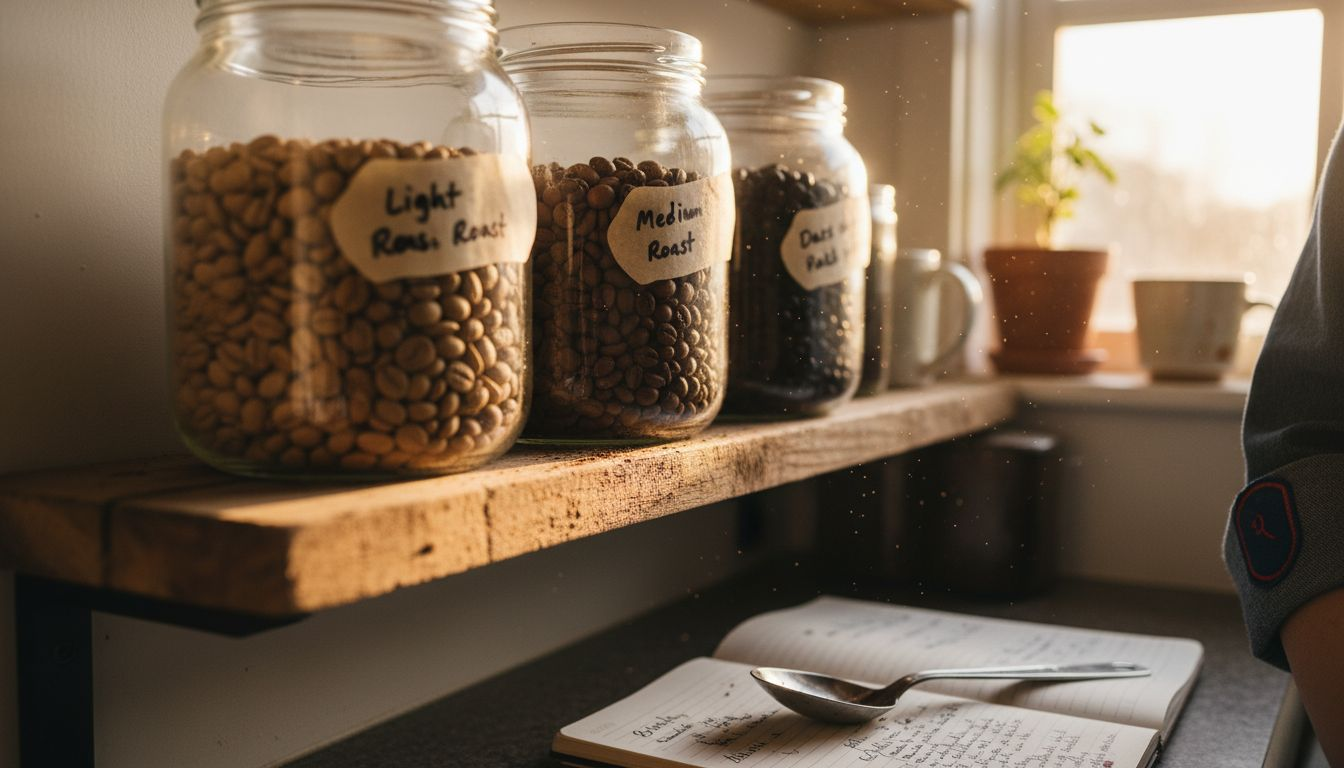
Contrary to popular belief, coffee freshness involves complex maturation processes that go beyond simply checking the roast date. Modern research suggests that beans undergo a nuanced flavor development after roasting, challenging traditional freshness assumptions.
Coffee roast levels range across several key categories:
- Light Roast: Bright, acidic, retains more original bean characteristics
- Medium Roast: Balanced flavor, reduced acidity, enhanced sweetness
- Dark Roast: Bold, intense flavor with pronounced bitterness
- Espresso Roast: Extra dark, deep caramelization, minimal origin characteristics
When evaluating freshness, look for these indicators:
- Roast date within the last 2-4 weeks
- Sealed, opaque packaging
- Presence of a one-way valve for gas release
- Minimal exposure to light and air
Freshness is not just about the date, but about how the beans have been stored and handled.
Pro tip: Purchase smaller quantities of beans more frequently to ensure you’re always brewing with peak-flavor coffee.
Step 4: Review ethical sourcing and origin stories
Ethical coffee sourcing goes far beyond a simple purchasing decision—it represents a commitment to supporting sustainable agriculture and empowering coffee-producing communities. Conscious coffee selection means understanding the journey of your beans from farm to cup.
Global coffee sustainability initiatives are transforming the industry by connecting consumers directly with the stories of farmers and their communities. Understanding origin stories helps you make more informed and responsible purchasing decisions.
When evaluating ethical sourcing, consider these critical factors:
- Farmer Compensation: Fair wages and living income standards
- Environmental Impact: Sustainable farming practices
- Community Development: Local infrastructure and educational support
- Traceability: Transparent supply chain documentation
- Certification Standards: Recognized ethical and environmental credentials
Key certifications to look for include:
Use this summary to understand popular coffee certifications and their meaning:
| Certification | Focus Area | Main Benefit | Typical Label Color |
|---|---|---|---|
| Fair Trade Certified | Farmer Compensation | Supports fair wages | Green/Black |
| Rainforest Alliance | Environment | Promotes sustainability | Green/Yellow |
| Organic Certification | Farming Practices | No synthetic chemicals | White/Green |
| Direct Trade | Transparency | Traceable supply chain | Varies |
- Fair Trade Certified
- Rainforest Alliance
- Organic Certification
- Direct Trade Verification
Each cup of coffee represents a complex global narrative of human connection and environmental stewardship.
Pro tip: Request origin details from your coffee provider and research the specific farm or cooperative behind your beans to deepen your understanding and appreciation.
Step 5: Test and refine your bean choice
Selecting the perfect coffee beans is an evolving journey of discovery and personal taste. Sensory exploration allows you to transform coffee drinking from a routine into a nuanced experience of flavor and craftsmanship.
Consumer preference testing reveals that systematic tasting can dramatically improve your ability to select exceptional coffee beans. Understanding how different processing techniques impact flavor will help you become a more discerning coffee enthusiast.
Develop a structured approach to bean testing:
- Small Batch Purchases: Buy minimal quantities to experiment
- Comparative Tasting: Sample multiple bean varieties side by side
- Brewing Variation: Test each bean with different brewing methods
- Detailed Note-Taking: Record flavor impressions and preferences
- Palate Training: Gradually develop sensitivity to subtle flavor notes
Key steps for refining your selection:
- Start with single-origin beans
- Compare beans from different regions
- Experiment with roast levels
- Document your tasting experiences
- Gradually narrow your preferences
Great coffee is a personal journey of continuous discovery and refinement.
Pro tip: Create a simple flavor journal to track your coffee experiences, helping you systematically identify your ideal bean characteristics.
Unlock the Perfect Brew with Expertly Selected Beans
Selecting coffee beans that truly match your brewing style and flavor preferences can feel overwhelming. You want freshness, ethically sourced quality, and a flavor profile that excites your palate every time. At House Coffee, we understand these challenges and share your passion for discovering single-origin Arabica beans that elevate your cup.
Explore our Limited Edition collection to find small-batch, skillfully roasted beans from dedicated growers who practice sustainable and ethical farming. Each variety highlights unique origin stories that enrich your coffee experience while supporting farming communities around the world. Whether you prefer light, medium, or dark roasts, our curated selections help you pinpoint the perfect match for your brewing equipment and taste preferences.
Ready to transform your daily coffee ritual into a premium tasting journey? Start today by visiting House Coffee to browse our exclusive collections and learn more about our subscription options at Subscriptions – House Coffee. Enjoy freshly roasted coffee delivered to your door and craft the perfect brew tailored just for you.
Frequently Asked Questions
How do I assess my brewing setup for selecting coffee beans?
To assess your brewing setup, identify your equipment type, such as a French press or espresso machine, and understand its grind size, water temperature, and brew time control. Start by taking inventory of your current equipment to ensure you choose the right beans that match your brewing method.
What flavor profiles should I consider when choosing coffee beans?
When selecting coffee beans, consider your personal taste preferences, including factors like acidity, body, sweetness, aftertaste, and aroma. Keep a coffee tasting journal to document your experiences with different beans and note which flavor characteristics you enjoy the most.
How can I evaluate roast levels and freshness of coffee beans?
To evaluate roast levels, familiarize yourself with light, medium, and dark roasts and their flavor influences. Check for a roast date within the last 2-4 weeks and look for proper packaging to ensure freshness; purchasing smaller quantities more frequently can also help maintain peak flavor.
What should I know about ethical sourcing of coffee beans?
Understanding ethical sourcing involves knowing how your coffee supports fair wages for farmers, sustainable farming practices, and community development. Research the origin stories of your beans and look for certifications like Fair Trade or Organic to ensure responsible purchasing decisions.
How do I test and refine my coffee bean choices?
To refine your coffee selections, buy small batches of different beans and conduct comparative tastings. Experiment with various brewing methods and document your tasting experiences to gradually identify your ideal coffee characteristics, allowing for a more personalized coffee experience.
Recommended
-
Posted in
how to select coffee beans