Best Coffee Setup for Home, Built Your Way
A great morning coffee does not begin with the machine on your counter. It begins with the moment you decide that the first cup of the day deserves more than stale grounds and a rushed pour. The best coffee setup for home is not necessarily the most expensive one. It is the one that fits your mornings, brings out the character of your beans, and makes it easy to create cherished moments again and again.
For some homes, that means a simple pour-over and a quiet five minutes before the day begins. For others, it means a capable espresso machine ready for cappuccinos shared around the kitchen. Start with the coffee you love, then build a setup that lets it shine.
Start With Fresh, Specialty-Grade Coffee
Your brewer matters, but the coffee in it matters more. Even the finest equipment cannot turn tired, low-quality beans into a memorable cup. Look for freshly roasted specialty Arabica coffee with clear information about origin, roast profile, and flavor notes. A Q-grade score of 84+ is a useful signal that the coffee has been evaluated for exceptional quality.
Single origin coffee is especially rewarding at home because it gives you a direct taste of place. A washed Colombian coffee may bring a clean, caramel-like sweetness; an Ethiopian lot may lean floral and fruit-forward; a rich Brazilian coffee can offer chocolate and toasted-nut comfort. Blends have their own place, too. A well-crafted blend can be wonderfully balanced, dependable, and easy to enjoy with milk.
Buy whole beans when possible and use them within a few weeks of opening. Store them in an airtight container away from heat, light, and moisture. Skip the refrigerator and freezer for your day-to-day supply, where condensation and repeated temperature changes can compromise flavor.
The Best Coffee Setup for Home Starts With a Grinder
If there is one upgrade that changes everyday coffee most noticeably, it is a burr grinder. Grinding immediately before brewing preserves the aromatic oils and delicate flavors that make specialty coffee feel alive in the cup.
Blade grinders chop beans unevenly, producing a mix of fine dust and large pieces. That inconsistency makes brewing difficult: the fine particles can turn bitter while larger pieces remain under-extracted and thin. Burr grinders crush beans to a more uniform size, giving you better control and a more balanced result.
A hand grinder is an excellent choice for someone making one or two cups at a time, especially if counter space is limited. An electric burr grinder is more convenient for busy households, larger batches, or espresso, where grind adjustments need to be precise. You do not need the most elaborate model to get started. Choose one that can produce consistent grounds for your preferred brewing method.
Grind size should match the brewer. Think coarse for French press, medium for drip and pour-over, and fine for espresso. If your coffee tastes sour or weak, try a slightly finer grind. If it tastes harsh, dry, or overly bitter, go a little coarser. Change one variable at a time so you can understand what improved the cup.
Choose a Brewer That Suits Your Ritual
The right brewer is less about chasing café equipment and more about choosing the experience you will actually enjoy using. Each method highlights coffee differently.
For a clean, expressive cup: pour-over
A pour-over brewer rewards a little attention. You control the pace of the water, which makes it easier to explore the brightness, sweetness, and subtle origin character in a single origin coffee. It is a lovely choice for slower mornings and for anyone who enjoys the craft of brewing.
You will need a dripper, filters, a gooseneck kettle, and a scale. The kettle helps you pour steadily, but it does not have to be expensive. What matters is being able to distribute water evenly rather than flooding one area of the coffee bed.
For familiar ease: automatic drip
A quality drip machine is often the most practical choice for a household that drinks several cups each morning. It delivers consistency without asking you to stand at the counter. Pair it with fresh whole beans and a burr grinder, and a simple drip setup can produce coffee that feels far beyond ordinary.
Look for a machine that reaches an appropriate brewing temperature and uses a showerhead-style water distribution. A thermal carafe is worth considering if you want to keep coffee warm without continuing to cook it on a hot plate.
For body and comfort: French press
The French press creates a full-bodied cup with a silky texture because its metal filter allows more of the coffee’s natural oils through. It is forgiving, affordable, and ideal for relaxed weekend breakfasts or brewing for two.
Use a coarse grind and give the coffee enough room to steep, usually around four minutes as a starting point. Press slowly, then pour the coffee out promptly. Leaving it sitting on the grounds can make the final cups taste increasingly bitter.
For café-style drinks: espresso
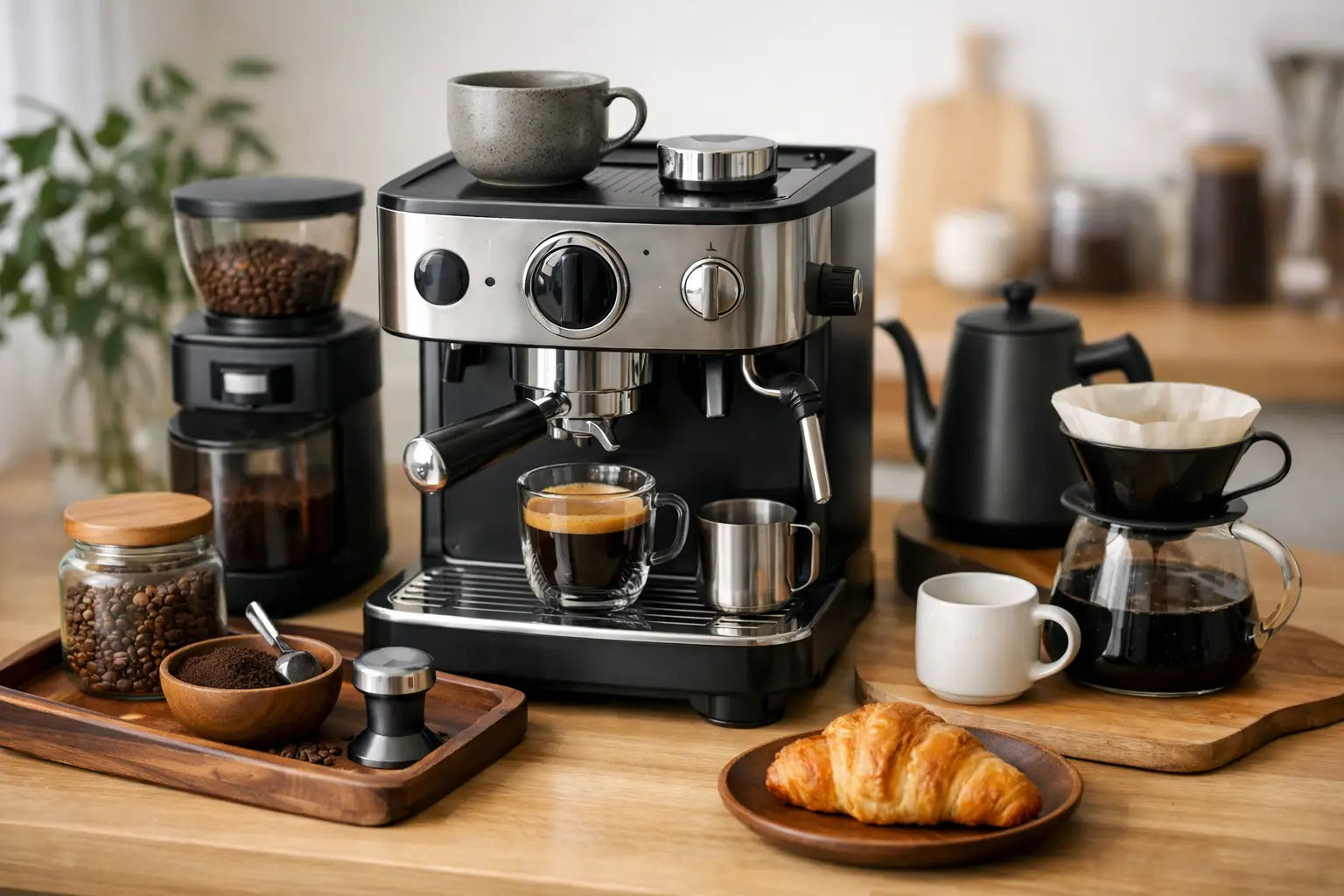
Espresso is the most equipment-intensive path, but it can be deeply satisfying. A good home espresso setup needs a machine with stable temperature and pressure, plus a grinder that can make very fine, repeatable adjustments. The grinder is just as important as the machine, sometimes more so.
This route makes sense if espresso, lattes, cortados, or Americanos are part of your daily ritual. If you only want a milk-based coffee occasionally, a French press, moka pot, or strong drip coffee paired with warmed milk may be a more sensible investment. There is no need to build a professional bar just to enjoy a comforting cup at home.
Use a Scale and Let It Simplify Brewing
A small digital scale may seem like an extra detail, but it removes guesswork. Measuring coffee by scoop is inconsistent because bean size and roast level affect volume. A scale gives you a repeatable starting point, which means you can adjust with confidence rather than hoping the next pot turns out better.
For filter coffee, begin with a ratio around 1 gram of coffee to 16 grams of water. For example, 20 grams of coffee to 320 grams of water makes a satisfying single large cup or two smaller servings. Prefer more intensity? Move toward 1:15. Want a lighter cup? Try 1:17.
For espresso, a common place to begin is a 1:2 ratio, such as 18 grams of dry coffee yielding 36 grams of espresso. These are not rigid rules. They are useful reference points that help you discover what your palate prefers.
Water and Temperature Make a Quiet Difference
Coffee is mostly water, so water quality deserves attention. If your tap water tastes strongly of chlorine or has a heavy mineral character, it will show up in the cup. Filtered water is often an easy improvement, especially for brewers and espresso machines that can accumulate scale over time.
Aim for water just off the boil for most filter brewing, generally around 195 to 205 degrees Fahrenheit. Very light roasts often benefit from the hotter end of that range, while darker roasts can taste smoother with slightly cooler water. If you do not own a temperature-controlled kettle, let freshly boiled water rest briefly before pouring.
Keep your equipment clean, too. Coffee oils build up in grinders, carafes, and brewing baskets, eventually muting flavor. Rinse removable parts after each use, wash them regularly with mild soap, and descale machines according to their instructions. Good coffee deserves a clean path to the cup.
Build a Setup in Stages, Not All at Once
The most rewarding home coffee corner grows with your habits. Begin with fresh coffee, a grinder, and one brewer you are excited to use. Add a scale when you want more consistency. Add a gooseneck kettle if pour-over becomes your favorite ritual, or a milk frother if your mornings call for something creamy.
A thoughtful starter setup can be as simple as a burr grinder, a French press or dripper, a scale, and freshly roasted coffee. A more advanced setup might include a precision grinder, espresso machine, and a dedicated water solution. Both can make beautiful coffee. The difference is not status. It is whether the tools support the way you want to live with coffee.
At House Coffee, we believe a memorable cup belongs at the center of home life: poured before a busy day, shared after dinner, or offered to someone you love at the kitchen table. Choose coffee with care, keep your method approachable, and let your setup become a small daily invitation to slow down and enjoy what is in the cup.