Coffee Roast Level Guide for Better Flavor
That first sip can tell you a lot. Maybe it tastes bright and lively, with notes that remind you of citrus or berries. Maybe it feels rounder, softer, and sweet like caramel. Or maybe it lands deep and bold, with a smoky edge that lingers. A good coffee roast level guide helps explain why those differences show up in the cup - and how to choose a roast that fits your taste, brewing style, and daily ritual.
Roast level is one of the biggest factors shaping flavor, but it is not the whole story. Origin, processing method, bean density, freshness, and brew technique all matter too. Still, understanding roast levels gives you a clear starting point, especially when you want to buy better coffee for home and actually enjoy what makes each bag distinct.
What a coffee roast level guide really tells you
At its simplest, roast level describes how long and how intensely green coffee beans have been roasted. As heat transforms the bean, moisture drops, sugars develop, acids shift, and aromatic compounds change. The roast can highlight a coffee's natural character or push it toward deeper, more roasted flavors.
That is why roast level is less about strength and more about flavor direction. Many people assume dark roast means more caffeine or a stronger coffee in every sense, but that is only partly true. Dark roasts often taste bolder because the roast flavors are more pronounced. Light roasts, on the other hand, can taste more vibrant and expressive, especially in high-quality single origin coffees.
For specialty coffee, roast level also reflects philosophy. A careful roast aims to bring out what is already beautiful in the bean rather than cover it up. When coffee is ethically sourced, freshly roasted in small batches, and chosen for quality markers like a strong Q-grade, the roast becomes a way of honoring the work done at origin.
Light roast, medium roast, dark roast
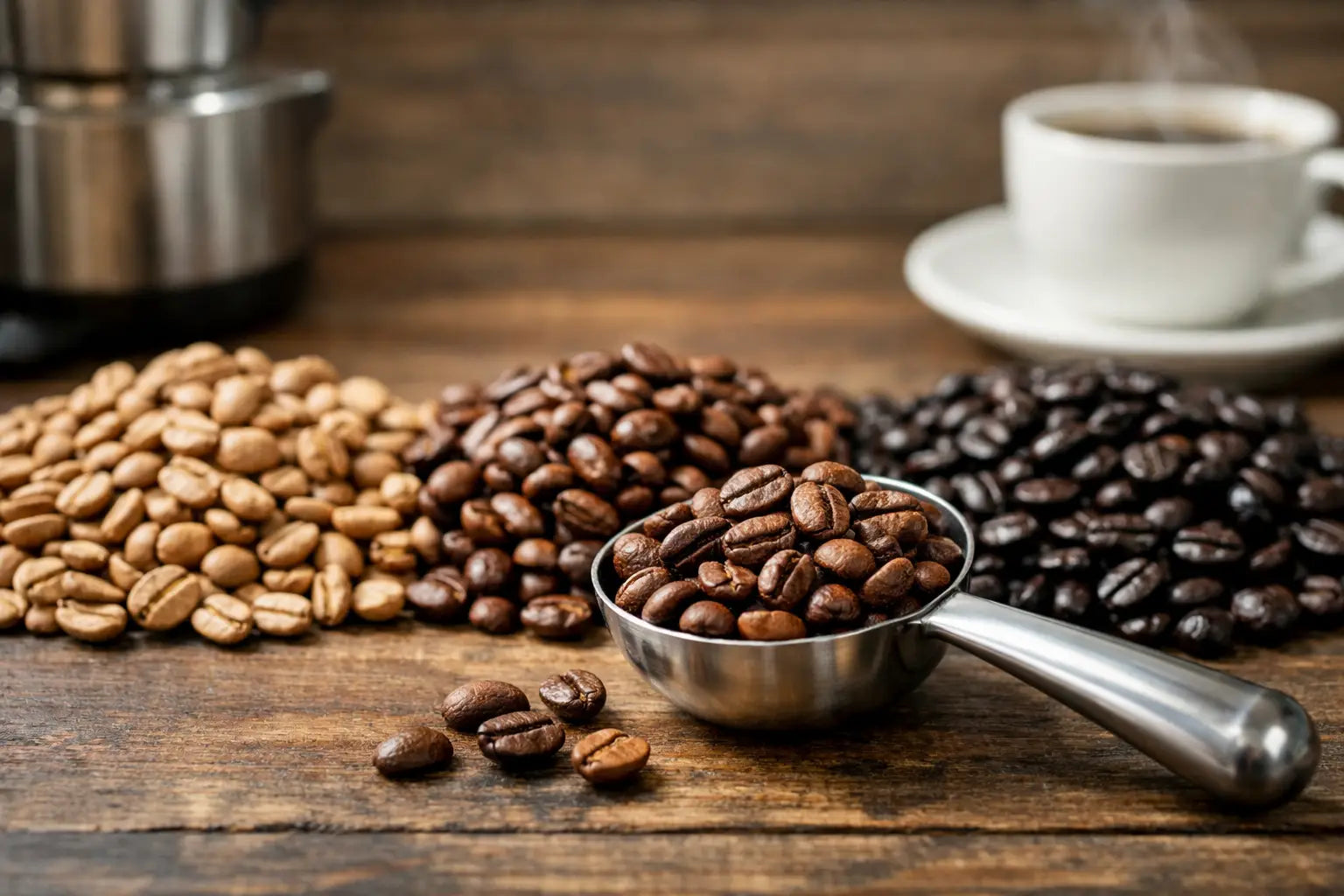
Most coffees fall into three broad roast categories, though the lines between them are not always rigid. Different roasters use slightly different naming systems, and one company's medium can look a little darker than another's. That is why flavor notes and roast style matter more than color alone.
Light roast
Light roast coffee spends less time in the roaster, which usually means more of the bean's original character stays intact. You are more likely to taste acidity, florals, fruit, and origin-specific detail. A washed Ethiopian coffee at a light roast may show jasmine, lemon, or stone fruit. A light roasted Colombian might lean crisp and sweet with red fruit and honey.
This style is often loved by pour-over drinkers and people who enjoy clarity in the cup. It can be a beautiful match for single origin coffee because the nuances are easier to notice. The trade-off is that light roast can feel sharper or less familiar if you are used to traditional diner-style coffee. It also demands a little more care in brewing, since under-extraction can make it taste sour or thin.
Medium roast
Medium roast is often the most flexible category. It balances sweetness, body, and acidity in a way that feels approachable without becoming generic. You still get character from the bean, but the roast adds more caramelized sugar notes, chocolate, nuts, or baked fruit.
For many home brewers, medium roast is the sweet spot. It performs well across drip coffee, pour-over, French press, and even some espresso setups. If you want a cup that feels comforting in the morning but still has specialty coffee detail, medium roast is often the answer.
This is also where many premium blends shine. A well-built medium roast blend can offer consistency, depth, and enough complexity to keep each cup interesting. It gives you that cozy, dependable profile people want for everyday brewing at home.
Dark roast
Dark roast develops farther, bringing more roast-driven flavors to the front. Bittersweet chocolate, toasted nuts, spice, and smoky notes become more prominent while acidity softens. The body can feel heavier, and the overall profile often reads as bold and familiar.
Done well, dark roast can be rich and satisfying, especially for espresso drinkers or anyone who likes a strong, full-bodied cup. Done poorly, it can flatten the coffee's character and taste burnt. That is the real distinction. Dark roast is not automatically lower quality, but it leaves less room for origin nuance. If the bean is exceptional, some of its finer details may be harder to taste after a deeper roast.
How roast level changes your brewing experience
A practical coffee roast level guide should help you think beyond taste notes on a label. Roast level affects how coffee behaves when you brew it.
Light roasts are denser and usually a little harder to extract. They often benefit from hotter water, a finer grind, and enough brew time to fully develop sweetness. If you brew them too gently, they can seem grassy or sour.
Medium roasts are more forgiving. They adapt well to different brew methods and are easier to dial in if you are still refining your home setup. This is one reason they work so well for households with different taste preferences.
Dark roasts extract more quickly because the beans are more porous. If you grind too fine or brew too long, bitterness can take over fast. Slightly cooler water and a coarser grind can help keep the cup balanced.
If you brew espresso, roast level matters even more. Light roast espresso can be layered, bright, and stunning, but it is less forgiving. Medium and medium-dark profiles are usually easier to work with if you want body, sweetness, and a more classic espresso experience.
Choosing the right roast for your taste
The best roast is not the one with the strongest branding or the darkest bean. It is the one that gives you the kind of cup you actually want to drink.
If you love tea-like coffees, fruit-forward flavors, and the feeling of tasting where a coffee came from, start with light roast single origins. If you want balance, comfort, and versatility, medium roast is a smart place to live. If you like intense, bold coffee with lower acidity, dark roast may be the better fit.
It also depends on when and how you drink coffee. A bright light roast can feel perfect for a slow weekend pour-over when you want to pay attention to every note. A smooth medium roast may be better for your everyday morning mug. A darker roast can be ideal when paired with milk or when you want a fuller, more traditional profile.
Roast level and milk drinks
Milk changes the equation. In cappuccinos and lattes, very light roasts can sometimes get overshadowed unless the espresso is dialed in carefully. Medium and medium-dark roasts tend to pair beautifully with milk because their chocolate, caramel, and nut tones stay present.
That does not mean dark is always best for milk drinks. A carefully roasted medium with natural sweetness can create a more balanced latte than an overly dark espresso that turns bitter under heat.
Roast level and freshness
Freshness matters at every roast level, but it shows up differently. Light roasts can feel especially lively when fresh, while darker roasts can lose nuance quickly and may taste flat or oily as they age. Buying freshly roasted coffee, rather than coffee that has been sitting on a shelf for months, gives you a better chance of tasting what the roaster intended.
For shoppers looking for a premium home coffee experience, this is where small-batch roasting makes a real difference. Fresh, thoughtfully roasted coffee brings more life to every brew and makes your morning ritual feel less routine and more like a moment worth keeping.
A few common myths about roast levels
One of the biggest myths is that dark roast has dramatically more caffeine. In reality, roast level changes flavor far more than it changes caffeine. Another myth is that light roast is always sour. High-quality light roast should taste bright and sweet, not harsh. Sourness often points to under-extraction, not just the roast itself.
There is also a tendency to treat medium roast as the boring middle. In practice, medium roast is often where craftsmanship shows most clearly. It asks the roaster to preserve origin character while building sweetness and body. That balance is harder than it looks.
How to use this coffee roast level guide when shopping
When you read a bag label, think in layers. Roast level tells you the general direction of flavor. Origin tells you where the coffee's natural characteristics come from. Processing gives clues about fruitiness, sweetness, or cleanliness. Tasting notes help you imagine the cup, but they are not promises that every brew will taste identical.
If you are shopping for home, it helps to match roast level to your brew method and your habits. Light roasts reward curiosity. Medium roasts support consistency. Dark roasts suit drinkers who want depth and boldness first. None is universally better. The right choice depends on what feels satisfying in your cup.
At House Coffee, that balance between quality and comfort is part of the point. Coffee should feel special, but it should also feel welcoming enough to become part of home.
A good roast does more than fit a category. It meets you where you are, whether that is a quiet early morning, a second cup shared across the kitchen, or the simple pleasure of brewing something beautiful for yourself.