Drip Coffee vs French Press: Which Wins?
Some mornings call for clarity. You want a clean, bright cup that gets the day moving without much fuss. Other mornings ask for something slower and fuller, a coffee with weight, aroma, and a little more ceremony. That is really what drip coffee vs french press comes down to - not which method is better on paper, but which one feels right in your kitchen, with your beans, and in the moments you want coffee to create.
Both methods can make excellent coffee at home. Both can also flatten a beautiful coffee if the grind, water, or ratio is off. If you are choosing between them, the smartest place to start is not the brewer itself. It is the kind of cup you love drinking.
Drip coffee vs french press: the core difference
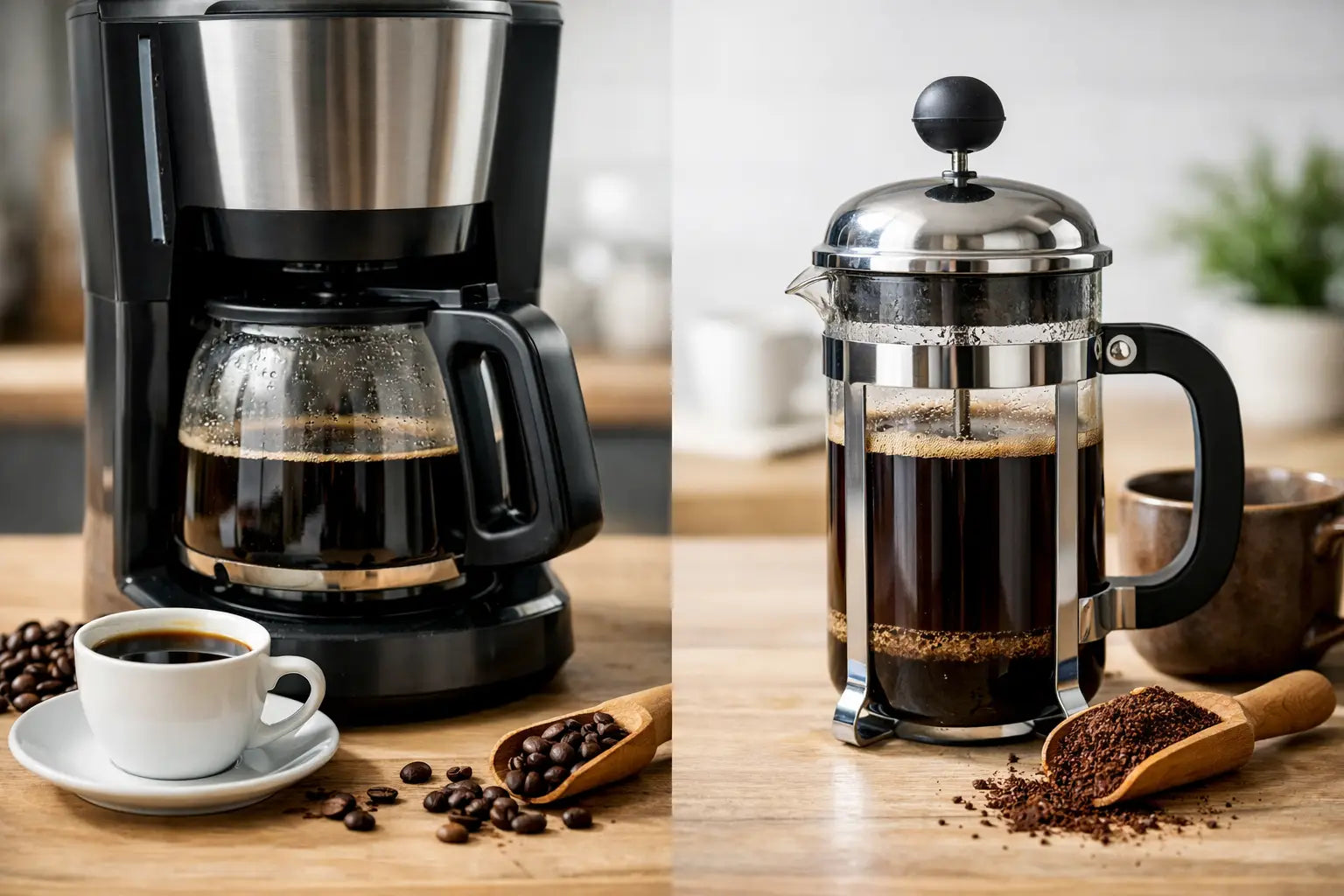
Drip coffee brews by passing hot water through ground coffee and a filter. That filter, usually paper, catches oils and fine particles before they reach the cup. The result is typically cleaner, lighter in body, and more transparent in flavor.
French press is full immersion brewing. Coffee grounds sit directly in hot water for several minutes before being separated by a metal mesh plunger. Because there is no paper filter, more oils and microscopic solids stay in the final cup. That gives french press coffee a heavier texture and a richer, rounder impression.
Neither outcome is inherently superior. They simply highlight different qualities in the same coffee. A washed Ethiopian single origin with floral notes and citrus brightness often feels more precise in drip. A chocolatey, nutty blend with deeper caramel sweetness can feel especially comforting in a french press.
Flavor and body: what changes in the cup
If flavor is your first priority, this is where the choice usually becomes clear.
Drip coffee tends to produce more separation between notes. Acidity shows up more clearly, fruit can feel crisper, and delicate aromatics are easier to notice. If you enjoy tasting the difference between origins, processing methods, or roast profiles, drip gives coffee room to speak with more definition.
French press leans into body and texture. The cup often tastes fuller and more substantial, with a round mouthfeel that many people describe as bold, even when the roast itself is not dark. Oils remain in the brew, so chocolate, spice, toasted nut, and syrupy sweetness can feel more pronounced.
This is also where trade-offs matter. A french press can make a balanced medium roast feel lush and satisfying, but it can also make muddiness more obvious if the coffee is over-extracted or ground unevenly. Drip can reveal lovely nuance, but it may feel too light for drinkers who want a dense, cozy cup that stands up well to milk or breakfast foods.
Which brewer is easier to use every day?
For busy households, drip often wins on convenience. If you have an automatic drip machine, the process is straightforward: add water, measure coffee, press a button, and let the brewer do the timing. It is practical for early work mornings, larger households, or anyone making several cups at once.
French press is simple, but it asks a little more of you. You heat the water, pour it manually, steep for the right amount of time, and plunge gently. It is not difficult, but it is more hands-on. For many coffee lovers, that is part of the appeal. The ritual slows the morning down in a good way.
Cleanup is another consideration. Drip brewers are generally cleaner because the used grounds stay contained in a paper filter. French press cleanup can be messier since you need to empty wet grounds from the carafe and rinse the mesh thoroughly. If your routine is rushed, that difference matters more than people like to admit.
Drip coffee vs french press for specialty beans
When you are buying fresh, specialty-grade coffee, the brewing method shapes how much of that quality you actually taste.
Drip coffee is often the better match for high-clarity coffees, especially single origins with distinct floral, citrus, stone fruit, or tea-like notes. A clean filter brew can highlight the work done at origin and in roasting - the careful picking, processing, and roast development that preserve complexity instead of covering it up.
French press can be beautiful with specialty coffee too, especially if you love sweetness, body, and a more immersive texture. Coffees with cocoa, berry jam, baking spice, or brown sugar notes often feel generous and comforting in this format. A carefully roasted blend can shine here, delivering a cup that feels both premium and deeply familiar.
The real question is whether you want precision or plushness. If your favorite part of coffee is identifying layered tasting notes, drip usually gives you more detail. If your favorite part is settling into a cup that feels rich and grounding, french press may be the better fit.
Brew control and consistency
There is a reason automatic drip coffee remains a staple in so many homes. It is easier to repeat. Once you have your ratio and machine settings dialed in, you can produce a reliably good cup with minimal effort.
That said, not all drip machines are equal. Water temperature, showerhead design, and brew bed saturation all affect extraction. A poor drip machine can make flat coffee just as easily as a good one can make excellent coffee.
French press gives you more direct control, but that also means more room for error. Grind too fine and your cup may turn bitter and sludgy. Steep too long and you can lose sweetness. Plunge too aggressively and more sediment ends up in the cup. For people who enjoy adjusting variables, this can be rewarding. For people who want dependable results before 7 a.m., it can feel like one step too many.
What grind size and ratio work best?
Both methods reward good fundamentals.
For drip coffee, a medium grind is usually the right starting point. The exact texture depends on your brewer, but you want water to pass through at a steady pace without stalling or racing. A common starting ratio is about 1:16, which means 1 gram of coffee for every 16 grams of water.
For french press, use a coarser grind than drip. This helps control extraction and reduces sediment. A slightly stronger ratio, around 1:15, often works well, though some people prefer even richer cups. Steep time usually lands around four minutes, with small adjustments based on the coffee and your taste.
Freshness matters in both cases. Freshly roasted beans, ground just before brewing, will give you more aroma, more sweetness, and a cup that feels alive rather than tired. That is especially noticeable with premium arabica coffees, where subtle origin character can disappear quickly once coffee is pre-ground.
Which is better for serving guests?
If you are brewing for a group, drip coffee is usually the more practical choice. It scales well, keeps the process tidy, and lets you serve several mugs without standing over the counter. For brunch, family visits, or shared mornings at home, that ease can be part of the hospitality.
French press is more intimate. It is ideal for two to four cups and feels more personal, especially when you want the act of brewing to be part of the experience. Setting a press on the table has a certain warmth to it. It invites people to slow down, pour another cup, and stay a little longer.
That emotional side matters. Coffee is not only about extraction theory. It is also about atmosphere, comfort, and the kind of ritual that turns an ordinary morning into something memorable.
So, should you choose drip or french press?
Choose drip if you want a cleaner cup, clearer flavor separation, easier cleanup, and a brewing method that fits fast mornings or larger batches. It is especially rewarding for bright single origins and anyone who wants to taste more distinction from bean to bean.
Choose french press if you want more body, more texture, and a slower brewing ritual that feels grounding. It is a natural fit for coffee drinkers who love richness, especially with chocolaty or sweet profile coffees.
For many homes, the honest answer is both. One brewer suits the weekday rush. The other suits the quiet weekend cup. One highlights precision. The other leans into comfort. At House Coffee, that balance is part of what makes brewing at home so meaningful: the chance to match exceptional beans to the moment you want to create.
The best method is the one that brings you back to your kitchen with anticipation, fills the room with a familiar aroma, and makes your coffee feel less like a habit and more like a small daily pleasure worth savoring.