Coffee Extraction Troubleshooting Guide at Home
A cup can smell like ripe berries, caramel, or cocoa in the bag, then land in your mug tasting thin, sharp, or strangely bitter. That gap is not a failure of your coffee ritual. It is usually a small extraction mismatch. This coffee extraction troubleshooting guide helps you identify what happened, change one variable with purpose, and get back to the comforting, café-quality cup your fresh beans can deliver.
Start with what extraction really means
Extraction is the process of dissolving flavor from ground coffee into water. Not every compound dissolves at the same rate. Bright acids tend to appear early; sweetness and deeper flavor develop through the middle; dry, woody, and bitter compounds are more likely to dominate when brewing goes too far.
The goal is not to pull out everything. It is to find balance: a cup with enough sweetness and body to support its acidity, plus a clean finish that invites another sip. The right setting depends on the coffee, too. A washed Ethiopian may shine with a lively, tea-like character, while a chocolate-forward Latin American coffee may feel best with more body and a slightly fuller extraction.
Before changing anything, taste the coffee once it has cooled for a few minutes. Very hot coffee hides sweetness and exaggerates heat-driven bitterness. Then describe the problem in plain language. Sour is not the same as bitter. Weak is not always under-extracted. A dry finish can point to over-extraction, but it can also come from a roast profile or a paper filter that was not rinsed.
Coffee extraction troubleshooting guide: taste first
If the cup tastes sour, sharp, or salty
Sourness often signals under-extraction. Water did not have enough opportunity to dissolve the sugars and balancing compounds that soften a coffee’s natural acidity. The cup may taste lemony in an unpleasant way, hollow at the center, or finish abruptly.
Start by grinding a little finer. This is usually the most effective adjustment because finer grounds create more surface area for water to work with. Make a modest move, especially with espresso, where one small grinder setting can noticeably slow the shot.
If the grind is already appropriate, extend contact time slightly. For a pour-over, pour more slowly or use a recipe with a longer drawdown. For immersion brewing, steep another 15 to 30 seconds. For espresso, a faster-running shot may need a finer grind or a slightly higher dose.
Water that is too cool can also leave a cup under-extracted. Use water close to boiling for light and medium roasts, generally around 200 to 205°F. If your coffee is naturally high in acidity, such as a bright single origin, do not assume that acidity is a defect. Look for sweetness beneath it. Pleasant acidity feels juicy and integrated; under-extracted acidity feels pointed and empty.
If the cup tastes bitter, dry, or harsh
Bitterness becomes a problem when it overwhelms sweetness and leaves your mouth feeling dry, papery, or rough. This often points to over-extraction, particularly if the brew also tastes dark, woody, or astringent.
Grind a little coarser first. Coarser particles slow extraction by reducing surface area, and they often bring immediate relief in pour-over and espresso. You can also shorten brew time. On a French press, press sooner. On a pour-over, use a slightly quicker pour pattern, provided the bed is not already draining unusually fast.
Water temperature matters here, too. If you are brewing a darker roast at 205°F and finding persistent bitterness, try 195 to 200°F. Darker beans are more soluble and can give up harsh compounds quickly. The trade-off is that water that is too cool may flatten aroma and sweetness, so make the adjustment in small steps.
Do not automatically blame the roast. Fresh specialty coffee can have a pleasantly bittersweet note, like dark chocolate, toasted nuts, or citrus peel. The concern is bitterness that crowds out every other flavor. If a coarser grind makes the cup sour before the bitterness disappears, uneven grinding or channeling may be the real issue.
If the cup tastes weak or watery
A watery cup can be under-extracted, but it often comes down to strength rather than extraction. Strength describes how much coffee is dissolved in the beverage. You can brew a balanced cup that is simply too diluted.
Check your coffee-to-water ratio before altering the grind. For filter coffee, a dependable starting point is 1 gram of coffee for every 16 grams of water. That is about 22 grams of coffee to 350 grams of water. If the flavor is pleasant but too light, use more coffee or less water. This improves strength without forcing a longer extraction that could add bitterness.
If the cup is both watery and sour, then increase extraction as well: grind finer, use hotter water, or add a little contact time. For espresso, a pale, fast shot with little texture usually calls for a finer grind. Keep your dose consistent while you diagnose the shot.
If the cup tastes muddy, uneven, or both sour and bitter
When a brew tastes simultaneously sharp and harsh, extraction may be uneven. Some grounds gave up too little, while others gave up too much. This is common when the grinder produces a broad range of particle sizes, when water finds channels through an espresso puck, or when a pour-over bed is disturbed inconsistently.
For espresso, distribute the grounds evenly before tamping, then tamp level with steady pressure. A crooked or cracked puck lets water rush through weak points, producing channeling. If your shot sprays from the portafilter or runs in pale, uneven streams, focus on puck preparation before changing several recipe variables.
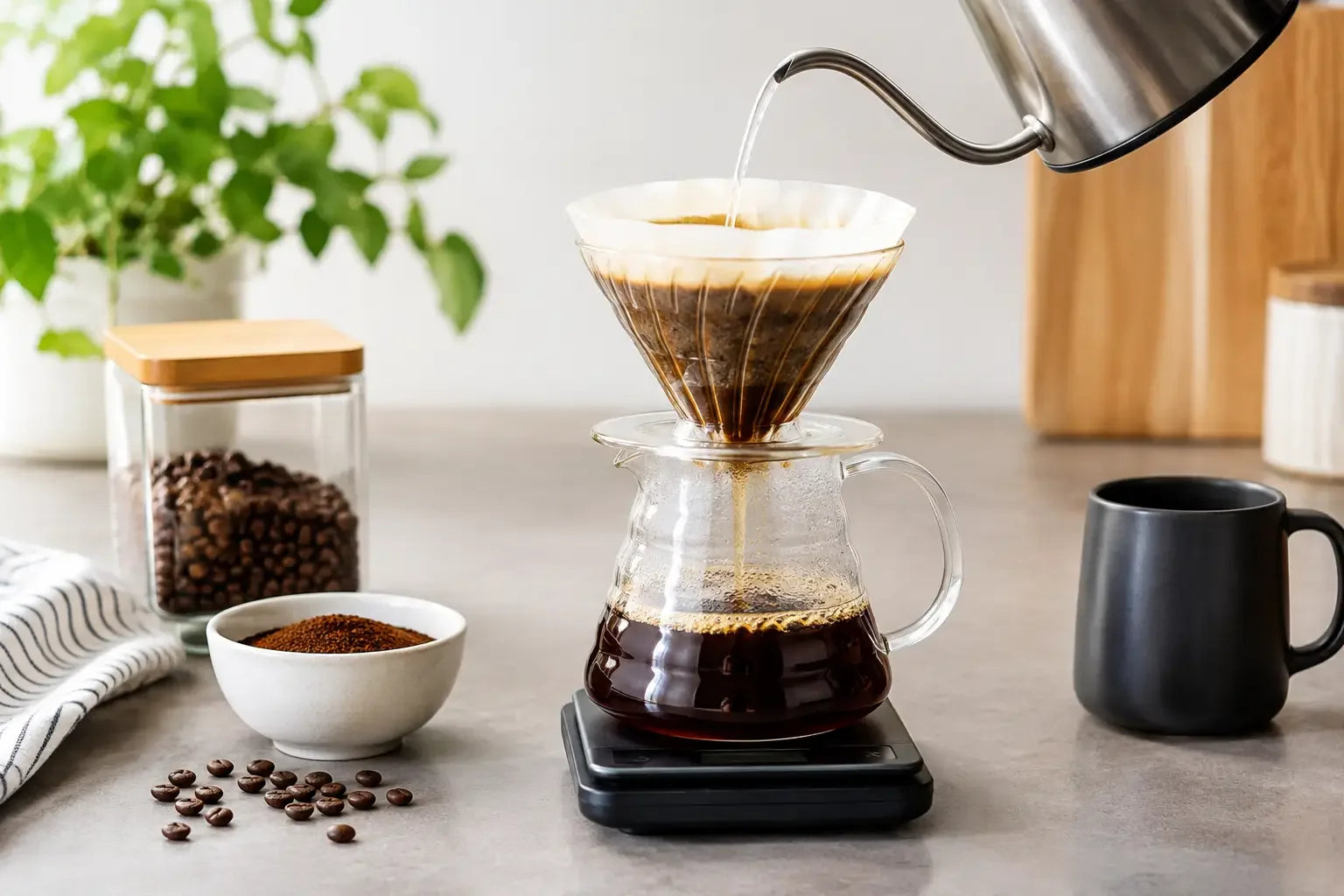
For pour-over, make sure all grounds are fully saturated during the bloom. Use enough water to wet the bed evenly, wait 30 to 45 seconds, and gently swirl if dry pockets remain. Pour in controlled circles rather than repeatedly striking the paper filter, which can send water around the coffee instead of through it.
A capable burr grinder is one of the most meaningful upgrades for consistent brewing. Freshly roasted, ethically sourced coffee deserves an even grind because it allows its origin character - florals, fruit, honeyed sweetness, or cocoa - to show up clearly rather than as a confusing mix of extremes.
Change one variable, then brew again
The fastest way to lose a good recipe is to change grind size, ratio, temperature, and time all at once. You may improve the cup, but you will not know why. Treat each brew as a small, useful experiment.
Keep the coffee dose and water amount consistent, then adjust one variable. If your pour-over is sour, move one or two clicks finer and repeat. If it becomes pleasantly sweet but too intense, keep that grind and add a little water next time. Write down the dose, water, temperature, and total brew time in a note on your phone. After three or four brews, patterns become much easier to see.
This approach matters when opening a new bag. Different origins, processing methods, and roast levels behave differently. A dense, light-roasted coffee may need a finer grind and hotter water than a more developed blend. Freshness also changes the brew: very recently roasted coffee can release more gas, so give it a longer bloom and expect to make small adjustments as it settles.
Check the details that quietly affect every cup
Water is often the overlooked ingredient. If your tap water has a strong chlorine smell or is very hard, it can mute sweetness and make troubleshooting confusing. Filtered water with moderate mineral content is a reliable place to start. Clean equipment matters just as much. Old coffee oils in a grinder, brewer, or carafe can create rancid bitterness that no recipe can correct.
Use a scale whenever possible. Scoops are convenient, but bean size and roast density make volume inconsistent. Weighing coffee and water takes only a moment and turns a good morning cup into a repeatable ritual. A timer gives you the same advantage, particularly for French press, pour-over, and espresso.
Finally, give the coffee room to speak. Buy whole beans in amounts you can enjoy while they are fresh, store them in an airtight container away from heat and light, and grind just before brewing. At House Coffee, carefully roasted specialty lots are chosen for the moments they create at home, but the final expression still happens in your hands and in your brewer.
The next time a cup feels off, resist the urge to abandon the bag or chase a completely new recipe. Taste carefully, make one thoughtful adjustment, and brew again. That patient rhythm is how an ordinary morning cup becomes one worth lingering over - and one worth sharing.