Coffee Flavor Wheel Guide for Better Home Brews
A coffee can taste like cocoa, ripe berries, toasted almonds, orange zest, or brown sugar. Those words are not marketing poetry pulled from thin air. They are a practical way to describe what is already in your cup. This coffee flavor wheel guide helps you put language to those small, memorable details, so choosing beans and refining your brew becomes more personal and much more rewarding.
You do not need a professional cupping lab or a trained palate to use a flavor wheel. You only need fresh coffee, a little attention, and permission to notice what you taste. Over time, that morning cup can become more than a habit. It can be a small ritual that awakens your senses and creates cherished moments at home.
What a Coffee Flavor Wheel Actually Does
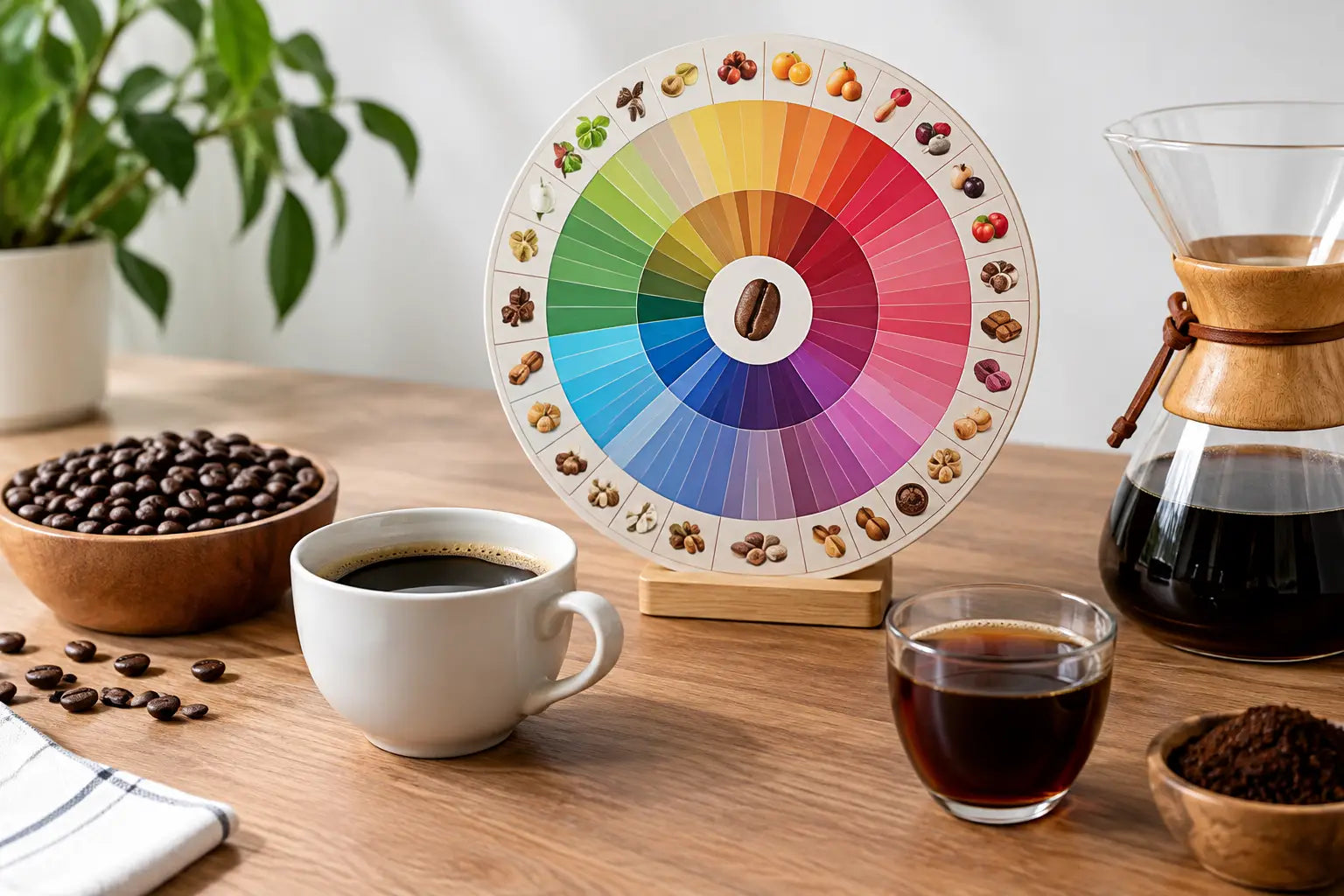
The coffee flavor wheel is a visual map of the aromas and flavors people experience in coffee. It begins with broad categories near the center, such as fruity, floral, nutty, sweet, spicy, roasted, or savory. As you move outward, the descriptions become more specific. Fruity may lead to berry, citrus, stone fruit, or tropical fruit. Berry may lead you further toward blueberry, blackberry, or raspberry.
Think of it as a vocabulary tool, not a scorecard. You are not trying to find every flavor on the wheel or prove that you have a perfect palate. The wheel simply gives you a starting point when a coffee tastes bright, comforting, unusual, or especially familiar.
A tasting note also does not mean the roaster added flavoring. In specialty coffee, notes like chocolate, cherry, or jasmine come from the coffee itself. Variety, growing altitude, soil, processing method, roast development, and brewing all shape what reaches the cup. Carefully sourced Arabica coffee can carry remarkable character before it ever meets your grinder.
How to Read the Coffee Flavor Wheel Guide
Start at the center and work outward. Rather than asking, “Does this taste exactly like a blueberry?” begin with a bigger question: “Does this feel fruity, sweet, nutty, or roasted?” Once you find the broad family, move to the next ring only if a more precise word feels useful.
For example, imagine a washed Ethiopian coffee brewed as a pour-over. You may first notice a lively fruitiness. The next level may suggest citrus. After another sip, you might land on lemon or bergamot. None of those words needs to be absolute. “Bright citrus, almost lemon-like” is an excellent tasting observation.
The same approach works with a fuller-bodied coffee. A medium-dark blend may first seem roasted and sweet, then reveal caramel, baking spice, toasted hazelnut, or dark chocolate. These coffees can feel familiar and grounding, especially in a milk drink, while brighter single origins may shine black or with a lighter preparation.
Aroma comes first
Smell the dry grounds before brewing, then smell the coffee as it blooms or steeps. Aroma prepares your palate and often points toward flavors you will notice later. A floral fragrance may show up as jasmine or tea-like delicacy in the cup. A scent of cocoa or toasted nuts may lead toward a rounder, more comforting finish.
Do not worry if aroma and flavor seem different. They often are. A coffee can smell intensely like berries yet taste more like chocolate once it cools.
Taste is more than flavor
When coffee professionals taste, they pay attention to several dimensions at once. Acidity is the lively, mouthwatering quality that can resemble citrus, apple, grape, or stone fruit. It is not the same as sourness. A good acidity brings energy and clarity; unpleasant sourness often signals under-extraction or an overly coarse grind.
Sweetness may remind you of honey, cane sugar, caramel, ripe fruit, or molasses. Bitterness can be pleasantly dark-chocolate-like in balance, but harsh bitterness may point to over-extraction, water that is too hot, or a roast profile that is not right for your preference.
Body describes texture. Is the cup tea-like and delicate, creamy and silky, or heavy and syrupy? Finish is what lingers after you swallow. A clean finish fades gracefully. A lingering cocoa note can feel cozy; a dry, astringent finish may tell you the coffee was brewed too aggressively.
A Simple Way to Taste Coffee at Home
The best time to explore a new bag is when you are not rushing out the door. Brew it in your usual method first. Familiar equipment gives you a clearer sense of the bean itself, and it helps you learn what you truly enjoy rather than what sounds impressive on a label.
Take one sip when the coffee is hot, then return as it cools. Heat can hide delicate sweetness and fruit notes. Many specialty coffees become more expressive at a warm, comfortable temperature, when you can better separate acidity, sweetness, and texture.
Keep a few simple questions in mind: What does the aroma remind me of? Does the coffee feel bright or mellow? Is the sweetness closer to fruit, sugar, or chocolate? What stays with me after the sip? A short note such as “smooth, cocoa-like, low acidity” is far more useful than trying to identify ten flavors at once.
If you are comparing coffees, taste them side by side using the same ratio, water, and brewing method. You will quickly notice how a single origin from Central America might lean toward caramel and citrus, while an East African coffee may show floral aromatics and juicy berry character. Origin offers helpful clues, but it is never a guarantee. Processing and roast level can change the picture dramatically.
What Flavor Notes Can Tell You When Shopping
Flavor notes are especially helpful when you know the kind of cup you want. If you enjoy an easygoing daily coffee with a rich, familiar profile, look for notes such as chocolate, brown sugar, almond, praline, or caramel. These coffees often feel balanced and satisfying in drip brewers, French presses, and espresso drinks.
If you prefer brightness and complexity, seek out descriptions like citrus, peach, apricot, berry, tea, or floral. A lighter roast can preserve more of a coffee's distinct origin character, though it may ask for more care in brewing. A precise grind, good water, and an appropriate brew temperature make a noticeable difference.
For espresso, the answer depends on how you drink it. A fruit-forward single origin can make a thrilling straight shot with sparkling acidity and jam-like sweetness. With milk, a chocolatey or nutty coffee may feel more harmonious and dessert-like. Neither choice is more sophisticated. The best coffee is the one that makes you want another sip.
Quality matters here. Freshly roasted, specialty-grade coffee gives the flavor wheel more to work with because its character has not been flattened by stale storage or overly dark roasting. Ethically sourced lots from dedicated growers also reflect the care taken at every step, from farm to roast to your kitchen counter.
Use the Wheel to Troubleshoot Your Brew
The flavor wheel can also help you improve a cup that is not quite right. If your coffee tastes sharply sour, thin, or grassy, it may be under-extracted. Try a finer grind, a slightly longer brew time, or a higher water temperature. Make one adjustment at a time so you can learn what changed.
If it tastes bitter, dry, hollow, or overly roasty, you may be extracting too much. A coarser grind, shorter contact time, or cooler water can help. With espresso, small changes in grind size can have an outsized effect, so keep your dose and yield consistent while you experiment.
A flat-tasting cup is not always a brewing problem. Coffee loses aromatic intensity with age, especially after grinding. Store whole beans in an airtight container away from heat and light, grind just before brewing, and enjoy your coffee while it is fresh. Those simple habits preserve the vivid sweetness and aroma you chose the bag for.
Let Your Own Taste Lead
The coffee flavor wheel is most useful when it helps you trust your preferences. Maybe you discover that “bright acidity” is exactly what makes a weekend pour-over feel special. Maybe you learn that your perfect weekday coffee is creamy, chocolate-forward, and quietly sweet. Both discoveries matter.
Brew slowly when you can, share a cup with someone you love, and keep a note of the flavors that make a coffee feel like home. Your palate does not need to be perfect to recognize a beautiful cup. It only needs a little room to pay attention.