Arabica vs Robusta Coffee: What to Choose
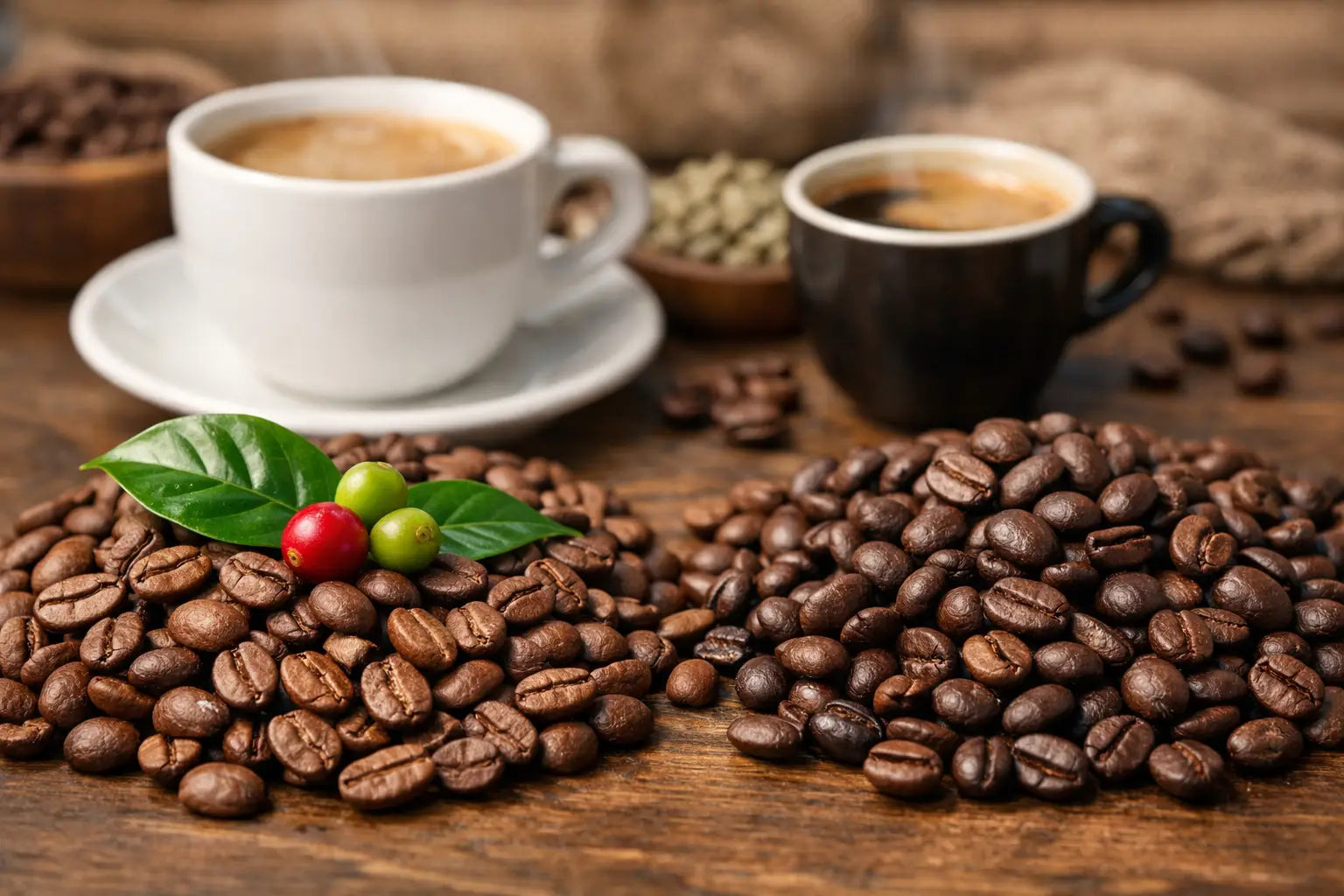
You can taste the difference before you know the names. One cup feels layered, soft, and fragrant, with notes that remind you of chocolate, citrus, or berries. Another lands harder - bolder, earthier, more bitter, with a heavier punch of caffeine. That is the real starting point for arabica vs robusta coffee: not a label, but the experience in your mug.
For home brewers, espresso lovers, and anyone trying to buy better beans online, this comparison matters. The choice between arabica and robusta shapes flavor, body, crema, caffeine content, price, and even how forgiving a coffee feels in your brewer. And while Arabica is usually the favorite in specialty coffee, robusta is not simply the "bad" bean. It has a purpose. The better question is what kind of cup you want to create at home.
Arabica vs Robusta Coffee: The Core Difference
Arabica and robusta are two different coffee species. Arabica, or Coffea arabica, is known for more refined flavor and aromatic complexity. Robusta, or Coffea canephora, is generally stronger, more bitter, and higher in caffeine.
That split sounds simple, but it shows up in meaningful ways from farm to cup. Arabica tends to grow at higher elevations and needs more careful conditions. It is more delicate as a plant and often more demanding to produce well. Robusta is tougher. It handles heat and pests better, produces higher yields, and is usually less expensive to grow.
Those agricultural differences help explain why arabica is associated with specialty coffee and why robusta appears more often in instant coffee, commercial blends, and some espresso blends. Higher risk and lower yield usually mean higher cost, but also more potential for nuance when the coffee is grown, processed, and roasted with care.
Flavor: Where Arabica Usually Wins Hearts
If you are shopping for premium whole bean coffee for pour over, drip, Chemex, or a balanced espresso, Arabica is usually the bean you are looking for. At its best, it offers sweetness, clarity, and distinct origin character. A washed Ethiopian Arabica can feel floral and tea-like. A natural Brazil might lean into cocoa, nuts, and gentle fruit. A high-quality Colombian can bring caramel sweetness with bright acidity.
Robusta tends to lean in a different direction. Its flavor is often described as earthy, woody, nutty, or smoky, with more bitterness and less acidity. Some people also notice a grain-like or rubbery note in lower-grade robusta. That is part of why robusta has a harder reputation among specialty coffee drinkers.
Still, quality matters. Fine robusta exists, and when grown and processed carefully, it can be cleaner and more interesting than many people expect. It will not usually mimic the elegance of a top single origin Arabica, but it can bring density, dark chocolate notes, and a satisfying punch that works well in the right context.
Caffeine, Body, and Crema
If your priority is a stronger kick, robusta has a clear advantage. It generally contains about twice the caffeine of arabica. That higher caffeine content contributes to its sharper, more assertive profile.
Body is another point of difference. Robusta often feels heavier and more intense on the palate. In espresso, it can create thick crema and a bold texture that some drinkers love, especially in traditional Italian-style blends. Arabica espresso usually gives you more flavor detail and sweetness, but the crema may be lighter and less dramatic.
This is where preference really matters. If you want a nuanced black coffee that opens up as it cools, Arabica is hard to beat. If you want a dense, punchy espresso with strong bitterness and lots of crema, a blend with some robusta may suit your taste better.
Why Specialty Coffee Favors Arabica
Specialty coffee is built around traceability, freshness, craftsmanship, and flavor expression. Arabica supports that beautifully because it has more potential for complexity. When a roaster highlights single origin lots, Q-grade scores, elevation, and processing methods, they are usually working with Arabica.
That does not mean every Arabica coffee is excellent. Commodity-grade arabica exists, and it can taste flat, stale, or lifeless. Species alone does not guarantee quality. But when you see specialty-grade markers like fresh roasting, direct trade relationships, and high cupping scores, Arabica is typically the foundation.
For many people building a better coffee ritual at home, that is the real shift. You are not just choosing the "better" species. You are choosing the kind of sensory experience you want every morning - more sweetness, more clarity, more origin character, and more pleasure in the details.
Arabica vs Robusta Coffee in Espresso Blends
Espresso is where the conversation gets more interesting. Pure Arabica espresso can be beautiful - sweet, syrupy, fragrant, and layered. It also tends to be less bitter, which many modern coffee drinkers prefer.
But robusta has long had a place in espresso blends for practical reasons. It adds crema, body, caffeine, and a darker edge that can cut through milk. In a cappuccino or latte, that extra intensity can help the coffee hold its own.
The trade-off is flavor refinement. Too much robusta can flatten the cup and push bitterness forward. A small amount, though, can be useful if the goal is a more traditional espresso style. It depends on whether you want brightness and sweetness or strength and density.
For most home brewers looking for a premium everyday espresso, a well-roasted Arabica or Arabica-led blend will feel more balanced and rewarding. If you love classic dark espresso with a bigger punch, a bit of robusta may be worth exploring.
Price and Value
Arabica usually costs more than robusta, and there are good reasons for that. It is harder to grow, often produced at higher elevations, and more closely tied to specialty standards. The best lots also require careful picking, processing, sorting, roasting, and storage.
Robusta is generally more affordable, which is one reason it appears in mass-market coffee. Lower price does not always mean poor value, though. If your goal is maximum caffeine, strong flavor, or a cost-effective blend for milk drinks, robusta can make sense.
But if your idea of value includes freshness, ethical sourcing, and a cup that actually tastes distinctive, Arabica often delivers more for the money. A coffee that turns a routine morning into a small daily pleasure has its own kind of value.
Which One Should You Buy?
If you enjoy black coffee, manual brewing, or tasting the differences between origins, choose Arabica. It is the better fit for people who care about sweetness, aroma, and the subtle notes that make coffee feel crafted rather than generic.
If you want high caffeine, heavy body, and bold espresso with lots of crema, robusta may appeal to you, especially in a blend. It can also be practical if you prefer dark roasts with milk and sugar, where nuance matters less than impact.
For most shoppers moving up from grocery-store coffee, Arabica is the easiest recommendation. A fresh-roasted, specialty-grade Arabica gives you a clearer picture of what coffee can be when quality comes first. That is why brands like House Coffee focus on premium Arabica with strong quality markers such as single origin sourcing and Q-grade standards. The goal is not just to sell beans. It is to help you brew a cup that feels comforting, elevated, and worth slowing down for.
A Note on Labels
One useful tip: do not stop at "100% Arabica" on a bag. That tells you the species, not the quality. Fresh roast date, origin transparency, altitude, processing method, and roaster reputation matter just as much.
A mediocre Arabica can still disappoint. A carefully sourced coffee roasted in small batches for freshness is far more likely to give you the kind of cup that creates real coffee moments at home.
So, Is Robusta Ever Better?
Sometimes, yes. If your definition of better is more caffeine, more crema, lower cost, or a stronger profile in milk-based drinks, robusta has a place. It serves a purpose, and in some blends it is exactly the right tool.
But if better means cleaner flavor, complexity, sweetness, and a more memorable cup, Arabica usually comes out ahead. That is why it remains the standard for specialty coffee and for drinkers who want more than just a jolt.
The best coffee is not the one with the loudest reputation. It is the one that fits your ritual, your taste, and the kind of morning you want to have. Start there, and the right bean becomes much easier to choose.