Coffee Processing Methods Guide for Better Brews
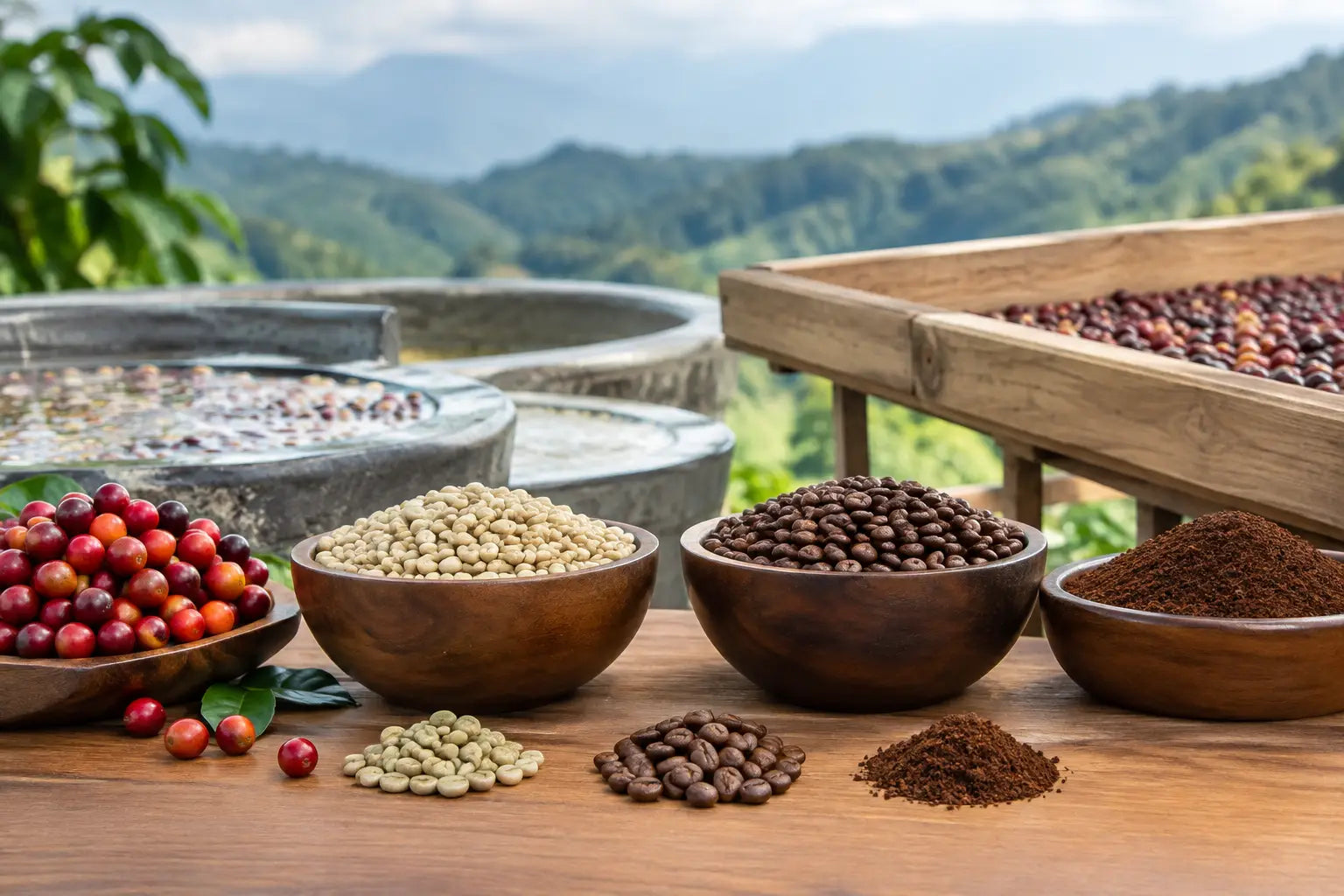
A coffee cherry has only a small seed at its center, yet the way its fruit is removed can change everything in your cup. This coffee processing methods guide makes that journey easier to taste: from clean, bright washed coffees to fruit-forward naturals and silky honey lots. Once you recognize what processing brings to the bean, choosing a coffee for your morning ritual becomes far more personal.
What Coffee Processing Means
Coffee processing is what happens after ripe cherries are picked and before the green coffee is dried, milled, shipped, and roasted. The goal is to remove the cherry's skin, pulp, and sticky mucilage while protecting the seed inside. But this is not simply a cleaning step. Fermentation, drying speed, climate, water access, labor, and meticulous sorting all leave a signature on flavor.
Processing begins at origin, often within hours of harvest. Producers make decisions based on their local weather, equipment, traditions, and the character they want to bring forward in a particular lot. A farmer in a dry region may have ideal conditions for sun-drying whole cherries, while a producer with reliable clean water may favor a precise washed process.
For home brewers, processing is a useful clue, not a guarantee. Variety, altitude, roast development, and your brew recipe matter too. Still, it can help explain why one single origin tastes crisp and citrusy while another feels like blueberry jam or caramelized stone fruit.
Washed Coffee: Clean, Clear, and Origin-Forward
Washed coffee, also called wet-processed coffee, has most of its fruit removed before drying. After sorting and depulping, the seeds ferment in water or controlled tanks so the remaining mucilage can be washed away. They are then dried carefully on patios, raised beds, or mechanical dryers.
The result is often a cup with clarity and definition. Washed coffees commonly highlight the qualities associated with origin and variety: floral aromas, bright acidity, citrus, crisp apple, tea-like structure, and a refined finish. A washed Ethiopian coffee might show jasmine and lemon, while a washed Colombian lot may lean toward red apple, cocoa, or sweet orange.
This is a wonderful starting point for anyone who enjoys a clean filter coffee or wants to taste the details in a single origin. It also performs beautifully as pour-over, drip, and lighter espresso. The trade-off is that washed coffee can feel less heavy or overtly fruity than a natural process. If you want a syrupy, dessert-like cup, another style may be a better match.
Natural Coffee: Fruit-Forward and Full-Bodied
Natural, or dry-processed, coffee dries with the whole cherry intact. Producers spread ripe cherries in thin layers and turn them regularly over days or weeks. As the fruit dries around the seed, it has more influence on the coffee's final flavor.
A well-executed natural coffee can be joyful and expressive, often carrying notes of berries, tropical fruit, ripe peach, dark chocolate, or wine-like sweetness. The body may feel fuller, and the sweetness can be more pronounced than in a washed coffee. These are coffees that can make a familiar brew method feel new again.
Natural processing demands close attention. Cherries must be picked at consistent ripeness, moved frequently, and protected from moisture and uneven drying. When those details are managed well, the cup feels vibrant rather than muddled. When they are not, flavors can become overly fermented or earthy.
Try a natural coffee when you want your morning cup to feel generous and memorable. It can be exceptional in a French press, as a rich espresso, or brewed over ice. Because its fruit character is so vivid, it may not be the best fit for someone seeking a classic, crisp profile. That is not a flaw, just a preference worth knowing.
Honey Processed Coffee: The Sweet Middle Ground
Honey processing does not involve honey. Its name refers to the sticky, honey-like mucilage that remains on the coffee seed as it dries. The cherry skin is removed first, but the producer leaves some or much of that fruit layer in place. The seeds then dry slowly, often on raised beds with careful turning.
This approach can sit beautifully between washed and natural coffee. Honey-processed lots often offer the clarity of a washed coffee with extra sweetness, roundness, and fruit. Think brown sugar, ripe pear, apricot, golden raisin, or milk chocolate, depending on the origin and how much mucilage remains.
You may see terms such as yellow, red, or black honey. These descriptions can refer to the amount of mucilage left on the coffee and the drying approach, though naming conventions vary by region and producer. A black honey process typically dries more slowly with more mucilage present, often creating a deeper, more intense cup. A yellow honey may be brighter and lighter in feel.
Honey coffees are a thoughtful choice for brewers who enjoy balanced sweetness. They are especially rewarding for espresso drinkers who want fruit without an aggressively funky edge, and for drip coffee fans who prefer a plush, smooth finish.
Experimental Processes: Precision Meets Curiosity
Specialty coffee producers continue to explore controlled fermentation methods, including anaerobic, carbonic maceration, thermal shock, and co-fermentation. These names can sound technical, but the purpose is straightforward: to guide fermentation in a deliberate way and create distinctive flavor experiences.
Anaerobic processing, for example, ferments coffee in sealed, low-oxygen tanks before the coffee is washed or dried. It can produce intense sweetness, tropical fruit, spice, and a creamy texture. Carbonic maceration uses carbon dioxide in a controlled environment and may bring vivid fruit aromas and a structured profile.
Co-fermented coffees introduce additional ingredients, such as fruit or spices, during fermentation. They can be exciting and highly aromatic, but they are not for every coffee drinker. If you love clear expressions of terroir, a traditional washed or natural lot may feel more authentic to your taste. If you enjoy trying something unexpected, experimental coffees can turn an ordinary weekend brew into a conversation.
The key is transparency. Great specialty coffee should clearly communicate what has been done to the lot, allowing you to choose with confidence rather than guess at an unusual flavor.
How to Choose a Process for Your Brew
Start with the cup you want, not the label you think you should prefer. If you enjoy bright, tidy flavors and want to notice origin-specific notes, choose washed coffee. If you want jammy fruit, a heavier body, and expressive sweetness, reach for a natural. Honey processing is often the comfortable middle ground, while experimental lots suit curious palates and special occasions.
Your brew method can shape the decision as well. Pour-over tends to spotlight the clarity of washed coffee and the nuanced sweetness of honey lots. French press brings out the body of naturals. Espresso can be excellent across all methods, though a fruit-forward natural or honey process may create a particularly lush shot. With milk, chocolatey washed coffees and sweet honey lots often remain easy to recognize, while delicate florals can become quieter.
Roast level matters. A careful light or medium roast preserves more of the distinctions created at origin. A darker roast can still be delicious, but its roast-driven flavors may cover some of the fruit, acidity, and fermentation character you hoped to explore.
At House Coffee, small-batch roasting is about respecting those choices made long before the beans arrive at the roastery. Look for the process alongside origin, tasting notes, and roast profile, then give yourself permission to follow your own taste. The right coffee is the one that makes you slow down, take another sip, and create a cherished moment at home.