Coffee Sourcing Ethics Guide for Better Cups
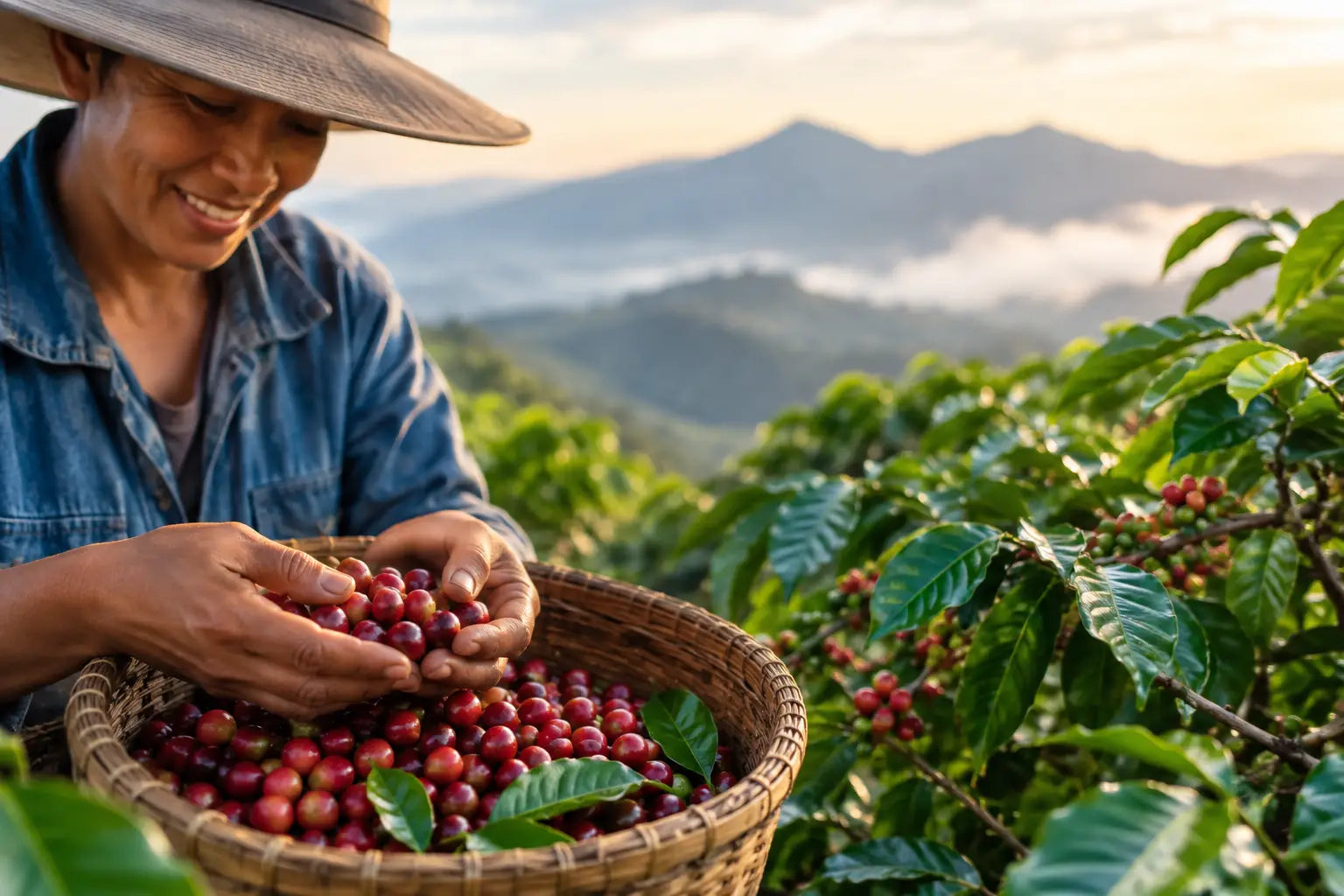
The story of your morning coffee began long before the first crack of the roast or the aroma filling your kitchen. It began on a farm, with people making careful decisions about land, labor, harvest, and quality. This coffee sourcing ethics guide helps you look beyond a beautiful bag and choose coffee that honors the hands behind every memorable cup.
Ethical sourcing is not one claim, one certification, or one price point. It is an ongoing commitment to purchasing coffee in ways that respect growers, support responsible farming, and create enough shared value for quality to last. For coffee lovers, that commitment often brings something tangible to the cup: clearer flavors, more distinctive origins, and a deeper connection to the ritual you share at home.
What Ethical Coffee Sourcing Really Means
Coffee is grown largely in regions where farmers face volatile market prices, changing weather, rising production costs, and limited access to financing. A coffee can taste extraordinary while the people who grew it remain underpaid. That is why ethical sourcing has to consider the full supply chain, not flavor alone.
At its best, ethical sourcing means a roaster or buyer knows where the coffee came from, builds accountable relationships with suppliers, and pays in a way that recognizes both quality and the real cost of sustainable production. It also means asking whether farm workers are treated fairly, whether environmental practices protect the future of the land, and whether farmers have a meaningful voice in commercial decisions.
No single sourcing model fits every producing community. A small family farm selling through a cooperative may need a different route to market than a larger estate with its own processing mill. What matters is transparency, respect, and a purchasing relationship designed for the long term rather than the lowest possible price.
Coffee Sourcing Ethics Guide: The Signs to Look For
A thoughtful coffee label should give you more than an evocative place name. Look for details that make the coffee traceable: the country and growing region, the producer or cooperative when available, and information about processing or harvest. Specificity is not a guarantee of fair practice, but it is a meaningful starting point. It shows that the origin is being treated as more than a marketing backdrop.
Direct trade language can also be encouraging, but it deserves a closer look. Unlike some certifications, direct trade does not follow one universal standard. For one company, it may mean buying directly from a producer. For another, it may describe a close relationship facilitated by a trusted exporter or importer. The useful question is not whether the phrase appears on the bag. It is whether the company can explain how it buys, how often it returns to the relationship, and how value reaches the people producing the coffee.
Certifications can be helpful signals as well. Fair Trade programs generally focus on minimum pricing structures, premiums, and standards set for participating producers. Organic certification speaks to approved agricultural practices. Rainforest-focused certifications may address environmental and social criteria. Each can support better outcomes, yet none tells the entire story of a particular coffee or farm.
A certified coffee can be a thoughtful choice, especially when information is otherwise limited. But small producers may face costs or administrative hurdles that make certification inaccessible even when their practices are responsible. Consider certifications as part of the picture, then seek out the story and sourcing detail behind them.
Price, Quality, and Fair Pay Are Connected
Specialty coffee asks more of everyone involved. Ripe cherries must be picked with care, processing must be managed precisely, and lots must be sorted and evaluated. Those steps require skill, time, and investment. When coffee earns a Q-grade score of 84 or higher, it signals a high-quality sensory experience, but it also reflects serious work at origin.
Quality scores alone do not prove ethical purchasing. Still, a buyer committed to specialty-grade coffee has a reason to reward exceptional cultivation and processing. The strongest relationships connect quality premiums to real farm-level value instead of treating quality as a free extra.
Consumers sometimes wonder why a carefully sourced single origin costs more than a generic blend. The answer is not simply that it is rare. Higher prices can help cover meticulous harvesting, better processing infrastructure, safer working conditions, more sustainable farm practices, and the financial breathing room to keep producing remarkable coffee year after year.
That does not mean the most expensive bag is automatically the most ethical. Price should be paired with evidence: clear origin information, credible sourcing practices, fresh roasting, and a company that communicates with honesty rather than vague promises.
Questions Worth Asking Before You Buy
You do not need a degree in coffee economics to shop with more intention. When a brand shares sourcing information, look for answers to questions like these:
- Can it identify the country, region, farm, producer group, or cooperative behind the coffee?
- Does it explain how relationships are built and maintained beyond a single purchase?
- Does it share meaningful quality details, such as variety, elevation, processing method, or Q-grade standards?
- Does it describe certifications accurately rather than using them as a shortcut for every ethical claim?
- Does its pricing and product language reflect respect for the work done at origin?
Why Fresh Roasting Matters to the Bigger Picture
Ethics and freshness are often discussed separately, but they belong in the same conversation. Coffee that has been grown, sorted, shipped, and purchased with care deserves to arrive at your brewer at its best. Fresh small-batch roasting protects the character that growers worked to create: the sweetness of a washed Colombian coffee, the fruit-forward complexity of an Ethiopian lot, or the chocolatey comfort of a carefully balanced blend.
Buying coffee that is roasted to order or soon after roasting can also encourage more intentional inventory practices. Instead of treating coffee as a shelf-stable commodity, it recognizes it as an agricultural product with a season, an origin, and a peak moment of flavor.
For the home brewer, this is where ethics becomes personal. Grinding fresh beans for a quiet morning, setting out cups for guests, or sending a coffee gift to someone you love can carry more meaning when you understand the care built into it. A better cup is not only about tasting notes. It is about choosing a supply chain that values the people who made those notes possible.
Make Room for Progress, Not Perfection
Ethical sourcing is a practice, not a finish line. Even excellent roasters and importers must navigate shipping emissions, crop shortages, currency changes, changing farm ownership, and the difficult reality that coffee prices do not always reflect production costs. Responsible companies keep asking hard questions, invest in relationships over time, and avoid pretending that a complex global trade can be solved with a single label.
When you choose specialty coffee with traceable origins and a clear commitment to growers, you help make room for that kind of progress. At House Coffee, the pursuit begins with exceptional single origin Arabica coffee and the belief that quality should feel good from farm to first sip.
The next time you brew a coffee that fills your home with warmth, pause for a moment before the first taste. Let the cup remind you that care travels - from a grower’s harvest to your hands - and that your daily ritual can help create cherished moments far beyond your kitchen.