Coffee Traceability: What Your Cup Can Tell You
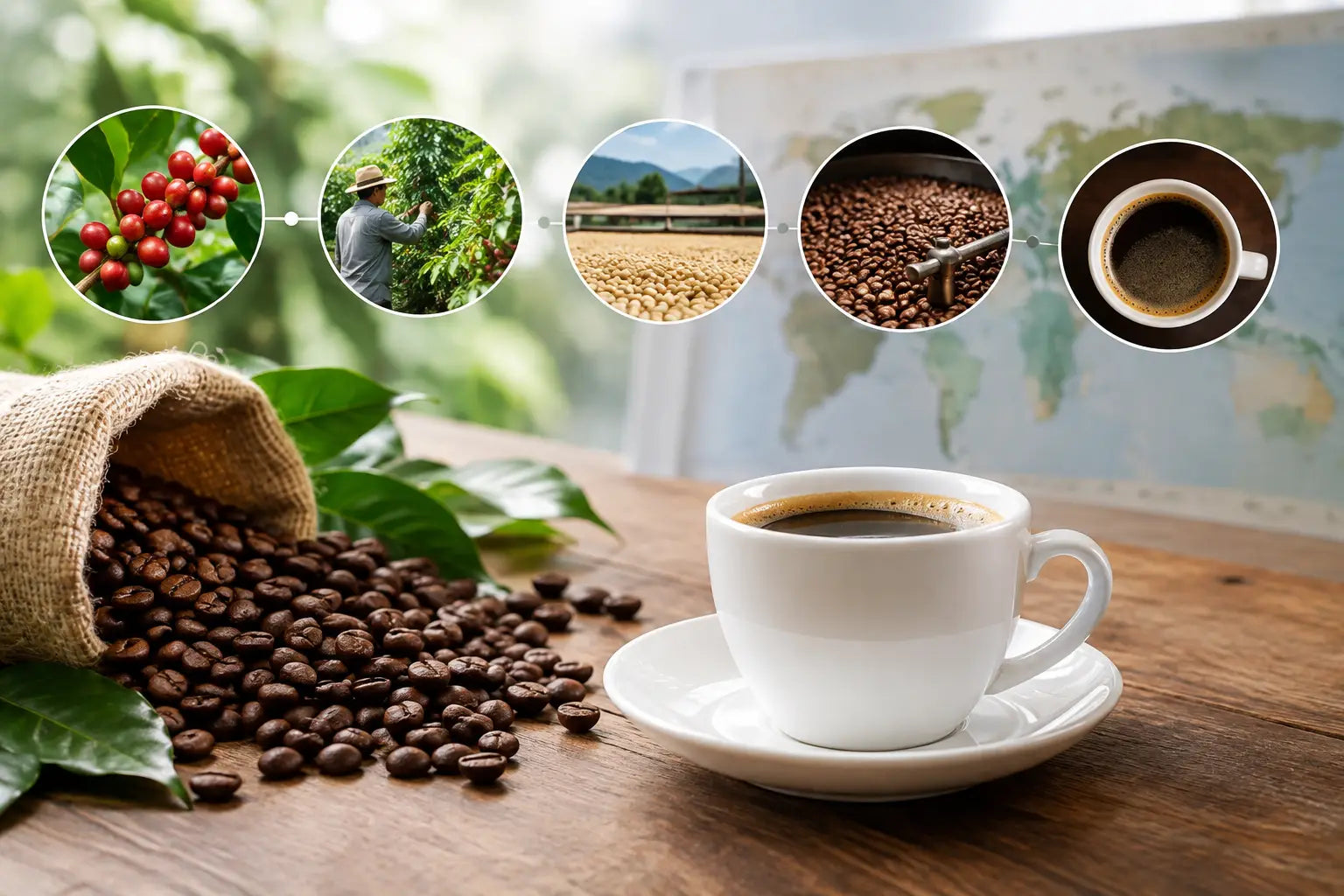
A bag of coffee can promise notes of chocolate, citrus, or brown sugar. Coffee traceability asks a more meaningful question: where did these beans begin, and who helped bring them to your morning cup? For people who care about fresh, specialty-grade coffee, the answer shapes more than a good story. It can reveal how the coffee was grown, processed, purchased, transported, roasted, and ultimately enjoyed at home.
That matters because coffee is never just a commodity. It is the work of growers, pickers, mill teams, exporters, roasters, and baristas or home brewers. When those steps are visible, a cup of single origin coffee feels more connected to the place and people behind its flavor.
What Coffee Traceability Really Means
Coffee traceability is the ability to follow coffee through its supply chain, from a specific farm or producing community to the finished bag. The depth of that information can vary greatly. One coffee may be traceable only to a country, such as Colombia or Ethiopia. Another may identify a region, cooperative, washing station, farm, lot, variety, altitude, harvest period, and processing method.
More detail is not automatically a guarantee of quality or fairness. A long origin description should be supported by real sourcing relationships and clear records. Still, meaningful traceability gives buyers a stronger basis for understanding what they are purchasing than a vague label ever could.
For specialty coffee, the most useful information often includes the producing country and region, the farmer or cooperative when available, the processing method, and the roast date. These details help explain both flavor and freshness. They also invite a more thoughtful relationship with the people whose care made the coffee possible.
Why Origin Changes the Flavor in Your Cup
Coffee is agricultural, which means place matters. Soil, rainfall, elevation, shade, coffee variety, and harvesting practices all influence the character of a bean. A high-elevation washed coffee from Central America may bring a crisp structure and gentle sweetness. A naturally processed coffee from Ethiopia can offer ripe berry notes and a lush, aromatic body. Neither is universally better. It depends on what you love to brew.
Traceability gives those tasting notes context. Instead of treating flavors as marketing language, you can connect them to a coffee's growing conditions and processing. Washed coffees are typically fermented and cleaned before drying, often creating a clear, bright cup. Natural coffees dry with the fruit intact, which can build fruit-forward sweetness and heavier texture. Honey processing sits somewhere between, with some fruit mucilage left on the bean during drying.
A coffee's journey also explains why one harvest can taste slightly different from the next. Weather changes. Farms experiment with processing. Harvest windows shift. That variation is part of what makes freshly roasted single origin coffee so rewarding. It offers a taste of a real season and a real place, not a formula designed to remain identical forever.
Traceability helps you choose with intention
For a home brewer, origin information makes shopping easier. If you consistently enjoy caramel, toasted nuts, and round body, you may gravitate toward certain regions or washed profiles. If your favorite cups are floral, juicy, and tea-like, a traceable African coffee may become a welcome part of your rotation.
This is not about memorizing every coffee-growing region. It is about learning your own preferences over time. Keep a simple note after brewing: the method you used, the grind, and what you tasted. Soon, origin details become useful clues for choosing the next bag or finding a gift that feels personal.
The Human Side of a Transparent Supply Chain
Coffee traceability can support better buying decisions because it makes the people behind the product harder to overlook. Coffee farming carries real risk. Producers contend with unpredictable weather, rising costs, labor challenges, pests, and market prices that can swing dramatically. A transparent supply chain does not solve every problem, but it creates a foundation for accountability.
When roasters and import partners know where their coffee comes from, they can build purchasing practices around quality, consistency, and longer-term relationships rather than buying anonymous lots based only on the lowest available price. This can help producers plan, invest in their farms, and continue refining the careful work that specialty coffee requires.
There is an important distinction here. Traceable does not always mean direct trade, certified organic, or automatically equitable. Those terms describe different parts of sourcing and should not be used interchangeably. A responsible coffee company should be specific about what it knows, what it pays attention to, and where information is limited.
As a customer, you do not need a supply-chain spreadsheet to make a thoughtful choice. Look for clear origin details and language that respects producers as skilled partners, not background characters in a brand story. Specificity is often more helpful than sweeping claims.
What to Look for on a Coffee Bag
A well-labeled specialty coffee bag should make it easier to understand what you are bringing home. Along with a roast date, look for an origin that goes beyond a broad blend description whenever possible. Single origin coffees may name a country, region, farm, estate, cooperative, or washing station.
Processing information is especially useful if you are selecting coffee by flavor. Washed, natural, honey, anaerobic, and other processing terms can offer a helpful preview, though the final cup still depends on roast development and how you brew it. A Q-grade score of 84 or higher is another encouraging quality signal. It indicates that the coffee has been evaluated within specialty coffee standards, but it cannot tell you whether you will personally enjoy the flavor profile.
Freshness deserves equal attention. Exceptional sourcing can be muted by stale coffee or a roast that does not suit your preferred brewing method. Buy coffee roasted in smaller batches, store it in an airtight container away from heat and light, and use it while the aromas and sweetness are at their best. For most coffees, that is often within a few weeks of roasting, with a brief resting period after roast day for ideal extraction.
Traceability Is Not About Chasing Perfection
It is tempting to think the most detailed coffee card is always the best coffee. The reality is more nuanced. Smallholder farmers may deliver ripe cherries to a shared washing station, so a coffee can be deeply traceable to a community without being separated farm by farm. In other cases, privacy, logistics, or changing supply conditions may limit what a roaster can publish.
The goal is not to demand a romanticized story from every bag. The goal is to value clarity, respect, and real care. Good traceability should make you more curious, not make coffee feel intimidating.
Blends have a place here, too. A blend may combine coffees from multiple origins to create a balanced, dependable espresso or a comforting daily brew. It can be an excellent choice for milk drinks, busy mornings, and households with different taste preferences. Single origins invite exploration; thoughtful blends offer familiarity. Both can be sourced with integrity when their makers communicate honestly.
Bringing the Story Home
The next time you open a fresh bag, take a moment to read what it shares. Notice the origin, processing method, and roast date before you grind the beans. Brew with enough care to let those details speak, whether that means a patient pour-over on a quiet morning or a rich espresso shared after dinner.
At House Coffee, we believe the best specialty coffee pairs craft with comfort. Traceability brings you closer to the hands and landscapes behind every bean, while fresh roasting helps carry that character into your kitchen. A more informed cup does not need to be complicated. It simply gives every cherished moment around coffee a little more meaning.