How to store coffee beans for ultimate freshness in 2026
You open a fresh bag of specialty coffee beans, excited for that first brew. Within days, the vibrant aroma fades and your cup tastes flat. This frustrating experience happens because most home coffee enthusiasts don’t know the simple storage methods that preserve flavor. Oxygen, moisture, heat, and light silently degrade your beans every day. This guide reveals research-backed techniques using vacuum canisters, proper containers, and smart environmental controls to keep your beans tasting exceptional for weeks. You’ll learn exactly what tools to use, where to store them, and which common mistakes ruin even premium beans.
Table of Contents
- Understanding Why Proper Storage Matters
- What You Need: Tools And Conditions For Optimal Storage
- Step-By-Step Guide: How To Store Coffee Beans At Home
- Common Mistakes And Troubleshooting In Bean Storage
- Upgrade Your Coffee Experience With Specialty Beans
- FAQ
Key takeaways
| Point | Details |
|---|---|
| Vacuum canisters preserve flavor best | Displacement containers like Fellow Atmos block oxygen exposure and maintain taste for weeks |
| Four enemies attack freshness | Oxygen, moisture, heat, and light chemically degrade beans and spoil aroma |
| Store small weekly quantities | Keep only 1-2 weeks of beans at room temperature in airtight containers |
| Freeze bulk purchases properly | Seal beans airtight before freezing and thaw completely before opening container |
| Location matters as much as container | Cool, dark, dry spaces away from ovens and windows protect bean integrity |
Understanding why proper storage matters
Coffee beans are living ingredients that begin deteriorating the moment roasting ends. Four environmental factors attack your beans simultaneously, each triggering chemical reactions that destroy the complex flavor compounds you paid premium prices to enjoy.
Oxygen causes oxidation, the primary villain in coffee degradation. When air molecules contact bean surfaces, they break down aromatic oils and volatile compounds that create nuanced flavors. This process accelerates rapidly after grinding, which is why premium whole bean coffee stays fresher longer than pre-ground alternatives. Within days of exposure, beans lose their brightness and develop stale, cardboard-like notes.
Moisture introduces another threat by creating conditions for mold growth and accelerating staleness. Coffee beans are hygroscopic, meaning they absorb water from humid environments. Even small amounts of moisture trigger enzymatic reactions that produce off-flavors and musty aromas. In extreme cases, wet beans develop visible mold that makes them unsafe to consume.
Heat speeds up every chemical degradation process in coffee. Storing beans near ovens, dishwashers, or sunny windowsills essentially fast-forwards their aging. The oils inside beans become rancid faster at elevated temperatures, creating bitter, unpleasant tastes that no brewing method can fix.
Light exposure, particularly UV rays, triggers photodegradation of delicate flavor molecules. This is why serious roasters package beans in opaque bags rather than clear containers. Even indirect sunlight slowly breaks down the compounds responsible for fruity, floral, and chocolate notes that distinguish specialty coffee from commodity beans.
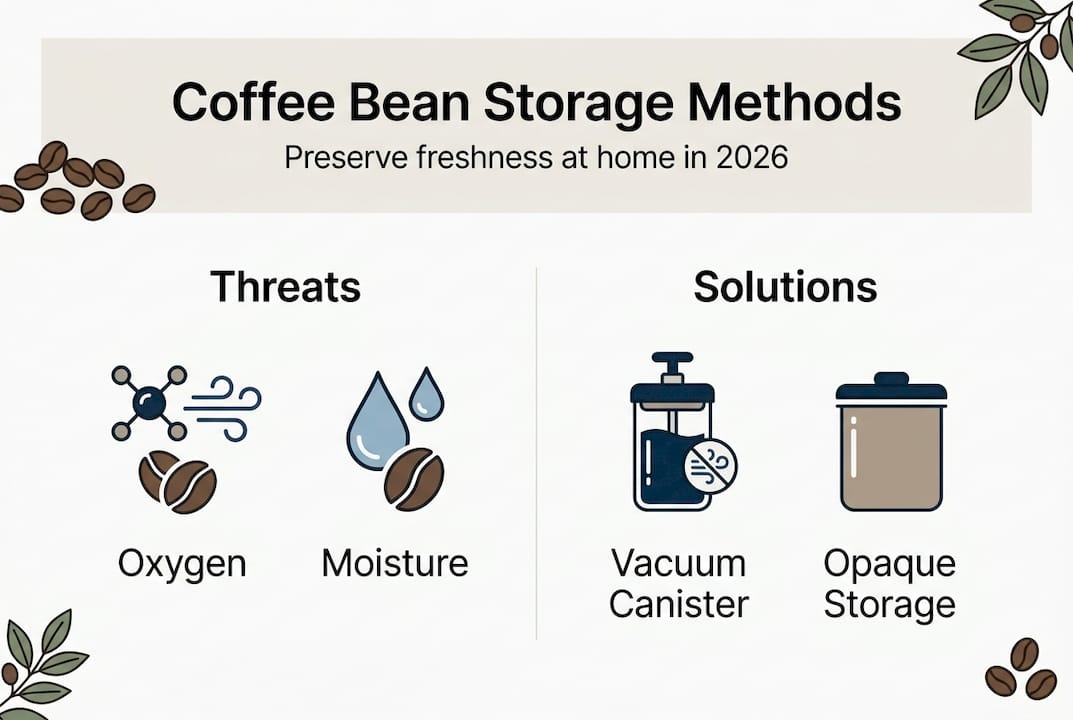
Vacuum coffee canisters address the oxygen problem most effectively. Empirical testing confirms these containers maintain taste integrity far better than standard jars or zip-top bags.
Pro Tip: Smell your beans before brewing. Fresh coffee releases intense, complex aromas when you open the container. If you detect only faint or flat scents, oxidation has already compromised your beans regardless of the roast date printed on the bag.
- Oxidation destroys aromatic oils within days of air exposure
- Moisture enables mold growth and enzymatic staleness reactions
- Heat accelerates oil rancidity and flavor compound breakdown
- UV light photodegrades delicate taste molecules in specialty beans
“The difference between properly stored and poorly stored beans is like comparing fresh bread to week-old toast. The chemical composition changes so dramatically that you’re essentially drinking different coffee.”
What you need: tools and conditions for optimal storage
Successful bean preservation starts with selecting containers specifically engineered to combat the four degradation factors. Not all storage solutions perform equally, and understanding these differences saves you from wasting money on inferior products.
Vacuum and displacement canisters represent the gold standard for home storage. These containers actively remove air or create one-way valves that push oxygen out while preventing new air from entering. Models like the Fellow Atmos use a simple twist mechanism to create vacuum pressure, while others employ CO2 displacement technology. Testing data shows these systems preserve flavor compounds significantly longer than passive containers.
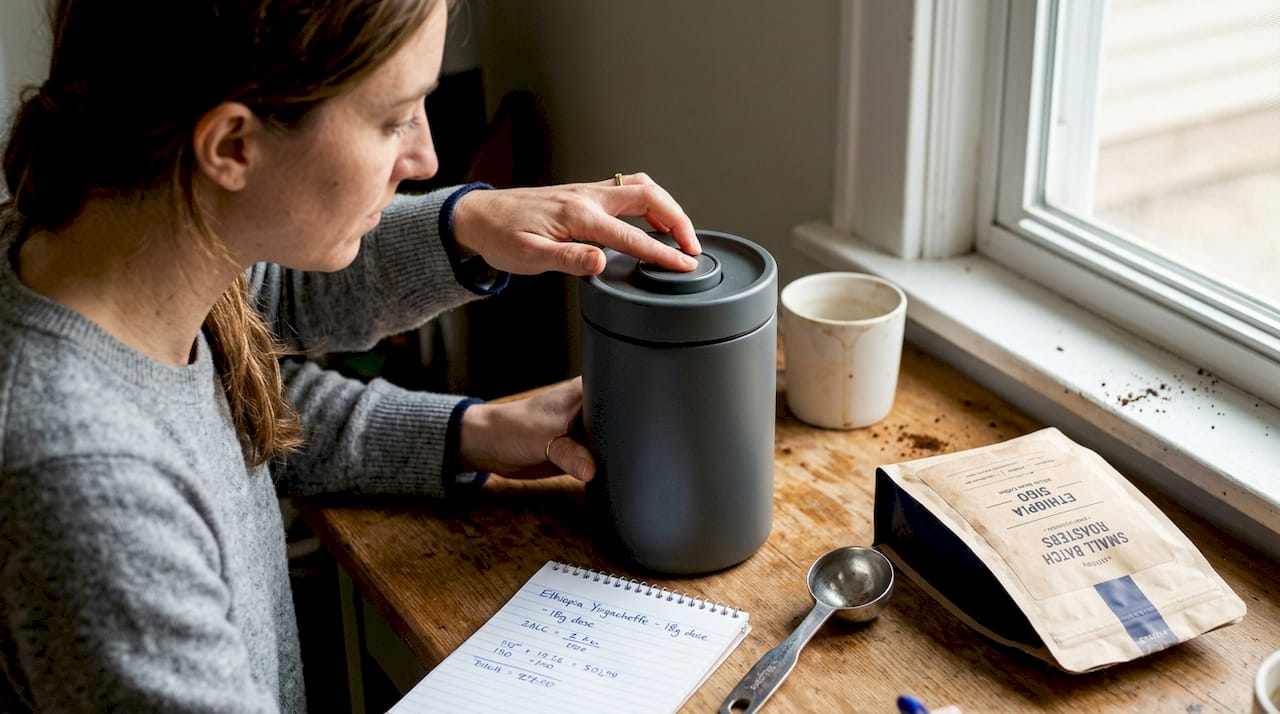
Opaque materials block harmful light while maintaining airtight seals. Stainless steel, ceramic, and dark-tinted glass all work well, but avoid clear containers regardless of how attractive they look on your counter. Transparency might showcase your beans beautifully, but it guarantees faster flavor loss.
Environmental conditions matter as much as container choice. Your storage location should be cool (60-70°F), dry (below 60% humidity), and dark. Kitchen cabinets away from heat sources work perfectly. Avoid storing beans above the refrigerator, near the stove, or in direct sunlight streaming through windows.
Container comparison for home coffee storage:
| Container Type | Oxygen Protection | Light Blocking | Typical Freshness | | — | — | — | | Vacuum canister | Excellent | Yes (opaque models) | 3-4 weeks | | Airtight ceramic jar | Good | Yes | 2-3 weeks | | Original bag with clip | Poor | Varies | 1 week | | Clear glass jar | Poor | No | 3-5 days |
Portion control prevents unnecessary exposure. Opening your container floods beans with fresh oxygen each time, so storing smaller quantities you’ll consume within 1-2 weeks minimizes this damage. If you buy bulk, immediately divide beans into weekly portions using separate airtight containers or freezer bags.
Pro Tip: Never store different coffee origins in the same container without thoroughly cleaning between uses. Residual oils from previous beans will contaminate new batches and create muddy, confused flavors that mask the unique characteristics you’re trying to preserve.
- Vacuum canisters actively remove oxygen for superior protection
- Opaque containers prevent light-triggered photodegradation
- Cool, dry, dark locations slow all chemical breakdown processes
- Smaller portions reduce cumulative oxygen exposure from repeated opening
Follow essential coffee storage steps to create an optimal preservation system that works with your brewing routine and kitchen layout.
Step-by-step guide: how to store coffee beans at home
Implementing proper storage requires following specific procedures immediately after purchasing or receiving freshly roasted beans. These steps build on each other to create maximum protection.
-
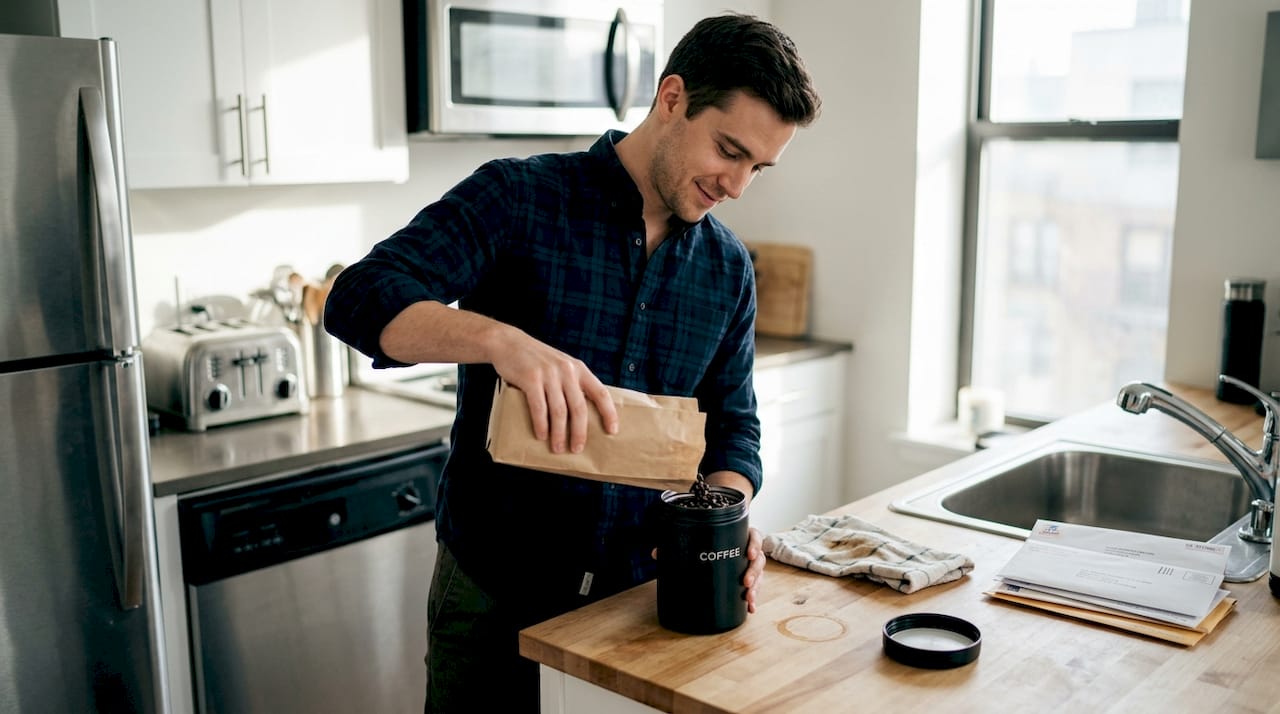
Transfer beans immediately upon opening the original packaging. Don’t leave beans in the roaster’s bag even if it has a zip closure. Most coffee bags lack true airtight seals and offer minimal oxygen protection after the initial opening. Pour your beans directly into your vacuum canister or airtight container within minutes of breaking the seal.
-
Fill your container appropriately to minimize headspace. Empty space inside containers holds oxygen that will degrade your beans. Choose container sizes that match your typical purchase quantities, leaving only 1-2 inches of air above the beans. If your canister is too large, fill the extra space with inert objects like clean glass marbles.
-
Activate vacuum or displacement mechanisms properly. If using a vacuum canister, pump or twist the mechanism until you feel resistance, confirming you’ve removed excess air. For displacement canisters, ensure the one-way valve is functioning and not clogged with coffee oils or debris.
-
Store containers in consistent, cool locations away from temperature fluctuations. Choose a cabinet or pantry shelf that maintains steady temperatures throughout the day. Avoid areas that experience heat cycles from nearby appliances or dramatic cooling at night.
-
Minimize opening frequency by using separate containers for daily and reserve supplies. Keep a small container with 2-3 days of beans accessible for daily brewing, refilling it from your main storage container. This reduces how often you expose your primary supply to fresh oxygen.
-
For bulk purchases, freeze excess beans in original sealed bags or vacuum-sealed portions. Place unopened bags directly in the freezer, or divide beans into weekly portions using vacuum-sealed bags or airtight containers designed for freezing. Never freeze beans you’ve already exposed to air and moisture.
-
When using frozen beans, allow complete temperature equilibration before opening containers. Remove your portion from the freezer and let it sit sealed at room temperature for 2-3 hours. Opening cold containers causes condensation that introduces moisture directly onto bean surfaces.
Pro Tip: Mark your containers with the roast date using removable labels or dry-erase markers. This simple habit helps you rotate stock properly and avoid brewing beans past their prime freshness window.
These procedures work together to create multiple barriers against degradation. Selecting premium coffee beans deserves equal attention to storage methods, since even perfect preservation can’t restore quality that wasn’t present initially. Similarly, grinding coffee at home immediately before brewing maximizes the flavor you’ve worked to preserve through proper storage.
Research confirms vacuum canisters maintain taste significantly better than conventional storage methods when following these steps precisely.
Common mistakes and troubleshooting in bean storage
Even coffee enthusiasts who invest in quality beans and containers often sabotage their efforts through preventable errors. Recognizing these pitfalls helps you avoid flavor disappointments.
Storing beans in clear containers near windows ranks as the most common mistake. The visual appeal of displayed beans tempts many home brewers, but this practice guarantees rapid degradation. UV exposure combined with temperature fluctuations from sunlight creates the worst possible storage environment. If you must display beans, use opaque decorative containers and keep functional storage hidden.
Placing coffee near heat-generating appliances accelerates staleness dramatically. The space above your refrigerator, beside your oven, or in cabinets sharing walls with dishwashers experiences temperature swings that speed up chemical breakdown. Even if these locations seem convenient, they’re destroying your coffee’s potential.
Buying excessive quantities you can’t consume within 3-4 weeks wastes money regardless of storage quality. Many enthusiasts get excited about sales or new roasts and purchase more than they can reasonably use. Unless you’re freezing properly portioned excess immediately, you’re guaranteeing that later portions will taste significantly worse than initial brews.
Freezing and thawing beans repeatedly causes severe damage through condensation cycles. Each time you remove beans from the freezer, temperature changes create moisture on bean surfaces. This moisture penetration ruins cell structure and leaches out soluble compounds. Freeze only once in appropriate portions, then keep thawed beans at room temperature.
Neglecting container cleanliness allows rancid oil buildup that contaminates fresh beans. Coffee oils coat container interiors over time, and these residues go rancid even after you’ve finished the original batch. Wash and completely dry your containers monthly, or whenever switching between different coffee origins.
Pro Tip: If your beans have lost noticeable aroma but haven’t developed off-flavors, use them for cold brew instead of hot brewing methods. Cold extraction is more forgiving of slightly stale beans and can still produce enjoyable results when hot brewing would taste flat.
- Never store beans in clear containers exposed to light
- Avoid heat sources like ovens, dishwashers, and sunny spots
- Buy only quantities you’ll consume within 3-4 weeks
- Freeze beans once in portions, never repeatedly thaw and refreeze
- Clean storage containers monthly to prevent rancid oil contamination
Understanding how vacuum canisters avoid common pitfalls helps you appreciate why investing in proper storage tools pays dividends in every cup. Review perfect coffee storage mistakes to ensure you’re not inadvertently sabotaging your brewing efforts.
“The saddest coffee moment is realizing you’ve ruined exceptional beans through careless storage. It’s like buying premium ingredients and then leaving them out on the counter to spoil.”
Upgrade your coffee experience with specialty beans
Now that you understand proper storage techniques, you’re ready to experience how truly fresh, expertly stored specialty coffee should taste. House Coffee offers premium single-origin beans roasted to highlight unique flavor profiles that proper storage will preserve beautifully.
Our specialty coffee collection features ethically sourced Arabica beans from dedicated growers who prioritize quality and sustainability. Each origin tells a distinct story through carefully developed roast profiles that bring out fruity, floral, or chocolate notes.
Complement your storage setup with coffee filter cones that enhance your brewing precision and flavor clarity. For enthusiasts who’ve mastered storage and want consistent access to fresh beans, explore our specialty coffee wholesale options that deliver regular supplies of perfectly roasted beans ready for your optimized storage system.
FAQ
How long do coffee beans stay fresh after roasting?
Properly stored beans maintain peak flavor for 2-3 weeks after roasting when kept in vacuum or airtight containers away from light, heat, and moisture. After this window, you’ll notice gradual decline in aroma intensity and flavor complexity. Beans remain safe to drink for months but lose the vibrant characteristics that define specialty coffee.
Is it better to freeze coffee beans or store at room temperature?
Room temperature storage in airtight containers works best for beans you’ll consume within 2-3 weeks. Freeze only bulk purchases immediately after receiving them, dividing into weekly portions in vacuum-sealed bags. Never freeze and refreeze beans, as temperature cycling creates damaging condensation. Thaw frozen portions completely before opening containers to prevent moisture exposure.
What type of container keeps coffee beans freshest?
Vacuum or displacement canisters provide superior protection by actively removing oxygen that causes oxidation and flavor loss. Opaque, airtight containers made from stainless steel or ceramic also work well for 2-3 week storage periods. Avoid clear glass jars or containers with simple clip closures that allow continuous air exchange and light penetration.
Can I store coffee beans in the fridge?
Refrigerator storage is not recommended because temperature and humidity fluctuations cause condensation on bean surfaces, introducing moisture that accelerates staleness and potential mold growth. Additionally, coffee beans absorb odors from other foods, compromising their flavor profile. Room temperature storage in airtight, opaque containers placed in cool, dry locations provides much better results for maintaining bean quality and taste integrity.
Recommended
- Why buy whole bean coffee for premium flavor in 2026 – House Coffee
- How to Select Coffee Beans for a Premium Brew – House Coffee
- Single-Origin Coffee Guide: Brew Premium Coffee at Home – House Coffee
- How to Identify Single Origin Beans for Premium Coffee – House Coffee
- Coffee from around the world – Autoryzowany dystrybutor i serwis Jura Wrocław
-
Posted in
en, how to store coffee beans