Conical vs Flat Burrs: Which Grinder Fits You?
The grinder is where a beautiful coffee can either begin to shine or lose its way. When comparing conical vs flat burrs, the question is not which design is universally better. It is which one helps you bring out the character you love in the fresh, specialty coffee you brew at home.
A thoughtfully sourced single origin can offer notes of ripe fruit, cocoa, florals, or caramel-like sweetness. Burr shape affects how evenly those flavors are extracted, how much texture lands in the cup, and how forgiving your daily routine feels. Whether you are pulling espresso before the house wakes up or making a slow pour-over for a long Saturday morning, the right grinder should support the ritual, not complicate it.
What Burrs Actually Do
Burr grinders crush coffee beans between two precisely shaped surfaces. This is fundamentally different from a blade grinder, which chops beans into uneven fragments and creates a wide range of particle sizes. Better grind consistency gives water a more predictable path through the coffee, making it easier to brew a balanced cup.
Every burr set creates a distribution of particle sizes rather than perfectly identical grounds. The important difference is the shape of that distribution. A grinder that produces too many ultra-fine particles can add bitterness or slow brewing. Too many larger particles can leave coffee thin, sharp, or underdeveloped. Burr geometry helps determine where those particles fall and, in turn, how a coffee tastes.
Conical and flat burrs can both produce exceptional results. Burr size, material, grinder alignment, motor design, and the coffee itself matter just as much. Still, the two shapes tend to create distinct cup profiles and workflows that are useful to understand before investing in a grinder.
Conical vs Flat Burrs: The Core Difference
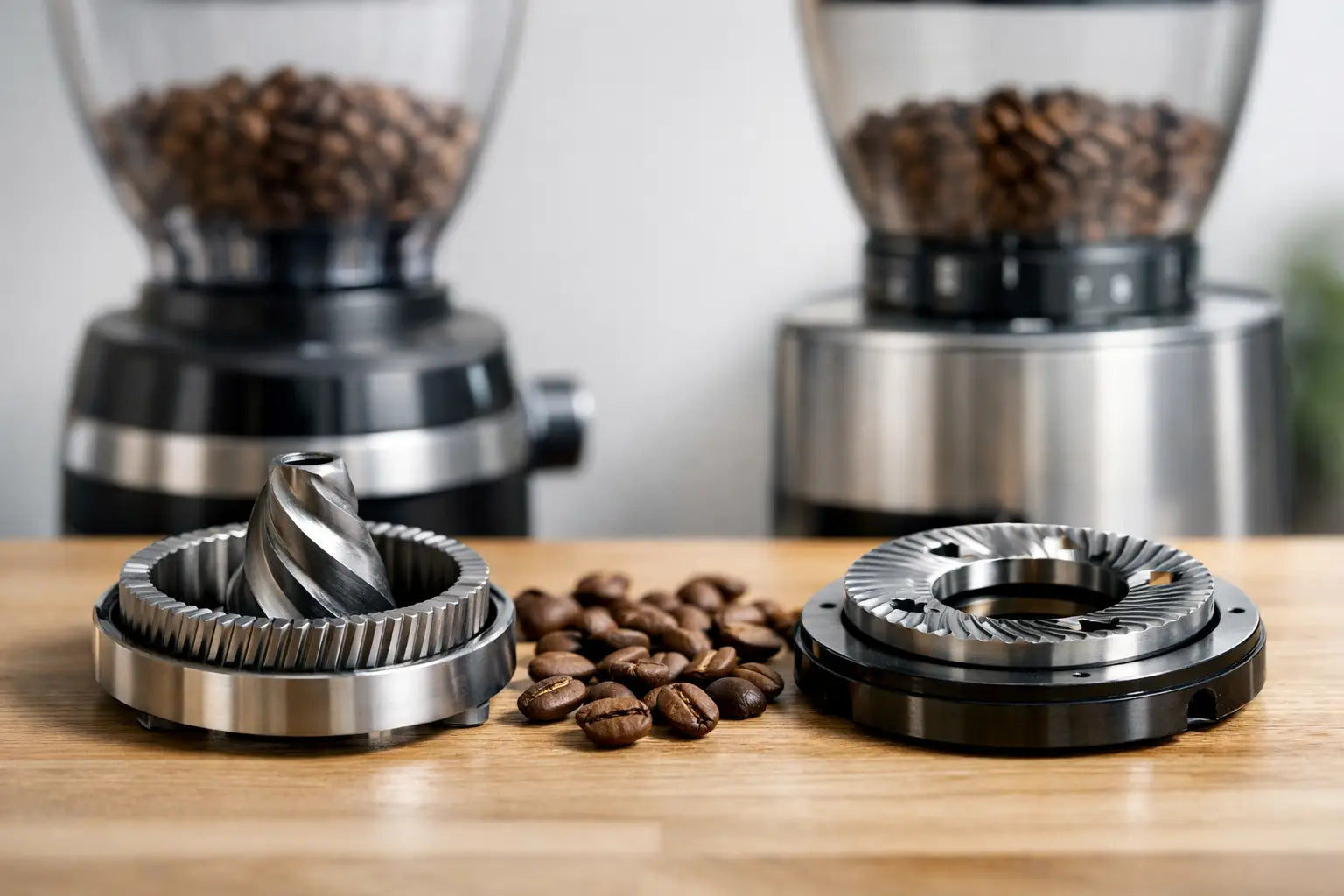
Conical burrs use a cone-shaped inner burr that sits inside a ring-shaped outer burr. Beans travel downward through the space between them as they are ground. This design is common in home grinders because it can grind efficiently at lower speeds and often works well with a compact motor.
Flat burrs use two horizontal, disc-shaped burrs positioned face to face. Coffee is fed between them and pushed outward as it is ground. Flat burr grinders are frequently found in cafes and serious home espresso setups, though there are many excellent home-friendly options as well.
Neither shape tells the whole story. A well-built conical grinder can outperform a poorly aligned flat burr grinder, and vice versa. Think of burr type as a helpful starting point for choosing a flavor direction, not a shortcut to judging quality.
How Conical Burrs Tend to Taste
Conical burrs are often associated with a fuller body, rounded sweetness, and a more blended flavor presentation. In espresso, that can translate to a syrupy mouthfeel with chocolate, nut, caramel, and deeper fruit notes feeling closely woven together.
Many coffee drinkers find this profile comforting and generous. It can be especially lovely with medium and medium-dark roasts, classic espresso blends, and coffees intended for milk drinks. When steamed milk is part of the picture, a little extra body and rich sweetness can help coffee remain present rather than disappearing behind the milk.
Conical burrs also tend to produce a broader mix of particle sizes. That is not automatically a flaw. In the right grinder and recipe, it can contribute to texture and make an espresso taste layered. The trade-off is that dialing in very light-roast espresso, where clean acidity and distinct flavor separation are the goal, may take more patience.
For filter brewing, conical burrs can make a warm, satisfying cup with a plush feel. If you want your morning coffee to taste sweet, familiar, and easy to enjoy without chasing tiny adjustments, this character can be a real advantage.
How Flat Burrs Tend to Taste
Flat burrs are often prized for clarity and flavor separation. A washed Ethiopian coffee may show a clearer distinction between jasmine-like florals, citrus, and stone fruit. A carefully roasted Colombian coffee might reveal a more defined balance of red fruit, brown sugar, and cocoa.
The cup profile is commonly described as cleaner, brighter, and more articulate. Espresso can taste more transparent, with individual tasting notes easier to identify. Filter coffee can feel especially vivid, giving high-quality single origins room to express the work of the grower, the soil, and the roast.
That clarity can come with a different kind of challenge. Flat burr grinders may be less forgiving of an imprecise recipe, especially for espresso. Small changes to grind setting, dose, temperature, or yield can be more noticeable. Some flat burr grinders also retain more grounds in their chute, which can matter if you switch coffees frequently or prefer to single-dose.
For coffee lovers who enjoy experimenting with brew recipes and want to explore the finer details in a Q-grade single origin, the extra precision can be deeply rewarding. It is less about making coffee feel technical and more about giving a remarkable bean the attention it deserves.
Choosing Burrs for Espresso
If your ideal espresso is thick, sweet, and comforting, conical burrs are a natural fit. They often pair beautifully with chocolate-forward blends, Brazilian coffees, and fuller-bodied medium roasts. They can also be a practical choice for households where several people want a dependable shot without constant adjustment.
If you enjoy lighter roasts, straight espresso, and tasting the differences between origins, flat burrs may better match your preferences. Their clarity can make a fruity Kenyan, floral Ethiopian, or bright Central American coffee feel more detailed in the cup.
There are exceptions on both sides. Some modern conical burr sets are designed for more clarity, while some flat burrs are built to emphasize body and traditional espresso texture. Consider the specific grinder and burr set, not just the category on the box.
For Milk Drinks
Cappuccino and latte drinkers often appreciate the richness associated with conical burrs. A balanced espresso blend with caramelized sweetness and enough body can create a café-style foundation for milk.
Flat burrs can still make excellent milk drinks, particularly when you want more lift or fruit character in the espresso. But if your goal is a classic, rich latte that feels like a small moment of comfort at home, conical burrs often make that result easier to reach.
For Straight Espresso
Straight shots reveal everything. Flat burrs can be compelling here because they highlight nuance, especially in lighter specialty roasts. Conical burrs can be equally enjoyable when you value texture, sweetness, and a rounder finish over crisp flavor separation.
Choosing Burrs for Filter Coffee
For pour-over, batch brew, and immersion methods, flat burrs are popular among enthusiasts who want a clean, transparent cup. They can help delicate coffees show their acidity and aromatics without blurring the finish. This is particularly appealing when you buy fresh, small-batch roasted single origins for their distinct origin character.
Conical burrs remain an excellent choice for filter coffee, especially if you prefer body and sweetness to a highly tea-like profile. They are often quieter, simpler to live with, and available in capable grinders at a wider range of price points. For a French press or a rich drip coffee, that approachable, rounded profile can be exactly right.
A practical point: brew method matters. Immersion brewers such as French press and AeroPress can be relatively forgiving of particle variation. Pour-over brewing, especially with faster-flowing drippers, may make differences in grind consistency more apparent.
Workflow Matters as Much as Flavor
The best grinder is one you want to use every day. Before choosing based on cup profile alone, think about your kitchen and your habits.
Conical burr grinders are often compact, lower in cost, and less noisy than comparable flat burr machines. Many are excellent all-purpose choices for a household that makes espresso one day and drip coffee the next. They can offer a graceful balance of quality, convenience, and warmth in the cup.
Flat burr grinders may take up more counter space and can cost more, particularly in espresso-focused designs. They are worth considering if consistency, clarity, and repeatable adjustments are central to your brewing routine. Some people enjoy the precision of weighing doses and refining a recipe. Others want to press a button, breathe in the aroma of fresh grounds, and get on with the morning. Both are valid ways to care about coffee.
Also consider retention, static, cleaning, and grind adjustment range. A grinder that retains several grams of coffee can make switching from an espresso blend to a delicate pour-over coffee inconvenient. A stepless adjustment system can give espresso lovers more control, while stepped settings may make it easier to return to a preferred filter recipe.
Let Your Coffee Preference Lead
Choose conical burrs if you are drawn to fuller body, rounded sweetness, traditional espresso character, and a straightforward daily workflow. They are a strong fit for milk drinks, darker or medium roasts, and anyone who wants premium home coffee with fewer variables.
Choose flat burrs if you want clean flavor separation, bright and expressive single origins, and greater precision for espresso or pour-over. They suit the curious brewer who enjoys noticing how a coffee changes from one recipe to the next.
Fresh coffee, a thoughtful recipe, and water at the right temperature will always matter more than chasing a burr label. Start with the flavors that make you pause for another sip. A good grinder should help every carefully roasted coffee feel less like a routine purchase and more like a cherished moment waiting at home.