Why Does Coffee Freshness Matter at Home?
That bag of coffee may look beautiful on the counter, but its best flavors are not guaranteed by the label alone. Why does coffee freshness matter? Because coffee is a living sensory experience after roasting: aromatic compounds shift, carbon dioxide escapes, and oxygen slowly softens the sweetness, clarity, and character that made those beans special in the first place.
For a daily ritual that helps you slow down, connect, and create cherished moments at home, freshness is not a small detail. It is what lets a carefully grown, specialty-grade coffee taste like itself in your cup.
Why Does Coffee Freshness Matter for Flavor?
Green coffee can remain stable for a long time when it is properly stored. Roasting changes that. Heat transforms the bean's sugars, acids, and amino acids into hundreds of flavor and aroma compounds. It creates the notes you may recognize as chocolate, caramel, stone fruit, citrus, florals, or toasted nuts.
Many of those compounds are delicate. Once roasted coffee meets air, moisture, heat, and light, oxidation begins to change them. The process is gradual rather than dramatic, but it is noticeable. A fresh coffee often tastes sweet, clear, fragrant, and lively. An older coffee can taste muted, papery, flat, or unusually bitter, even when it was expertly roasted and brewed with care.
Freshness also protects a coffee's sense of place. A high-quality single origin has a story shaped by its variety, soil, elevation, climate, processing method, and producer's work. In a fresh brew, you may taste the bright berry character of an African coffee or the rounded cocoa depth of a Latin American lot. As the coffee stales, those distinctions blur. The cup becomes less expressive, and the origin becomes harder to recognize.
This is why specialty coffee quality starts well before brewing. An 84+ Q-grade coffee may have remarkable potential, but timing still matters. Fresh roasting helps preserve the work of dedicated growers and gives you a fair chance to experience what they created.
Fresh Does Not Always Mean Brew It Immediately
There is one useful nuance: coffee needs a little time after roasting. Freshly roasted beans release carbon dioxide through a process called degassing. If you brew them too soon, especially as espresso, that gas can interfere with even extraction. The result may be an overly fast shot, excessive bubbling, or a cup that tastes sharp and unsettled.
For many filter methods, coffee begins brewing beautifully a few days after roasting. Espresso often benefits from a somewhat longer rest. The exact window depends on the roast level, bean density, processing method, and your recipe. A light, dense single origin may need more rest than a darker roast intended for a classic, chocolate-forward espresso.
So the goal is not coffee roasted this morning at any cost. The goal is coffee that was roasted recently enough to retain its character, then rested long enough to brew with balance. Think of freshness as a window, not a single perfect day.
What Fresh Coffee Changes in Your Brewer
Fresh beans do more than smell better when you open the bag. They behave differently when water meets the grounds.
During pour-over, drip, French press, or AeroPress brewing, recently roasted coffee often blooms noticeably. That rise of bubbles is carbon dioxide leaving the grounds as water saturates them. A healthy bloom can be a reassuring sign that the coffee still has energy, though it is not the only measure of quality. Some coffees, especially those that are older or naturally processed, may bloom differently.
In the cup, freshness commonly brings more aroma and definition. You may notice a sweeter opening sip, a smoother texture, and a cleaner finish. Acidity tends to read as juicy and bright rather than sour. A medium roast can reveal both its caramelized comfort and its fruit character instead of tasting one-dimensional.
Espresso makes freshness especially visible. Coffee that has rested properly produces a more stable extraction and often a richer, more persistent crema. Beans that are very old may run quickly despite a fine grind and produce thin, dry, or hollow shots. Beans that are too new can be difficult to dial in. A few days of patience can turn a frustrating shot into the café-style espresso you were hoping to make at home.
Freshly Ground Is Half the Equation
If whole-bean coffee is a time-sensitive ingredient, ground coffee is even more vulnerable. Grinding exposes vastly more surface area to oxygen. The fragrance that fills your kitchen is wonderful, but it is also evidence that volatile aromas are leaving the coffee.
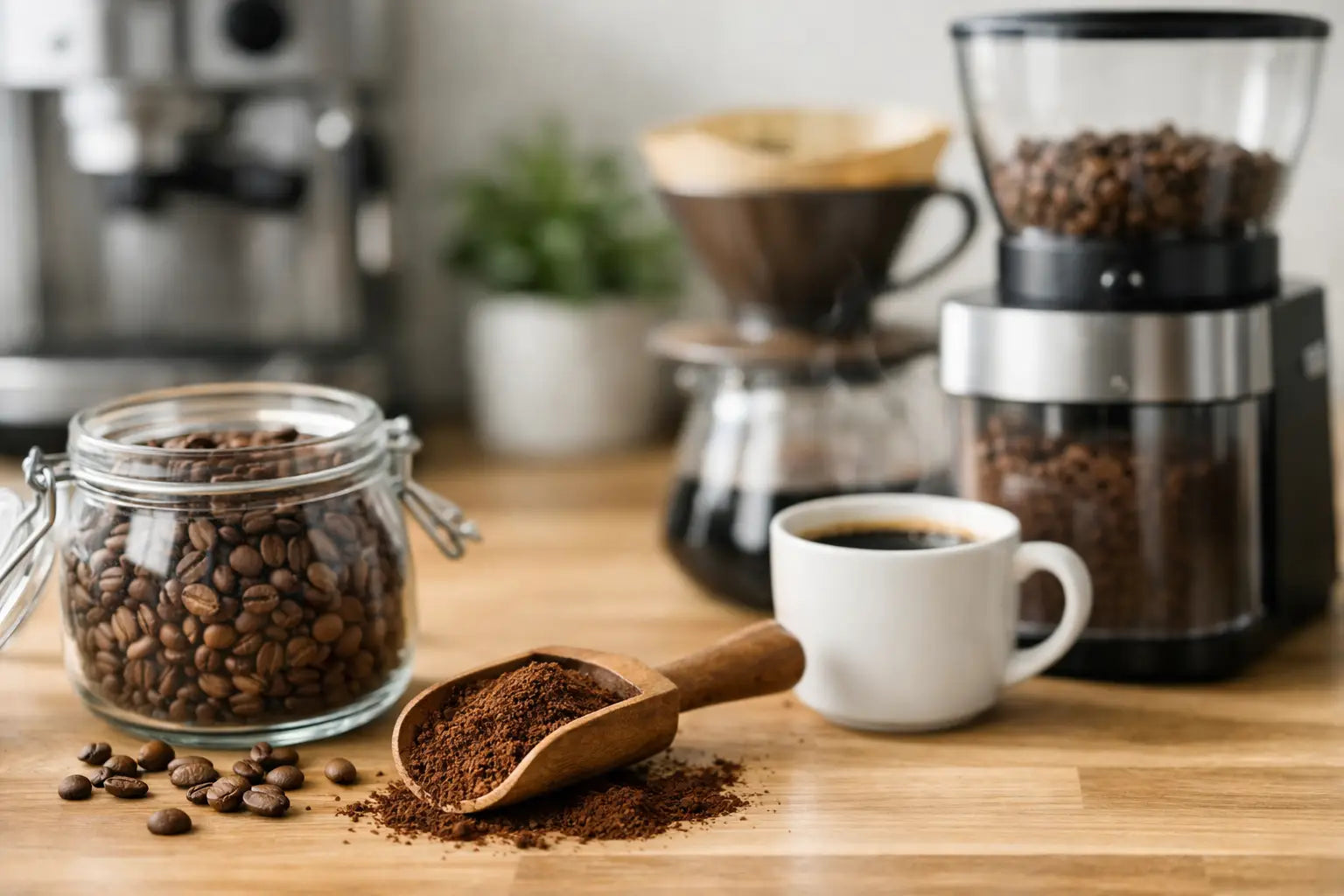
For the clearest improvement in home brewing, buy whole beans and grind only what you need just before brewing. You do not need an elaborate setup to taste the difference. A dependable burr grinder and a consistent recipe will often take you further than a complicated collection of equipment.
Pre-ground coffee still has a place. It can be practical for offices, travel, gifts, or mornings when convenience matters most. If that is your routine, choose a smaller bag size and use it steadily after opening. The trade-off is simple: convenience may cost some aroma and nuance, but a good coffee can still make a comforting, satisfying cup.
How to Keep Coffee Fresh at Home
The best storage plan is uncomplicated. Keep beans in their original resealable bag if it has a one-way valve, or move them to an airtight, opaque container. Store the coffee in a cool, dry cabinet, away from direct sunlight, heat sources, and strong-smelling foods.
Avoid leaving beans in a clear jar on the counter. It may look inviting, but light and repeated exposure to air work against the coffee. Avoid the refrigerator, too. Coffee can absorb odors, and temperature changes can introduce condensation.
Freezing is more conditional. For a large supply of whole beans that you will not use soon, freezing small, tightly sealed portions can help preserve freshness. Divide the coffee before freezing, remove only one portion at a time, and let it come to room temperature while sealed before opening. Do not repeatedly freeze and thaw the same container.
Buying the right amount matters as much as storage. A larger bag can offer better value, but not if it sits open for months. For most households, purchasing an amount you can enjoy within a few weeks of opening is a sensible balance between convenience, value, and flavor. If your household drinks coffee quickly, a subscription can make that rhythm easier without turning your pantry into long-term storage.
Roast Date Beats a Distant Best-By Date
A best-by date can be useful, but it does not tell the whole story. It usually signals that the coffee is safe and acceptable through a certain period, not that it is at peak flavor. A roast date gives you more practical information because it tells you where the coffee is in its flavor journey.
For home brewers, a coffee roasted within the past several weeks is often a strong place to start. The ideal timeline is not universal. Properly sealed coffee can still brew well beyond that point, and darker roasts may taste their best on a different schedule than light roasts. What matters is paying attention to your own palate and brewing method.
Try making a small note when you open a bag. Notice how it smells, how it blooms, and how the cup changes over the following weeks. This turns freshness from a marketing claim into something you can taste and understand.
Freshness Honors the Coffee Behind the Cup
Freshness is sometimes framed as a luxury, but it is really a way of respecting the entire coffee journey. It honors the grower who harvested ripe cherries, the producer who processed them with skill, the buyer who selected a distinctive lot, and the roaster who developed its potential in small batches.
At House Coffee, freshly roasted specialty Arabica is meant to bring that care into the everyday moments that happen around your kitchen table. Whether you are brewing a quiet first cup before work or sharing a pot with people you love, coffee tastes more meaningful when its sweetness, aroma, and origin are still present.
The next time you open a new bag, pause for the fragrance before you scoop the beans. Grind what you need, use clean water, and give the brew a little attention. A fresh coffee will meet you there, turning an ordinary morning into a small ritual worth remembering.