How to Use a Coffee Scale for Better Coffee
A great bag of freshly roasted coffee deserves more than a scoop-and-hope routine. Learning how to use a coffee scale gives you one simple advantage: the ability to make the cup you loved yesterday again tomorrow. Whether you are brewing a bright single origin pour-over before work or pulling espresso for guests, a scale replaces guesswork with a small, satisfying ritual of precision.
You do not need to turn your kitchen into a laboratory. A basic digital coffee scale, fresh beans, clean water, and a dependable recipe are enough to bring more sweetness, clarity, and balance to your daily cup.
Why a Coffee Scale Changes Your Brew
Coffee brewing is a relationship between coffee, water, grind size, temperature, and time. Measuring coffee by volume can be inconsistent because bean size, roast level, and grind texture all affect how much fits into a scoop. One tablespoon of a dense light roast can weigh very differently from one tablespoon of a darker, more brittle roast.
A scale measures grams, so you can control the coffee-to-water ratio. This matters especially with specialty coffee, where carefully grown, thoughtfully roasted beans offer distinct notes that can disappear when a brew is too strong, weak, bitter, or watery.
Consistency is the real benefit. Once you find a recipe that brings out the chocolate depth of a blend or the fruit-forward character of a single origin, you can repeat it. Then, if you want to adjust the flavor, you can change one variable at a time instead of wondering what went wrong.
What to Look for in a Coffee Scale
Any digital kitchen scale that measures in grams can improve your coffee. For pour-over, French press, and drip coffee, choose one with a capacity of at least 2,000 grams and a tare button. A built-in timer is useful but not essential.
For espresso, look for a compact scale that fits beneath your portafilter or cup and reads to 0.1 grams. Fast response time helps when you are measuring a short shot. Water resistance is also worthwhile because brewing counters tend to get splashed.
Do not worry about buying the most technical model at the start. Accuracy, an easy-to-read display, and a reliable tare function will take you far. The best scale is the one you will use every morning.
How to Use a Coffee Scale Step by Step
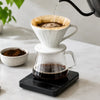
Start by placing your empty brewing device on the scale. That may be a pour-over dripper and server, a French press, or your espresso dosing cup. Turn on the scale, then press tare. The display should return to zero, which means it will measure only the ingredients you add.
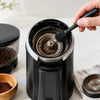
First, weigh your whole beans. For a single 12-ounce cup of filter coffee, begin with 20 grams of coffee. Grind only what you need just before brewing, then place the brewer back on the scale and tare it again.
Next, add water by weight rather than filling to a line on a kettle or carafe. Watch the scale as you pour until you reach your target amount. For 20 grams of coffee at a 1:16 ratio, use 320 grams of water.
If your scale has a timer, start it when water first touches the grounds. Timing is not about chasing perfection on the second. It helps you notice patterns. If the same recipe finishes much faster or slower than usual, the grind size or pouring method may have changed.
Begin With a Simple Coffee-to-Water Ratio
For most manual brewing methods, a ratio between 1:15 and 1:17 is a welcoming place to start. The first number is coffee and the second is water.
A 1:15 ratio makes a fuller, more intense cup. Using 20 grams of coffee means adding 300 grams of water. A 1:17 ratio is lighter and more delicate, using 340 grams of water for the same 20 grams of coffee. Neither is universally better. A washed Ethiopian coffee may shine with a slightly gentler ratio, while a medium-dark blend might feel richer and more comforting at 1:15 or 1:16.
Start at 1:16, taste the result, and make a small adjustment next time. If the cup feels thin, use a little less water or add a little more coffee. If it tastes heavy or overly intense, use slightly more water.
Using a Scale for Pour-Over Coffee
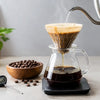
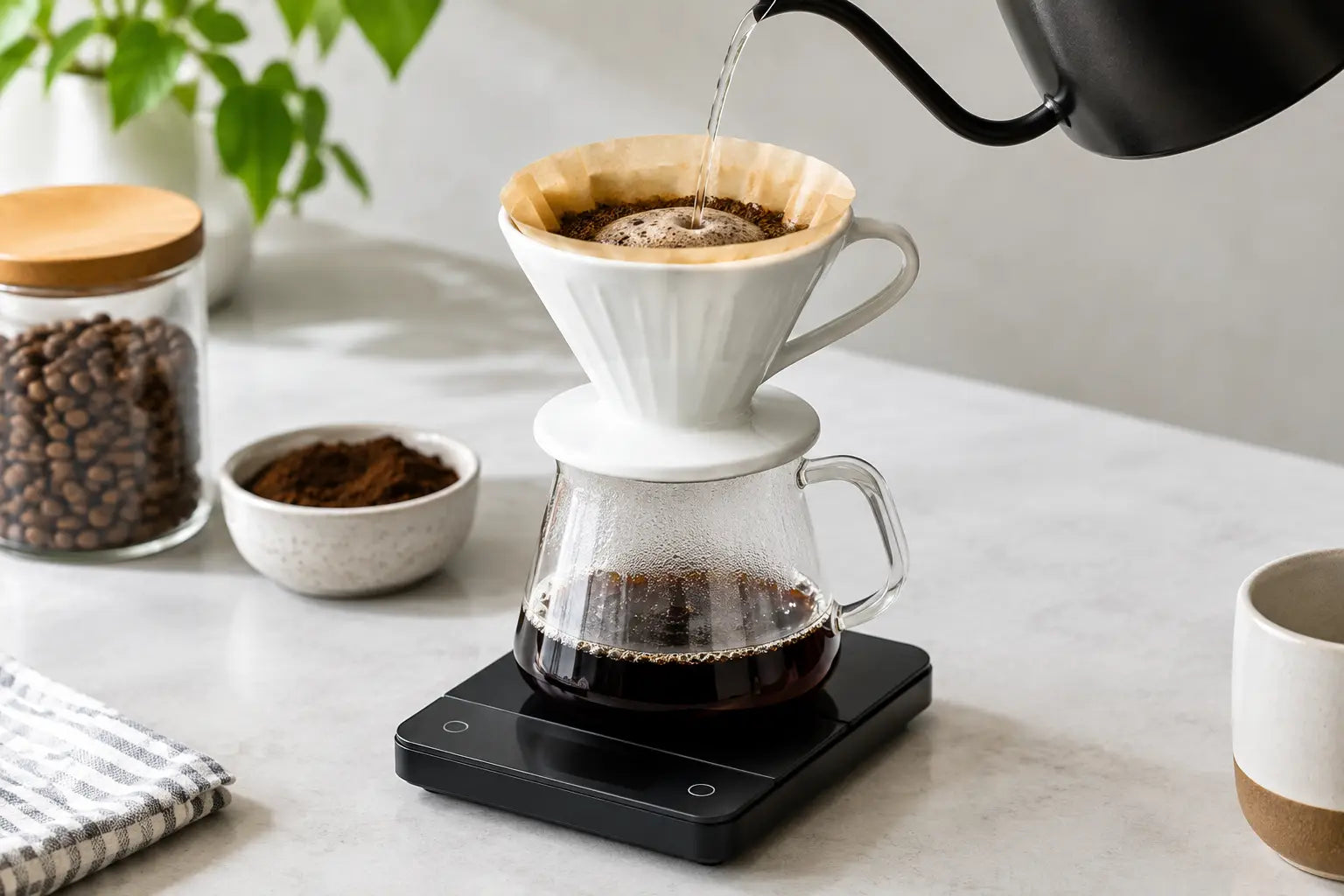
A scale is particularly helpful for pour-over because it guides both total water and the pace of your pour. Try this dependable starting recipe: 20 grams of medium-fine ground coffee and 320 grams of water, brewed over about three minutes.
After taring your dripper and grounds, pour about 40 grams of hot water over the coffee. Let it sit for 30 to 45 seconds. This is the bloom, when trapped gases escape and the grounds become evenly saturated. Freshly roasted coffee often rises and bubbles noticeably here, a small sign that the coffee still has life in it.
Continue pouring slowly in circles until the scale reads 320 grams. You can do this in two or three gentle pours rather than one continuous stream. Aim to keep the coffee bed level and avoid pouring directly down the paper filter, where water can bypass the grounds.
If your brew drains in under about two and a half minutes and tastes sour or weak, grind a little finer. If it takes well over four minutes and tastes dry or bitter, grind coarser. Keep your coffee dose and water weight the same while you adjust the grind. That makes the result easier to understand.
Using a Scale for French Press Coffee
French press brewing is forgiving, but weighing your coffee prevents the common problem of a pot that tastes too heavy one day and disappointingly weak the next. A good starting point is 30 grams of coarse-ground coffee to 500 grams of water, close to a 1:16.5 ratio.
Tare the empty French press, add the grounds, tare again, and pour in 500 grams of hot water. Give the coffee a gentle stir after the first minute so all the grounds are saturated. Steep for four minutes, press slowly, and pour the coffee into mugs or a separate serving vessel.
If the cup is muddy, your grind may be too fine, or you may be pressing too quickly. If it tastes underdeveloped, use a slightly finer grind or extend the steep by 30 seconds. The scale keeps the ratio steady while you refine those choices.
Using a Scale for Espresso
Espresso is where small weight changes can make a dramatic difference. Most home espresso recipes use a brew ratio around 1:2. That means 18 grams of ground coffee in the portafilter should produce roughly 36 grams of liquid espresso in the cup.
Place an empty dosing cup on the scale and tare it before grinding. Weigh 18 grams of coffee, transfer it to the portafilter, distribute and tamp as usual. Then place your cup on the scale under the group head, tare it, and start the shot. Stop the extraction when the display reaches 36 grams.
As a starting point, aim for that yield in roughly 25 to 30 seconds from the moment the pump starts. If it runs too quickly and tastes sharp or sour, grind finer. If it drips slowly and tastes bitter or harsh, grind coarser. Espresso is sensitive, so adjust in small increments and change only one thing at a time.
Common Coffee Scale Mistakes
The most common mistake is measuring coffee but not water. The ratio only works when both ingredients are weighed. Another is forgetting to tare between steps, which can lead to confusion about whether the display includes the brewer, grounds, or water.
Try not to chase a number while ignoring taste. A scale creates repeatability, not a rulebook. Water mineral content, roast development, and personal preference all matter. A recipe that highlights citrus and florals may not be the recipe you want on a slow Sunday morning when you are craving a softer, rounder cup.
It also helps to keep your scale dry and level. Make sure a dripper or cup is not touching the backsplash, grinder, or another object, as even slight contact can interfere with the reading.
Make the Ritual Your Own
At House Coffee, we believe great coffee belongs in the moments that make a home feel like home. A scale may seem like a small addition to your counter, yet it gives your beans the care they were roasted to receive. Weigh your dose, pour with intention, taste with attention, and let each cup become a familiar, cherished part of the day.