7 Best Coffee Storage Containers for Fresh Beans
A coffee bag opened on Monday can taste wonderfully sweet and fragrant. By the following week, that same coffee may seem flatter, less lively, and harder to dial in. The best coffee storage containers cannot stop time, but they can protect the aromas and delicate oils that make a freshly roasted cup feel special.
For specialty coffee, storage is not an afterthought. Those notes of ripe fruit in a single origin, the cocoa depth of an espresso blend, or the soft caramel sweetness in your morning pour-over are carried by volatile aromatic compounds. Oxygen, heat, light, moisture, and frequent opening all work against them. A good container gives your coffee a calmer place to rest between brews.
What the Best Coffee Storage Containers Protect Against
Coffee beans have four main enemies: air, light, heat, and moisture. Air is usually the biggest concern once a bag has been opened. Oxygen gradually dulls flavor and can leave beans tasting papery, stale, or strangely hollow. Light and warmth speed that process along, while moisture can damage beans outright.
That is why the right container needs more than a lid that merely sits on top. Look for a genuinely airtight seal, opaque walls or a dark storage location, and a size that suits how quickly you finish a bag. The goal is simple: expose your coffee to as little fresh air as possible, as few times as possible.
Freshly roasted coffee also releases carbon dioxide for a period after roasting. Most quality coffee bags account for this with a one-way valve. If you transfer very fresh beans to a rigid container, do not seal a large amount immediately after roasting without allowing for degassing. In practical terms, buying coffee in sensible quantities and enjoying it within a few weeks is a far more useful freshness strategy than chasing a container that promises miracles.
7 Best Coffee Storage Containers by Brewing Habit
1. An airtight stainless steel canister
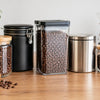
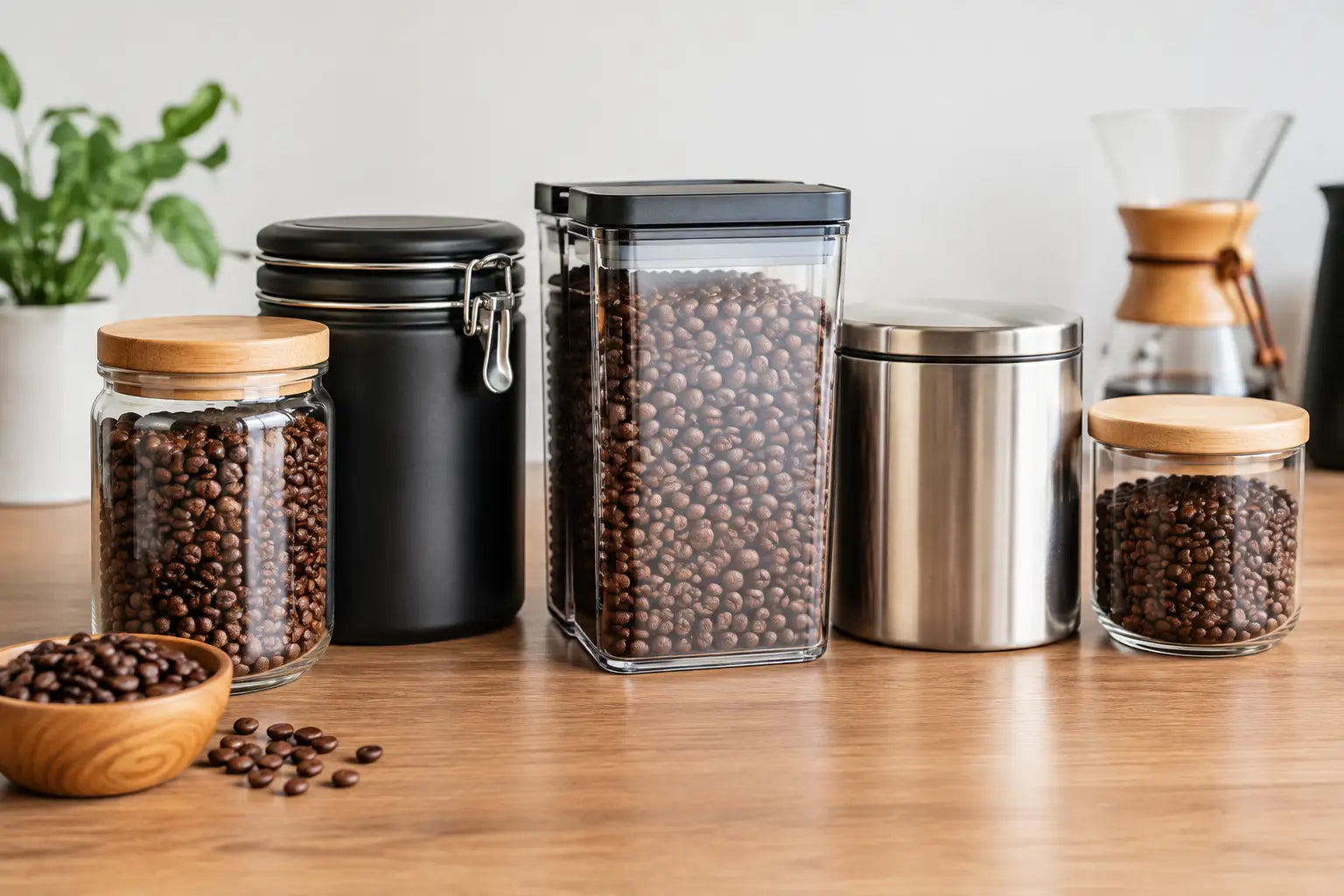
For most home coffee drinkers, a stainless steel canister with a silicone gasket is the strongest all-around choice. Stainless steel blocks light, resists kitchen odors, and feels at home beside a quality grinder and brewer. Choose a model with a firm clamp, twist lid, or press-down seal rather than a loose-fitting cap.
This is an especially good option if your coffee station gets daylight or sits near a window. The trade-off is that you cannot see how many beans remain, so a small label on the bottom or lid can help you keep track.
2. An opaque ceramic canister with a gasket lid
Ceramic brings a warm, considered look to the counter, making it a lovely fit for a home where coffee is part of the morning ritual. A glazed ceramic canister protects from light and, when paired with a tight silicone-sealed lid, offers dependable everyday storage.
Not every ceramic jar is airtight, however. Many decorative canisters have lids that look substantial but allow plenty of air exchange. Check for a gasket and a secure closure before choosing one. Ceramic is also heavier and more breakable than steel, so it may not be ideal for a busy office kitchen or a crowded shelf.
3. A vacuum canister for slower coffee drinkers
Vacuum storage canisters remove some air from the container after each use, either with a manual pump or a built-in mechanism. They can be useful when you buy a larger bag, brew only a few times a week, or want to preserve a special lot for longer.
They are not essential for everyone. If you finish a 10- to 12-ounce bag within two or three weeks, a well-sealed airtight canister will usually serve you beautifully. Vacuum models also have more components to clean and maintain. Still, for a treasured single origin you want to savor slowly, the extra protection can be worthwhile.
4. A coffee canister with a date tracker
Some dedicated coffee containers include a small dial that lets you mark the roast date or the day you opened the bag. This feature does not improve freshness by itself, but it encourages a smarter habit: tasting coffee while it is still in its most expressive window.
It is easy to forget when a bag came home, particularly if you keep a few coffees for espresso, drip, and decaf. A date tracker gives you a quick visual reminder to brew the older coffee first. Pair it with an airtight, opaque design, and it becomes a genuinely practical tool rather than a novelty.
5. A small canister for your daily beans
Large containers look efficient, but oversized storage can work against freshness. Every time you open a mostly empty canister, you introduce a larger volume of oxygen around the beans. A smaller vessel that holds roughly one week of coffee is often a better choice for daily use.
If you buy larger bags, keep the remaining beans sealed in their original package and refill your smaller canister as needed. This approach creates less repeated exposure for the bulk of your coffee while keeping your countertop routine easy.
6. The original coffee bag inside a sealed bin
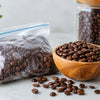
The bag your coffee arrives in is often better engineered than people realize. Quality roasters commonly use multilayer bags with one-way valves, designed to protect beans from light and support degassing. If the bag has a reliable zipper seal, you can press excess air out after each use and place the whole bag inside an opaque, airtight bin.
This is an excellent low-fuss option. It also preserves the origin, roast information, and tasting notes printed on the package. For coffee drinkers who enjoy rotating through different profiles, keeping beans in their labeled bags avoids mix-ups and makes it easier to remember what you are brewing.
7. A freezer-safe container for long-term reserves
Freezing coffee is useful in one specific situation: you have more beans than you can reasonably drink while they are fresh. Perhaps you bought several bags of a limited harvest, received a generous gift bundle, or want to save a favorite coffee for a future occasion.
Divide whole beans into small, airtight, freezer-safe portions before freezing. Only remove a portion when you are ready to use it, and let the unopened container come to room temperature before opening. This prevents condensation from forming on the beans. Do not repeatedly freeze and thaw the same coffee, and avoid storing an everyday bag in the freezer where it will be opened constantly.
Choosing the Right Size and Material
The best container is the one that matches your actual coffee rhythm. A household brewing two pots each morning may need a large steel canister that holds a full 12-ounce bag. A solo espresso drinker may get better results from two smaller containers, each holding enough for several days.
Stainless steel is the easiest recommendation for durability and light protection. Ceramic is beautiful and effective when it has a proper seal. Glass is best reserved for a dark cabinet, since even tinted glass still allows some light through. Clear glass jars can be tempting because they display glossy beans, but coffee is more delicious when it is protected than when it is on display.
Avoid plastic containers that retain odors, especially if they have previously held spices, tea, or snacks. Food-safe plastic can work in a pinch, but it is rarely the most satisfying long-term home for premium beans.
Where to Store Coffee at Home
Place your container in a cool, dry cabinet away from the oven, dishwasher, microwave, and direct sun. The countertop is fine only when it stays cool and shaded. Above the stove is one of the worst locations, even if it is convenient, because heat and steam are constant companions there.
Do not refrigerate your everyday coffee. Fridges contain humidity and food odors, and the repeated temperature changes from taking beans in and out are not helpful. Whole beans also keep their character longer than ground coffee, so grind only what you need just before brewing whenever possible.
A thoughtfully stored bag of fresh, small-batch coffee can turn an ordinary morning into a moment worth lingering over. Give your beans a dark, dry, airtight home, then let the fragrance filling your kitchen do the rest.