Coffee Pods vs Whole Beans: Which Is Better?
The coffee maker is humming, the morning is already moving, and you want a cup that feels like a small act of care. That is where the coffee pods vs whole beans decision becomes real. One promises speed with almost no cleanup; the other asks for a grinder and a few extra minutes, then rewards you with the aroma of coffee at its freshest.
Neither choice is automatically better for every home. The right one depends on what you value most: a fast, consistent cup before work, or the fuller flavor and hands-on ritual of brewing freshly ground specialty coffee. Here is how the two formats compare where it matters.
Coffee Pods vs Whole Beans: The Core Difference
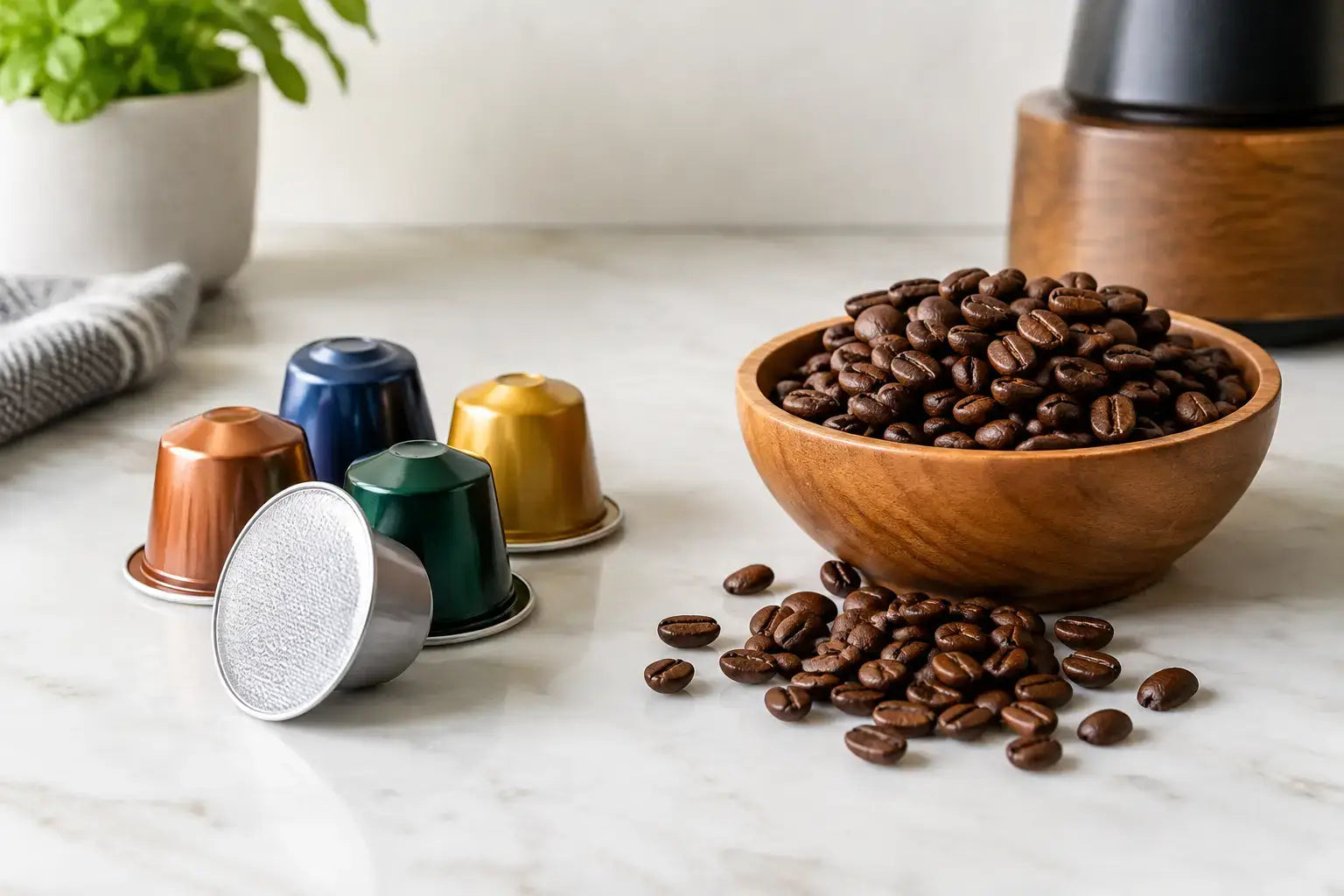
Coffee pods are pre-portioned servings of ground coffee sealed in individual capsules or paper pods. They are designed for a specific brewer, delivering a predictable cup at the press of a button. There is little measuring, little mess, and almost no learning curve.
Whole beans are coffee in its intact form, usually ground just before brewing. They can be used in a drip machine, pour-over, French press, espresso machine, moka pot, or cold brew setup. Whole beans require a grinder and a little more attention, but they also give you control over the coffee's freshness, strength, and extraction.
The biggest distinction is simple: grinding exposes coffee to oxygen. Once ground, coffee releases its most delicate aromatic compounds quickly. A sealed pod slows that process, but it cannot fully recreate the vivid fragrance and range of flavor that comes from grinding quality beans moments before water meets coffee.
Flavor and Freshness: Where Whole Beans Shine
If coffee is more than caffeine to you, whole beans usually offer the more memorable cup. Freshly ground coffee carries the character of its origin with greater clarity: cocoa and toasted almond notes in a comforting blend, bright citrus in an Ethiopian coffee, or caramel-like sweetness in a balanced Latin American lot.
This matters even more with specialty Arabica. High-scoring, carefully roasted beans are selected for nuanced flavor, not simply intensity. Brewing them fresh gives those details room to appear. You may notice a clean finish, a silky body, or a sweetness that does not need sugar to feel complete.
Pods can taste good, especially when they contain well-roasted coffee and are brewed at the right temperature. Their sealed packaging protects them better than an open bag of pre-ground coffee sitting in a cupboard. Still, the grind must be chosen to work for the pod system, and the coffee is often roasted and ground well before it reaches your kitchen. The result can be pleasant and reliable, but often less expressive.
Freshness is also about timing. For whole beans, buy in quantities you can enjoy within a few weeks of opening and store them in an airtight container away from heat, sunlight, and moisture. Do not refrigerate them. A smaller, fresher bag is usually a better choice than a large bag that lingers for months.
Convenience: Pods Win the Busy Morning
There is a reason pod brewers have earned a place on so many kitchen counters. They are quick, clean, and easy to use. If your morning involves getting children ready, joining an early meeting, or getting out the door in ten minutes, a pod machine removes friction from the routine.
Pods are also useful when household coffee preferences vary. One person can make a decaf cup, another can choose a dark roast, and no one has to brew a full pot that goes to waste. For guest rooms, offices, waiting areas, and events, that convenience can be especially practical.
Whole beans ask a bit more of you. You need to measure, grind, and occasionally adjust your grind size or brew ratio. Yet that extra minute can become part of the pleasure. The sound of the grinder, the bloom of freshly brewed coffee, and the first warm sip can turn a rushed morning into a more grounded one.
Convenience does not have to mean pods. A good burr grinder paired with an automatic drip brewer can make fresh coffee remarkably easy. Grind enough for the day, use a simple measured scoop, and let the machine handle the rest. For many households, that is the sweet spot between café-quality flavor and everyday practicality.
Cost Depends on How You Brew
At first glance, pods seem affordable because each cup has one clear price. Over time, however, the cost per ounce of coffee is often significantly higher than buying whole beans. You are paying for single-serve packaging, compatibility with a brewing system, and the convenience of a pre-portioned dose.
Whole beans generally stretch further, particularly for households that brew several cups a day. A quality grinder is an upfront investment, but it can pay for itself over time when compared with buying individual capsules. It also lets you choose from a wider range of fresh-roasted coffees, including single origins and seasonal selections.
There are exceptions. If you live alone and only drink coffee occasionally, a large bag of beans may lose its peak freshness before you finish it. In that case, pods or very small bags of beans can reduce waste. The best value is not simply the lowest price per cup. It is coffee you genuinely enjoy and use while it is fresh.
Waste and Sustainability Need a Closer Look
Single-serve pods create more packaging per cup than a bag of beans. Some capsules are recyclable or compostable, but local programs vary, and a recyclable pod only helps if it is properly separated, cleaned when required, and accepted where you live. Convenience can come with a less visible environmental cost.
Whole beans are typically sold in one bag, creating less packaging per serving. They also produce coffee grounds that can be composted in many home systems. That said, bean bags often use layered materials to protect freshness and may not be accepted in curbside recycling. Sustainability is rarely perfect, but whole beans generally create less single-use waste across a week of brewing.
If pods are the best fit for your routine, look for brands with transparent material information and follow your local recycling guidance. If you choose beans, buy the amount you will use fresh and compost grounds when possible. Small habits make a difference without taking away from the ritual.
Brewing Control and Coffee Quality
Whole beans give you the ability to shape the cup. A finer grind slows water and suits espresso; a coarser grind works better for French press. You can adjust the coffee-to-water ratio, water temperature, and brew time until the coffee tastes balanced to you. If a cup tastes sour, bitter, thin, or heavy, there is usually a brewing variable you can change.
Pods offer much less room for adjustment. You may be able to choose cup size or a stronger setting, but the dose and grind are already fixed. That consistency is valuable when you want the same result every time. It is less satisfying for curious home brewers who want to learn what a particular coffee can do.
For espresso lovers, the gap can be especially noticeable. A pod system can produce a convenient, crema-topped drink, while freshly ground beans in a capable espresso machine provide more texture, sweetness, and complexity. Still, an excellent cup is the one that fits your life well enough to make often.
When Coffee Pods Make the Most Sense
Choose pods when speed, simplicity, and low cleanup are your priorities. They are a sensible option for occasional coffee drinkers, shared spaces with many preferences, or mornings when you need dependable coffee before anything else happens.
Choose whole beans when flavor, freshness, and flexibility matter most. They are ideal for daily coffee drinkers, people who enjoy experimenting with brew methods, and anyone who wants to taste the care behind ethically sourced, small-batch roasted coffee.
You do not have to make the choice permanent. Many homes keep pods for the busiest weekdays and whole beans for weekends, slow mornings, and after-dinner coffee with friends. There is room for both, provided each cup serves the moment you are in.
A bag of freshly roasted specialty beans from House Coffee can make an ordinary kitchen feel a little more like your favorite café - not because brewing needs to be complicated, but because coffee made with care invites you to pause. Choose the format that supports your real routine, then make space to enjoy the cup in your hands.