Filter Coffee Brewing Guide for Better Cups
That first sip of filter coffee can feel either flat and forgettable or quietly perfect - sweet, fragrant, and comforting in a way that sets the tone for the whole morning. A good filter coffee brewing guide is not about turning your kitchen into a lab. It is about understanding a few variables well enough to brew a cup that honors the bean, the roast, and the ritual.
Filter coffee is often treated like the simple option, but simplicity is exactly why small details matter. When you brew with paper-filter methods like a drip machine, pour over, or manual dripper, there is nowhere for stale coffee, a poor grind, or bad water to hide. The payoff, though, is beautiful clarity. You get the fruit, florals, chocolate, caramel, or spice in the cup with more definition.
Why filter coffee rewards precision
Filter brewing is especially good at showing what makes specialty coffee worth seeking out in the first place. If you are brewing a fresh, ethically sourced single origin with strong cup quality, filter methods let you taste the nuances that can get buried in darker, heavier brewing styles. You will notice acidity more clearly, sweetness more cleanly, and body with more structure.
That does not mean there is one perfect recipe for every coffee. A washed Ethiopian coffee may shine with a lighter body and more open aromatics, while a balanced Latin American blend may taste better with a slightly fuller extraction. The point is not to chase a universal formula. It is to understand how to adjust with intention.
The essentials in this filter coffee brewing guide
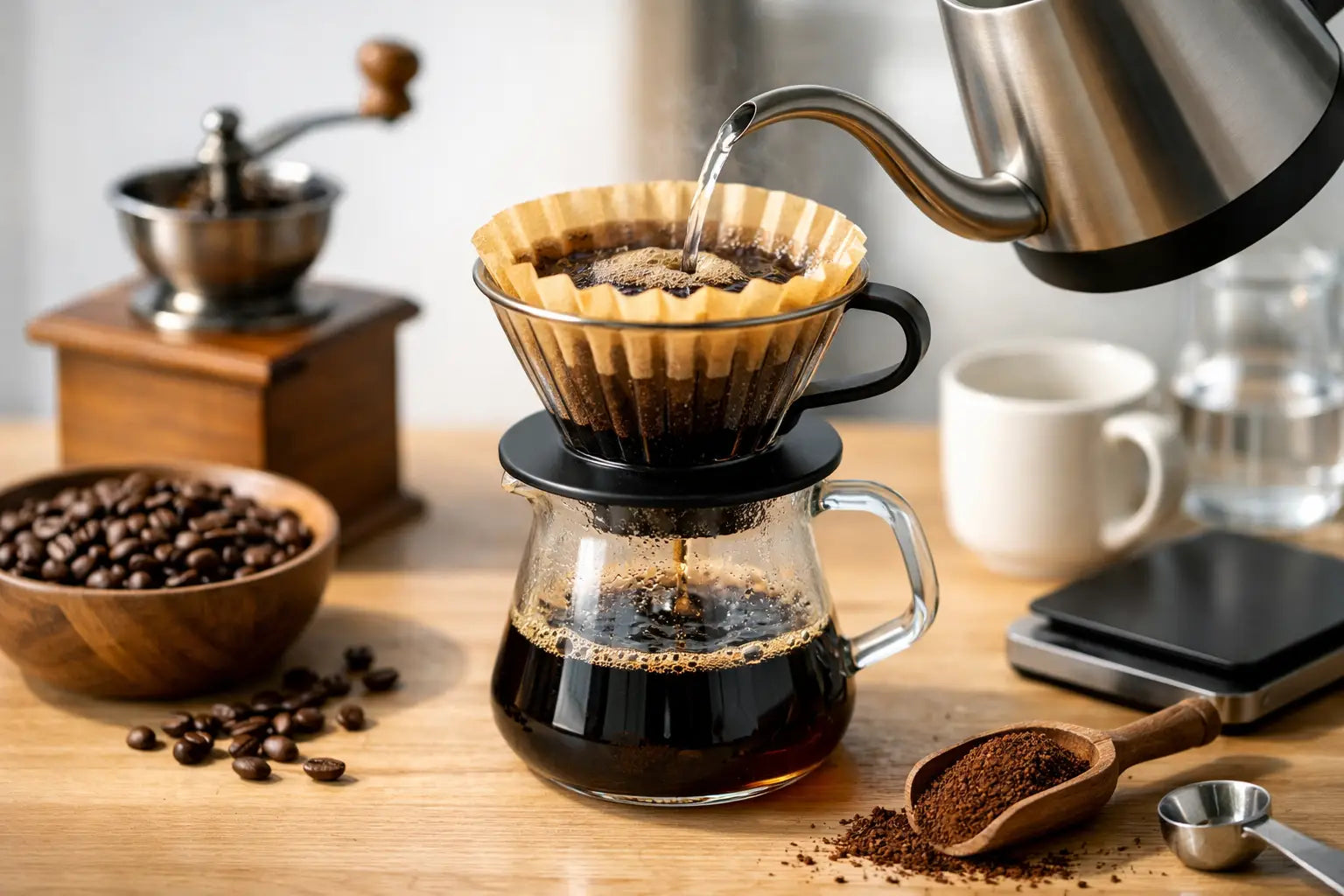
You do not need an elaborate setup to make excellent coffee at home, but a few tools make a real difference. The most important are fresh coffee, a burr grinder, a scale, filtered water, and a brewer you can use consistently. A gooseneck kettle helps with pour over, though it is less critical for automatic drip machines.
Fresh coffee matters more than most people think. Even the best beans lose their vibrancy when they sit too long. If you start with freshly roasted coffee, ideally used within a sensible window after roast, you are already giving yourself a much better chance at sweetness and aroma. This is where quality-driven roasters stand apart from grocery shelf coffee. You are tasting coffee while it still has life in it.
Grind consistency is the next big factor. Blade grinders chop unevenly, which creates both fine particles and large chunks. That makes brewing uneven too - some grounds over-extract and taste bitter while others under-extract and taste sour. A burr grinder produces a much more even particle size, which means a cleaner, more balanced cup.
Start with a simple ratio
If you want one dependable baseline, use a 1:16 ratio of coffee to water. That means 20 grams of coffee for 320 grams of water, or 30 grams of coffee for 480 grams of water. This ratio usually lands in a sweet spot where the cup feels flavorful but not heavy.
From there, you can adjust based on preference. If your coffee tastes thin, you can either use a little more coffee or grind slightly finer. If it tastes too intense or muddy, use a little less coffee or grind slightly coarser. Ratio changes strength. Grind changes extraction. Knowing that difference helps you fix the right problem.
Grind size and what it changes
For most filter methods, think medium to medium-coarse. But those labels only go so far because grinders vary. What matters more is how the brew behaves and tastes.
If water runs through too quickly and the cup tastes sharp, salty, or hollow, the grind is probably too coarse. If the brew drags, tastes bitter, and leaves a dry finish, the grind is likely too fine. With a good filter coffee brewing guide, taste should always lead the adjustment.
A practical target for many manual brewers is a total brew time of around 2:30 to 4:00, depending on brewer size and recipe. Automatic drip machines are less hands-on, but the same principle applies. If the coffee tastes off, the grind is one of the first places to look.
Water quality is not a side detail
Coffee is mostly water, so water quality can either support the cup or flatten it. If your tap water smells strongly of chlorine or tastes harsh on its own, your coffee will reflect that. Filtered water is usually the safest choice for home brewing.
Temperature matters too. Water between 195 and 205 degrees Fahrenheit is a reliable range for filter coffee. Cooler water can under-extract and leave the cup sour or weak. Water that is too hot can push bitterness forward, especially in darker roasts or finer grinds.
How to brew better pour over coffee
If you are using a V60, Kalita Wave, Chemex, or similar brewer, consistency comes from keeping the process calm and repeatable. Rinse the paper filter first to remove papery flavor and warm the brewer. Add your ground coffee, level the bed, and start with a bloom using about twice the coffee weight in water.
The bloom is the first pour, usually lasting 30 to 45 seconds. It allows trapped gas to escape from fresh coffee so the rest of the brew extracts more evenly. After that, continue pouring in slow circles or controlled pulses, keeping the coffee bed saturated without flooding it aggressively.
Different brewers emphasize different qualities. A V60 often gives more brightness and clarity but can be less forgiving. A Kalita Wave tends to be more even and approachable. A Chemex produces a very clean cup because of its thicker filter, though some people find it slightly lighter in body. None is automatically better - it depends on whether you want sparkle, body, or simplicity.
Making automatic drip coffee taste excellent
Drip machines deserve more respect than they get. A good machine with fresh beans and the right grind can make a beautiful daily cup, especially for households brewing several mugs at once. The mistake is assuming the machine will compensate for stale coffee or an unmeasured scoop-and-hope routine.
Use the same ratio principles you would for manual brewing. Measure your coffee by weight, use filtered water, and check that the grind is appropriate for your basket style. Flat-bottom baskets often perform well with a medium grind, while cone-shaped baskets can prefer slightly finer grounds.
Cleanliness matters here more than many people realize. Old oils in the basket or carafe can make fresh coffee taste dull or rancid. Regular cleaning keeps the cup tasting true.
How fresh roast, origin, and roast level show up in the cup
This is where brewing becomes more personal. A bright, fruit-forward single origin from higher elevation may reward a lighter extraction that preserves its lively acidity and floral notes. A chocolatey, nutty coffee may handle a fuller extraction and still taste rounded and sweet. Roast level plays a role too.
Lighter roasts are often denser and may need a slightly finer grind or hotter water to bring out their full sweetness. Darker roasts extract more easily, so a slightly coarser grind or gentler approach can help avoid bitterness. If you are buying premium coffee with clear origin and roast information, use that information. It is part of the craft.
At House Coffee, this is part of what makes home brewing feel special rather than routine. When coffee is freshly roasted in small batches and sourced with care, filter brewing becomes a way to taste the story behind the cup, not just the caffeine in it.
Troubleshooting your filter coffee
If your coffee tastes sour, grassy, or empty, it is usually under-extracted. Grind finer, increase water temperature slightly, or extend contact time. If it tastes bitter, harsh, or drying, it is usually over-extracted. Grind coarser, reduce brew time, or lower the temperature a touch.
If the cup tastes both bitter and sour, the issue may be uneven extraction. That often points to poor grind consistency, careless pouring, channeling, or a filter bed that is not level. Sometimes the fix is not more complexity. It is better repetition.
If your coffee seems muted no matter what you do, freshness may be the missing piece. Great brewing cannot create flavor that has already faded.
Small habits that make a big difference
Consistency comes from simple habits repeated well. Weighing coffee and water, keeping your grinder setting noted, rinsing filters, and cleaning your equipment all help more than buying another gadget. Once your routine is stable, then it makes sense to experiment.
Try changing only one variable at a time. If you adjust ratio, keep the grind the same. If you change the grind, hold the temperature steady. That is how you learn what actually improved the cup.
The best filter coffee brewing guide leaves room for preference. Some people love a delicate, tea-like brew. Others want more body and deeper sweetness. Neither is wrong. The real goal is to brew with enough care that your cup tastes intentional.
A better mug of coffee is rarely hiding behind a complicated trick. More often, it is waiting in fresher beans, cleaner water, a measured ratio, and a few quiet minutes of attention - the kind that turns an everyday habit into one of the most comforting parts of home.