How to Brew Chemex Coffee for a Brighter Cup
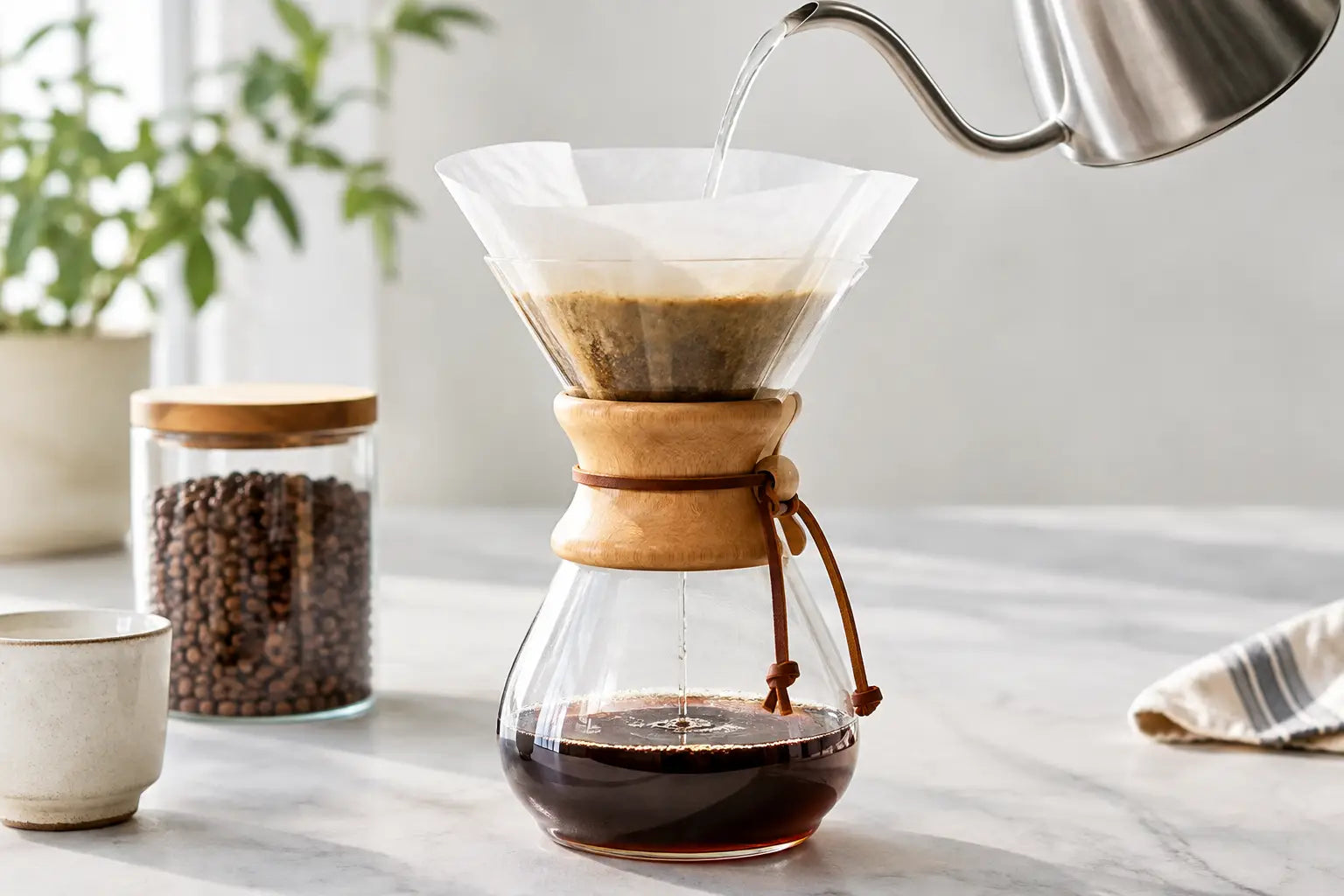
A Chemex has a way of making an ordinary morning feel considered. The glass carafe, the slow spiral of water, the aroma gathering in the kitchen - it turns a simple cup into a small ritual worth sharing. Learning how to brew Chemex coffee is less about chasing perfection than paying attention to a few details that let a beautiful coffee speak clearly.
The result should be clean, sweet, and bright, with room for the character of the bean to come through. A washed Ethiopian may show floral citrus notes, while a coffee from Colombia might bring caramel, stone fruit, and gentle sweetness. The Chemex is especially kind to fresh, specialty-grade coffee because its thick filter creates a remarkably clear cup.
What Makes Chemex Coffee Different?
Chemex brewing is a form of pour-over coffee, but the filters are much thicker than standard paper filters. They hold back more oils and fine sediment, creating a lighter-bodied cup with notable clarity. That can be a wonderful match for single-origin Arabica coffees with layered fruit, floral, or tea-like notes.
There is a trade-off. Because the filter is dense, a Chemex can mute some of the heavier texture and rich oils that make a French press cup feel full and round. It also requires a patient, steady pour. If you enjoy coffee that feels crisp and refined rather than dense and rustic, it is hard to beat.
The Chemex Recipe to Start With
Use this dependable starting recipe for a 3-cup Chemex:
- 30 grams whole-bean coffee
- 500 grams water, just off the boil
- A medium-coarse grind
- Total brew time of about 4 to 5 minutes
A digital scale makes the process easier and more repeatable, but it does not need to make your morning feel clinical. Think of it as a helpful tool that frees you from guessing. Once you know the version you love, it becomes part of the rhythm.
What You Need
Along with your Chemex and bonded paper filters, gather a burr grinder, kettle with a narrow spout, scale, timer, and your favorite mug. A gooseneck kettle offers the most control, especially when you are new to pour-over, but you can still make a lovely cup with a standard kettle if you pour slowly and carefully.
Freshly roasted whole beans matter more than any accessory. Look for coffee with a clear roast date and grind it right before brewing. For a clean, expressive Chemex cup, House Coffee single-origin selections are a natural place to begin, particularly if you enjoy tasting the distinct personality of an origin.
How to Brew Chemex Step by Step
1. Heat your water and prepare the filter
Bring filtered water to a boil, then let it rest briefly. Aim for 200 to 205°F. If you do not have a thermometer, about 30 seconds off the boil is usually close enough.
Open the Chemex filter into a cone and place it in the top of the brewer. The side with three layers should sit against the spout. This gives the filter structure and keeps the spout open so air can escape as coffee drips through.
Rinse the filter generously with hot water. This step removes any papery taste and warms the glass vessel, helping the brewed coffee stay at a pleasant temperature. Pour the rinse water out through the spout before adding your grounds.
2. Grind and add your coffee
Grind 30 grams of coffee to a medium-coarse consistency, similar to coarse sea salt. The grounds should be noticeably coarser than a typical drip coffee grind but not as large as peppercorns.
Add the coffee to the rinsed filter and gently shake the Chemex until the bed looks level. An even coffee bed encourages water to move through the grounds consistently. It is a small step, but it helps prevent one area from extracting too quickly while another is left behind.
3. Bloom the coffee
Start your timer and pour about 60 grams of water over the grounds, making sure they are all wet. Let the coffee bloom for 30 to 45 seconds.
During the bloom, trapped carbon dioxide escapes from freshly roasted coffee. You may see the bed rise and bubble, especially with beans roasted recently. Giving it this moment helps the rest of your water contact the coffee more evenly, bringing out sweetness and reducing the risk of a sharp, underdeveloped cup.
4. Pour in calm, steady circles
After the bloom, slowly pour water in gentle circles, starting near the center and moving outward. Avoid pouring directly onto the paper filter, where water can run down the sides without properly brewing the coffee.
Bring the scale to roughly 250 grams of water, then let the level drop slightly. Continue pouring in two or three measured additions until you reach 500 grams total. There is no prize for making one uninterrupted pour. Controlled pulses are often easier at home and can produce a more even extraction.
Keep the water level comfortably below the rim of the Chemex. If your brew seems to stall, do not stir aggressively. A light swirl of the brewer after the last pour is enough to settle stray grounds from the sides and level the bed.
5. Let it draw down, then serve
When you have added all the water, allow the coffee to finish dripping. The full process should take around 4 to 5 minutes, including the bloom. Remove the filter as soon as the stream slows to occasional drips rather than waiting for every last drop. The final drips can carry bitterness into the carafe.
Give the brewed coffee a gentle swirl in the Chemex before pouring. This blends the layers of extraction together, so the first cup tastes as balanced as the last. Serve it while warm, then notice how its flavor changes as it cools. Many specialty coffees become sweeter and more detailed as they reach a lower temperature.
Adjust Your Chemex When the Cup Tastes Off
A recipe is a starting point, not a rule carved into glass. Coffee changes with its origin, roast level, age, and even the mineral makeup of your water. Make one adjustment at a time, then brew again.
If your coffee tastes sour, thin, or a little salty, it is likely under-extracted. Grind slightly finer, use a touch hotter water, or pour more slowly to extend the brew time. If it tastes bitter, dry, or overly harsh, it may be over-extracted. Try a slightly coarser grind, a gentler pour, or a shorter drawdown.
If your coffee is flavorful but simply too strong, add a little hot water to the finished carafe rather than changing the brew immediately. If it feels weak, increase the dose on the next brew before making your grind much finer. Ratios shape strength, while grind size has a stronger effect on extraction and flavor balance.
A Few Details That Make a Noticeable Difference
Use filtered water whenever possible. Coffee is mostly water, so water with strong chlorine or heavy mineral content can flatten even an exceptional roast. Keep your brewer clean as well. Coffee oils build up in the glass over time and can leave a stale note in an otherwise fresh cup.
Do not overlook the filter placement. A three-layer side positioned away from the spout can restrict airflow and slow the drawdown dramatically. When the filter is correctly placed and the grind is in range, the brew should move with an easy, steady pace.
Finally, give yourself permission to enjoy the process rather than treating it as a test. The Chemex rewards care, but it also welcomes repetition. A quiet pour before the house wakes up or a full carafe placed between friends at the table can become one of those everyday moments that stays with you.
The best Chemex coffee is not necessarily the most technical one. It is the cup that tastes clear, comforting, and unmistakably yours - brewed with good beans, a little attention, and enough time to let the morning unfold.