Coffee Cupping Score Explained Clearly
A bag marked 84+ can feel reassuring, but what does that number actually tell you about the coffee in your cup? If you've ever wondered about coffee cupping score explained in plain English, the short answer is this: it is a standardized way professionals evaluate a coffee's quality, flavor, and overall experience.
For home brewers, that score matters because it offers a useful quality signal before you buy. It can point you toward cleaner, sweeter, more distinctive coffees. But it is not a crystal ball, and it does not replace your own taste. The most memorable coffee moments still happen at home, in the quiet rhythm of your morning, not on a scoring sheet.
What a coffee cupping score actually means
A cupping score is a number assigned during a formal tasting process used in specialty coffee. Trained tasters evaluate the coffee across several categories, then add those results into a final score. In practice, the score helps producers, importers, roasters, and buyers speak the same language about quality.
The system most people are referring to uses a 100-point scale. Coffees that score 80 points or above are generally considered specialty coffee. Below that, the coffee may still be drinkable and enjoyable, but it usually will not meet specialty standards for clarity, complexity, and lack of defects.
That sounds simple, but the number is only part of the story. An 84-point coffee and an 88-point coffee can both be excellent, yet offer very different experiences. One might be chocolatey, balanced, and comforting. The other might be floral, bright, and layered. A higher score often suggests more distinction and refinement, but not necessarily that every drinker will prefer it.
Coffee cupping score explained by range
If you're shopping online and seeing score ranges on specialty coffee, here is a practical way to read them.
80-82: entry-level specialty
This range usually means the coffee is clean, pleasant, and clearly above commodity grade. You may find approachable notes like nuts, cocoa, or mild fruit. These coffees can be wonderful everyday drinkers, especially if you enjoy balance over intensity.
83-84: solid specialty quality
This is where many excellent single origin coffees live. You can expect better sweetness, more defined acidity, and a clearer sense of origin. For many coffee lovers, this is a sweet spot where quality feels elevated without becoming too niche or polarizing.
85-87: standout specialty coffee
At this level, coffees often show more complexity, structure, and memorable flavor separation. You may notice layered fruit, florals, syrupy body, or exceptional finish. These coffees often feel like the cup has something to say.
88+: rare and exceptional
Once scores move into the high 80s and beyond, you're typically looking at truly distinctive coffees. These lots may be limited, highly sought after, and priced accordingly. They can offer extraordinary aroma and clarity, but they can also be more delicate and less forgiving in brewing.
90+: elite territory
A 90-plus coffee is uncommon. These are the coffees people talk about for months after tasting them. They can be stunning, but they are not everyday coffee for most households, either in availability or price.
How coffee gets that score
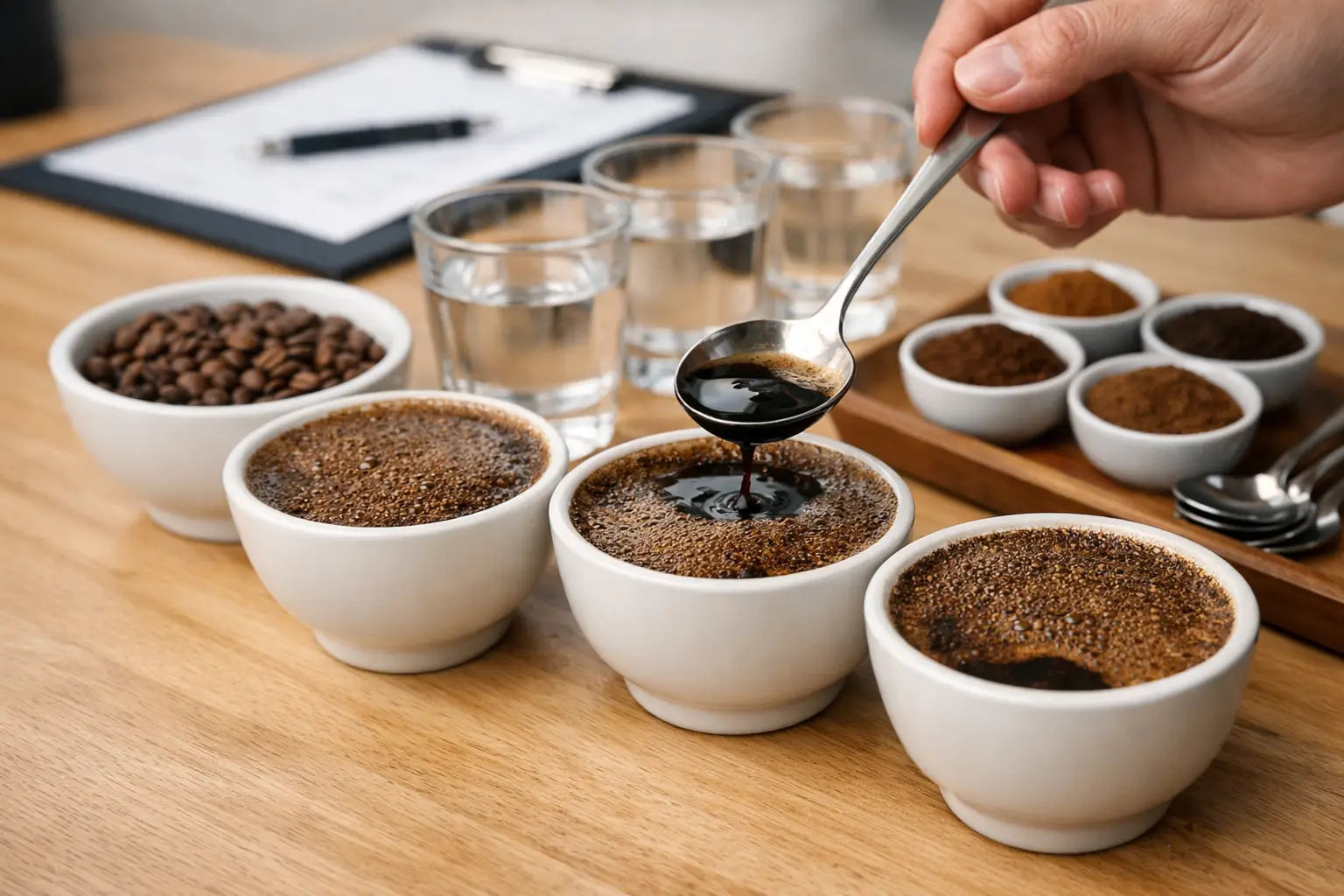
Cupping is designed to create consistency. Tasters assess coffee under controlled conditions so they can focus on the bean itself, not the brewing style. The coffee is ground, smelled dry, steeped in hot water, then evaluated for aroma, flavor, aftertaste, acidity, body, balance, sweetness, uniformity, clean cup, and overall impression.
Defects lower the score. Positive sensory qualities raise it. The goal is not to reward the loudest coffee, but the most complete one. A coffee can score well because it is bright and fruit-forward, or because it is sweet, clean, and deeply balanced.
That matters for buyers at home because the score reflects both quality and execution at origin. Farming, harvesting, processing, sorting, and storage all influence what ends up in the cup. A strong cupping score is often a sign that care was taken long before roasting began.
What a cupping score can tell you before you buy
The best way to think of a cupping score is as a quality benchmark, not a flavor guarantee. It can tell you that the coffee has been evaluated to a specialty standard and found to have a certain level of sensory merit. It can also suggest whether a coffee is likely to feel more everyday or more exceptional.
For example, if you love dependable, smooth, premium coffee for your morning routine, an 84-point single origin may be exactly right. If you enjoy chasing rare lots with unusual fruit, florals, or fermentation-driven notes, you may naturally gravitate toward higher scores.
This is one reason many specialty brands highlight Q-grade scores of 84 and above. It gives shoppers a shorthand for quality while still leaving room for preference. At House Coffee, that kind of marker helps bridge expertise and comfort. You can shop with confidence, then brew the kind of cup that turns an ordinary morning into something worth savoring.
What a score does not tell you
This is where coffee cupping score explained becomes more useful than simply memorizing numbers. A score does not tell you whether the coffee will match your favorite brew method, your roast preference, or your personal palate.
It also does not tell you everything about body or roast development in the final retail bag. A coffee that scored 87 at origin might be roasted in a way that emphasizes sweetness and softness rather than sparkling acidity. Another might be roasted to showcase its brightest notes. Same coffee, different expression.
Scores also cannot fully capture comfort. A beautifully sweet, chocolate-forward coffee with a modest score may bring you more pleasure every morning than a rare 90-point coffee that feels too sharp or too delicate for your taste. That is not a contradiction. That is the human side of coffee.
Why two coffees with similar scores can taste so different
Cupping scores reward quality, not sameness. A washed Ethiopian and a natural-process Brazilian could land in a similar scoring band while tasting nothing alike. One may lead with jasmine and citrus. The other may offer berry, cacao, and a fuller body.
Processing method, altitude, variety, terroir, and roasting all shape the final cup. The score tells you both coffees performed well in evaluation. It does not mean they share a flavor profile.
This is why tasting notes, origin, and roast style should always be read alongside the score. If you want a coffee that feels cozy, rich, and grounding, the highest number on the page may not be the best fit. If you want something vivid and conversation-starting, it might be.
Is a higher score always worth paying more for?
Sometimes yes, sometimes no. Higher scores often reflect coffees that are more limited, more labor-intensive, or more exceptional in the cup. That can justify a higher price. But value depends on what you want from your coffee ritual.
If your goal is an elevated daily brew that feels fresh, ethical, and reliably delicious, an 84-86 point coffee may offer the best balance of quality and price. If you are buying for a special gift, a weekend brew bar, or a tasting experience with friends, stepping into the upper 80s may feel worthwhile.
The key is not to treat scoring as a contest. Treat it as context. The right coffee is the one that suits the moment you want to create, whether that is a quick, beautiful cup before work or a slow Sunday pour over shared across the kitchen.
How to use cupping scores when shopping online
Start by using the score to confirm baseline quality. Then look at the origin, tasting notes, roast style, and intended brew method. Together, those details paint a much fuller picture.
If you are new to specialty coffee, coffees in the 84-86 range are often a great place to begin. They usually offer clear quality improvements over grocery-store coffee while remaining approachable and versatile. If you already know you love bright acidity, layered fruit, or highly expressive lots, explore higher-scoring coffees with more confidence.
And remember that freshness matters. Even a beautifully scored coffee can lose its charm if it sits too long after roasting. The score speaks to the coffee's potential. Fresh roasting and careful brewing help bring that potential home.
A cupping score is best seen as an invitation. It tells you this coffee was grown, processed, and tasted with care. Your part is simpler and better: brew it well, share it when it feels right, and pay attention to the cup in front of you.