How to Read Coffee Tasting Notes
You open a bag of coffee and see words like blackberry, milk chocolate, jasmine, or brown sugar. It sounds beautiful, but also a little confusing. If you have ever wondered how to read coffee tasting notes without feeling like you need a sommelier’s vocabulary, the good news is this: tasting notes are not rules, and they are not promises of flavored coffee. They are a helpful way to describe what is naturally present in the bean, and once you know how to interpret them, buying coffee becomes much more personal and much more rewarding.
For anyone building a better home coffee ritual, this matters. Tasting notes help you choose a coffee that fits your mood, your brew method, and the kind of morning you want to create. They turn a bag label into something useful.
What coffee tasting notes actually mean
Coffee tasting notes are shorthand for aroma, flavor, and mouthfeel that trained tasters detect in a brewed cup. If a coffee is labeled with notes of blueberry, caramel, and cocoa, it does not mean those ingredients were added. It means the cup reminds the taster of those flavors.
That distinction is important because coffee flavor is associative. A washed Ethiopian coffee might carry citrus and floral qualities that remind someone of bergamot or lemon zest. A natural-process coffee from Colombia might suggest ripe berries or jam. A classic Central American profile may lean toward chocolate, nuts, or red apple. These notes help set expectations, but they are still impressions, not exact ingredients.
The language can sound luxurious, yet the purpose is practical. Tasting notes give you a faster way to understand whether a coffee is likely to feel bright and lively, soft and sweet, or deep and comforting.
How to read coffee tasting notes on a bag
The easiest way to read tasting notes is to stop treating each word as a standalone flavor and start reading them as a pattern. Most coffee bags are giving you clues about three things at once: fruit character, sweetness, and finish.
If you see notes like citrus, berry, stone fruit, or tropical fruit, that usually points to a brighter, more acidic cup. In coffee, acidity is not a flaw. Good acidity gives coffee energy and structure. It can taste crisp like orange, juicy like peach, or vivid like raspberry.
If the notes mention chocolate, caramel, toffee, molasses, or brown sugar, the coffee will often feel sweeter and more familiar. These coffees tend to appeal to people who want balance and comfort in the cup, especially for everyday brewing.
If you see florals, tea-like descriptors, or herbs, expect more delicacy. Those coffees can be beautiful, but they may feel subtle if you usually drink darker, heavier profiles.
When a bag combines fruit with chocolate or sugar notes, that often signals balance. A coffee described as cherry, cocoa, and honey may offer brightness up front with a smooth, sweet finish. That is often a great place to start if you want complexity without straying too far from a classic cup.
How to read coffee tasting notes by category
Fruit notes
Fruit notes usually tell you the coffee has noticeable acidity and aromatic lift. But not all fruit notes behave the same way. Citrus suggests sharpness and sparkle. Berry can mean juicy sweetness or a more fermented, wine-like profile depending on the process. Stone fruit, like peach or apricot, often feels softer and rounder.
If you enjoy a lively pour-over or a cleaner morning cup, fruit-forward coffees are often a strong match. If you drink coffee mainly with milk, some delicate fruit notes can get lost.
Chocolate, nuts, and sugar notes
These are often the easiest tasting notes to understand because they align with flavors many people already associate with coffee. Milk chocolate, cocoa, almond, praline, caramel, and brown sugar usually signal a smooth and approachable profile.
That does not mean simple or low quality. Some of the most satisfying coffees in the world present this way. They are just less flashy and often more versatile across drip coffee, French press, and espresso.
Floral and tea-like notes
Jasmine, orange blossom, chamomile, and black tea point to aroma and elegance more than heaviness. These coffees can feel refined and layered, especially when lightly roasted and carefully brewed.
They are often loved by people who enjoy paying attention to subtle changes in temperature and aroma as the cup cools. If you want boldness, these may not be your first choice. If you want nuance, they can be unforgettable.
Spice and savory notes
Sometimes you will see cinnamon, clove, cedar, or even tomato. These can be surprising, but they are still natural descriptors. Spice notes can add warmth. Savory notes can reflect terroir, processing, or roast expression.
These descriptions tend to be more polarizing, so if you are new to specialty coffee, it may help to treat them as supporting notes rather than your main buying cue.
Why the same coffee can taste different at home
One reason tasting notes can feel mysterious is that your cup may not match the bag exactly. That is normal. Coffee is sensitive to brew ratio, water quality, grind size, temperature, and rest time after roasting.
A coffee labeled as plum and cacao might taste more like dark chocolate in a French press, then show more fruit in a pour-over. Espresso can intensify sweetness and body, while filter brewing often makes acidity and florals easier to notice.
Personal taste also plays a role. One person says nectarine, another says apricot, and both may be reacting to the same quality in the cup. Tasting notes are not a test with one correct answer. They are a shared language for describing a sensory experience.
How to use tasting notes to buy coffee you will actually love
How to read coffee tasting notes before you buy
Start with what you already enjoy in food and drink. If you love dark chocolate, toasted nuts, and caramel desserts, coffees with cocoa-forward notes will likely feel familiar and satisfying. If you gravitate toward berries, citrus, or floral teas, a brighter single origin may be more exciting.
Then think about brew method. For espresso, coffees with chocolate, caramel, dried fruit, or nut notes often hold up beautifully, especially with milk. For pour-over, more delicate fruit and floral coffees have room to shine. For drip coffee at home, balanced profiles with sweetness and mild fruit tend to be reliable crowd-pleasers.
Roast style matters too. Lighter roasts often express more acidity and origin character. Medium roasts can preserve sweetness while feeling rounder and more accessible. Darker roasts may mute subtle tasting notes and emphasize roast-driven flavors instead. None is automatically better. It depends on what kind of cup feels like home to you.
When you shop specialty coffee, quality markers help put tasting notes in context. Single origin coffees, careful processing, and stronger cup scores often mean those notes will be more distinct and more intentional. That is part of what makes freshly roasted specialty coffee so rewarding - the flavors are clearer, and the label means something.
A simple way to practice reading tasting notes
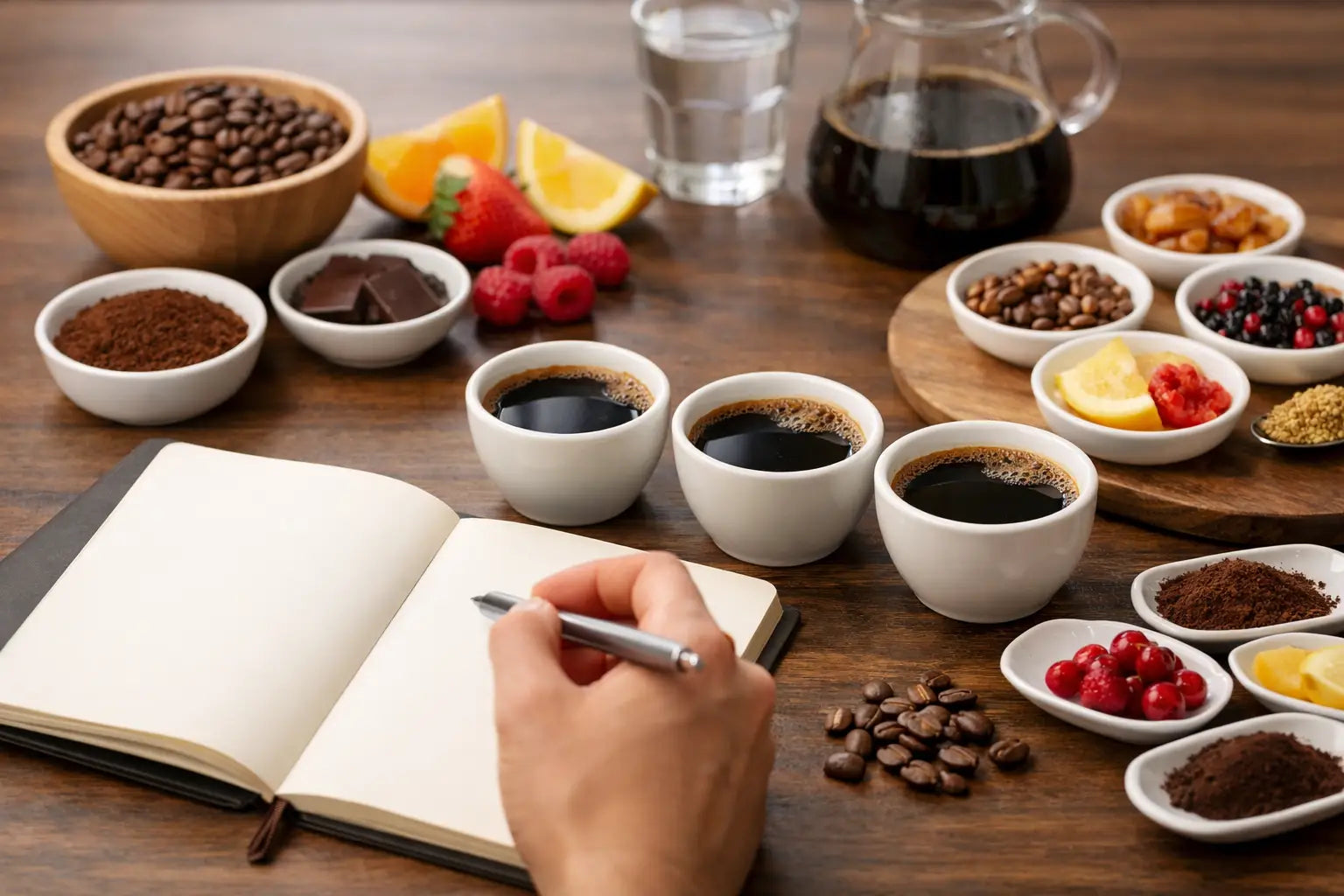
The best way to get better at this is to slow down with one cup. Smell the dry grounds first. Brew the coffee and take a sip once it cools slightly. Ask yourself a few easy questions. Does it feel bright or mellow? Sweet or dry? Does it remind you more of fruit, chocolate, nuts, flowers, or spice?
You do not need to identify exact words right away. Broad categories are enough. Over time, your palate will get sharper. You will begin to notice the difference between lemon and orange, cocoa and milk chocolate, or jammy berry and fresh berry.
A side-by-side tasting can help even more. Brew two coffees with different note profiles and compare them. One might taste like citrus and tea, while the other leans toward caramel and almond. Contrast makes flavor easier to understand.
If you are serving coffee for family or guests, this can become part of the ritual. It invites conversation and turns an ordinary cup into something shared and memorable.
The trade-off between precision and enjoyment
There is a point where tasting language can become too technical. That is worth saying clearly. Coffee should still feel welcoming. If a bag lists five highly specific notes, you do not need to hunt for every one of them to enjoy the coffee.
Sometimes the most useful interpretation is the simplest one. Bright and fruity. Sweet and chocolatey. Floral and light. Rich and comforting. Those broad impressions are often enough to guide a great purchase.
At House Coffee, that balance matters. Specialty coffee should feel elevated, but never distant. The best tasting notes do not talk over you. They help you choose a coffee that fits your mornings, your table, and the moments you want to create around a fresh cup.
The next time you read blackberry, toffee, or jasmine on a bag, treat those words as an invitation rather than a puzzle. Trust your preferences, stay curious, and let your palate grow one cup at a time.