Coffee Bean Roast Date Importance Explained
That bag with a beautiful origin note and a high score can still disappoint if one small detail is off. Coffee bean roast date importance becomes obvious the moment a promising coffee brews flat, sharp, or strangely lifeless at home. For anyone who wants richer mornings and café-level flavor from their own kitchen, the roast date is not a minor label detail. It is one of the clearest clues to how the coffee will taste in the cup.
Why coffee bean roast date importance matters
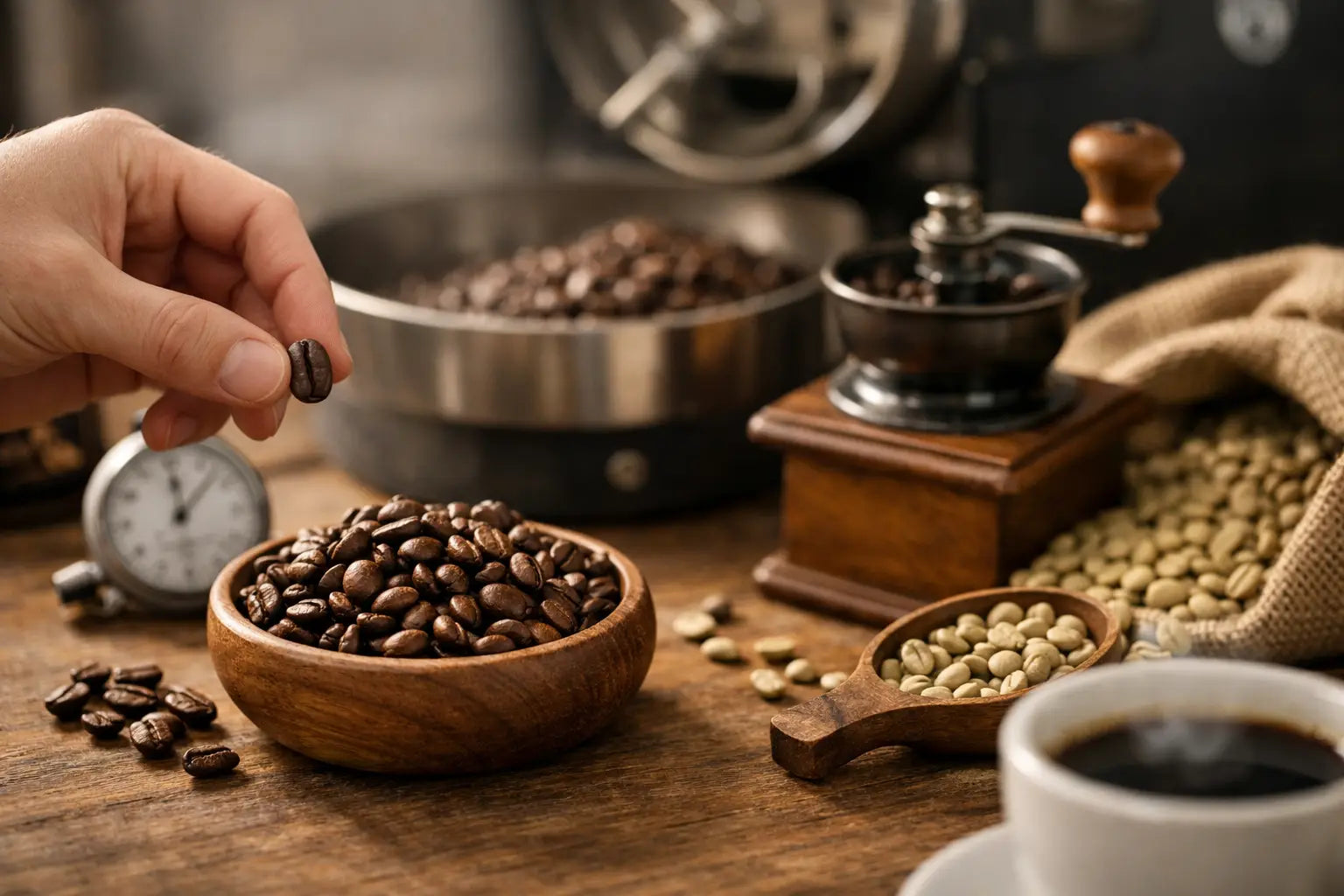
Coffee is an agricultural product, but it is also a freshly roasted food. Once beans are roasted, they begin to change. Aromatic compounds start to fade, carbon dioxide leaves the bean, and oxygen slowly alters the oils and flavor molecules that make a coffee taste sweet, vibrant, and expressive.
That does not mean coffee is "bad" a week after roasting or useless after two. It means flavor moves through a window. At one point it may be too fresh and unsettled. Later it reaches a sweet spot where acidity, sweetness, body, and aroma feel more complete. Leave it too long, and the cup can lose clarity, depth, and that comforting sense of life that makes specialty coffee feel special.
This is why a roast date matters more than a generic best-by date. A best-by date tells you when a product is likely still acceptable. A roast date tells you where the coffee is in its actual flavor journey.
Roast date vs. best-by date
If you shop for coffee online or in stores, you will see both styles of labeling. The difference is bigger than it looks.
A roast date tells you when the beans were roasted. That gives you real context. You can estimate how fresh the coffee is, when it may taste best, and how quickly you should use it.
A best-by date is less precise. It often stretches far beyond the point when a specialty coffee tastes its best. For lower-quality coffee, that may be enough. For premium single origin Arabica or a carefully built blend, it does not tell you what you really want to know - whether the coffee is still in its prime.
For home brewers who care about flavor, the roast date is the more useful signal every time.
What happens to coffee after roasting
Freshly roasted coffee is active. In the first days after roast, beans release gases in a process called degassing. This matters because trapped gas can interfere with extraction. Espresso in particular can run unevenly when beans are extremely fresh, producing shots that look dramatic but taste underdeveloped or unstable.
As beans rest, they often become easier to brew consistently. Flavors can open up. Fruit notes become clearer, chocolate tones feel fuller, and sweetness can become more integrated. This is one reason many specialty roasters recommend waiting a few days before brewing, especially for espresso.
Then the curve changes. Over time, exposure to oxygen gradually dulls the coffee. The brightest aromatics fade first. Sweetness can flatten. A once-layered cup may start tasting woody, papery, or simply tired. You still get coffee, but not the kind of cup that creates those quiet, cherished moments at home.
When coffee tastes best after roast
There is no single perfect number of days for every coffee. Processing method, roast level, density, and brew method all affect the ideal window. Still, some broad ranges are useful.
For drip coffee, pour over, and French press, many coffees show beautifully from about 4 to 14 days after roast. Some stay excellent longer, especially if stored well. Bright single origins may keep evolving in interesting ways through the second or even third week.
For espresso, many coffees benefit from a little more rest. A common sweet spot is around 7 to 21 days after roast. Some dense, lightly roasted coffees improve even later. If you have ever pulled a sour, overly fizzy shot from beans roasted yesterday, you have already seen why patience matters.
Darker roasts can sometimes feel ready sooner, while lighter specialty roasts may need more time. This is where craft roasting makes a difference. A carefully roasted coffee with strong green coffee quality often has a more rewarding and stable flavor arc.
How roast date affects flavor in the cup
The clearest reason to care about coffee bean roast date importance is simple: you can taste it.
Beans that are too fresh may taste uneven. You might notice sharp acidity, excessive crema, or cups that seem aromatic but not yet harmonious. This is especially common with espresso.
Beans in their peak window tend to taste balanced and expressive. Acidity feels lively rather than sour. Sweetness is easier to find. Body becomes more polished. Origin character comes through with more confidence, whether that means stone fruit, cacao, florals, caramel, or toasted nuts.
Beans that are too old often lose the details that made them worth buying in the first place. You may still get bitterness and roast character, but less nuance. A beautiful single origin can start tasting generic. That is disappointing when you chose the coffee for its story, its grower, and its carefully developed profile.
Buying coffee online? Roast date matters even more
When you buy from an online specialty coffee brand, you are not picking a bag off a shelf and guessing how long it has been there. You are trusting the roaster to send coffee with real freshness and a useful brewing window ahead of it.
That is one reason small-batch roasting matters. Fresh roasting allows coffee to arrive with flavor still intact and enough life left for you to enjoy it at home over the coming days and weeks. It also respects the coffee itself. Ethically sourced, high-scoring beans deserve to be brewed when their quality can actually be tasted.
For many coffee lovers, this is the difference between routine caffeine and a daily ritual that feels warm, grounding, and elevated.
How to use the roast date at home
A roast date is only helpful if you know what to do with it. Start by matching your brewing method to the coffee's age.
If your beans were roasted very recently, give them a short rest before brewing, especially for espresso. If you brew filter coffee, you can usually start sooner, then track how the flavor changes day by day. Some cups will be brighter at first and sweeter later. Paying attention helps you learn your own preferences.
It also helps to buy in quantities you can finish while the coffee is still tasting lively. A huge bag may seem practical, but if it takes too long to use, freshness becomes the trade-off. For many households, smaller bags more often deliver better flavor than one oversized purchase.
Storage matters too. Keep beans in a sealed container away from heat, light, moisture, and frequent air exposure. Freezing can work for longer storage if done carefully in well-sealed portions, but for daily use, a cool pantry and an airtight bag or container are usually enough.
Signs your coffee is past its best
Not every older coffee is terrible, and not every fresh coffee is perfect. Still, a few signs often point to age.
If the aroma from the bag seems faint or dusty, that is one clue. If brewed coffee tastes flat, hollow, or strangely papery, age may be part of the issue. Espresso that suddenly loses crema and complexity can also suggest the beans are beyond their prime, though grinder settings and dose still matter.
This is where context matters. A darker roast may still taste bold after a long period, but much of its nuance may be gone. A delicate washed Ethiopian coffee may reveal age sooner because its floral and citrus notes are more fragile. The goal is not to chase perfection obsessively. It is to give good coffee a fair chance to shine.
Freshness is important, but it is not everything
A recent roast date does not automatically guarantee a great cup. Poor green coffee, weak roasting, bad storage, or sloppy brewing can still lead to disappointing results. Freshness works best as one quality marker among several.
Look at the whole picture: origin, roast style, sourcing ethics, roast transparency, and whether the coffee was crafted for flavor rather than shelf life alone. Specialty coffee earns its place through the combination of these details.
That is why truly memorable coffee feels different. It is not just fresh. It is thoughtfully sourced, carefully roasted, and delivered in a window where its character can be enjoyed. That is the kind of coffee that turns a rushed morning into a pause worth keeping.
For anyone building a better home coffee ritual, the roast date is not a technical footnote. It is a practical way to protect flavor, honor the work behind the bean, and make each cup feel a little more like home. When you choose coffee with freshness in mind, you give yourself a much better chance of brewing something worth slowing down for.