Manual Grinder Buying Guide for Better Coffee
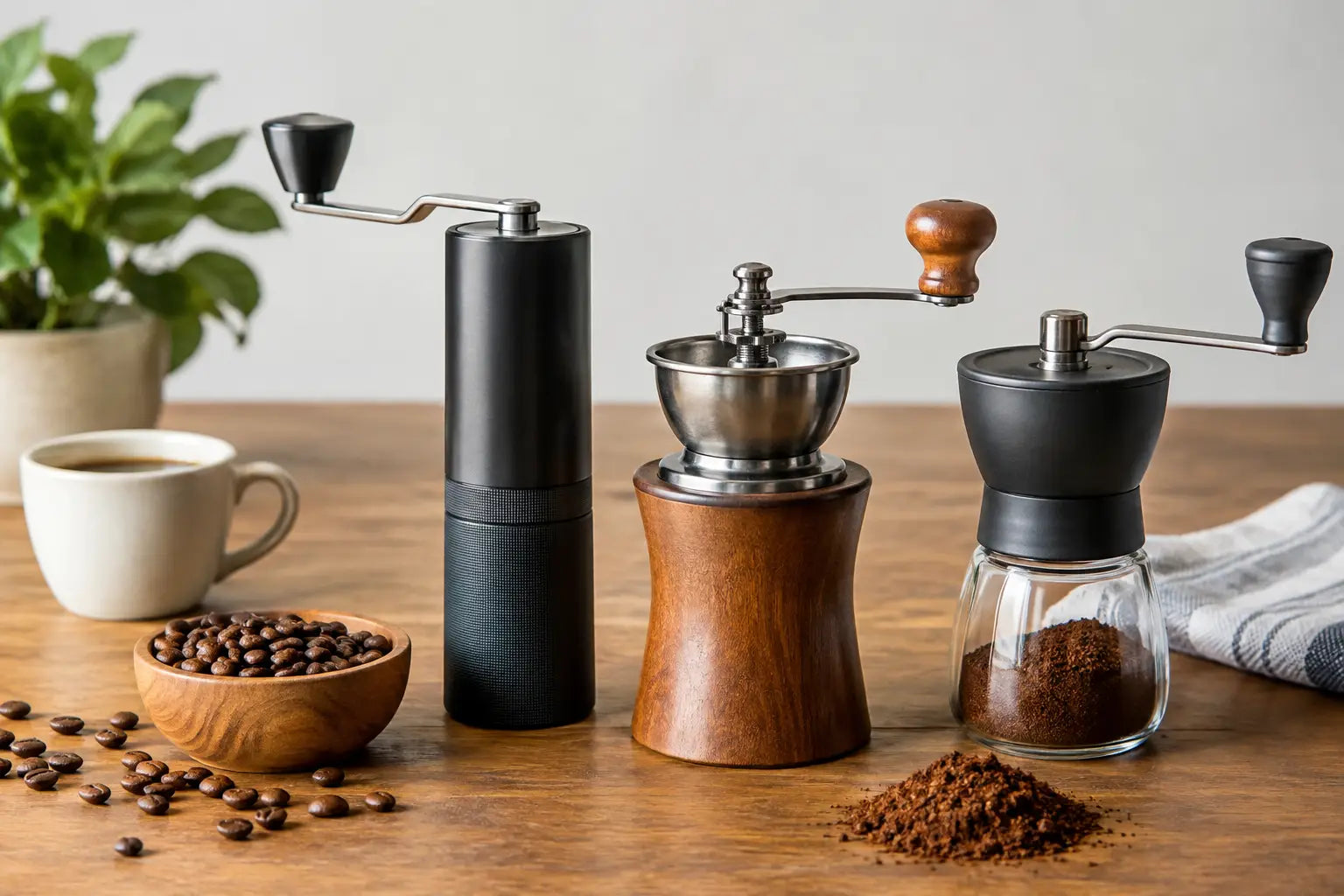
A great coffee grinder changes more than the texture of your grounds. It changes the morning: the aroma that fills the kitchen, the clarity in your first sip, and the small satisfaction of making something beautiful by hand. This manual grinder buying guide will help you choose a grinder that brings out the best in freshly roasted specialty coffee, whether your ritual is a quiet pour-over or espresso shared after dinner.
Why a Manual Grinder Is Worth Considering
Manual grinders ask for a little more effort than pushing a button, but they offer real advantages for home brewers. Many use high-quality burrs that produce a more even grind than inexpensive blade grinders. That consistency matters because evenly sized coffee particles extract at a similar pace, giving your cup more sweetness, balance, and definition.
They are also compact, quiet, and easy to take anywhere. A hand grinder can live in a small apartment kitchen, travel in a weekend bag, or become part of a campsite coffee routine. Without a motor, there is less noise between early mornings and a freshly brewed cup.
The trade-off is time. Grinding one serving for a pour-over is usually pleasant and quick, while preparing enough coffee for a large group can feel like a workout. A manual grinder is often the right fit for one or two daily drinkers who value the process. If you regularly brew for a household or make several espresso drinks back to back, an electric grinder may better suit your pace.
Manual Grinder Buying Guide: Start With Your Brew Method
The best grinder is not necessarily the most expensive one. It is the one that can produce the grind range and consistency your favorite brewer needs.
For French press, cold brew, and many drip coffee makers, you need a reliably coarse grind. These methods are forgiving, though too many fine particles can create a muddy cup or slow your press filter. A basic burr grinder can often perform well here.
Pour-over brewing demands more precision. Whether you use a cone dripper, flat-bottom brewer, or a full carafe setup, a consistent medium to medium-fine grind helps water move through the coffee evenly. Look for a grinder with clear adjustment steps and burrs known for producing fewer powdery fines. This is where a better hand grinder can make a noticeable difference in cup clarity, especially with nuanced single-origin coffees.
Espresso is the most demanding category. It requires very fine adjustments because a small shift in grind size can turn a balanced shot into one that runs too fast or chokes the machine. If espresso is your main goal, choose a manual grinder designed specifically for espresso, with fine, repeatable adjustment control. Not every grinder labeled “fine” can offer the precision needed for a 25- to 30-second shot.
Choose Burrs, Not Blades
A buying decision gets simpler when you know one rule: choose burrs over blades. Blade grinders chop beans into uneven pieces, creating a mix of boulders and dust. That unevenness makes it difficult to extract coffee evenly, often leading to a cup that tastes both sour and bitter.
Burr grinders crush beans between two precisely shaped surfaces. In a manual grinder, those burrs are usually conical, and they are commonly made from ceramic or steel.
Ceramic burrs stay sharp for a long time and do not transfer much heat while grinding. They can be a practical option for coarse brewing and occasional use. Steel burrs are typically sharper and more precise, making them a strong choice for pour-over and espresso. They also tend to grind faster. For a daily specialty coffee ritual, a well-made steel burr set is often worth the added investment.
Burr size matters, too. Larger burrs generally grind beans more quickly and can produce a more uniform result, but they may add weight and cost. A compact grinder with 38 mm burrs can be excellent for a single pour-over. Larger burrs become especially helpful if you grind for multiple cups or want to reduce the effort required for espresso.
Pay Attention to Adjustment Design
Grind adjustment is where a hand grinder becomes either a dependable brewing tool or a frustrating mystery. Some entry-level models use stepped adjustment, often controlled by a small dial or click system. Each click moves the burrs a set distance apart. This is easy to use, and it works well when you switch among common brew methods.
Stepless or micro-adjustment systems give you more freedom between settings. They are especially useful for espresso, where one click may be too coarse and the next may be too fine. The learning curve is slightly higher, but the ability to make tiny changes is valuable when dialing in a new coffee.
Look for an adjustment mechanism that is easy to access and remember. Exterior adjustment rings are convenient because you can make changes without taking apart the grinder. Internal adjustments can work beautifully, but you may need to count clicks carefully when moving between French press, drip, and espresso.
Think About Capacity and Daily Routine
Bean capacity should match the way you make coffee at home. A grinder that holds 20 to 25 grams is ideal for one generous mug or a two-cup pour-over. If you usually make coffee for two people, 30 to 40 grams provides more breathing room. For larger batches, a manual grinder with a bigger hopper may save time, though it will naturally be larger in your hand and cabinet.
It is also worth considering the grounds container. A threaded metal catch cup is secure and durable. A magnetic cup feels especially convenient during a sleepy morning routine, but make sure the magnet is strong and the cup stays stable while grinding. Glass containers look lovely but are less practical for travel or busy kitchens.
A useful habit is to weigh your beans before grinding. Freshly roasted coffee is easier to dial in when you use a consistent dose, and a small coffee scale makes that process simple. You do not need a large hopper if you measure each brew, which also helps protect the rest of your beans from unnecessary air exposure.
Comfort and Build Quality Matter More Than You Think
A beautiful grinder should feel good to use. Consider the shape of the body, the grip material, the length of the handle, and the smoothness of the turning motion. Narrow bodies are easier for smaller hands to hold. A longer handle provides more leverage, which is welcome when grinding light-roast beans for espresso.
Aluminum and stainless-steel bodies are durable, travel-friendly choices. Wood accents can add warmth to a coffee bar, while a textured silicone grip can make the grinder more comfortable and secure. Whichever finish you prefer, check that the central shaft has minimal wobble. A stable shaft helps keep the burrs aligned, which supports more even grinding.
Do not confuse a heavy grinder with a better grinder. Weight can signal solid construction, but it can also make a tool inconvenient to carry or use every day. The best choice balances quality with the way your coffee ritual actually happens.
Match the Grinder to Your Coffee
Fresh grinding gives specialty beans their best chance to shine, but the grinder cannot replace good coffee. Start with beans roasted recently and suited to your preferred brewing method. A bright, floral single origin may reward a clean, even pour-over grind, while a chocolate-forward blend can feel wonderfully comforting as a rich French press or espresso.
Light roasts are denser and usually require more force to grind. If you enjoy crisp, fruit-forward coffees, choose a grinder with sharp steel burrs and a comfortable handle. Medium and darker roasts are easier to grind, though they still benefit from consistent particles and careful adjustment.
Keep your grinder clean, especially when switching between coffees. Old grounds and oils can cling to burrs and subtly dull the flavors of a new bag. A soft brush is usually enough for routine care. Avoid washing burrs unless the manufacturer specifically permits it, and always make sure every part is fully dry before reassembling.
A Smart Budget for a Hand Grinder
Budget models can be a good introduction to burr grinding, particularly for French press or drip coffee. Their limitations often appear at finer settings, where inconsistent particles and vague adjustments can make pour-over or espresso less predictable.
Midrange grinders are often the sweet spot for daily home brewing. You can expect sturdier construction, sharper burrs, better ergonomics, and more dependable adjustment. Premium manual grinders make the most sense for serious pour-over enthusiasts, frequent travelers, and home espresso brewers who want repeatable precision without an electric machine.
Before choosing, ask yourself five practical questions: What do I brew most often? How many cups do I make at once? Will I travel with it? Do I want espresso capability? And will I enjoy hand-grinding each day? Your answers will narrow the field faster than feature lists ever can.
A manual grinder invites you to slow down just enough to notice the coffee in front of you. Pair it with freshly roasted beans, an honest dose, and a brew method you love, and even an ordinary morning can become a cherished moment at home.