Espresso Roast vs Filter Roast Explained
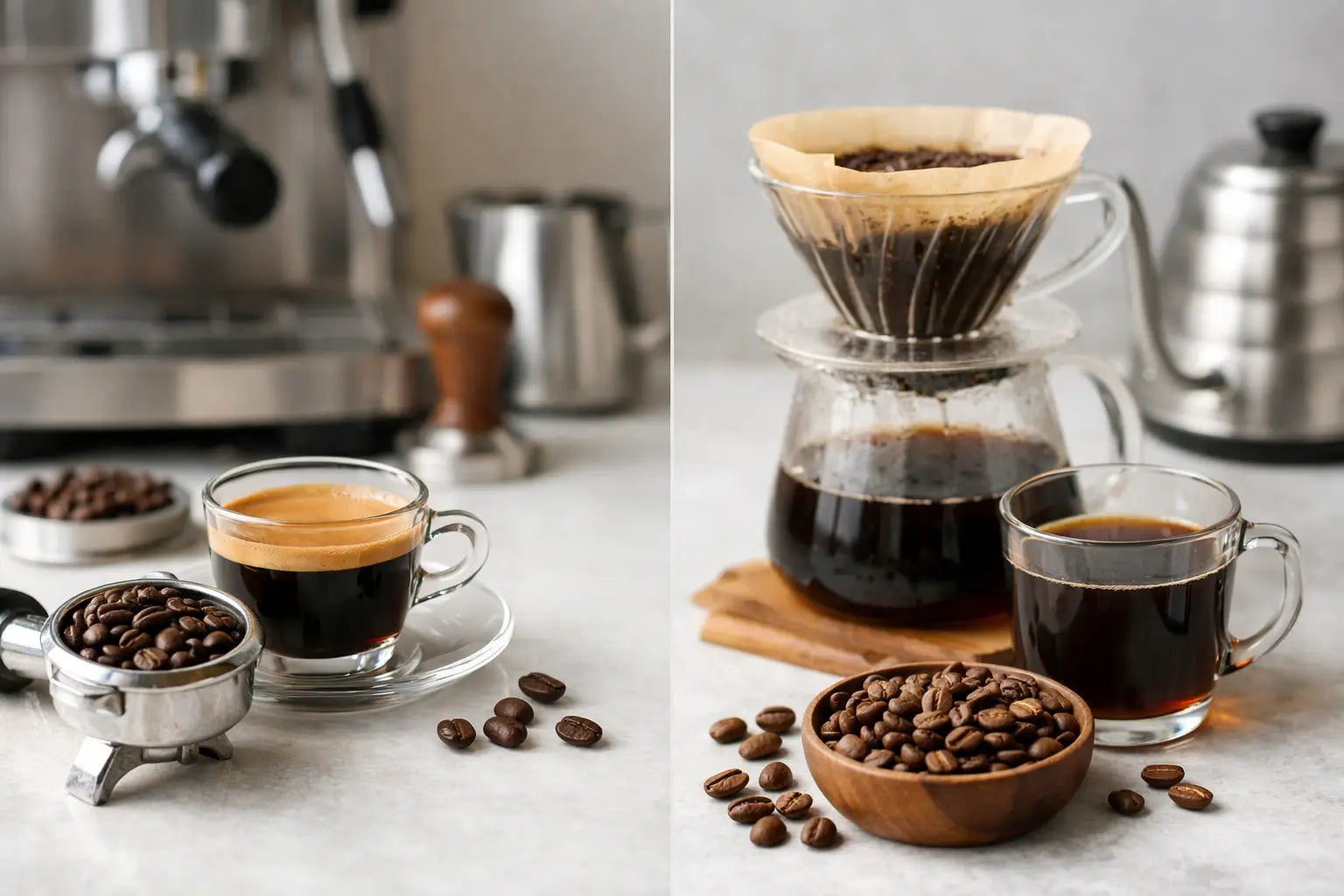
You can taste the difference before you know the jargon. One coffee pulls syrupy, deep, and concentrated through an espresso machine. Another opens up in a pour over with more sparkle, floral notes, or citrus sweetness. That is where the espresso roast vs filter roast conversation gets interesting - not as a hard rule, but as a roasting choice that shapes how a coffee feels in the cup and how easily it brews at home.
For anyone building a better coffee ritual, this matters. Roast style affects extraction, body, sweetness, and how forgiving a coffee feels with your brewer. If you have ever bought a bag labeled for espresso and wondered whether it would work in your drip machine, or picked up a light roast and struggled to dial it in as espresso, you are asking the right question.
Espresso roast vs filter roast: what changes in the roaster?
At the simplest level, espresso roasts are often developed a bit more than filter roasts. That usually means slightly longer roast development, a bit more caramelization, and lower perceived acidity. The goal is not necessarily to make the coffee dark. In specialty coffee, an espresso roast can still be medium or even on the lighter side. What matters more is that it is roasted to extract well under pressure and taste balanced in a concentrated format.
Filter roasts are often kept lighter to preserve clarity, acidity, and origin character. A washed Ethiopian coffee roasted for filter may highlight jasmine, lemon, and tea-like texture. Roast that same coffee further for espresso, and the profile may shift toward sweetness, heavier body, and softer edges. Neither is better. They simply serve different brewing experiences.
This is where many coffee bags can be misleading. Some brands use espresso roast to mean dark roast. Others use filter roast to mean light roast. In reality, roast level and brew intent overlap, but they are not identical. A thoughtful roaster is making choices around solubility, sweetness, and cup balance, not just color.
Why espresso usually needs a different roast profile
Espresso is intense by design. You are brewing with pressure, a fine grind, and a short contact time. That creates a small cup with concentrated flavor, where acidity feels sharper and roast flaws show up quickly. Because of that, coffees roasted for espresso are often shaped to be a little more soluble and a little easier to extract evenly.
More development can help soften high acidity and build sugars into notes of chocolate, caramel, nuts, and ripe fruit. It can also make the shot less likely to taste grassy, sour, or thin. For home espresso drinkers, that extra forgiveness matters. A coffee roasted specifically for espresso often gives you a wider sweet spot, especially if your grinder or machine is good but not commercial-level precise.
That does not mean all espresso should taste dark or smoky. Great modern espresso can be lively, fruit-forward, and transparent to origin. But even then, the roast profile is usually tuned to help those flavors land with sweetness and texture rather than sharpness alone.
The role of solubility
Solubility is one of the biggest practical differences. Darker or more developed coffees tend to dissolve more easily. Since espresso uses brief brew time, that can be helpful. Lighter filter-focused roasts are often denser and less soluble, which can make them harder to extract fully as espresso. The result can be a shot that looks beautiful but tastes underdeveloped.
If you are experienced, you can absolutely make excellent espresso with a lighter roast. You may just need a finer grind, higher brew temperature, longer ratio, or more patient dialing in. For many home brewers, that is a fun challenge. For many others, it is a frustrating Tuesday morning.
Why filter roast often tastes better with immersion and pour over
Filter brewing gives coffee more room to speak clearly. Whether you use a Chemex, V60, batch brewer, or French press, the brew is less concentrated than espresso, so nuance becomes easier to taste. A filter roast often leans into that by preserving acidity, aroma, and distinct origin notes.
This is where single origin coffees can feel especially expressive. A carefully roasted filter coffee might show peach, honey, or bergamot in a way that would be harder to notice in a two-ounce espresso shot. The cup can feel cleaner, brighter, and more transparent.
That clarity is part of the appeal for coffee drinkers who want their morning cup to feel a little more intentional. You are not just chasing caffeine. You are tasting the work of the producer, the variety, the processing, and the roast.
Filter roast is not always light and sharp
There is a common idea that filter roast means sour, ultra-light coffee for experts only. Good filter roasting should not taste unfinished. Even a bright coffee needs enough development to create sweetness and structure. The best filter roasts still feel comforting. They just express comfort through balance and detail rather than weight and intensity.
For many households, this is why keeping both styles on hand makes sense. One coffee for the espresso machine and milk drinks. Another for slow weekend brews or a clean daily drip pot. Different moments, different pleasures.
Can you use espresso roast for filter coffee?
Yes, absolutely. An espresso roast can make a rich, easy-drinking filter cup, especially if you like fuller body, lower acidity, and notes like cocoa, toasted nuts, or brown sugar. It is often a smart choice for automatic drip machines because it tends to extract more easily and taste consistent without much fuss.
The trade-off is clarity. Compared with a filter-specific roast, you may lose some high-tone fruit or floral character. The cup can feel rounder and more blended. For some people, that is exactly the point.
If your idea of a comforting coffee ritual is a warm mug that tastes sweet, smooth, and familiar, an espresso roast can work beautifully as filter coffee. There is no rule against it.
Can you use filter roast for espresso?
You can, but this is where expectations matter. A filter roast used as espresso can taste vivid and exciting, with berry, citrus, or tea-like complexity. It can also taste sharp, salty, or under-extracted if your setup is not dialed in carefully.
Lighter roasts usually need more precision. You may need to grind finer than expected, extend your shot ratio, or increase brew temperature. Milk can also change the equation. A bright, delicate filter roast may taste amazing as a straight shot but disappear in a latte.
For home brewers who enjoy experimenting, using filter roast for espresso can open a new side of specialty coffee. For people who want dependable morning shots with less trial and error, espresso-focused roasts are usually the friendlier choice.
How to choose the right roast for your brewing style
Start with your brewer, but do not stop there. Think about the cup you actually enjoy drinking.
If you use an espresso machine most days, especially for cappuccinos or lattes, look for coffees roasted for espresso or described with balanced, sweet, chocolate-forward notes. They tend to be easier to dial in and more satisfying in milk.
If you brew pour over, drip, or French press and you love tasting origin character, choose a filter roast or a coffee described as bright, clean, floral, or fruit-forward. Those profiles often shine in longer brews.
If you move between both brewing methods, a versatile medium roast can be the sweet spot. Some specialty coffees are intentionally roasted to work across espresso and filter, especially balanced blends or approachable single origins. Freshness matters here too. Freshly roasted coffee with strong sourcing and careful roast development will usually give you better range no matter how you brew it.
At House Coffee, that is part of what makes small-batch specialty coffee so rewarding at home. When the beans are fresh, ethically sourced, and roasted with purpose, the cup feels less like a compromise and more like a choice.
The label matters less than the intent behind it
The best way to think about espresso roast vs filter roast is as a guide, not a law. Good roasters are responding to the coffee itself - its density, moisture, variety, process, and flavor potential. Some coffees become stunning, syrupy espresso with a bit more development. Others are at their most beautiful as a crisp, transparent filter roast. Some can do both.
So read the label, but also read the tasting notes and trust your palate. If you love body, sweetness, and comfort, you may lean toward espresso-style roasts even for drip. If you want brightness and detail, filter roasts may feel more alive in your cup.
Coffee at home should feel personal, not intimidating. The right roast is the one that suits your brewer, your taste, and the kind of moment you want to create. Sometimes that means a bold morning shot. Sometimes it means a slow pour over by the window. Both belong in a well-loved kitchen.
The good news is that you do not need to choose a side forever. Try both, taste with intention, and let your favorite cup tell you where to go next.