Cold brew's real influence in specialty coffee culture
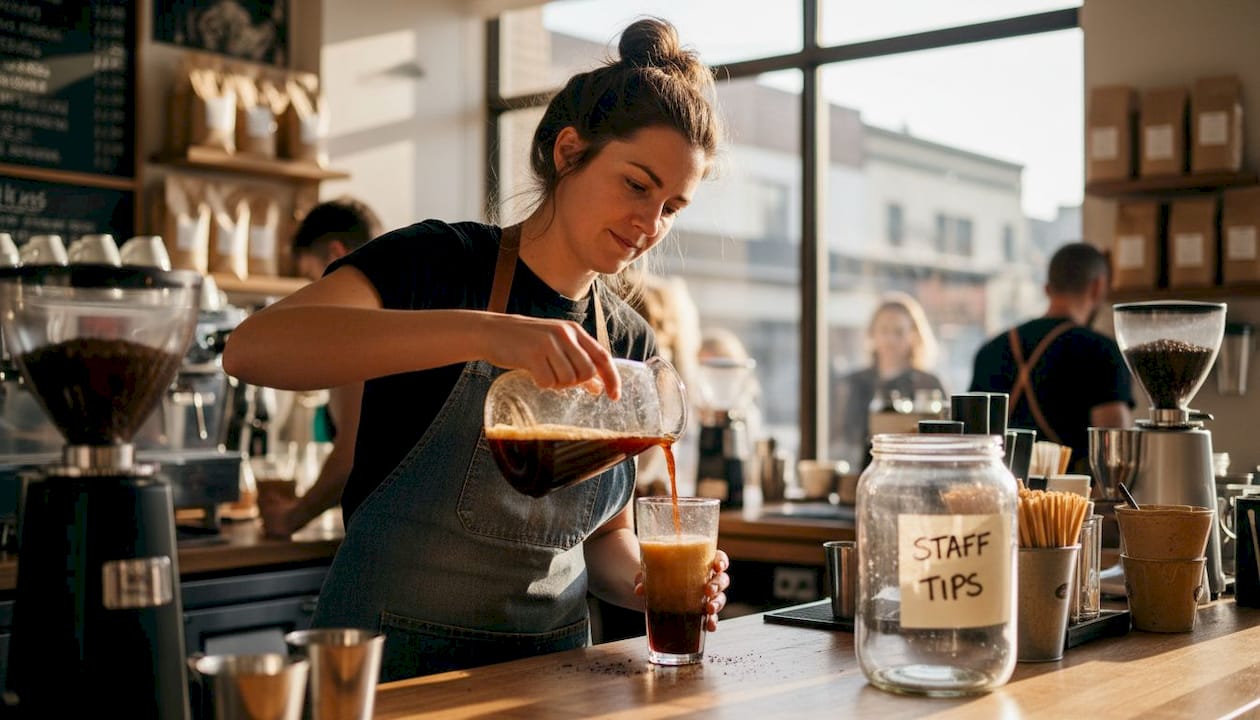
Cold brew has a reputation problem. Most people write it off as a watered-down summer drink, something you grab from a gas station cooler when it’s too hot for espresso. That assumption misses the entire point. Cold brew is one of the most technically demanding, flavor-revealing methods in the specialty coffee world, and its global rise from niche origins to mainstream café staple is a story worth knowing. If you care about what’s in your cup, this one will change how you think about cold extraction entirely.
Table of Contents
- Tracing cold brew’s journey in specialty coffee
- How cold brew is made: methods and craft
- The science behind flavor: variables that matter
- Innovation and trends: why cold brew matters in 2026
- Elevate your cold brew at home
- Frequently asked questions
Key Takeaways
| Point | Details |
|---|---|
| Cold brew’s specialty rise | Cold brew evolved from a niche process to a creative staple in specialty coffee culture. |
| Variable control matters | Grind size, roast, time, and dilution dramatically shape cold brew’s flavor and body. |
| Innovation drives trends | Nitro, ready-to-drink, and unique infusions define how cold brew pushes boundaries in 2026. |
| Craft at home | With the right beans and method, you can create delicious, café-level cold brew yourself. |
Tracing cold brew’s journey in specialty coffee
Cold brew’s story doesn’t start at a trendy café in Brooklyn. It starts centuries earlier, with Dutch traders steeping coffee in cold water to preserve it on long sea voyages. That technique traveled to Japan, where it was refined into the slow, meditative Kyoto drip method, a process where cold water drips through coffee grounds one drop at a time over several hours. The result was a clean, nuanced cup that Japanese coffee culture embraced as an art form.
The method didn’t reach American kitchens in any practical way until 1964, when Todd Simpson invented the Toddy cold brew system. That device made batch brewing accessible and gave cafés a repeatable, commercial-scale process. For decades, cold brew remained a niche product, mostly used to make coffee concentrate for mixing or for people with sensitive stomachs who needed something lower in acidity.
The third wave specialty coffee movement changed everything. When roasters and baristas started treating coffee with the same seriousness as wine, cold brew became a vehicle for showcasing single-origin character. A light Ethiopian Yirgacheffe brewed cold reveals florals and stone fruit that hot brewing can actually suppress. Suddenly, cold brew wasn’t just a summer menu item. It was a year-round, premium expression of craftsmanship in premium brewing.
“Cold brew’s evolution from a preservation technique to a specialty showcase mirrors the broader story of coffee culture itself: patience, precision, and a refusal to settle for ordinary.”
Here’s a quick look at how cold brew’s role has shifted across different eras:
| Era | Method | Primary purpose |
|---|---|---|
| 17th century | Dutch cold steep | Preservation on sea voyages |
| 19th to 20th century | Kyoto drip | Artisan café culture in Japan |
| 1960s | Toddy system | Commercial concentrate production |
| 2000s to present | Immersion and drip | Specialty flavor expression |
For anyone building their palate, understanding this specialty coffee selection guide is a natural next step after appreciating cold brew’s roots.
How cold brew is made: methods and craft
Cold brew is fundamentally different from every other brewing method you know. It’s not about heat forcing extraction. It’s about time. Steep coarse-ground coffee in cold or room-temperature water for anywhere between 12 and 24 hours, then filter out the grounds. That’s the core process. But the variables inside that process are where craft and science collide.
Here’s the standard cold brew process broken down step by step:
- Choose your coffee. Single-origin Arabica beans with clear flavor notes work best. You want something that has a story to tell.
- Grind coarse. Think sea salt texture. A fine grind increases surface area and leads to over-extraction, which means bitterness.
- Set your ratio. A 1:8 coffee-to-water ratio by weight is a reliable starting point for a drinkable brew. For concentrate, go 1:4.
- Steep. Room temperature speeds extraction slightly, but the fridge is safer for hygiene over long steeps. Most specialty brewers prefer cold steeping for clarity.
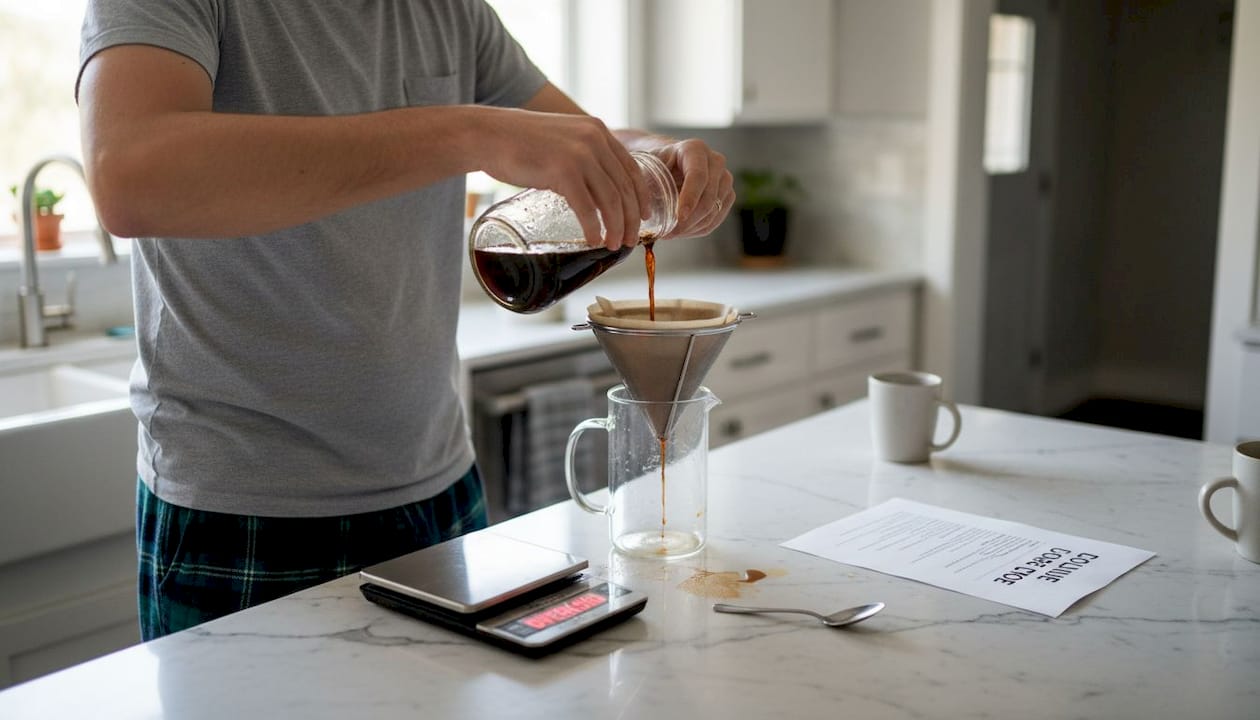
- Filter twice. First through a mesh filter, then through a paper filter or fine cloth. This removes sediment and produces a clean, bright cup.
- Dilute and serve. Concentrate needs dilution, usually 1:1 with water or milk.
The biggest mistake most home brewers make is skipping the double-strain. A single mesh filter leaves fine particles in suspension, which continue extracting and turn your brew muddy and bitter within 24 hours.
Pro Tip: Always double-strain your cold brew. The first pass through a metal mesh removes the bulk of the grounds. The second pass through a paper filter pulls out the fine particles that cause bitterness and cloudiness. Your brew will stay clean and sweet for up to two weeks in the fridge.
For a deeper look at specialty cold brew techniques and how they compare to other methods, it’s worth exploring how extraction variables interact across different best brewing methods.
The science behind flavor: variables that matter
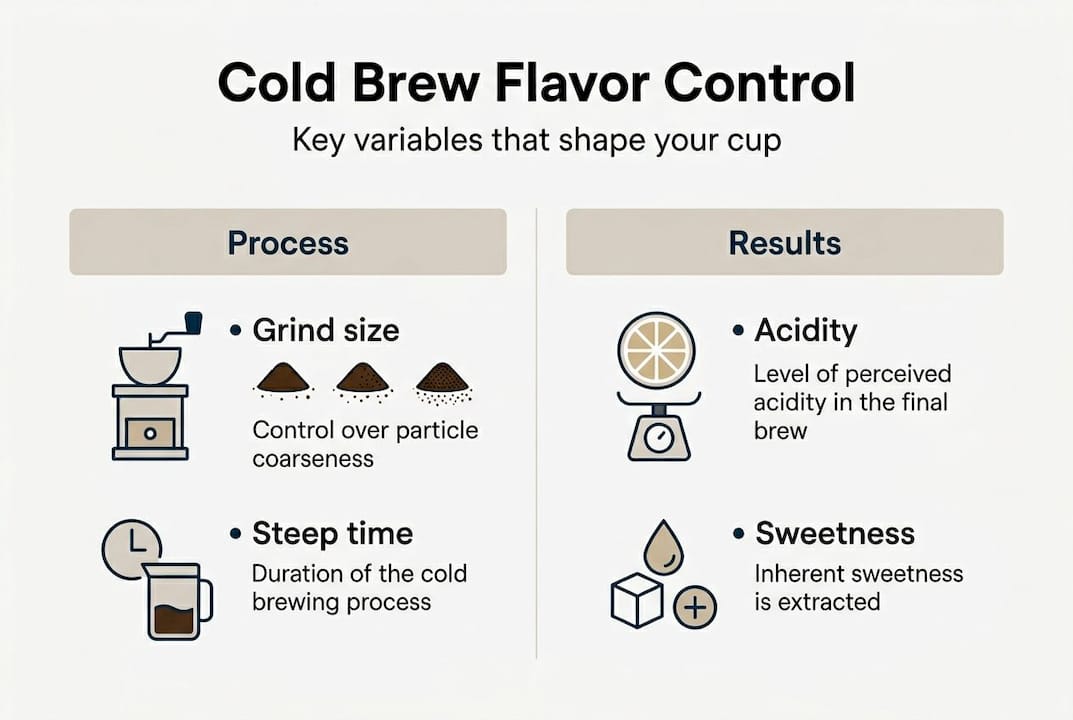
Once you understand the method, the real fun begins. Cold brew’s flavor profile isn’t fixed. It’s a direct result of the choices you make before a single drop of water touches the grounds. Grind size, roast level, steep time, and water quality all push and pull the final cup in different directions.
Here’s how the key variables interact:
| Variable | Too low or too fine | Sweet spot | Too high or too coarse |
|---|---|---|---|
| Grind size | Over-extraction, bitterness | Coarse, sea salt texture | Under-extraction, weak flavor |
| Steep time | Thin, sour, underdeveloped | 12 to 18 hours | Bitter, harsh, muddy |
| Coffee-to-water ratio | Watery, flat | 1:8 for brew, 1:4 for concentrate | Overpowering, syrupy |
| Roast level | Light roast can taste thin cold | Medium roast for balance | Dark roast goes flat and ashy |
The numbers behind a great cold brew are more precise than most people realize. Optimal TDS sits between 1.88 and 2.06% with an extraction yield around 70%. TDS, or total dissolved solids, is a measure of how much coffee material has dissolved into your water. Too low and the cup tastes hollow. Too high and it becomes aggressive and unpleasant.
Statistic to know: A TDS of 1.88 to 2.06% is the target range for specialty-grade cold brew. Most home brews fall well below this, which is why they taste thin compared to café versions.
Roast choice matters more in cold brew than in almost any other method. Medium roasts hit the sweet spot because they retain sweetness and chocolate notes without the flatness of a dark roast or the fragility of a light roast under cold extraction. If you’re selecting beans for cold brew, prioritize medium roasts from origins known for caramel, nut, or stone fruit notes.
Pro Tip: If your cold brew tastes sour or thin, your steep time is too short or your grind is too coarse. If it tastes bitter and muddy, you’ve gone too long or ground too fine. Adjust one variable at a time so you can actually track what changed.
Innovation and trends: why cold brew matters in 2026
Cold brew’s technical foundation makes it one of the most adaptable formats in coffee. That adaptability is exactly why it keeps driving innovation across the specialty coffee landscape. In 2026, the format is more creative and more serious than ever.
Here’s what’s defining cold brew culture right now:
- Nitro cold brew. Infusing cold brew with nitrogen gas creates a creamy, Guinness-like texture with a cascading pour. No milk needed. The mouthfeel is thick and velvety, and the sweetness perception increases without adding sugar.
- Ready-to-drink (RTD) formats. Canned and bottled cold brew has exploded as a retail category. Specialty roasters are now releasing RTD products that showcase single-origin beans with full traceability on the label.
- Single-origin showcases. Cold brew strips away the masking effect of heat, making it one of the clearest windows into a bean’s terroir. A Guatemalan Huehuetenango brewed cold will taste noticeably different from an Ethiopian Sidama, and specialty cafés are leaning into that contrast.
- Creative toppings and foams. Salt cream, oat milk foam, and flavored syrups made from real ingredients are showing up on cold brew menus as a way to layer complexity without hiding the coffee underneath.
- Cold brew vs. iced coffee. Iced coffee is brewed hot and chilled, which preserves brightness and acidity. Cold brew is smoother, fuller, and lower in acidity. Neither is better. They’re different tools for different flavor goals.
What makes cold brew genuinely exciting is its range. A first-time specialty coffee drinker finds it approachable because it’s smooth and naturally sweet. An experienced taster finds it fascinating because it reveals terroir and processing notes that other methods blur. Understanding specialty coffee terminology like terroir, processing, and extraction yield helps you get more out of every cold brew you make or order.
Elevate your cold brew at home
Everything you’ve read here points to one thing: the quality of your cold brew starts with the quality of your beans. Technique matters, but even perfect extraction can’t create flavor that isn’t there to begin with. That’s where sourcing makes all the difference.
At House Coffee, we source single-origin Arabica beans with the traceability and freshness that cold brew demands. Our Gold, Diamond, and Limited Edition collections each bring distinct origin profiles that shine under cold extraction. Whether you’re building your first cold brew setup or dialing in your ratio for a cleaner cup, our brewing essentials and detailed cold brew brewing guides give you everything you need to brew with confidence. Cold brew rewards patience and precision. We make sure you have the right beans to make that patience worth it.
Frequently asked questions
What makes cold brew different from regular iced coffee?
Cold brew is steeped in cold water for 12 to 24 hours, producing a smooth, full-bodied profile with lower acidity. Iced coffee is brewed hot and chilled, which keeps its brightness but also its sharpness.
What is the best coffee roast for cold brew in specialty coffee?
Medium roasts deliver the best balance of sweetness, chocolate, and body in cold brew. Dark roasts go flat and ashy under cold extraction, while light roasts can taste underdeveloped.
Is cold brew more caffeinated than other coffee styles?
Cold brew concentrate is very high in caffeine, but dilution is essential for a balanced cup. A standard 1:1 dilution brings it in line with a strong drip coffee.
How can I avoid bitterness in homemade cold brew?
Keep your steep under 24 hours, use a coarse grind, and double-strain for clarity. Over-steeping and fine grinds are the two most common causes of bitter, muddy cold brew.
Recommended
- Specialty Coffee – House Coffee
- How to Brew Specialty Coffee for Rich, Authentic Flavor – House Coffee
- Limited Edition Coffee: Why It Elevates Your Brew – House Coffee
- Seasonal Coffee Specials Wholesale | Limited Edition Roasts
-
Posted in
en, role of cold brew in specialty coffee