Understanding coffee body: a guide for enthusiasts

Most coffee lovers think body means bold or strong, but that’s a myth. Coffee body actually describes how the liquid feels in your mouth, not how intense the flavor tastes or how much caffeine hits your system. This tactile dimension transforms every sip into a sensory experience, from silky and light to creamy and syrupy. Mastering coffee body unlocks a deeper appreciation for specialty beans and empowers you to brew exactly the texture you crave. This guide breaks down what body really is, the science behind it, and practical ways to control and evaluate it at home.
Table of Contents
- Key takeaways
- What is coffee body and why does it matter?
- The science behind coffee body: what affects texture and weight
- How brewing techniques and coffee processing shape body
- Evaluating and appreciating coffee body: sensory scoring and tasting tips
- Explore specialty coffees that highlight distinctive body profiles
- What is the difference between coffee body and coffee strength?
Key Takeaways
| Point | Details |
|---|---|
| Definition of body | Body is the tactile fullness felt in the mouth and is independent of flavor intensity and caffeine strength. |
| Texture range | Body ranges from light and tea like to heavy and syrupy textures, shaping how the cup feels in your mouth. |
| What creates body | Body comes from suspended insoluble solids and emulsified lipids that affect viscosity and mouthfeel. |
| Influencing factors | Brewing method, roast level, and processing affect body, so you can tailor texture by adjusting brewing parameters. |
| Home evaluation | To evaluate body at home, experiment with different brewing methods and compare the texture across cups. |
What is coffee body and why does it matter?
Coffee body is the physical sensation you feel when coffee coats your tongue and palate. It’s the weight, thickness, and texture that linger after you swallow. Think of it as the difference between skim milk and heavy cream: one feels watery and light, the other rich and coating. Body exists entirely separate from flavor notes like chocolate or citrus and from strength, which measures total dissolved solids.
Common descriptors for body include watery, tea-like, silky, creamy, syrupy, buttery, and heavy. A light-bodied coffee might feel delicate and clean, while a heavy-bodied brew can feel almost oily or velvety. These textures shape your overall coffee experience just as much as taste does. A bright Ethiopian coffee with floral notes feels entirely different when brewed light-bodied versus full-bodied, even if the flavor profile stays similar.
Understanding body matters because it helps you choose beans and brewing methods that match your preferences. If you love the clean clarity of pour-over coffee, you’re probably drawn to lighter body. If you crave the richness of French press or espresso, you’re seeking heavier body. Recognizing this distinction lets you communicate with roasters, refine your palate, and brew with intention. Body also plays a critical role in professional coffee scoring, where judges evaluate texture quality alongside aroma and taste.
“Body is the tactile fullness perceived in the mouth, ranging from thin and watery to thick and creamy, independent of flavor intensity.”
Why does body deserve attention? Because it completes the sensory picture. Coffee flavor profiles explained often focus on taste and aroma, but texture adds a third dimension that elevates specialty coffee from good to extraordinary. A perfectly balanced cup harmonizes flavor, aroma, and body into a cohesive experience. When you learn to identify and appreciate body, you unlock a new layer of coffee enjoyment that most casual drinkers miss entirely.
Key reasons to care about body:
- It influences perceived quality and satisfaction independent of taste.
- Different brewing methods produce radically different body profiles.
- Body preferences vary widely, so understanding yours guides better purchasing decisions.
- Professional cupping scores body separately, recognizing its distinct contribution.
- Texture affects how flavors express themselves on your palate.
The science behind coffee body: what affects texture and weight
Coffee body emerges from specific chemical and physical properties in your brew. Body is primarily determined by suspended insoluble solids and emulsified lipids, affecting viscosity and turbidity. These components don’t dissolve like sugars or acids. Instead, they float in the liquid, creating thickness and mouthfeel. Insoluble fines are tiny coffee particles that pass through filters. Emulsified oils are lipids extracted from coffee beans that form microscopic droplets suspended in water.
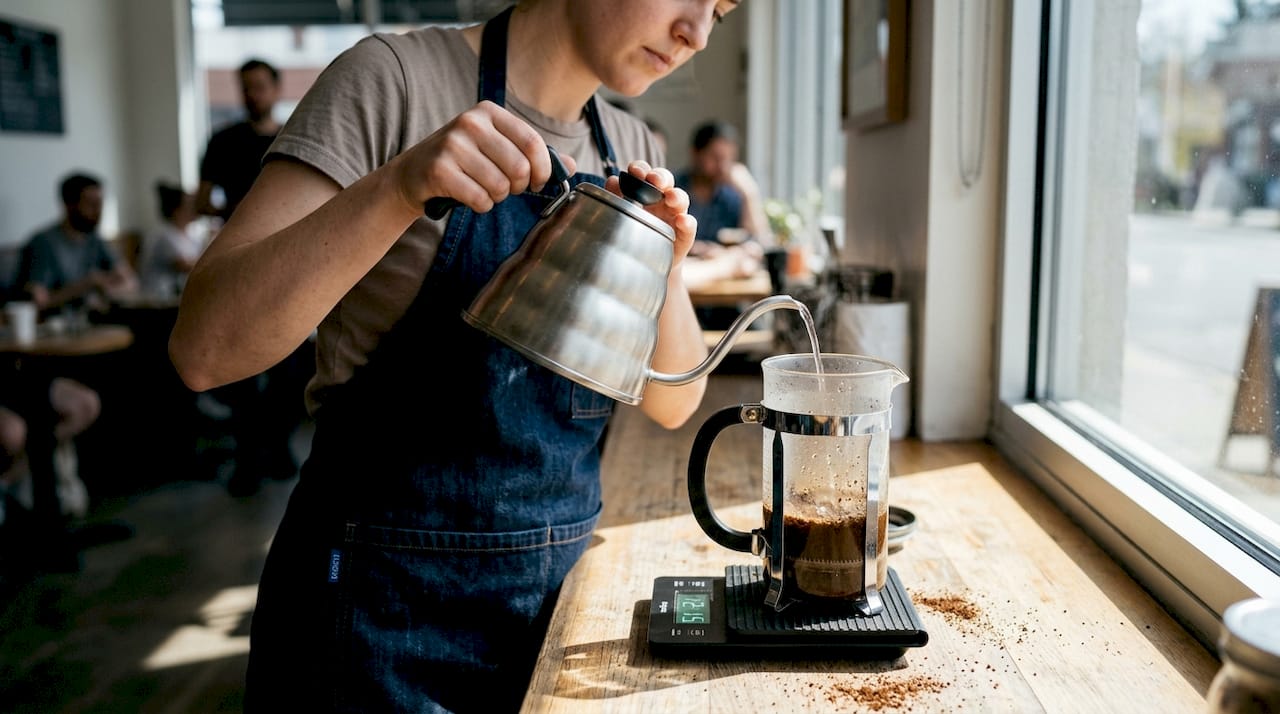
Viscosity measures how thick or resistant a liquid feels when it flows. Espresso viscosity is about double other brew methods due to oil droplets and polymers. This happens because high-pressure extraction pulls more oils and creates stable emulsions. Turbidity refers to cloudiness caused by suspended particles. A cloudy French press coffee has higher turbidity than a clean pour-over, directly correlating with heavier body.
Polymers like melanoidins form during roasting and contribute to viscosity. These complex molecules add thickness without affecting flavor directly. Protein-polysaccharide complexes stabilize oil droplets, preventing them from separating and maintaining that creamy texture. Together, these compounds create the physical sensation we call body.
| Brew Method | Viscosity (mPa·s) | Total Solids (%) | Body Character |
|---|---|---|---|
| Espresso | 2.8-3.2 | 8-12 | Heavy, syrupy, creamy |
| French Press | 1.4-1.6 | 1.2-1.5 | Full, rich, oily |
| Pour-Over | 1.1-1.3 | 1.2-1.4 | Clean, light, delicate |
| Drip Coffee | 1.2-1.4 | 1.1-1.3 | Medium, balanced |
| Cold Brew | 1.3-1.5 | 1.0-1.2 | Smooth, mellow |
Pro Tip: Choosing best coffee brewing methods 2026 based on desired body gives you more control than bean selection alone. A light Ethiopian coffee brewed as espresso will still have heavier body than a dark Sumatra brewed as pour-over.
The concentration of these compounds varies dramatically by brewing technique. Metal filters allow oils and fines to pass through freely, creating heavier body. Paper filters absorb oils and trap fine particles, yielding lighter body. Pressure extraction in espresso machines forces more oils into emulsion. Immersion methods like French press maximize contact time, extracting more solids and oils. Understanding these mechanisms lets you manipulate body intentionally rather than accidentally.
How brewing techniques and coffee processing shape body
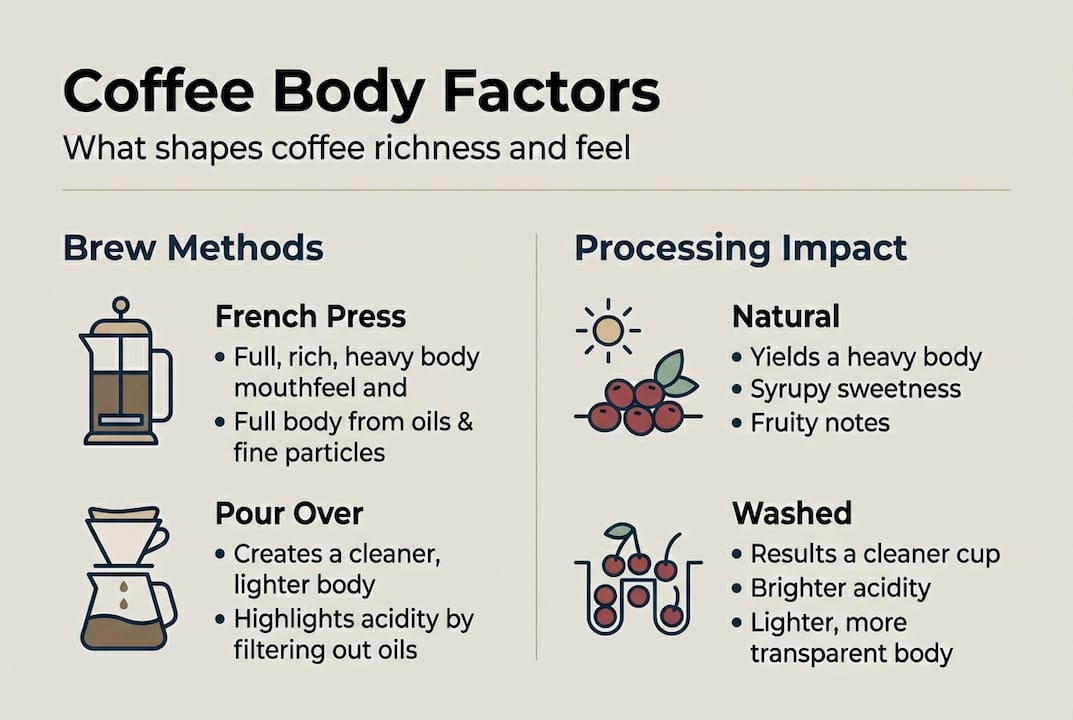
Your brewing choices directly control how much oil, solids, and polymers end up in your cup. French press and espresso produce heavier body due to oil and solids retention; paper filters yield lighter body by absorption. Metal mesh filters in French press let everything through. Paper filters in pour-over or drip machines trap oils and fine particles, creating a cleaner, lighter texture. Espresso uses pressure to emulsify oils that would otherwise float separately, producing that signature creamy body.
Grind size affects body by changing how many fine particles end up suspended in your brew. Finer grinds create more surface area and produce more fines, increasing viscosity and heaviness. Coarser grinds reduce fines and yield lighter body. This explains why espresso uses ultra-fine grinds while French press uses coarse grinds. Adjusting grind size within a single brewing method lets you fine-tune body without changing equipment.
Roast level influences body because darker roasts break down cell structures, releasing more oils. Light roasts retain more cellular integrity, producing less oil extraction. A dark roast brewed any method will generally have heavier body than a light roast brewed identically. This doesn’t mean dark roasts always taste better, just that they feel heavier in your mouth.
Coffee processing methods dramatically affect body before brewing even starts. Natural processing produces syrupy heavier body; washed processing lighter and tea-like. Natural processed coffees dry with the fruit still attached, allowing sugars and mucilage to ferment into the bean. This creates a fuller, more viscous texture. Washed coffees have fruit removed before drying, resulting in cleaner, lighter body. Honey processed coffees fall somewhere in between, with partial mucilage retention creating moderate body.
| Factor | Lighter Body | Heavier Body |
|---|---|---|
| Filter Type | Paper (absorbs oils) | Metal mesh (retains oils) |
| Grind Size | Coarser (fewer fines) | Finer (more fines) |
| Roast Level | Light (less oil release) | Dark (more oil release) |
| Processing | Washed (clean, minimal sugars) | Natural (syrupy, fermented) |
| Brew Method | Pour-over, drip | French press, espresso |
| Contact Time | Shorter extraction | Longer immersion |
Practical tips for adjusting body:
- Switch from paper to metal filters for instant body increase without changing beans.
- Grind slightly finer to add body, but watch for over-extraction bitterness.
- Experiment with top coffee brewing methods richer flavor to find your ideal texture.
- Try natural processed beans if you want syrupy richness.
- Choose washed coffees for delicate, tea-like clarity.
- Explore coffee roasting explained specialty flavor to understand how roast affects both taste and texture.
Pro Tip: Use metal filters for heavier body and paper for lighter, but remember quality matters too. A gritty, over-extracted heavy body tastes worse than a clean light body. Balance is key.
Evaluating and appreciating coffee body: sensory scoring and tasting tips
Professional coffee tasters use standardized methods to evaluate body objectively. SCA evaluates body on a 6-10 scale as part of 100-point coffee scoring system. Scores use 0.25 increments, with 6.0 representing acceptable commercial quality and 10.0 representing extraordinary body. Judges assess both intensity (light to heavy) and quality (smooth to astringent). A coffee can score high for having perfectly balanced medium body or exceptional heavy body, depending on the bean’s character.
The cupping slurp technique helps you evaluate body accurately. Take a spoonful of coffee and slurp it forcefully, spraying it across your entire palate. This aerates the liquid and coats your mouth, highlighting texture. Focus on how the coffee feels, not just how it tastes. Does it feel thin and watery? Silky and smooth? Creamy and coating? Syrupy and viscous? Notice how long the sensation persists after you swallow.
Body quality nuances (silky/smooth vs astringent/gritty) impact overall perception as much as intensity. A heavy-bodied coffee with gritty, chalky texture scores lower than a medium-bodied coffee with silky smoothness. Quality descriptors include:
- Silky: smooth, refined, luxurious texture
- Creamy: rich, coating, dairy-like mouthfeel
- Velvety: soft, plush, elegant texture
- Syrupy: thick, viscous, almost sticky
- Gritty: rough, sandy, unpleasant particles
- Astringent: dry, puckering, harsh sensation
Steps to practice evaluating coffee body at home:
- Brew the same coffee using three different methods (pour-over, French press, espresso if possible).
- Let each brew cool to the same temperature for fair comparison.
- Taste each one using the slurp technique, focusing only on texture.
- Write down body descriptors for each before moving to the next.
- Compare your notes and identify which method produced your preferred body.
- Repeat with different beans to calibrate your palate across varieties.
Tips to improve your body evaluation skills:
- Taste coffees side by side rather than in isolation for clearer contrasts.
- Practice with step by step coffee tasting guide specialty coffee home to develop systematic evaluation habits.
- Use reference beverages like water (lightest), tea (light), whole milk (medium), and cream (heavy) to anchor your scale.
- Join coffee cupping 85 percent flavor accuracy home baristas sessions to learn from experienced tasters.
- Keep a tasting journal tracking body alongside flavor notes to build pattern recognition.
- Focus on quality, not just intensity, when scoring body.
“The best coffee experiences balance body with flavor and aroma. A perfectly light-bodied Ethiopian floral coffee can be just as exceptional as a heavy-bodied Sumatran earthy brew when body matches the bean’s character.”
Developing body awareness takes practice, but it transforms how you experience coffee. You’ll start noticing subtle texture differences between beans, roasts, and brewing methods. This knowledge empowers you to brew intentionally, choosing techniques that highlight each coffee’s best qualities. Whether you prefer delicate clarity or rich creaminess, understanding body lets you craft your ideal cup every time.
Explore specialty coffees that highlight distinctive body profiles
Now that you understand how body works and how to control it, experience the difference firsthand. Our specialty coffee collection features beans specifically chosen for their distinctive body characteristics. From light-bodied Ethiopian naturals with silky floral notes to heavy-bodied Indonesian coffees with syrupy earthiness, each origin offers unique texture experiences.
Want to experiment with lighter body brewing? Our coffee paper filters deliver clean, delicate texture that lets subtle flavors shine. For enthusiasts ready to explore widely, buy specialty coffee wholesale options let you sample multiple body profiles and discover your preferences. Every bean tells a story through its texture, and we’re here to help you taste it.
What is the difference between coffee body and coffee strength?
What is the difference between coffee body and coffee strength?
Coffee body describes texture and mouthfeel, the physical sensation of weight and viscosity on your palate. Strength refers to the concentration of dissolved solids, measuring how intense the flavor tastes. You can have a light-bodied coffee that’s very strong in flavor or a heavy-bodied coffee that tastes mild, because these attributes operate independently.
How can I adjust my brewing to get a heavier or lighter coffee body?
Switch to a French press or metal filter to increase body by retaining oils and fine particles. For lighter body, use paper filters in pour-over or drip methods that absorb oils and trap solids. Adjust your grind finer for heavier body or coarser for lighter, but balance extraction to avoid bitterness or sourness.
Why does coffee from natural processing taste heavier than washed?
Natural processing leaves fruit and mucilage on the bean during drying, allowing sugars to ferment and penetrate the seed. This creates syrupy, heavier body with more viscosity. Washed coffees have fruit removed before drying, resulting in cleaner, lighter body with more delicate texture and clarity.
What scale is used to score body in specialty coffee cuppings?
The Specialty Coffee Association scores body on a 6 to 10 scale using 0.25 increments. This score forms part of the overall 100-point coffee evaluation system. Judges assess both body intensity (light to heavy) and quality (smooth to astringent), with higher scores indicating better balance and texture appropriate to the coffee’s character.
Recommended
- Explaining coffee flavor notes: a guide for enthusiasts – House Coffee
- Coffee Flavor Profiles Explained: Tasting the Difference – House Coffee
- What is coffee flavor profile? A 2026 guide for enthusiasts – House Coffee
- Coffee Cupping: 85% Flavor Accuracy for Home Baristas – House Coffee
- Organic Coffee Blends: A Smart Guide to Flavor Profiles and Choices – EcoVibe Roast
-
Posted in
en, understanding coffee body