Why invest in luxury coffee: value, experience, and impact
TL;DR:
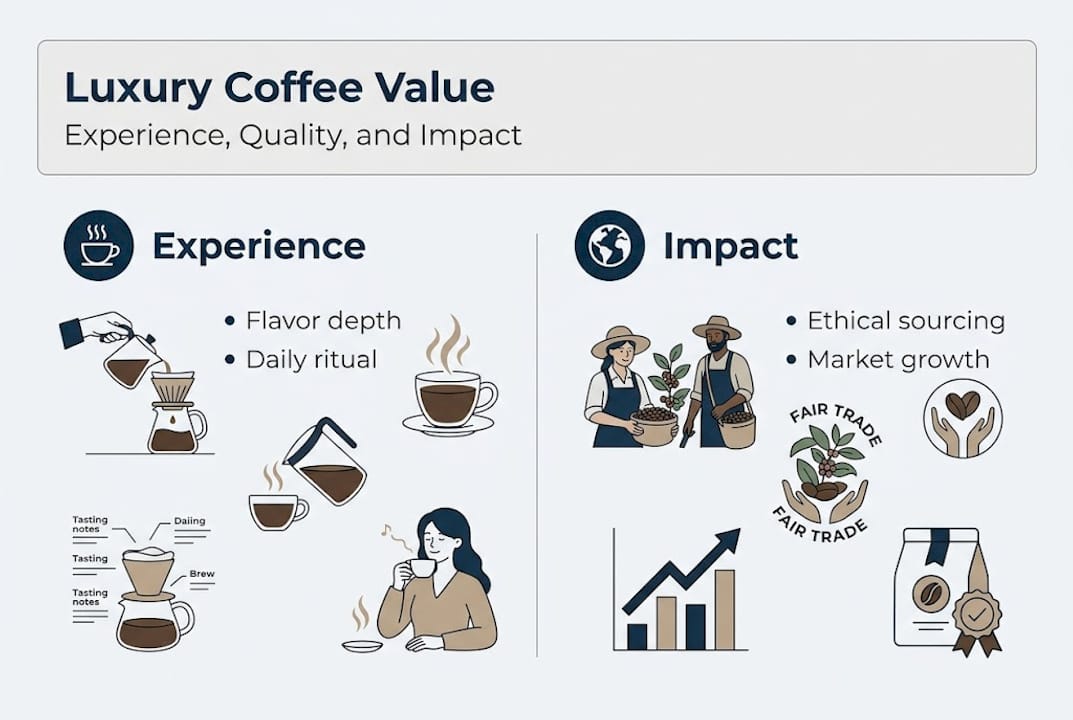
- The specialty coffee market is projected to reach nearly USD 180 billion by 2032, driven by health, ethics, and consumer sophistication. Higher-quality coffees with traceability and ethical sourcing offer better flavor, health benefits, and environmental impact. The true value lies in intentional purchasing and cultivating a mindful coffee ritual rather than just focusing on price.
The specialty coffee market hit USD 80.47 billion in 2024 and is on track to nearly double by 2032. That number alone should reframe how you think about your morning cup. Luxury coffee is no longer a niche obsession for barista competitions or obscure tasting menus. It has become a serious lifestyle choice, a gifting statement, and for many affluent consumers, a daily ritual with genuine returns on experience, health, and ethics. If you have ever wondered whether premium coffee is worth the investment, the answer is more layered and more compelling than you might expect.
Table of Contents
- Understanding the luxury coffee market and its growth
- Taste, quality, and the science of coffee excellence
- Ethical sourcing, rarity, and impact: investing with conscience
- Luxury coffee as lifestyle: ritual, gifting, and status
- Why the true value of luxury coffee is about more than price
- Discover your next luxury coffee experience
- Frequently asked questions
Key Takeaways
| Point | Details |
|---|---|
| Luxury coffee’s market growth | Specialty coffee is booming with affluent buyers driving demand for taste and ethics. |
| Taste and health advantages | Premium coffee delivers superior flavor, aroma, and health benefits due to quality sourcing. |
| Ethical and unique choices | Direct trade and traceability make luxury coffee an ethical, impactful, and rare experience. |
| Gifting and lifestyle value | Luxury coffee enhances your daily ritual and provides meaningful, high-status gifting options. |
| Sensible investment, not just price | Smart luxury coffee investments focus on ethical sourcing and sensory enjoyment, not simply high prices. |
Understanding the luxury coffee market and its growth
Not all coffee is created equal, and the market reflects that with remarkable clarity. At the base level, commodity coffee is traded on global exchanges, priced by volume, and optimized for consistency over character. Specialty coffee sits above that, defined by traceability, origin quality, and a scoring system that separates the exceptional from the ordinary. Ultra-premium coffee goes further still, featuring micro-lot harvests, auction-winning lots, and direct relationships between roasters and individual farms.
The specialty coffee market is growing at a CAGR of 9.77%, projected to reach USD 178.67 billion by 2032. That growth is not driven by casual drinkers switching brands. It is being fueled by a new class of discerning consumer who treats coffee the way previous generations treated wine: with curiosity, intention, and a willingness to pay for provenance.
What is driving this shift? Several forces are converging at once:
- Taste sophistication: Consumers are developing more refined palates and actively seeking flavor complexity.
- Provenance and traceability: Knowing the farm, the altitude, and the processing method matters deeply to today’s buyers.
- Ethical sourcing: Buyers want to know their purchase supports fair wages and sustainable farming.
- Freshness culture: The rise of small-batch roasting has made freshness a non-negotiable expectation.
| Coffee category | Scoring range | Price range per bag | Key characteristic |
|---|---|---|---|
| Commodity | Below 80 SCA | Under $10 | Volume-driven, blended |
| Specialty | 80 to 89 SCA | $15 to $35 | Origin-specific, traceable |
| Ultra-premium | 90+ SCA | $40 and above | Micro-lot, auction-grade |
Understanding these tiers helps you make smarter decisions. The benefits of specialty coffee extend well beyond taste, touching on health, ethics, and the overall experience of your daily ritual.
Taste, quality, and the science of coffee excellence
Once you understand the market landscape, the next question is what actually separates a truly exceptional cup from a merely good one. The answer lives in chemistry, craft, and a scoring system that takes the guesswork out of quality.
The Specialty Coffee Association uses an 100-point scale to evaluate coffee across attributes like aroma, flavor, aftertaste, acidity, body, balance, and uniformity. Any coffee scoring above 80 qualifies as specialty. Coffees above 90 are considered outstanding and are typically sold in limited quantities at premium prices. This is not arbitrary. Higher scores correlate directly with more complex and enjoyable flavor profiles.
Beyond taste, the science supports investing in quality. High-quality coffee retains bioactive compounds that benefit cardiovascular health, cognitive function, mood, and metabolism. Careful roasting preserves antioxidants that mass-production methods often destroy through over-roasting or poor storage. When you choose premium coffee, you are not just paying for flavor. You are getting a more nutritionally intact product.
Here is where it gets interesting. SCA scoring and direct trade traceability create a verifiable chain of quality from farm to cup, but there is a ceiling. Studies and expert tasters consistently find that taste ratings plateau somewhere in the $25 to $40 per bag range. Beyond that point, you are increasingly paying for rarity, story, and status rather than a proportionally better sensory experience.
“The best cup you will ever drink is not necessarily the most expensive one. It is the one sourced with care, roasted with precision, and brewed with attention.”
Pro Tip: When evaluating a luxury coffee, focus on the roast date rather than the price tag. Coffee is at its peak within two to four weeks of roasting. A $50 bag roasted three months ago will taste worse than a $20 bag roasted last week.
For those who want to develop their palate, a solid coffee tasting guide can transform how you evaluate and appreciate what is in your cup. And if you want a deeper look at what separates the truly exceptional, exploring what makes luxury coffee exceptional is a worthwhile read.
| Attribute evaluated | What it measures | Why it matters |
|---|---|---|
| Aroma | Fragrance before and after brewing | First indicator of complexity |
| Acidity | Brightness and liveliness | Signals origin altitude and variety |
| Body | Weight and texture in the mouth | Reflects processing and roast level |
| Aftertaste | Lingering finish | Marks quality and roast precision |
Ethical sourcing, rarity, and impact: investing with conscience
Taste and quality explain a significant portion of luxury coffee’s appeal. But for many of the most committed buyers, ethics and rarity are equally important drivers of value.
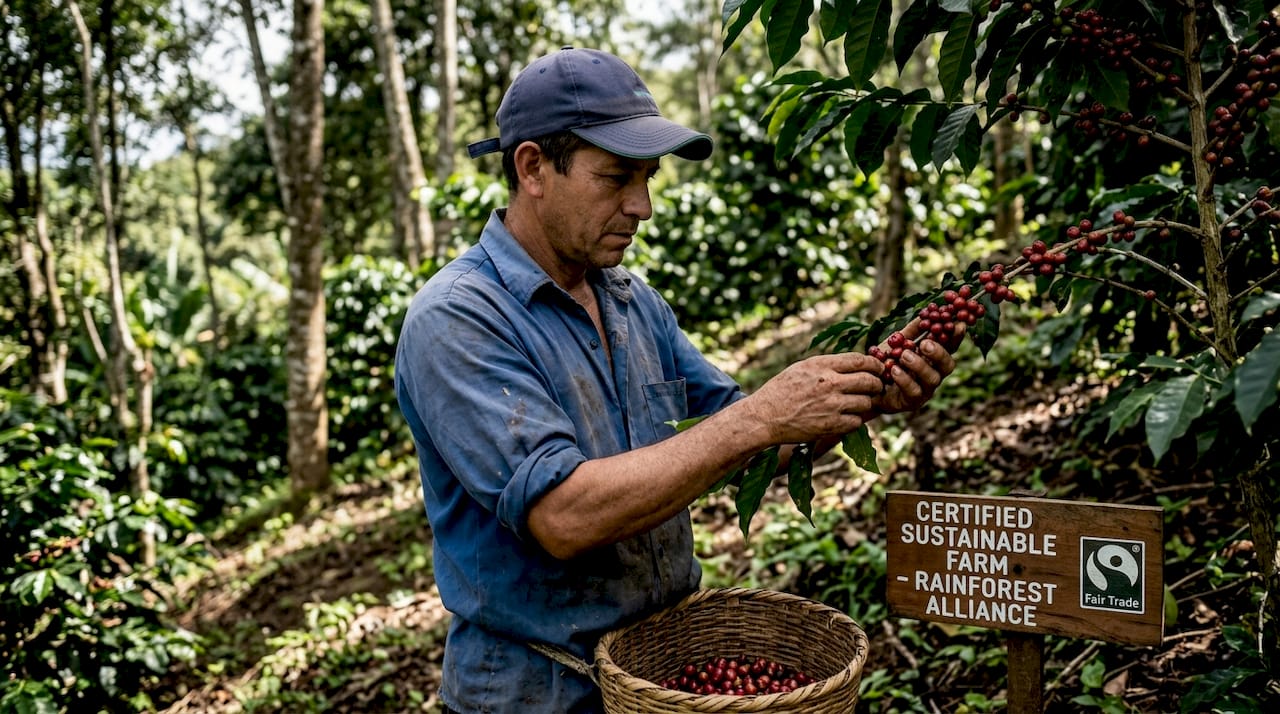
Direct trade is the gold standard in ethical sourcing. Unlike fair trade certifications, which set minimum price floors, direct trade means the roaster has a personal relationship with the farmer. Prices are negotiated above market rates, quality feedback flows both ways, and the farmer has a genuine economic incentive to improve their craft. Direct trade ensures traceability at every step, meaning you can often trace your bag back to a specific plot of land and the family who farmed it.
Micro-lots add another layer of value. These are small, carefully separated harvests from a single block of trees, a specific processing method, or a unique fermentation experiment. Because the quantities are tiny, they are inherently rare. Climate volatility is shrinking the availability of high-altitude growing regions, which makes exceptional lots even scarcer and more valuable year over year.
Why does this matter to you as a buyer? Because your purchase decision has a direct downstream effect. Understanding how growers elevate specialty coffee through ethical practices shows just how much craftsmanship goes into every bag. A deeper look at ethical coffee sourcing reveals the full picture of what responsible purchasing supports.
Here is what to look for when evaluating whether a luxury coffee is genuinely ethical:
- Farm-level traceability: Can you find the specific farm or cooperative on the label or website?
- Transparent pricing: Does the brand share what percentage goes to the grower?
- Direct relationships: Does the roaster visit farms or have documented partnerships?
- Sustainability practices: Are shade-growing, water conservation, or organic methods mentioned?
Pro Tip: Ask your roaster for the producer’s name and country of origin. If they cannot tell you both, the coffee is not truly traceable, regardless of what the packaging claims.
The reasons why ethics matter in coffee go beyond feel-good marketing. Ethical sourcing creates long-term supply security, incentivizes quality improvements at origin, and ensures that the most exceptional growing regions remain viable for future generations.
Luxury coffee as lifestyle: ritual, gifting, and status
There is a dimension of luxury coffee that market data cannot fully capture, and that is the lived experience of it. The ritual of preparing and drinking a truly exceptional cup is a form of mindfulness that affluent consumers are increasingly prioritizing.
Daily ritual enhances cognitive and mood benefits, and when that ritual involves a carefully sourced, expertly roasted coffee, the experience becomes something worth protecting in your day. It is not about caffeine delivery. It is about the pause, the aroma, the texture, and the quiet satisfaction of knowing exactly where your cup came from.
Gifting is where luxury coffee becomes genuinely powerful as a social signal. Consider the parallels to fine wine: a bottle of exceptional wine communicates taste, thoughtfulness, and generosity. A bag of micro-lot single-origin coffee does the same, often at a fraction of the cost per impression. Gifting ultra-rare coffees signals status in a way that feels modern, personal, and far less predictable than a bottle of Champagne.
The benefits of luxury coffee gifting are well documented among premium consumers. Here is why it works so well:
- Personalization: Coffee can be matched to the recipient’s brewing preferences, flavor profile, or origin interest.
- Storytelling: Every bag carries a narrative, a farm, a region, a farmer’s name.
- Repeatability: Unlike a single-use gift, coffee creates a recurring moment of appreciation.
- Accessibility: Premium coffee delivers a luxury experience at a price point that feels generous without being excessive.
Limited edition coffee adds urgency and exclusivity to the gifting equation. When a lot is gone, it is gone, which makes the gesture feel genuinely rare.
“Extreme prices can signal status and diminishing returns, but the $25 to $40 range consistently delivers peak experience for those who know what they are drinking.”
For those who want to master the art of coffee gifting, the key is pairing the right origin story with the right recipient.
Why the true value of luxury coffee is about more than price
Here is something the market data will not tell you directly: the smartest investment in luxury coffee is not the most expensive one. It is the most intentional one.
There is a growing tendency to equate price with quality, and while there is a real correlation up to a point, luxury is shifting toward quiet ritual and genuine experience rather than label-chasing. The consumers who get the most from their coffee investment are not buying $300 auction lots to impress guests. They are building a daily practice around a $30 to $40 bag of ethically sourced, freshly roasted coffee that they know intimately.
What most coffee lovers miss is that the return on sensory experience compounds over time. The more you learn about origin, processing, and roast, the more pleasure you extract from every cup. That is a return no stock can offer. Exploring what makes luxury coffee exceptional is a worthwhile starting point for anyone building that kind of knowledge.
The market CAGR of 9.77% confirms that this is not a passing trend. But the real signal is not the growth rate. It is the shift in why people are buying. Ethics, ritual, and traceability are outpacing pure status as purchase motivators. That is a meaningful cultural change, and it rewards buyers who invest with intention rather than impulse.
Discover your next luxury coffee experience
If this article has shifted how you think about your daily cup or your next gift, the next step is straightforward. House Coffee curates premium, ethically sourced single-origin Arabica collections designed for exactly the kind of intentional coffee experience we have been discussing.
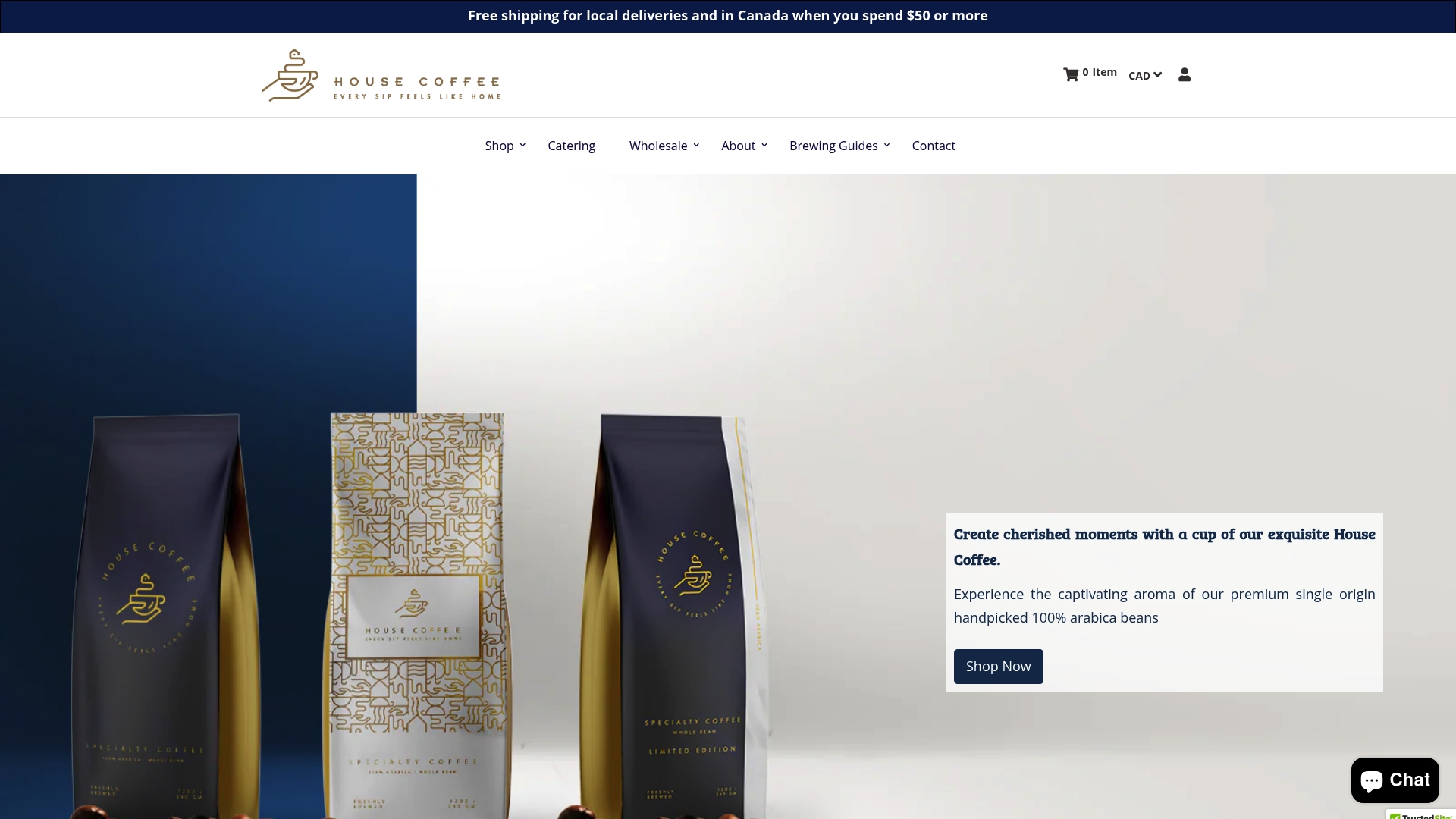
Whether you are looking to explore specialty coffees for your own ritual or find a gift that genuinely impresses, the range covers every preference and occasion. The Gold Collection is a strong starting point for those seeking traceable, high-scoring lots with compelling origin stories. You can also buy specialty coffee directly and discover the full range of what ethical, premium sourcing tastes like in the cup.
Frequently asked questions
What defines luxury coffee compared to regular coffee?
Luxury coffee scores above 80 on SCA scales, features superior taste, ethical sourcing, and rarity, and is often traceable to specific farms or micro-lots rather than anonymous commodity blends.
Is investing in luxury coffee good for your health?
Yes. Premium coffee retains more antioxidants and bioactive compounds than commodity alternatives, delivering measurable benefits for cardiovascular health, cognitive function, and mood.
Do high coffee prices always mean better taste and value?
Not always. Taste ratings plateau past $25 to $40 per bag, meaning the highest prices typically reflect rarity and status rather than a proportionally better sensory experience.
How does buying luxury coffee support ethical practices?
Buying from direct trade or traceable sources supports ethical farming, ensures fair wages for growers, and incentivizes sustainable agricultural practices that protect growing regions long-term.
Recommended
- Defining luxury coffee: what makes it truly exceptional – House Coffee
- Limited Edition Coffee: Why It Elevates Luxury – House Coffee
- Why Limited Edition Coffee Collections Matter Today – House Coffee
- Premium Coffee Gifting: 80+ SCA Score Defines Quality – House Coffee
- How mug design shapes your sensory experience: 5 key facts
-
Posted in
en, why invest in luxury coffee