Coffee cupping checklist: taste like a pro at home
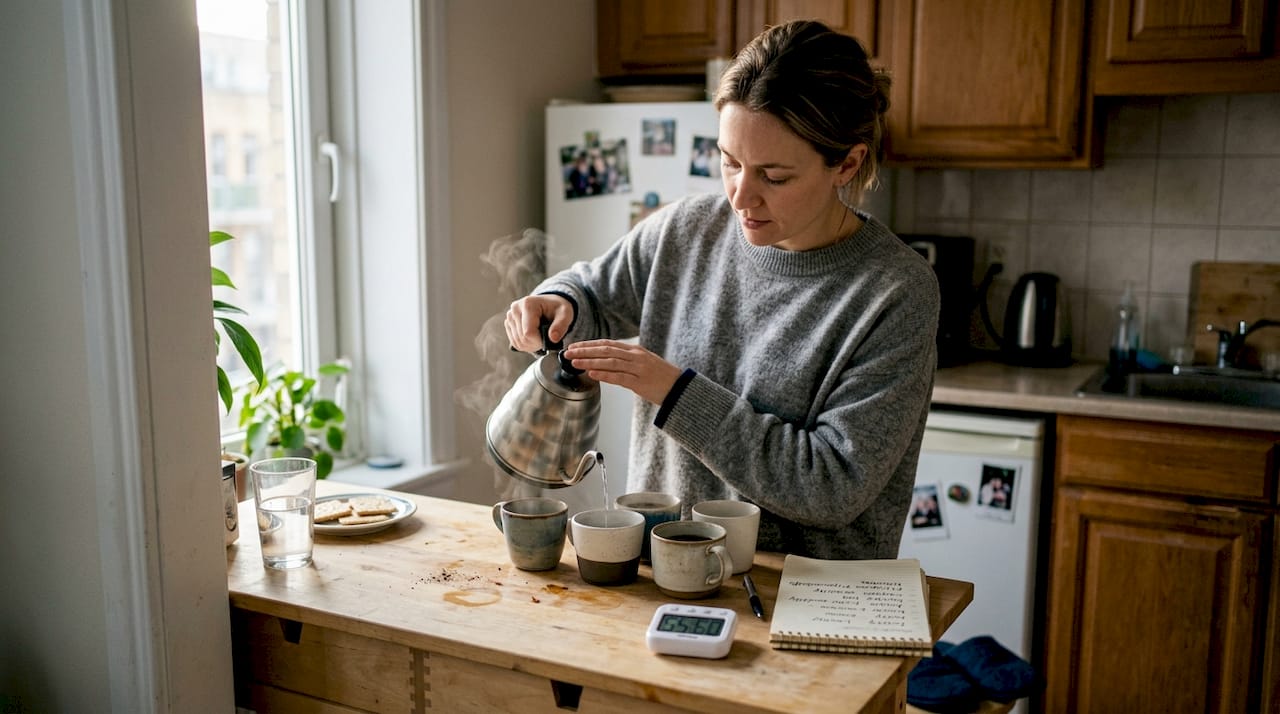
Tasting coffee with real precision is harder than it looks. You can love coffee deeply and still struggle to articulate why one cup excites you and another falls flat. That gap between sensing and knowing is exactly what a structured coffee cupping checklist closes. Cupping, the standardized method professional tasters use to evaluate coffee, gives you a repeatable framework to decode aroma, acidity, body, and flavor with confidence. Whether you’re exploring single-origin Arabica beans or comparing roast profiles, this guide walks you through every step of the process so your sessions become sharper and more meaningful every time.
Table of Contents
- Core criteria for effective coffee cupping
- Step-by-step coffee cupping checklist
- How to identify and score defects
- Using your notes for repeatable results
- What most cupping checklists miss (and how to level up)
- Take your coffee cupping further with House Coffee
- Frequently asked questions
Key Takeaways
| Point | Details |
|---|---|
| Clear criteria | Use structured cupping criteria for more accurate and consistent coffee tasting. |
| Step-by-step checklist | Follow a detailed process from setup to scoring for professional-level results. |
| Spotting defects | Learn to recognize and score common defects to refine your palate. |
| Note organization | Organize cupping notes for repeatable outcomes and continuous improvement. |
| Go beyond checklists | Mastery comes from practice, feedback, and awareness of overlooked tasting variables. |
Core criteria for effective coffee cupping
Before you pick up a spoon, it helps to understand what cupping means and why it works. Cupping is not casual tasting. It is a controlled evaluation process designed to strip away variables and let the coffee speak for itself. The goal is consistency: you want to be able to taste the same coffee twice and arrive at the same conclusions.
Professional tasters score coffee across six primary criteria:
- Aroma: The smell of the dry grounds and the wet brew, assessed separately
- Acidity: The brightness or liveliness in the cup, not sourness
- Body: The weight and texture of the coffee on your palate
- Flavor: The full taste experience, including fruit, chocolate, floral, or earthy notes
- Aftertaste: How long and how pleasantly the flavor lingers after swallowing
- Balance: How well all the above elements work together without one dominating
Each of these criteria is scored individually, and the total gives you a picture of the coffee’s overall quality. Getting familiar with coffee terminology explained makes the scoring process much more intuitive.
Two terms worth knowing early are quakers and phenolic. Quakers are underdeveloped beans that survive roasting without fully developing, producing flat, peanutty flavors. Phenolic refers to a medicinal or smoky off-flavor caused by certain processing or storage conditions.
“Common defects in cupping include taints and faults, which impact scoring.” Coffee Cupping Guide
Defects are scored as deductions. Taints, which are subtle off-notes that don’t fully ruin the cup, typically subtract 2 points. Faults, which are severe and unpleasant, subtract 4 points. Tracking defects is just as important as tracking what you love, because a cup with excellent flavor but a persistent fault cannot score as a specialty-grade coffee.
Step-by-step coffee cupping checklist
With the main criteria clear, let’s walk through the exact steps you’ll follow for systematic coffee cupping. A step-by-step tasting guide can help you internalize the sequence faster, but here is the core checklist:
- Measure and grind: Use 8.25 grams of coffee per 150 ml of water. Grind coarse, similar to sea salt texture.
- Assess dry aroma: Smell the grounds immediately after grinding. Note any floral, fruity, nutty, or earthy impressions.
- Add water: Pour water at 93°C (about 200°F) directly onto the grounds. Start your timer.
- Evaluate wet aroma: At 3 to 4 minutes, lean in and smell the crust that forms on top. This is often where the most vivid aromas appear.
- Break the crust: At 4 minutes, use your spoon to push through the crust with three gentle strokes. Smell again as you do this.
- Skim the surface: Remove the foam and any floating grounds with two spoons.
- First sips: Begin tasting at around 8 to 10 minutes when the cup has cooled to roughly 70°C. Slurp loudly to aerate the coffee across your palate.
- Score each criterion: Use a standard SCA (Specialty Coffee Association) scoring sheet and rate each of the six criteria.
- Taste again as it cools: Flavor evolves significantly as temperature drops. A coffee that seemed flat at 70°C may reveal sweetness at 50°C.
- Record defects and impressions: Note any off-flavors, unusual textures, or surprising highlights.
Systematic checklists improve reproducibility and can lift accuracy to 85% for home baristas. That is a significant jump from casual tasting.
Pro Tip: Keep a glass of room-temperature water nearby to cleanse your palate between cups. Plain crackers also work well. Resetting your palate between samples is what separates reliable cupping from guesswork.
To master your tasting workflow, practice the checklist with the same coffee across multiple sessions before introducing new variables.
How to identify and score defects
As you work through the checklist, learning to spot and handle defects is key. Defects fall into two categories: taints and faults. Taints are subtle. They don’t dominate the cup but they pull the score down. Faults are hard to miss. They make the coffee actively unpleasant.
Here are the most common sensory cues to watch for:
- Musty or earthy: Often caused by improper drying or storage
- Fermented or sour: Signals over-fermentation during processing
- Peanutty or flat: A classic quaker signature from underdeveloped beans
- Phenolic or medicinal: Can result from contaminated water or processing equipment
- Rubbery or smoky: Associated with over-roasting or certain defect beans
| Defect type | Sensory cue | Score deduction | Impact on cup |
|---|---|---|---|
| Taint | Musty, slightly sour | -2 points | Subtle but noticeable |
| Fault | Fermented, phenolic | -4 points | Dominates or ruins the cup |
| Quaker | Peanutty, flat | -2 to -4 points | Dulls sweetness and complexity |
| Rubbery | Smoky, harsh | -4 points | Heavy finish, unpleasant |
Defects such as taints and faults have specific scoring penalties, with taints costing 2 points and faults costing 4 points per occurrence. In amateur cupping sessions, it is common for 20 to 30 percent of cups to show at least one detectable defect, which makes defect identification a core skill rather than an afterthought.
Understanding coffee body also helps here, because some defects primarily affect mouthfeel rather than flavor, and a thin or astringent body can signal a processing issue before your taste buds fully register it.
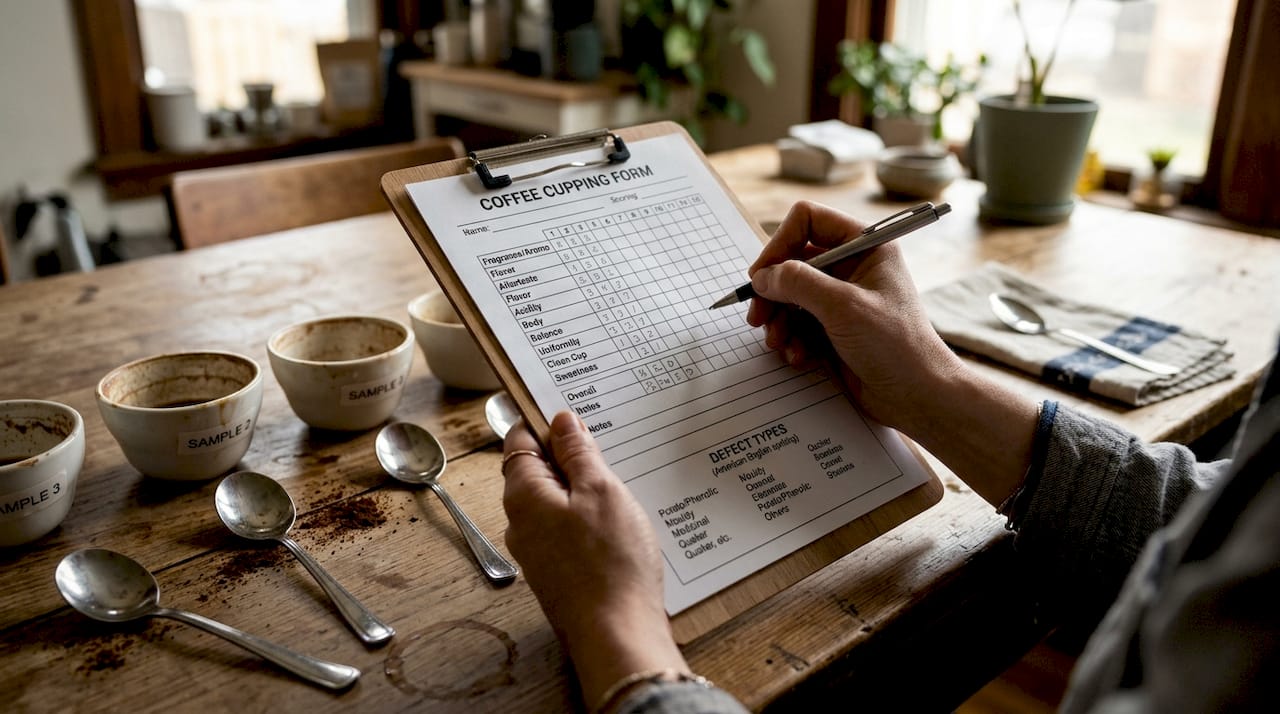
Keep a quick defect reference card next to your scoring sheet during sessions. Familiarity with these cues speeds up your evaluation and prevents you from second-guessing a clear fault.
Using your notes for repeatable results
After each cupping session, making sense of your notes is the piece that ties it all together. Raw impressions scribbled mid-session are valuable, but they only become useful when you organize and review them consistently.
Here is a simple approach to structuring your session notes:
- Consolidate immediately after tasting: While impressions are fresh, transfer your shorthand into complete sentences or organized fields.
- Group by criterion: Keep aroma notes separate from flavor notes. Mixing them creates confusion when you review later.
- Assign a final score: Add up your criterion scores and apply any defect deductions to get the session total.
- Compare across sessions: If you cup the same coffee weekly, track how your scores shift. Consistency in scoring is itself a skill.
Here is a sample data table from a single cupping session:
| Criterion | Score (out of 10) | Key impressions |
|---|---|---|
| Aroma | 8.0 | Jasmine, dried apricot |
| Acidity | 7.5 | Bright, citrus-forward |
| Body | 7.0 | Medium, smooth |
| Flavor | 8.5 | Peach, brown sugar, light floral |
| Aftertaste | 7.5 | Clean, lingering sweetness |
| Balance | 8.0 | Well-integrated, no dominant note |
| Total | 46.5 | Specialty grade |
Pro Tip: Build your vocabulary using the SCA Coffee Taster’s Flavor Wheel. It organizes descriptors from broad categories like fruity or nutty down to specific notes like tamarind or hazelnut. Using shared language makes your notes far more useful when comparing with other tasters.
Systematic note-taking and consistent terminology greatly improve flavor accuracy and analysis over time. Reviewing your home cupping tips periodically also helps you spot patterns in what you consistently over or under-score.
What most cupping checklists miss (and how to level up)
Here is something most cupping guides won’t tell you: the checklist is the floor, not the ceiling. Following every step correctly gets you to consistent results. But the tasters who develop truly refined palates go further.
Environment matters more than people realize. Room temperature, ambient smells, and even the material of your cupping bowls affect what you perceive. Ceramic and glass cups produce noticeably different thermal experiences, which changes how flavor develops during the session. Most checklists ignore this entirely.
Group bias is another blind spot. When you cup with others and someone announces their impressions before everyone has scored, scores cluster around that first opinion. Blind cupping, where no one shares notes until all scores are recorded, produces far more honest and useful data.
Peer feedback, when structured correctly, accelerates learning faster than solo practice. Comparing your notes with someone who has a different palate forces you to articulate why you tasted what you tasted, which sharpens your vocabulary and perception simultaneously.
Finally, sometimes the most valuable session is one where you leave the scoring sheet aside entirely. Focus on what the coffee makes you feel or remember. Emotional and sensory impressions that don’t fit neatly into a scoring rubric often reveal the most about a coffee’s character. Learning to taste coffee flavors naturally without the pressure of scoring builds the intuition that makes checklists work better when you return to them.
Take your coffee cupping further with House Coffee
If you’re ready to put your checklist to use, the quality of your beans is the single biggest variable you control. Practicing on flat or stale coffee teaches you very little. Practicing on exceptional, freshly roasted single-origin Arabica gives your palate something worth analyzing.
At House Coffee, you can shop specialty coffee sourced from dedicated growers across unique origins, each with distinct flavor profiles that reward careful cupping. Pair your beans with the right vessels by browsing our selection of cupping mugs designed to support proper evaluation. Consistent practice with quality materials is what turns a checklist into a genuine skill. We are here to make sure you have both.
Frequently asked questions
What is the purpose of a coffee cupping checklist?
A coffee cupping checklist ensures you evaluate coffee methodically, increasing tasting consistency and accuracy. Structured checklists improve reproducibility and can raise flavor accuracy to 85% for home baristas.
How do I know if there’s a defect in my coffee during cupping?
Defects show up as unusual tastes or aromas like musty, sour, or fermented notes. Use your checklist to confirm and score them, since common defects include taints and faults with musty and fermented as the most typical sensory cues.
What tools do I need for a proper coffee cupping session?
You’ll need quality beans, clean cups, hot water at 93°C, cupping spoons, a timer, and a scoring sheet to follow your checklist effectively.
Why should I record my coffee tasting notes?
Recording notes helps you compare sessions, track preferences, and improve your palate over time. Systematic note-taking improves flavor analysis and accelerates your development as a taster.
How often should I use a coffee cupping checklist?
Use the checklist for every tasting session until the process becomes second nature, ensuring consistent and accurate results across all your evaluations.
Recommended
-
Posted in
coffee cupping checklist, en