Coffee freshness: why it's key to better flavor in 2026
TL;DR:
- Coffee begins losing noticeable flavor within two weeks, especially once ground.
- Proper storage in airtight, opaque containers can extend freshness up to four weeks.
- Personal taste preferences vary; some prefer slightly aged coffee over ultra-fresh brews.
Most coffee lovers assume their bag of beans stays fresh for months. The reality is more surprising. Some specialty coffees lose noticeable quality in less than two weeks, especially once ground. That gap between what we assume and what actually happens in the bag is exactly where great coffee goes wrong. Freshness is not just a marketing word. It is a measurable, sensory reality that shapes every cup you brew. Understanding it is the fastest, most practical way to start making better coffee at home without changing your equipment or your technique.
Table of Contents
- What does coffee freshness actually mean?
- How freshness changes coffee flavor and aroma
- How to preserve freshness: Practical tips and storage
- Debating the ‘fresh is always best’ myth
- Our take: the real secret to consistently delicious coffee
- Upgrade your coffee experience with fresh, specialty beans
- Frequently asked questions
Key Takeaways
| Point | Details |
|---|---|
| Freshness powers flavor | Coffee loses its best flavor and aroma rapidly after roasting, so freshness directly impacts your brew quality. |
| Whole beans last longer | Whole bean coffee stays tasty more than twice as long as ground, making it a better choice for most home brewers. |
| Proper storage matters | Keep coffee sealed, away from light, air, and moisture to slow down the loss of freshness and flavor. |
| Taste is personal | Some coffee lovers prefer slightly aged coffee to ultra-fresh, so experiment to find your own ideal. |
What does coffee freshness actually mean?
Understanding why freshness matters starts with knowing what it actually means and why it changes so quickly.
When we say coffee is “fresh,” we are talking about two things: how recently it was roasted, and how recently it was ground. Both timelines matter, and they move faster than most people realize. Coffee is not a shelf-stable product in the way that canned goods are. It is alive, chemically speaking, and it starts changing the moment it leaves the roaster.
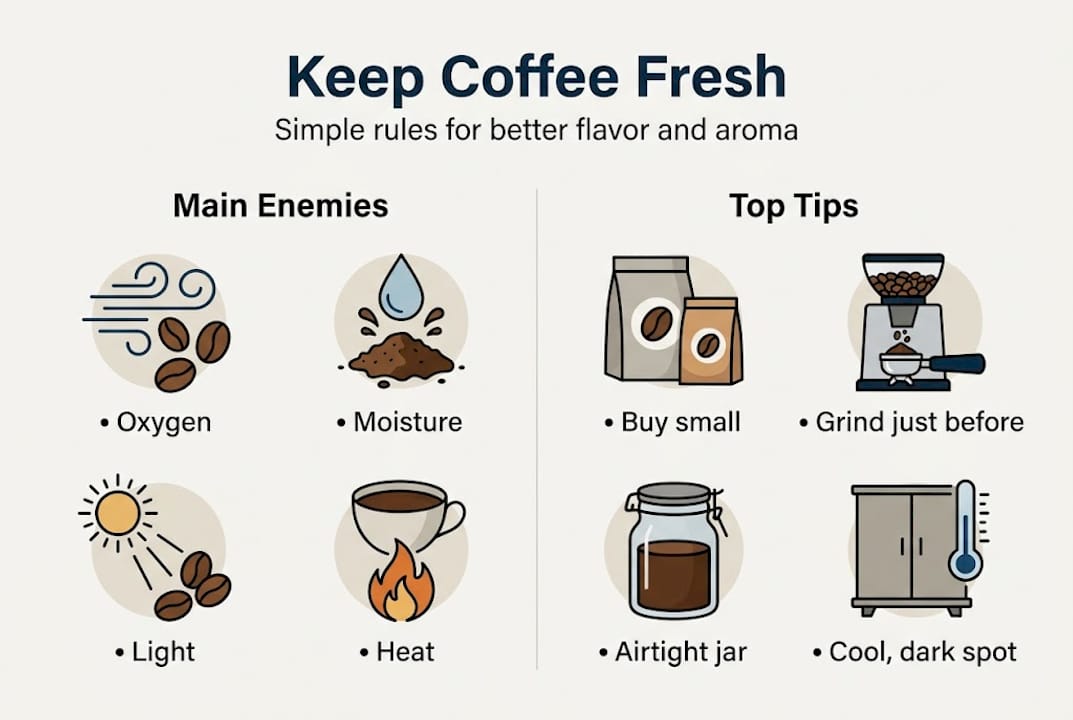
The main enemies of freshness are oxygen, moisture, light, and heat. Oxygen is the biggest culprit. When roasted coffee is exposed to air, a process called oxidation begins breaking down the aromatic compounds that give coffee its complexity. Those compounds, called volatile aromatics, are responsible for the fruity, floral, nutty, and chocolatey notes you smell and taste. Once they degrade, you cannot get them back.
The difference between whole beans and pre-ground coffee is dramatic. Ground coffee has a much larger surface area exposed to air, which means oxidation happens far faster. Whole roasted coffee can maintain quality for up to 32 days, while ground coffee loses measurable quality in just 11 to 12 days. That is a significant gap, and it explains why whole bean vs ground coffee is such an important choice for home brewers who care about taste.
Here is a quick breakdown of what drives staling:
- Oxygen exposure: Triggers oxidation, breaking down flavor compounds
- Moisture: Accelerates chemical breakdown and can introduce off-flavors
- Light: Degrades oils and aromatics through photo-oxidation
- Heat: Speeds up all the above reactions
- Time: Even in ideal conditions, freshness fades gradually
“Freshness in coffee is not about the roast date on the bag. It is about how well those aromatic compounds have been protected from the moment of roasting to the moment of brewing.”
The importance of freshness goes beyond taste. Fresh coffee also behaves better during brewing. It produces more carbon dioxide, which helps create that satisfying bloom when you pour hot water over your grounds. Stale coffee blooms weakly or not at all, which is often a sign that extraction will be uneven.
Pro Tip: Buy coffee in smaller amounts, ideally enough for one to two weeks, and grind just before brewing. This single habit will do more for your cup quality than almost any other change.
How freshness changes coffee flavor and aroma
Once you understand what makes coffee fresh, it is important to see exactly how those qualities affect your cup.
Fresh coffee has a character that is hard to describe until you have tasted it side by side with older coffee. The aroma is vivid and layered. You might catch stone fruit, citrus, or a deep chocolatey warmth depending on the origin and roast. The flavor in the cup follows that same brightness. There is a liveliness to it, a kind of clarity that makes each sip interesting. Understanding coffee aroma essentials helps you recognize what you are tasting and why.
As coffee ages, those qualities flatten out. The aroma becomes muted, sometimes almost cardboard-like. The flavor loses its edges. Bright fruit notes disappear first, replaced by a dull bitterness or a papery aftertaste. Some people describe stale coffee as tasting “empty,” which is surprisingly accurate. The structure is there, but the personality is gone.
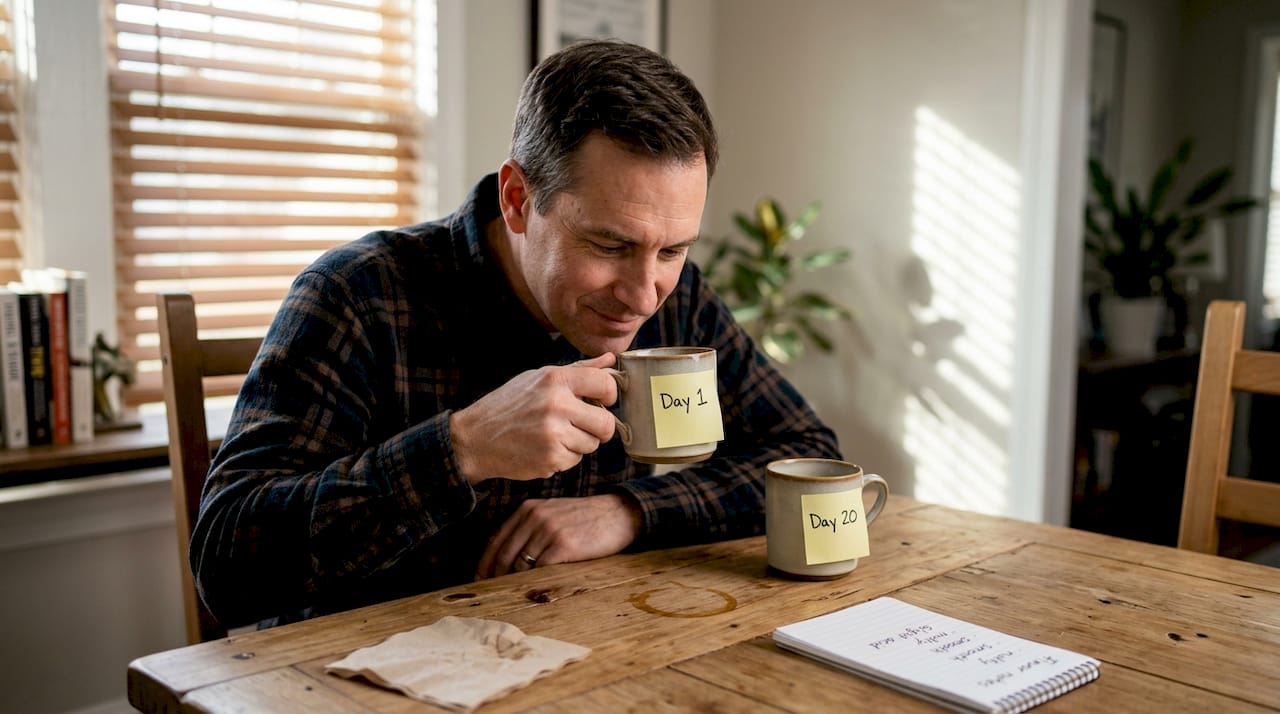
Cup score drops below 80 after 11 to 12 days for ground coffee, which is the threshold specialty coffee professionals use to define quality. That is a measurable, objective decline, not just a matter of opinion.
Here is how flavor typically shifts over time:
| Freshness stage | Aroma | Flavor notes | Texture |
|---|---|---|---|
| Days 1 to 7 | Vivid, layered | Bright, complex, origin-forward | Full, round |
| Days 8 to 14 | Moderate | Softer, some notes fading | Slightly thinner |
| Days 15 to 30 | Faint | Flat, bitter, papery | Thin, hollow |
| 30+ days | Minimal | Stale, one-dimensional | Watery |
Interestingly, the story is not entirely black and white. Taste tests found no unanimous preference for fresh versus older coffee, even among enthusiasts. About 70% of testers could tell the difference between one-day-old and 145-day-old coffee, but they were split on which they actually preferred. Some found the softer, more settled flavor of slightly aged coffee more approachable.
This tells us something important: freshness is not a single dial set to “maximum.” It is a window, and your preferred spot within that window is personal. Exploring the taste of freshly roasted coffee alongside slightly rested beans is a genuinely worthwhile experiment. And understanding flavor profiles explained in more depth will sharpen your ability to notice these shifts in your own brewing.
How to preserve freshness: Practical tips and storage
Knowing freshness fades fast, you can take control by storing your coffee as effectively as possible.
Storage is where most home brewers lose ground they did not know they were losing. You might be buying excellent, freshly roasted beans, but if they sit in an open bag on a sunny counter, you are undoing all of that quality within days. The good news is that smart storage is simple and inexpensive.
Here are the steps that make the biggest difference:
- Transfer beans to an airtight, opaque container as soon as you open the bag. Glass jars with rubber seals or ceramic canisters with locking lids work well. Keep them away from windows and stovetops.
- Choose valve bags when buying coffee. One-way valve bags allow carbon dioxide to escape without letting oxygen in. They are the standard in specialty coffee for a reason.
- Buy in two-week quantities. Buying smaller amounts more frequently is better than buying a large bag and letting it sit. Match your purchase size to your consumption rate.
- Keep coffee at room temperature rather than the fridge. The fridge introduces moisture and absorbs odors. The freezer can work for long-term storage of unopened bags, but only if sealed airtight.
- Never store coffee near the stove, dishwasher, or any heat source. Even ambient warmth speeds up staling significantly.
Reducing oxygen to 0.5% can extend coffee’s shelf life up to twentyfold compared to regular air storage. That is a remarkable difference, and it is why vacuum-sealed packaging is worth seeking out when you shop.
| Storage method | Oxygen exposure | Estimated freshness window |
|---|---|---|
| Open bag on counter | Very high | 3 to 5 days |
| Sealed bag, room temp | Moderate | 1 to 2 weeks |
| Airtight canister | Low | 2 to 3 weeks |
| Vacuum-sealed container | Very low | Up to 4+ weeks |
For deeper guidance on this topic, the coffee storage tips guide covers every scenario in detail. And if you are still figuring out what to buy in the first place, the buying guide for freshness walks through what to look for on a label.
Pro Tip: Invest in a vacuum-sealed coffee canister. They are available for under $30 and can dramatically extend the life of your beans without any extra effort in your daily routine.
Debating the ‘fresh is always best’ myth
With practical steps in hand, it is worth stepping back to explore whether fresher always means better for every taste and occasion.
There is a widely held belief in specialty coffee circles that freshest equals best. Buy beans roasted yesterday, grind them this morning, brew immediately. It sounds logical, but the reality is more nuanced, and sometimes that approach can actually work against you.
Many roasters recommend a “rest” period after roasting, typically three to ten days for filter coffee and up to two weeks for espresso. Why? Because coffee right off the roaster is still releasing large amounts of carbon dioxide. That off-gassing can interfere with extraction, producing uneven, sometimes sour results. A little time in the bag allows the flavors to settle and integrate. The coffee becomes more predictable and often more enjoyable to brew.
“Freshness is a starting point, not a finish line. The best cup comes from understanding your beans, not just chasing the roast date.”
Taste tests show no universal preference for the freshest possible coffee, even among dedicated enthusiasts. Preference is shaped by roast level, origin, brew method, and individual palate. A lightly roasted Ethiopian natural processed bean might taste its best at day five. A dark-roasted Colombian blend might hit its stride at day twelve.
Here are a few situations where “just roasted” is not necessarily ideal:
- Espresso: Needs more rest time to reduce excessive CO2, which causes channeling and inconsistency in the puck
- Cold brew: The long steep time compensates for some freshness loss, making slightly older beans perfectly usable
- Dark roasts: Often benefit from a few extra days of rest before the flavors fully integrate
- Gifting: A bag roasted two to five days before giving is often in a better brewing window than one roasted that morning
For more on how roast date and flavor interact, the freshness taste insights article is worth reading alongside a deeper look at understanding flavor profiles to connect the dots between timing and taste.
Our take: the real secret to consistently delicious coffee
After weighing all sides of the freshness debate, here is an insight shaped by real-world experience.
We think the coffee world sometimes turns freshness into a competition, as if the person with the most recently roasted beans automatically wins. That framing misses the point. Freshness is a tool, not a trophy. The real goal is flavor, and flavor is personal.
The most consistent coffee drinkers we know are not the ones obsessing over roast dates. They are the ones who pay attention to what they actually taste. They keep simple notes, adjust their grind, try beans at different points in the freshness window, and develop a genuine feel for what works in their cup.
Chasing freshness best brew results means understanding when freshness matters most for your specific habits and preferences, and then building simple routines around that understanding.
Pro Tip: Keep a small notebook or phone note with your coffee, jotting down the roast date, grind setting, and a one-line flavor impression. After a few weeks, patterns emerge that are more useful than any general rule.
Upgrade your coffee experience with fresh, specialty beans
Ready to taste the difference? Here is where to start your fresh coffee journey.
Making better coffee at home starts with one honest decision: choosing beans that were roasted with care and shipped while still in their prime. Everything else, your grinder, your technique, your water temperature, builds on that foundation.
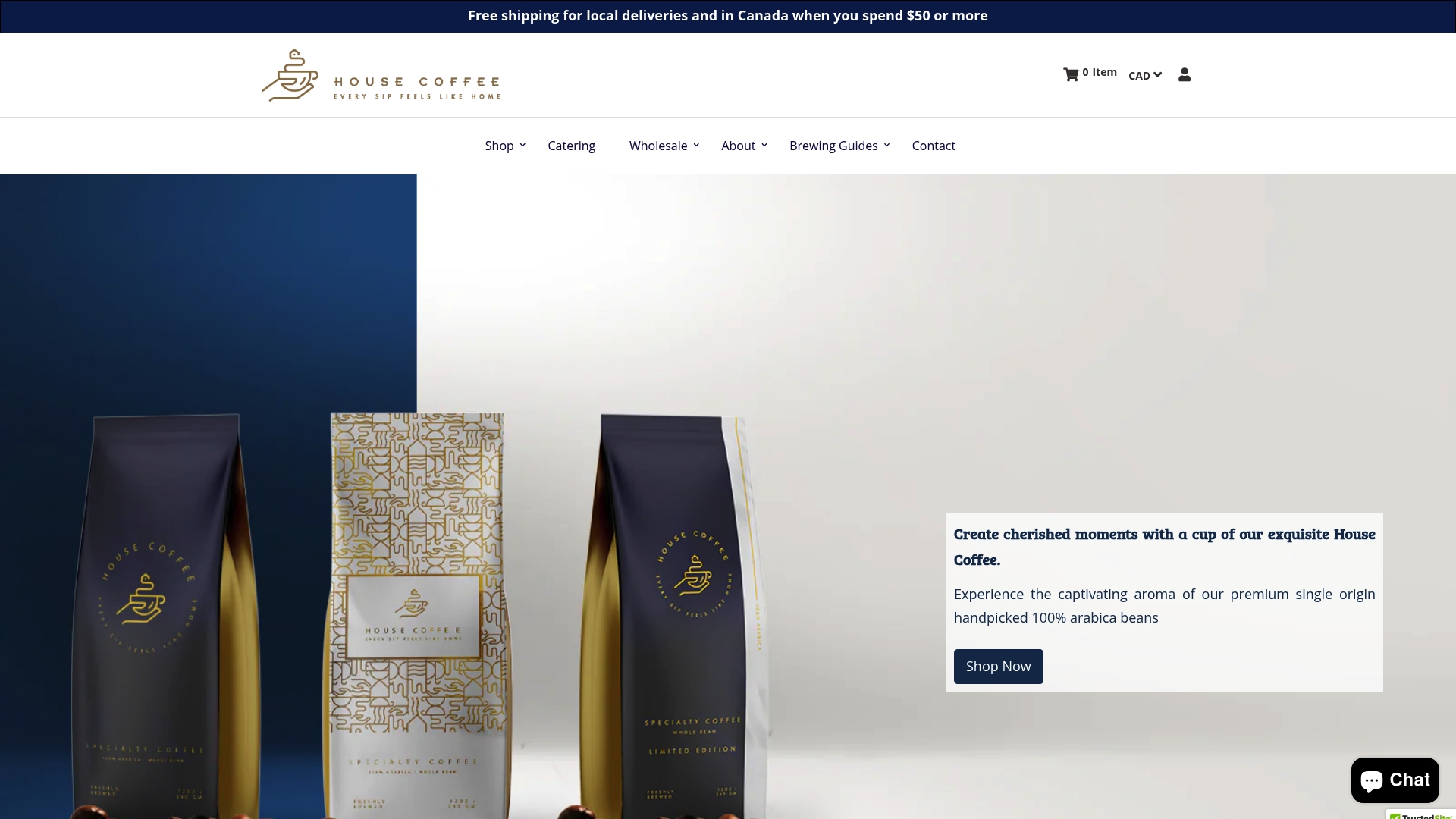
At House Coffee, our specialty coffee selection is built around single-origin Arabica beans sourced from dedicated growers and roasted to highlight each origin’s best qualities. Whether you are exploring our Gold Collection coffees or looking into wholesale specialty coffee options, every bag is shipped at peak freshness so it arrives ready to brew. Start with one bag, taste the difference, and build your routine from there.
Frequently asked questions
How long does coffee stay fresh after roasting?
Whole beans stay fresh for up to 32 days, while ground coffee is best used within 12 days if stored in an airtight container away from heat and light.
Does vacuum sealing coffee make a big difference?
Yes. Reducing oxygen to 0.5% can extend coffee’s shelf life up to 20 times compared to leaving it in a regular open or loosely sealed bag.
Can you taste the difference between fresh and older coffee?
About 70% of testers could distinguish between one-day-old and 145-day-old coffee in blind tests, though individual preference for which tasted better was split.
Should I avoid pre-ground coffee completely?
Whole beans preserve flavor significantly longer, but pre-ground coffee can still deliver a good cup if you use it quickly and store it in a sealed, airtight container away from heat and moisture.
Recommended
-
Posted in
en, why is coffee freshness important