Gourmet Coffee Buying Guide: Flavor, Freshness & Ethics
TL;DR:
- Freshness depends on buying coffee roasted within 2-6 weeks, ideally 5-18 days post-roast.
- Quality coffee features specific origin details, a high SCA score, and transparent processing methods.
- Ethical sourcing is proven through transparency, farmgate prices, and direct trade relationships, not just labels.
Navigating the gourmet coffee market feels like walking into a library where every book looks equally important. Roast dates, SCA scores, processing methods, Fair Trade logos, single-origin claims — the labels pile up fast, and most buyers grab whatever looks premium without knowing what actually makes it so. The truth is, three factors consistently separate a transcendent cup from a forgettable one: freshness, quality transparency, and ethical sourcing. Miss even one, and you’re leaving real flavor on the table. Whether you’re treating yourself or searching for a gift that genuinely impresses, this guide gives you the tools to buy with confidence every single time.
Table of Contents
- Focus on freshness: Why roast date matters
- Know your quality: SCA score, origin, and processing
- Prioritize ethics: Transparency, certifications, and farmgate pricing
- Buy smart: Local roasteries, direct questions, and sensory selection
- Our perspective: Gourmet coffee is about details, not just labels
- Elevate your coffee experience with House Coffee
- Frequently asked questions
Key Takeaways
| Point | Details |
|---|---|
| Freshness window | Buy beans roasted within 2-6 weeks and use them at their peak, 5-18 days after roasting. |
| Specialty grade matters | Choose coffees rated 80+ on the SCA scale with complete origin and processing details on the label. |
| Go beyond certifications | Look for transparency on pricing and relationships over just ethical certifications for true sustainability. |
| Maximize local connections | Ask questions and examine beans at local roasteries to discover the best gourmet flavors for you. |
| Explore and compare | Use cuppings, sampler packs, and conversations to expand your coffee knowledge and enjoyment. |
Focus on freshness: Why roast date matters
Most people associate “fresh” coffee with a bag that hasn’t expired yet. That’s not how it works. Coffee is a perishable product, and its flavor peaks at a very specific window after roasting. Buy coffee roasted within the last 2-6 weeks for optimal freshness, with the ideal flavor window sitting at 5-18 days post-roast for most brewing methods. This period allows CO2 — a natural byproduct of roasting — to degas from the bean, which is what lets water properly extract flavor during brewing.
Buy too early, and excess CO2 creates uneven extraction. Buy too late, and oxidation has already dulled the complexity. It’s a narrow window, and most grocery store bags don’t even tell you when the beans were roasted — only when they “expire,” which is nearly useless information.
When selecting coffee beans, always look for a clearly printed roast date, not just a best-by date. Specialty roasters and reputable online shops almost always include this. If a bag doesn’t show a roast date, treat it as a red flag.
What to avoid when checking freshness:
- Beans with no roast date printed anywhere on the bag
- Overly oily beans on light or medium roasts (surface oil signals over-roasting or staleness)
- Bulk bins with no sourcing or roasting information
- Bags labeled only with a “best by” date and nothing else
- Coffee marketed as “fresh” with no date to back the claim
Pro Tip: Buy smaller quantities more frequently rather than stockpiling a large bag. A 250g bag purchased every two weeks will consistently outperform a 1kg bag purchased monthly, because you’re always drinking coffee in its prime window.
Understanding premium Arabica qualities also helps here — high-quality Arabica beans are more sensitive to freshness than commodity-grade blends, which means the roast date matters even more when you’re buying specialty.
Know your quality: SCA score, origin, and processing
Once you’ve confirmed a bag is fresh, the next question is: how good are the beans themselves? The Specialty Coffee Association (SCA) uses a 100-point cupping scale to evaluate coffee, and specialty grade requires a score of 80+ on this scale. Anything below that is considered commodity coffee, regardless of how it’s packaged or priced.
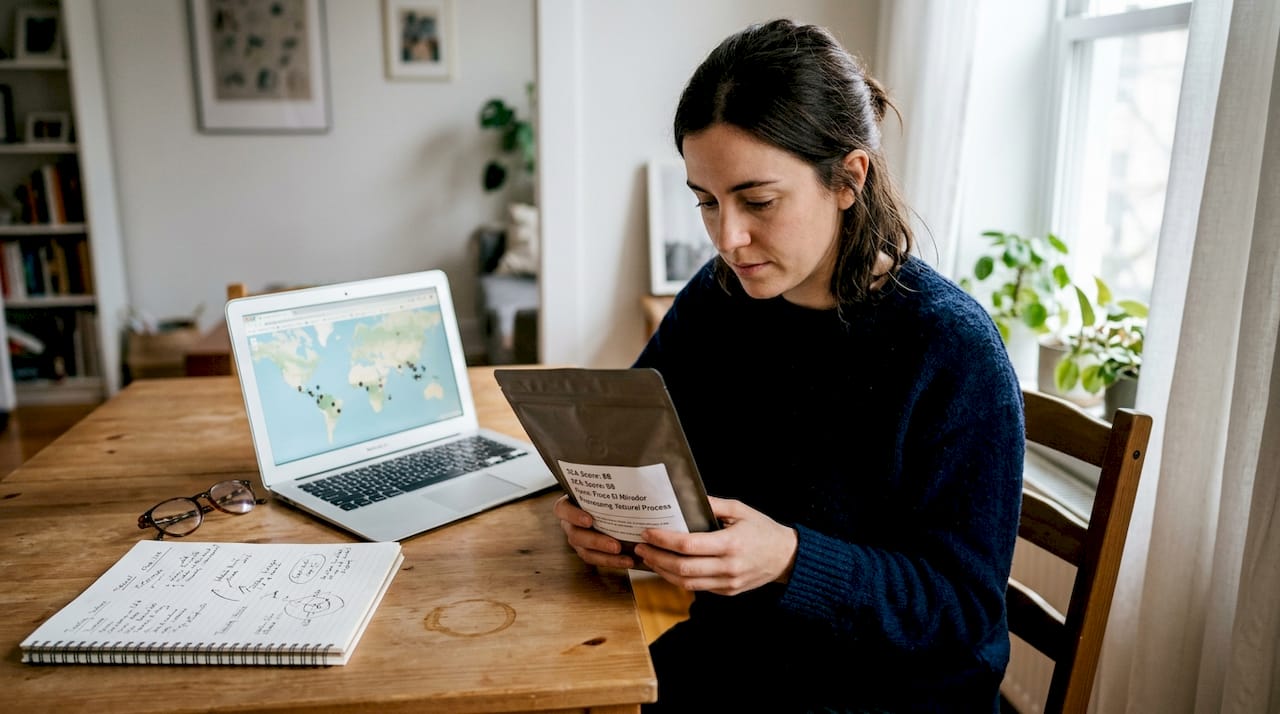
But a score alone isn’t enough. The best gourmet coffees include specific origin details: the farm or cooperative name, the growing region, the altitude, the varietal (like Bourbon, Gesha, or Typica), and the processing method. Vague labels like “Colombia” or “Ethiopian Blend” are marketing, not information. Real quality is traceable.
Coffee flavor notes are directly tied to how a bean was processed after harvest. Washed (wet) processing produces clean, bright, and acidic cups. Natural (dry) processing creates fruity, wine-like, and complex flavors. Honey processing sits in between, offering sweetness with some clarity. Understanding this helps you predict what’s in your cup before you brew it.
Key questions to ask before buying:
- What is the SCA cupping score for this lot?
- Which farm or cooperative produced it, and where exactly?
- What altitude was it grown at?
- What varietal is it, and what does that mean for flavor?
- How was it processed after harvest?
“Avoid vague labels like just ‘Colombia.’ Real specialty coffee tells you exactly where it came from and how it was handled.”
Sample coffee quality comparison:
| Coffee | SCA Score | Origin Detail | Processing |
|---|---|---|---|
| Generic “Colombia” blend | 72 | Country only | Unknown |
| Huila Region, El Paraiso Farm | 87 | Farm, region, altitude | Washed |
| Yirgacheffe, Kochere Cooperative | 91 | Region, cooperative, varietal | Natural |
The difference between the first and third rows isn’t just price — it’s traceability, flavor complexity, and the confidence that origin shapes flavor in ways you can actually taste. If you want to sharpen your ability to detect these differences, try at-home coffee tasting with two contrasting coffees side by side.
Prioritize ethics: Transparency, certifications, and farmgate pricing
Ethical sourcing is where gourmet coffee gets complicated. Many buyers assume a Fair Trade or Organic label settles the question. It doesn’t. Certifications are a starting point, not a finish line. The real measure of ethical sourcing is transparency: does the brand tell you what the farmer was actually paid?
For context, Fair Trade premiums can reach 37% above market price for sustainability, which sounds significant. But market prices for commodity coffee are often so low that even a 37% premium still leaves farmers earning less than a living wage. Direct trade relationships, where roasters negotiate directly with producers and publish what they paid, often deliver better outcomes for farmers and better quality for buyers.
Steps to verify ethical sourcing:
- Search the brand’s website for a “sourcing” or “transparency” page
- Look for published farmgate prices or price-per-pound paid to producers
- Check whether they name specific farms or cooperatives, not just countries
- Read about their direct trade or long-term relationship practices
- Use the ethical coffee guide to cross-reference brand practices
Sourcing model comparison:
| Sourcing model | What it guarantees | Limitations |
|---|---|---|
| Fair Trade certified | Minimum price floor | Doesn’t guarantee quality or full transparency |
| Organic certified | No synthetic pesticides | Doesn’t address farmer pay |
| Direct trade | Negotiated premium, named producers | No third-party verification |
| Full transparency | Published farmgate prices, producer stories | Rare, but the gold standard |
Pro Tip: Brands that publish farmgate prices and tell the producer’s story aren’t just being ethical — they’re signaling that they know their supply chain well enough to stand behind it. That level of knowledge usually correlates with better quality beans too.
When you apply these filters to premium bean selection tips, you’ll find that the brands worth buying from are often the ones that make ethics and quality inseparable.
Buy smart: Local roasteries, direct questions, and sensory selection
Knowing what to look for on paper is one thing. Knowing how to extract that information in real time — whether you’re at a local roastery or browsing online — is where buyers separate themselves.
When you visit a roastery or contact an online seller, come prepared. The best roasters love specific questions because it tells them you’re serious about quality.
Top 8 questions to ask your roaster:
- What are the tasting notes, and what processing method produced them?
- When was this lot roasted?
- What’s the SCA score for this specific batch?
- Where exactly is the farm or cooperative located?
- What altitude were these beans grown at?
- How do you recommend brewing this particular coffee?
- What’s the sweetness and acidity balance like?
- Do you have any limited or micro-lot offerings right now?
Beyond questions, use your eyes. Dry beans for light and medium roasts are a good sign — surface oil on lighter roasts indicates either over-roasting or age. Dark roasts naturally develop some surface sheen, so a slight gloss there is acceptable. Uneven coloration, cracked beans, or a dusty appearance are all reasons to pass.
“Roaster conversations are the shortcut to finding your next favorite flavor.”
Pro Tip: Attend cupping events at local roasteries whenever you can. Cuppings let you taste multiple coffees side by side before committing to a bag, which is the fastest way to train your palate and discover what you actually love.
If you’re still building your preferences, start by choosing single origin beans from one region at a time. It’s much easier to understand what you like when you’re not comparing blends with multiple variables.
Our perspective: Gourmet coffee is about details, not just labels
After years of sourcing and curating specialty coffee, here’s what we’ve learned: the buyers who get the most out of gourmet coffee are the ones who stay curious. Not the ones with the most expensive grinder or the trendiest brewing method — the curious ones.
Pretty packaging and buzzwords like “artisanal” or “small batch” are everywhere. Real quality is quieter. It shows up in a roast date printed clearly on the back, a farm name you can actually look up, and a roaster who can tell you the farmer’s name without hesitating.
The most memorable coffees we’ve encountered came from asking one extra question or attending one cupping we almost skipped. That’s not an accident. Sensory experience and intellectual curiosity work together in specialty coffee — one without the other leaves you with half the picture.
“If you can talk to the producer or roaster, you’re on the right path.”
Treat every new bag as a small experiment. Engage your senses, take notes, and compare. The details you start noticing will make every cup more rewarding. For those ready to put this into practice, learning how to brew specialty coffee is the natural next step toward getting the most out of every bean you buy.
Elevate your coffee experience with House Coffee
You now know what separates a truly great gourmet coffee from one that just looks the part. Put that knowledge to work with House Coffee’s curated lineup of ethically sourced, single-origin Arabica beans — each one selected for traceability, freshness, and flavor complexity.
Explore our specialty coffee selection to find beans that match exactly what you’ve learned to look for: clear roast dates, named origins, and transparent sourcing. If you’re looking for a standout gift or want to start with something exceptional, the Gold Collection is a great place to begin. Every bag tells a story worth tasting.
Frequently asked questions
How do I know if a gourmet coffee is truly fresh?
Check the roast date on the bag and purchase beans roasted within 2-6 weeks. The 5-18 day post-roast window is optimal for most brewing methods, as it allows CO2 to degas properly.
What should I look for on a gourmet coffee label?
Look for a SCA score of 80+, a specific farm or region name, the varietal, the processing method, and a clearly printed roast date. Vague country-only labels are a sign to keep looking.
Does Fair Trade or Organic certification guarantee ethical sourcing?
Certifications are a useful baseline, but true ethical sourcing means the brand publishes farmgate prices and direct trade relationships. Logos alone don’t tell the full story.
How can I discover more unique or rare coffee flavors?
Attend local cupping events, ask roasters about micro-lot or limited offerings, and try sampler packs to explore different processing methods and origins without committing to a full bag.
Is it better to buy from a local roaster or online?
Local roasters let you ask questions and assess freshness in person, but reputable online sellers with full sourcing transparency and visible roast dates are equally reliable options.
Recommended
-
Posted in
en, tips for gourmet coffee buyers