Discover single estate coffee: unique flavors & brewing tips
TL;DR:
- Single estate coffee offers unique flavors tied to specific farms and growing conditions.
- Brewing methods like filter and pour-over best preserve its delicate terroir.
- Variability between harvests is intentional, reflecting seasonal changes and farm practices.
Most coffee lovers assume that buying premium beans guarantees a predictable, polished cup every time. That assumption misses something exciting. Single estate coffee flips the script entirely, offering flavors so tied to one specific farm, its soil, altitude, and microclimate, that no two harvests taste exactly alike. If you’ve been drinking blends and wondering why specialty coffee gets so much attention, the answer lives at the estate level. This article walks you through what single estate coffee is, why it tastes the way it does, how to pick a great one, and how to brew it so nothing gets lost in the cup.
Table of Contents
- What is single estate coffee?
- Why single estate coffee tastes unique
- Choosing the right single estate coffee
- How to brew single estate coffee for best results
- What most coffee guides miss about single estate beans
- Explore specialty single estate selections for your home barista journey
- Frequently asked questions
Key Takeaways
| Point | Details |
|---|---|
| Estate-level sourcing | Single estate coffee comes from one farm, offering traceable and unique flavor. |
| Flavor variability | Expect seasonal changes and flavor adventures with each batch of single estate coffee. |
| Best brewing methods | Filter and pour-over techniques bring out the nuanced flavors of estate beans. |
| Choosing quality | Check farm labels and Cup of Excellence scores to ensure authenticity and excellence. |
| Enjoy the journey | Embrace the unpredictability and variety that single estate coffee offers over blends. |
What is single estate coffee?
Single estate coffee means every bean in your bag comes from one specific farm or estate, not a region, not a country, and not a cooperative blend of dozens of farms. That single-source commitment is what separates it from most coffee on the market.
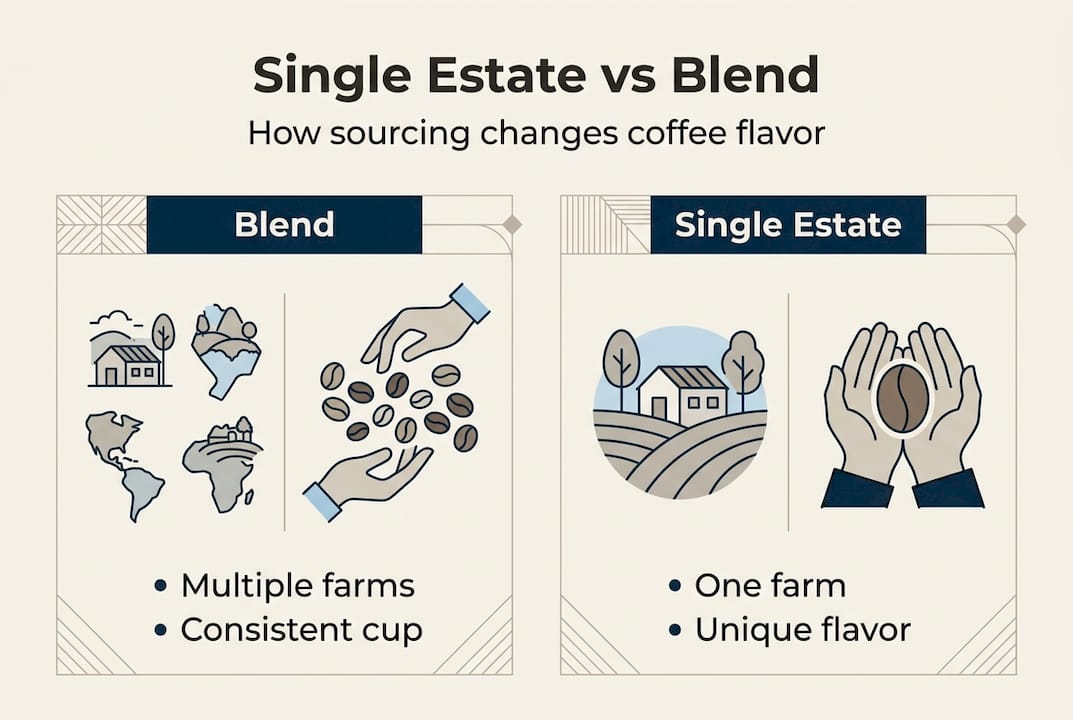
It helps to understand the spectrum. Blends combine beans from multiple origins to create a consistent, repeatable flavor. Single origin narrows it to one country or region. Single estate goes further, tracing every bean to one property, one farmer, and one set of growing conditions. The result is a cup with a story you can actually verify.
For home brewers who care about unique flavor and ethics, this level of traceability matters. You know exactly where your coffee came from, how it was processed, and who grew it. That transparency is rare in the food industry.
Here’s a quick comparison to put it in perspective:
| Coffee type | Source | Consistency | Traceability |
|---|---|---|---|
| Blend | Multiple origins | High | Low |
| Single origin | One country or region | Medium | Medium |
| Single estate | One farm or estate | Variable | Very high |
The variability column is key. As noted in the single origin coffee guide, single estate coffee offers more adventure and less consistency year-to-year than blends. That’s not a flaw. For enthusiasts, it’s the whole point.
What makes single estate coffee worth seeking out:
- Full traceability back to a named farm and farmer
- Terroir expression, meaning the soil, altitude, and climate show up in the cup
- Processing transparency, so you know if beans were washed, natural, or honey-processed
- Support for individual growers, not anonymous supply chains
- Seasonal character, where each harvest reflects that year’s unique conditions
For the home barista who wants more than caffeine, single estate coffee is where the real exploration begins.
Why single estate coffee tastes unique
Terroir (pronounced teh-WAHR) is a term borrowed from wine. It describes how a plant’s environment, including soil composition, altitude, rainfall, and temperature, shapes the flavor of what it produces. In coffee, terroir is everything.
A farm sitting at 1,800 meters above sea level in Costa Rica produces a completely different cup than one at 900 meters in Brazil, even if both grow the same Arabica variety. Higher altitudes mean slower cherry development, which concentrates sugars and acids in the bean. The result is brighter, more complex flavors with fruit-forward notes.
Microclimates matter just as much. A single estate might have one hillside facing morning sun and another in shade most of the day. Those micro-differences in light and temperature create flavor variation even within the same farm. That’s why coffee origin shapes flavor in ways that no roasting technique can fully replicate.
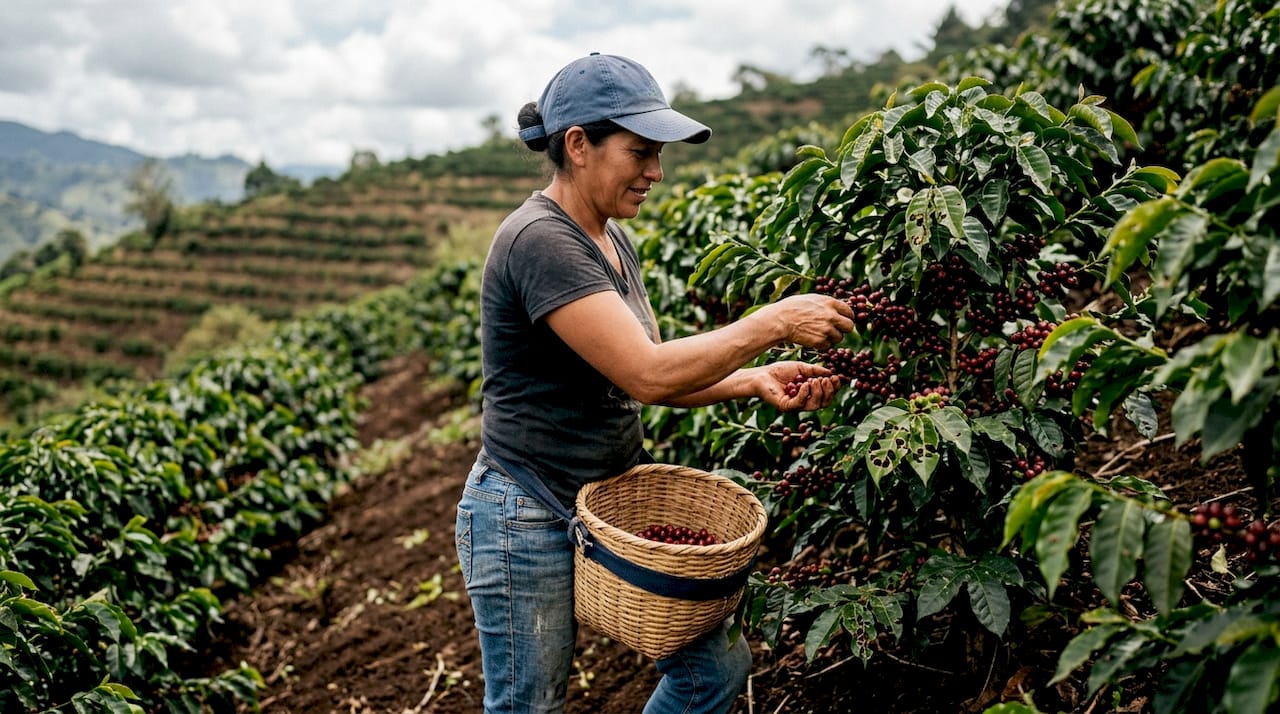
Farming methods add another layer. Estates that hand-pick only ripe cherries, use careful fermentation, and dry beans on raised beds produce cleaner, more nuanced cups than farms using mechanical harvesting. Every decision made between seed and bag shows up in your mug.
Here’s how growing conditions map to flavor:
| Growing condition | Flavor impact | |—|—|—| | High altitude | Bright acidity, fruit notes, complexity | | Volcanic soil | Mineral undertones, full body | | Shade-grown | Slower ripening, sweeter, more layered | | Natural processing | Fruity, wine-like, heavy body | | Washed processing | Clean, crisp, floral clarity |
“When you taste a Cup of Excellence winner, you’re tasting the farm itself. The notes of stone fruit, honey, and jasmine aren’t added. They grew that way.”
Understanding coffee flavor profiles explained helps you connect what you taste to where it came from. And once you start reading a cup that way, blends feel like they’re missing a voice. Experts consistently note that single estate shines in filter and pour-over for appreciating terroir, because those methods preserve delicate flavor compounds that espresso pressure can mask.
If you want a deeper look at how to read what’s in your cup, the coffee flavor profile guide is a great place to start building that vocabulary.
Choosing the right single estate coffee
Shopping for single estate coffee is a skill. Labels can be vague, marketing language is everywhere, and not every bag that says “single origin” means single estate. Here’s how to cut through the noise.
- Look for the farm name. A true single estate coffee names the farm, not just the country or region. “Ethiopia Yirgacheffe” is single origin. “Worka Chelbesa Farm, Yirgacheffe, Ethiopia” is single estate.
- Check the processing method. Labels that list washed, natural, or honey processing signal a producer who cares about traceability and flavor control.
- Find the altitude. Masl (meters above sea level) on a label shows the roaster did their homework. Higher masl often means more complexity.
- Look for competition scores or awards. Benchmarks like Cup of Excellence winners with 91+ scores highlight top estates and give you an independent quality signal.
- Check the harvest date. Freshness matters. Look for a roast date within the last 4 to 8 weeks, and a harvest year that confirms recent crop.
- Research the roaster. Roasters who visit farms and publish detailed sourcing notes are far more likely to be selling genuine single estate beans.
Pro Tip: When in doubt, search the farm name online. Legitimate single estate producers have a digital presence, farm profiles, or Cup of Excellence listings you can cross-reference.
Knowing how to identify single origin beans is the first step, but going one level deeper to verify estate-level sourcing is what separates a good purchase from a great one. The single-origin coffee benefits page breaks down why this level of sourcing also supports better farming practices and fair compensation for growers.
How to brew single estate coffee for best results
You’ve invested in a great bag. Now the brewing method determines whether those flavors make it to your cup or get buried.
Single estate coffee rewards gentle, controlled brewing. The goal is to let the bean’s natural character come through without interference. High-pressure espresso can work beautifully with the right estate bean, but for most home baristas starting out, filter and pour-over methods give you the clearest window into what the farm produced.
As the Cup of Excellence community consistently notes, filter and pour-over are the best methods for appreciating terroir in single estate coffee. These methods use lower temperatures and longer contact time, which coaxes out delicate fruit, floral, and mineral notes that espresso can compress.
Key brewing tips for single estate beans:
- Use filtered water. Tap water minerals can clash with delicate flavor compounds. Filtered water at around 93 to 96 degrees Celsius (200 to 205 degrees Fahrenheit) is ideal.
- Grind fresh, grind right. Pre-ground coffee loses volatile aromatics fast. A medium-fine grind works well for pour-over; medium-coarse for French press.
- Weigh your coffee. A 1:15 ratio (1 gram of coffee to 15 grams of water) is a reliable starting point for filter brewing.
- Bloom your grounds. For pour-over, add twice the weight of water to coffee first, wait 30 seconds, then continue pouring. This releases CO2 and opens up flavor.
- Taste before adding anything. Black first, always. Milk and sugar mask the very notes you paid for.
Pro Tip: If your single estate coffee tastes flat or bitter, adjust grind size before anything else. Too fine causes over-extraction and bitterness. Too coarse causes under-extraction and sourness. Small grind adjustments make a bigger difference than brew time.
For a broader look at methods that work across different bean types, the guides on top brewing methods and best brewing methods cover everything from Aeropress to cold brew in practical detail.
What most coffee guides miss about single estate beans
Here’s something most buying guides won’t tell you: the inconsistency of single estate coffee is a feature, not a problem to solve.
The coffee world spends enormous energy chasing repeatability. Blends exist precisely to deliver the same cup every time. But when you commit to single estate, you’re signing up for a relationship with a living farm, and living things change. A cooler rainy season, a new drying technique, a different harvest window. These variables show up in the cup, and that’s worth celebrating.
We believe the most rewarding single estate experiences come from enthusiasts who stop expecting their favorite farm to taste the same every year. When you approach each new harvest with curiosity instead of expectation, you start noticing things. A brighter acidity this year. More stone fruit than last season. A longer, cleaner finish.
That kind of attentive tasting is what separates a coffee drinker from a coffee enthusiast. The unique flavor and ethics behind single estate sourcing aren’t just talking points. They’re the reason each bag tells a story no blend ever could.
Explore specialty single estate selections for your home barista journey
If this article has sparked your curiosity, the best next step is tasting the difference for yourself. Single estate coffee reads differently on the palate than anything you’ll find in a grocery store blend, and the right starting point matters.
At House Coffee, our specialty coffee collection brings together ethically sourced, single-origin Arabica beans with full traceability and detailed origin stories. Whether you’re exploring for the first time or deepening an existing appreciation, our wholesale specialty coffee options offer flexible ways to stock your home setup. Pair your beans with the right gear from our brewing essentials to make sure every nuance reaches your cup.
Frequently asked questions
Is single estate coffee better than blends?
Single estate coffee offers unique, traceable flavors tied to one farm, while blends prioritize consistency. As the Cup of Excellence notes, single estate brings more adventure and less year-to-year predictability, which is exactly what enthusiasts seek.
What brewing method works best for single estate coffee?
Filter and pour-over methods are ideal because they highlight the terroir and subtle flavor notes in single estate beans. Experts confirm that filter brewing preserves the delicate compounds that define estate-level character.
How do I know if a coffee is single estate?
Look for a specific farm name, region, processing method, and altitude on the label. Quality benchmarks like Cup of Excellence scores of 91 or above are a reliable signal that the estate has been independently verified.
Does single estate coffee vary in flavor between seasons?
Yes, and that’s part of what makes it special. Each harvest reflects that year’s unique growing conditions, so seasonal flavor variation is expected and celebrated among enthusiasts who follow specific estates over time.
Recommended
-
Posted in
en, what is single estate coffee